


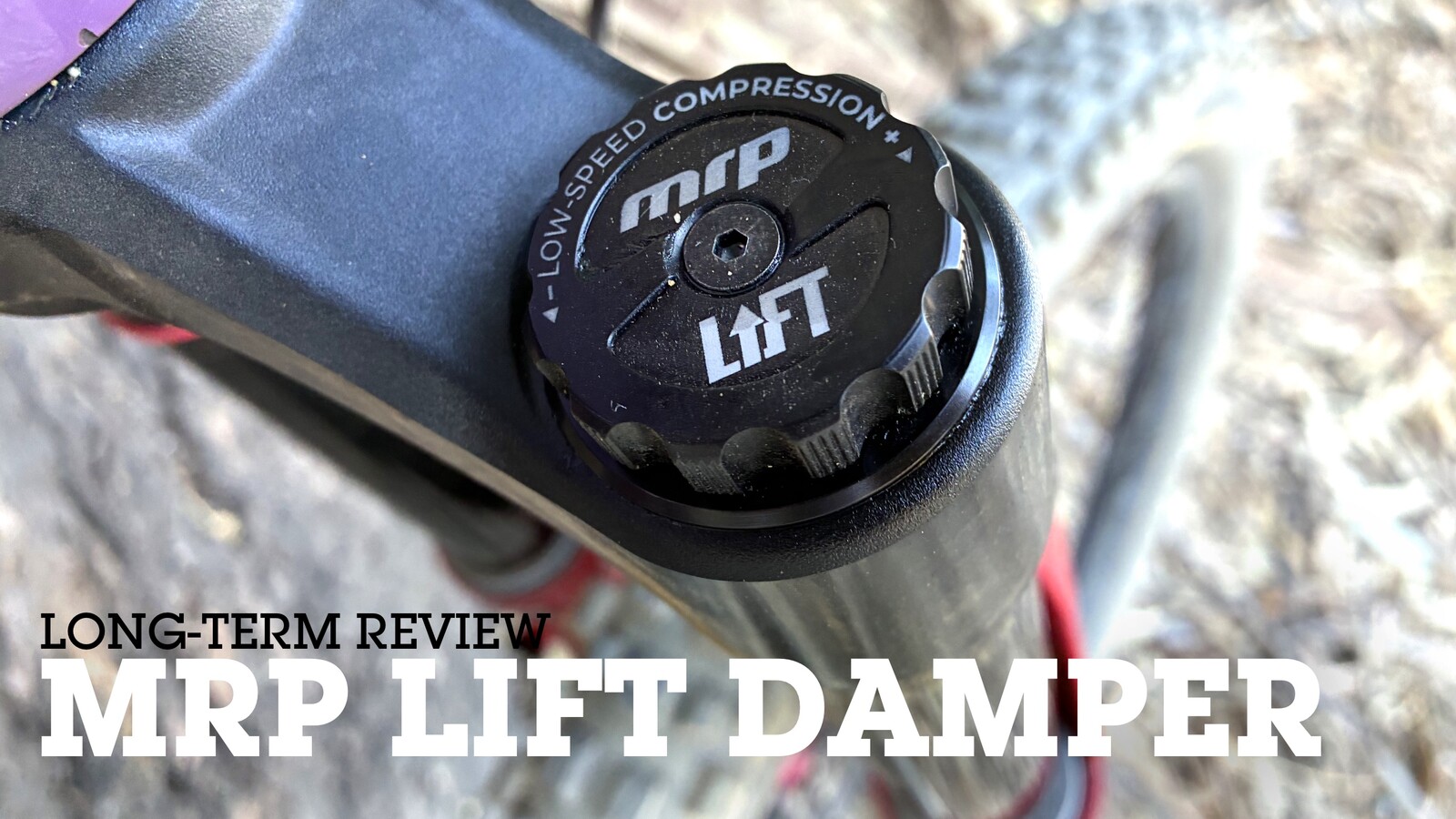
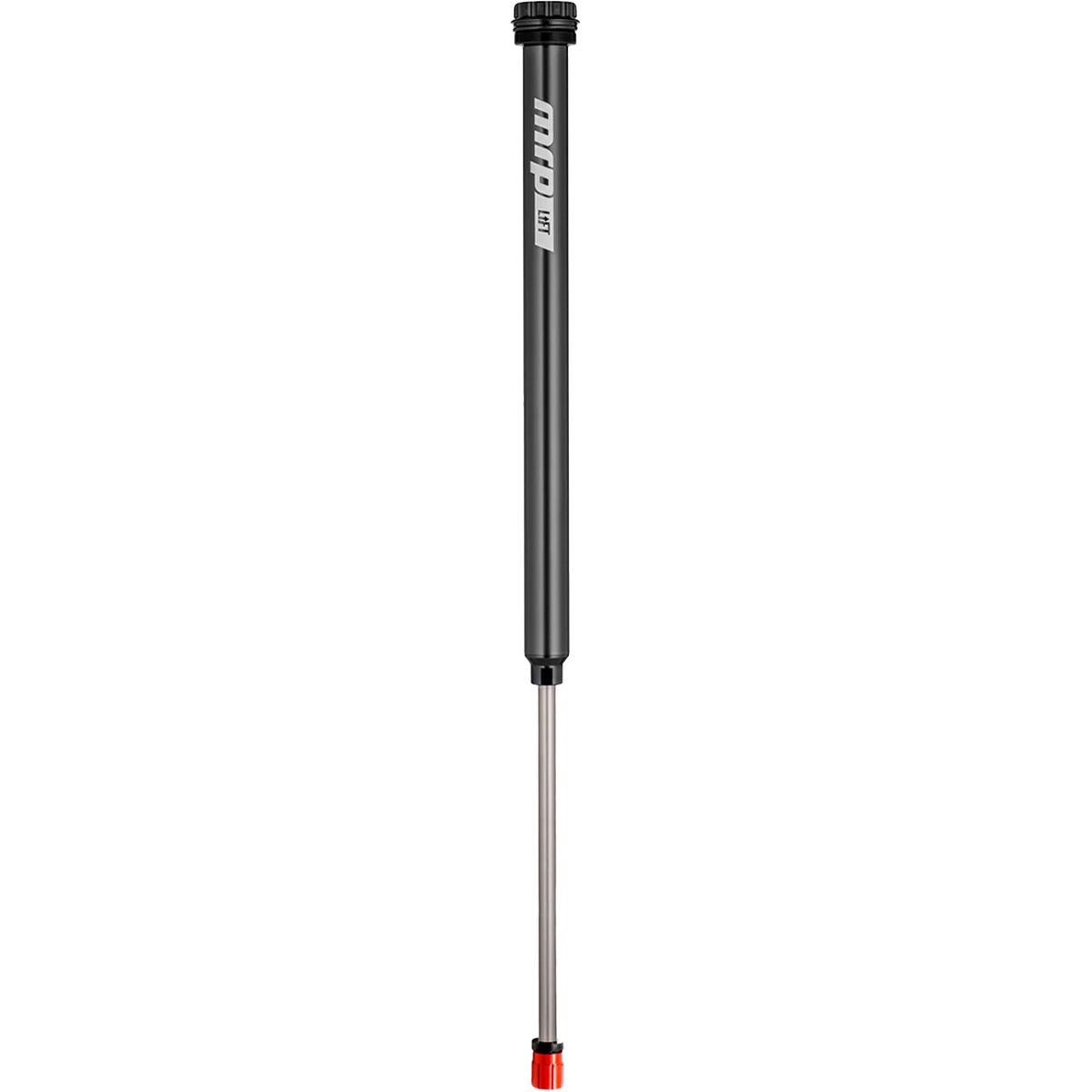
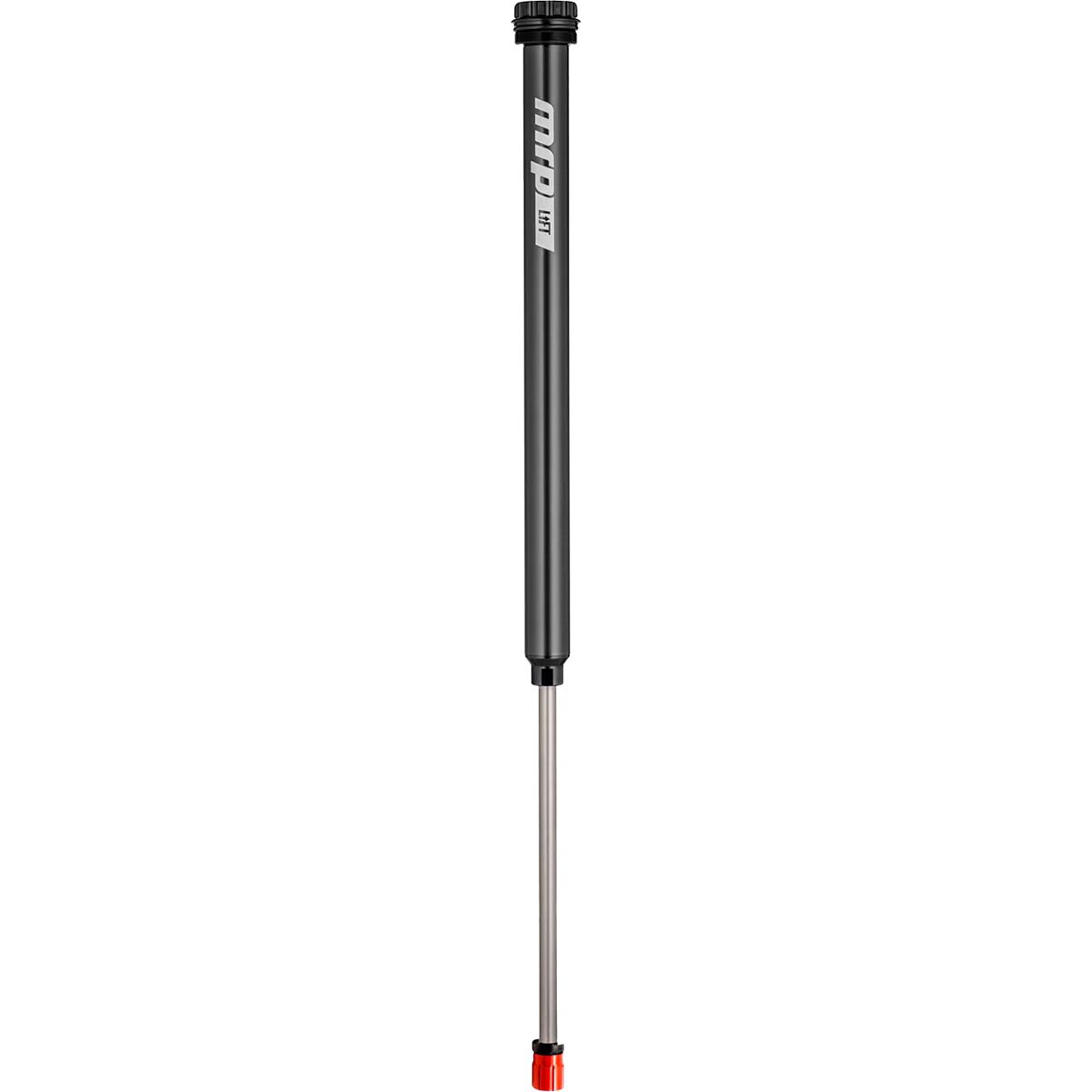
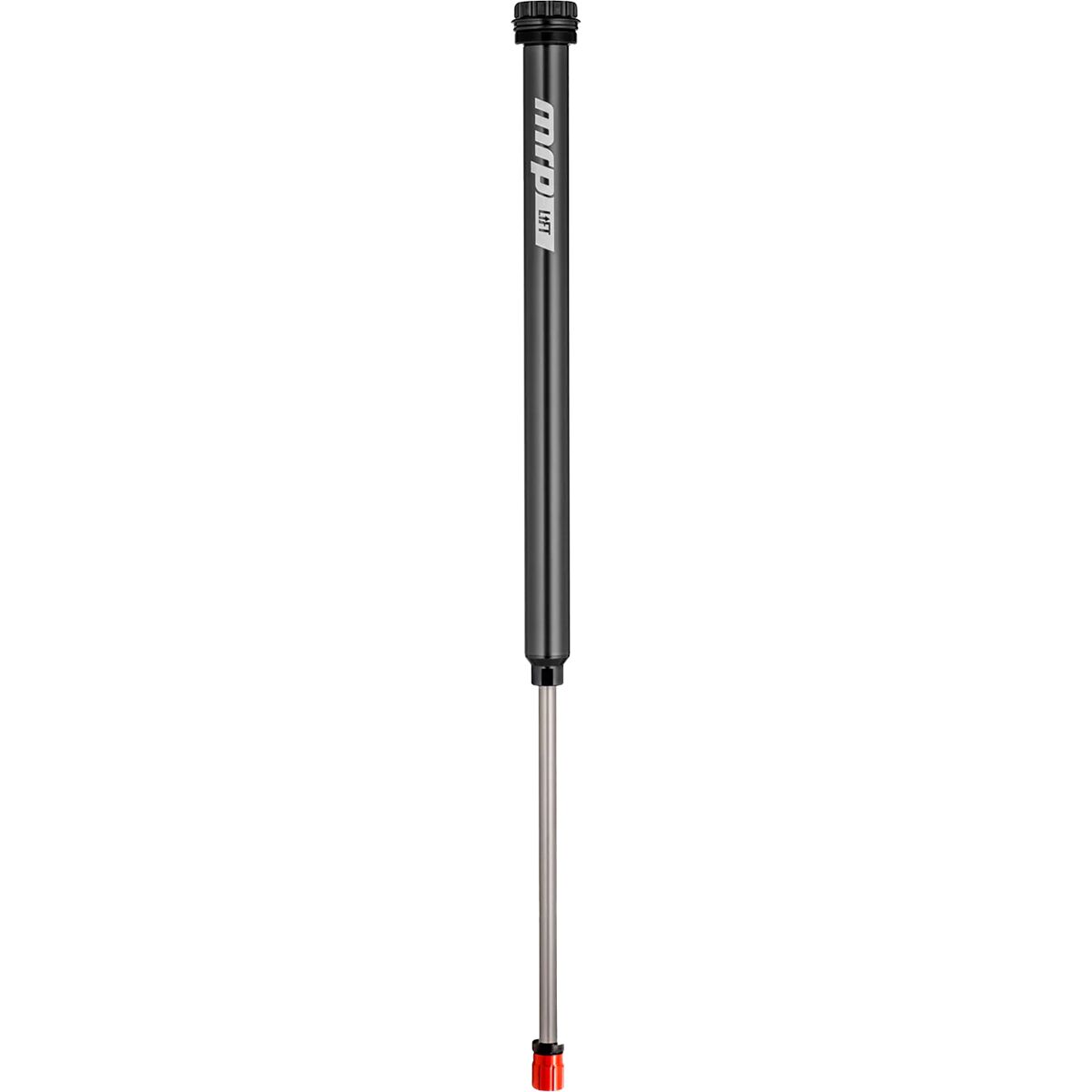
W hat doesn't MRP make? In addition to their namesake chainguides, dating back to the glory days of the 90's, MRP produces their own one-shop cottage industry of drivetrain hop-ups, brake accessories, and suspension products, including shocks, springs, forks, boost conversion kits, axles, and more. At the Sea Otter Classic in April 2024, MRP debuted the Lift Damper, an aftermarket damper upgrade for FOX, Marzocchi, and RockShox forks that's based on the damper they've been using for 10+ years in their own forks. After years of testing their competitors' forks as a benchmark for their own Ribbon and Bartlett, I picture someone at MRP finally stopping for a second and saying, "Hey, we really like the damper in our forks. Why don't we put it in one of these [insert: FOX/ Marzocchi/RockShox] forks and see how it feels?"
If you can't wait any longer to find out: it feels pretty darn good. I've been testing MRP's original V1 Lift Damper in my 2020 180mm travel RockShox Zeb for the better part of a year now, and two months ago I moved over to the updated V2 Lift Damper in a new 2025 Zeb Ultimate. Read on to hear what's going on inside this fancy aluminum tube, and what all that hidden tech translates to on the trail after nine months of skidding and rock smashing.

Highlights
- Available for RockShox Zeb, Lyrik, Yari, Pike, and Revelation; FOX 38, 36, and 34; and Marzocchi Z1 (see MRP website for exact models, years, and compatibility)
- Five different compression and rebound base valve tunes available for different riding styles and riders 110-270 pounds
- 12 clicks of externally adjustable low speed compression and 12 clicks of low speed rebound
- 200-hour service interval
- Shim kits are available for $35 for riders who want to further tune their Lift damper
- No proprietary tools required for install, service, or shim stack tuning
- 356 grams
- $419 US
Strengths | Weaknesses |
|
|

What's New
MRP launched their aftermarket Lift damper upgrade to deliver a more individual damping tune than the one-size-fits-all damper approach found in FOX, Marzocchi, and RockShox forks. Offering lighter compression and rebound shim stacks for riders all the way down to 110 pounds, and heavier shim stacks for riders up to 270 pounds, the Lift can be optimized for riders who otherwise may not get a stock damper and air spring to gel with their body weight and riding style.
"There are a lot of lighter riders who have to run damping adjusters nearly fully open just to get acceptable performance.”
MRP’s Noah Sears said they were originally inspired to release the Lift because "lighter riders often find stock setups overly stiff and overdamped, while heavier riders experience them as underdamped and lacking support. External adjusters can partially compensate, but they can't replicate the performance of a custom-tuned shim stack." Lighter and heavier riders often find themselves maxing out the range of adjustment to get to a usable place, "which effectively reduces their usable range, limiting fine-tuning for different terrain and conditions. There are a lot of lighter riders who have to run damping adjusters nearly fully open just to get acceptable performance.”

MRP released "Version Two" of the Lift Damper earlier this year in April 2025 at the Sea Otter Classic. According to Sears, the Lift V2 delivers an even wider adjustment range for different riders and more meaningful tuning adjustments within that range. The V2 damper still provides 12 clicks of low speed compression and 12 clicks of low speed rebound, but MRP expanded the effective damping range by making the open setting a bit more open in both rebound and compression. The clicks between open and closed also offer more even steps now, offering more parity across "the full damping gradation, spreading the adjustment effects more evenly across the full range." Previously on the V1, some of the clicks near full-open on rebound and compression provided too small of a change to offer a significant change in ride feel. According to Sears, "That means every rider, regardless of weight, gains access to real tuning" on the Lift V2.
Comparing the Lift V2 to FOX's Grip X2, which Sears added is "widely considered one of the best stock dampers, the Lift's green tune compression range (from -1 to -12 clicks) fully engulfs the entire functional range of the Grip X2, with additional range available above (max) and below (min)," which you can see in the dyno plot MRP included, below:

According to internal dyno tests at MRP, Sears told me that "FOX and RockShox dampers – across models and generations – vary widely in their damping profiles and adjustment effectiveness, so while we believe riders of all weights can benefit from upgrading to the Lift V2 Damper, the ways in which Lift outperforms them aren’t the same across the board. Some stock dampers have compression adjusters that make barely perceptible changes... Others offer wide adjustment ranges, but most of that range isn’t useful: essentially just “open,” “locked out,” and various shades of “harsh” in between."
The LSC knob on the V2 has a new trick, too: the first click on the V2 compression knob provides the same level of damping as the fully-closed setting on the V1, but the V2's fully closed setting is now 50% stiffer, serving as a sort of threshold mode for climbing and road transfers. According to Sears, "At the closed end of the range we’ve increased low-speed compression damping to provide a firm, supportive setting that’s perfect for steep, prolonged climbs. Just one click off that max setting, you’ll notice a sharp drop in compression damping, with the subsequent positions offering smaller, more gradual reductions for precise fine-tuning."

The Lift Damper's compression assembly uses a spring-backed IFP design for fluid displacement instead of a rubber bladder, which I love. I've blown up some rubber bladders in my day, and for my money, the spring-backed IFP design (that's been popularized since FOX's Grip Damper came on the scene in 2017) is the best way to build a fork. To minimize friction, the Lift uses IGUS low-friction sealheads, PTFE-coated pistons, and just a single major dynamic seal. Service parts are available through MRP, and they recommend a 200-hour service interval. Tuning and service only require one $15 proprietary tool, and comprehensive service instructions are available on the MRP website. Owners of existing V1 Lift dampers have the option to upgrade their damper with the new V2 Compression Assembly or the new V2 Rebound Assembly for $160, and shim kits are available for $35.

Initial Impressions
Unlike buying a fork from a major manufacturer that's designed for riders of all weights, there's a big personal decision before buying a Lift: which tune is right for me? MRP gives a lot of guidance on their site to help with this decision, and there's an overlap in the recommended weight range between tunes. For instance, the Lift Yellow Tune is for riders who weigh 140-180 pounds, and the Green Tune is for riders who weigh 170-210 pounds. If you weigh 180 pounds, how do you choose?

According to MRP, if you "like to plow" and "prefer a more planted feel," you'd probably prefer the more damped Green Tune. If you "like to pop" and "want a more playful ride," you'd probably prefer the less damped Yellow Tune. "When looking at two adjacent tunes, it’s not as though one represents a pogo stick (undamped) and the other a baja-ready trophy truck (highly damped), but that’s a useful metaphor to illustrate their differences. The lighter of the two tunes will suit the rider who likes a more active ride, values feedback from the trail, and likes to work the terrain for speed and fun. The heavier tune better suits the point-and-shoot style rider who wants the confidence provided by suspension that feels surefooted and highly composed, even when the terrain is ugly. This is not a binary choice, but rather helps steer you in one direction or another."
"When looking at two adjacent tunes, it’s not as though one represents a pogo stick (undamped) and the other a baja-ready trophy truck (highly damped), but that’s a useful metaphor to illustrate their differences. ”
The different Lift tunes are comprised of specific stacks for both compression and rebound. MRP says the rebound and compression stacks they offer can be mixed from one tune to the other, but added, "We find they work best in conjunction." MRP offers aftermarket shim stacks for both the V1 and new V2 damper, but note that V1 and V2 stacks are not interchangeable.
Installation is relatively simple, with no proprietary tools required, although MRP's instructions do call for a torque wrench. Otherwise, the job only requires a few allens, a cassette lockring tool, a 15mm wrench, and new bath oil for your fork lowers. Surprisingly, you don’t even have to remove your fork lowers to install the damper, which makes things a lot easier for a quick at-home swap. I haven't taken my Lift Damper apart yet, but luckily MRP says no specialty tools are needed for service or tuning.

On The Trail
I ended up loving this product, but at first it took a while to parse out what I was feeling. My first ride on the Lift was on the familiar trails of Laguna Beach, CA, and my bike instantly felt different. Compared to the stock Charger 2.1 on my 2020-vintage Zeb, the Lift had a more “damped” feel through the handlebars, but as a tester I try not to automatically assume that "different" means better. Before installing the Lift, my normal setup was 73 psi with a fairly open HSC setting and a middle of the road LSC. Running any more compression damping on my Charger 2.1 tended to produce a harsh feel at the bars, so I only ran more compression on the Charger 2.1 if I really needed it, i.e. DH races, shuttle days, Whistler, etc.
MRP's Sears had prepped me for the likelihood of needing to drop down in air spring pressure with the Lift, and sure enough, my fork felt pretty harsh with the Lift and my normal 73 psi, even with the LSC knob wide open. I quickly dropped down to 70 psi on that first ride, and firmed up LSC to get a similar ride height and dynamic feel as my old fork. After making that change, the fork felt different than with the old damper, maybe a little more muted, with a little more freedom to not think about the front wheel over bumps and braking, but it wasn’t worlds better.

That was until I dropped in on the Stairsteps Trail. This is the same trail Spomer and I filmed in the Ochain video test, specifically chosen because it’s steep, high speed, and violent. On the repeated square-edged hits of Stairsteps, the Lift suddenly came alive. Whereas my bars had ended up in a similar dynamic position on the flatter or smoother trails I'd been riding, on Stairsteps, it suddenly felt like my handlebars were 3” higher than normal through the bumps. It was super confidence-inspiring, and it felt like the faster I went and the harder I pushed, the better the fork felt. This dichotomy that I experienced on the first test day, of a fork that was mild-mannered and manageable on normal trails but which suddenly transformed on steep and rough trails into a stable and confidence-inspiring mini-DH fork, continued for the remainder of the test period. In short, I've been really impressed by the Lift. It does exactly what it claims to.

I immediately thought back to MRP’s rocky local terrain in Grand Junction, Colorado, which I had the chance to ride with Sears several presidents ago. According to the "Tune Selection Guide” on MRP's website, “One thing we have in abundance locally is very rocky, almost violent trails, and that’s an area we think Lift particularly shines – and where the shortcomings of other dampers are obvious.” That about sums it up. The harder I rode, and the rougher the trails were, the better the Lift felt, and the more noticeable the damper upgrade was. The Lift felt amazing on the rooty and steep bike park trails of Leogang, AUT, which is doubly impressive considering that it was being measured against the new FOX Podium, which I gushed over.

The Lift-equipped Zeb didn't feel as good as the Podium in Leogang, but to be fair, I've never ridden any single crown fork that feels as good as the Podium. The Lift helps to close that gap by a good margin. Later in the summer, I was back in Europe for the 6-day Stone King tour in the Maritime Alps of Italy and France, and could not believe how comfortable my fork felt smashing rocks all day long. It was a huge boost of confidence while riding trails blind day after day.
Another trait that continued throughout the test period is that the Lift was pretty abusive when I ran too much pressure in my air spring. Again, according to MRP's Sears, this is pretty normal- “Some people have struggled with setup or insisted on going down a tune when really they just had a compromised air spring setup.”

For descending, I ran four clicks of compression on the Lift V1 and ended up right back at four clicks of compression on the new V2, but the difference between clicks on the V2 is much more noticeable, making the clicks more usable on the updated V2. Interestingly, when I upgraded from my old 2020 Zeb to a new 2025 Zeb Ultimate this fall, swapping to the Lift was even more noticeable than on my previous Charger 2.1 damper. I did several rides on the stock Zeb before installing the Lift, and while I can't speak to dyno tests of the Charger 2.1 vs. 3.1, my butt dyno said that the old 2.1 felt like it offered more damping force than the new 3.1, making the Lift an even bigger upgrade on the current Zeb.

One thing I didn't expect to use was the "threshold" setting on the LSC knob of the V2 Lift Damper, designed for climbing and road transfers. Compared to the V1, the Lift V2 features a big bump in compression damping between the first click and the fully closed position, which creates a sort of lockout mode when the knob is fully closed. I ended up using the threshold feature a ton on the extended death march climbs through the Alps on the 6-day Stone King tour, and I've continued using that feature pretty regularly on road transfers at my local laps in Simi Valley, CA.
I spent half a year on the V1 Lift and only two months on the V2, so while I can’t speak to the long-term durability of the V2, the V1 has been excellent. I’m way past the 200-hour service interval on the V1 damper, with no wear and tear or loss of performance to speak of.

Going forward, I would love to try an even firmer compression tune on my Lift, and thanks to MRP's webstore and technical documentation, that's pretty straightforward. Swapping shimstack tunes on the Lift only requires one $15 proprietary tool, and doesn't require an expensive vacuum bleeder. Talking with Sears about trying a stiffer tune, he told me he's personally ridden all five of the Lift tunes, all the way up the Red Tune for riders 230-270 pounds. On paper, that's way too stiff for his 180-pound self, but he said, "It still feels good to me. All I ever felt was more feedback and a bit more fatigue as a result, but I felt like I could really push into things. 'Racier," I guess." Color me curious to try a firmer tune, too.
Who Is This Upgrade For?
After nine months on the Lift, I think any rider who's hitting steep, rough, or chunky terrain would benefit, regardless of weight or riding style. MRP's home trails in Grand Junction, CO are a great testing ground because there's nowhere for an underperforming fork to hide on the desert's chunky rocks, ledges, and high-speed impacts. Faster, heavier, or more aggressive riders (like me) should appreciate the Lift's confidence-inspiring ability to stay high in its travel through successive hits. Slower, lighter, or less aggressive riders should appreciate the Lift holding them up in the travel. Counterintuitively, this is how a firmer damper can provide a smoother ride, by allowing riders to run a lower spring pressure and relying on the Lift to hold them up in the travel.

For riders in less demanding terrain, the benefits of the Lift will be most apparent at either end of the rider weight spectrum. The Lift is like a custom tune in a box, instead of being stuck on a one-size-fits-all damper that's too harsh or too soft for your weight and riding style. Lighter riders who run their compression and rebound knobs all the way open should appreciate the ability to run exactly the amount of damping they want. Similarly, heavier riders who consistently overpower their fork's stock damper should be pleased with MRP's "Green Tune" for 210-240 pound riders, or MRP's "Red Tune" for riders weighing 230-270 pounds.
And now the tricky question: the cost. For some riders, a $420 fork upgrade doesn't require a second thought. For me, it'd be pretty painful to pay $1250 for a brand new top-of-the-line fork and then have to shell out another $420 to get the damper where I want it.
Where the Lift starts to be a more exciting proposition is when we talk about the cheaper stock forks that come on complete bikes. For instance, anyone whose new bike came with a Grip 3-position damper, or a Marzocchi Rail-equipped Z1 or Z2, or a RockShox Lyrik or Zeb with a Charger R or RC. You'd be hard-pressed to buy a better fork for less than the cost of upgrading your stock fork with the Lift. In fact, with the Lift upgrade installed in a Performance or Select-level fork, I'd argue you're looking at a fork that's better than FOX or RockShox' top-of-the-line RSU models. It's a pretty compelling option.

If I were buying a fork, I would definitely plan to get a cheaper model and install a Lift. Cheap mid-level forks like this are seemingly everywhere right now. Online classifieds are overflowing with like-new entry or mid-level "takeoff" forks that some new-bike buyer took off their brand new bike, intending to upgrade from the stock fork without ever using it. The day this review was posted, Jenson USA (Full disclosure: Vital sponsor) had an ad for a $500 Performance-level FOX 38. With a $420 Lift Damper installed, your total cost for that Performance-level 38 would be $920, which is $330 less than a new Grip X2-equipped Factory 38. If you're shopping for a new gnar-smashing single crown, that's a tough offer to pass up.
What's The Bottom Line?
MRP's Lift Damper upgrade is just that: a big upgrade to the stock damper in your fork, especially if you're currently running an entry or mid-level damper, like FOX's Grip 3-position damper, Marzocchi's Rail, or RockShox's Charger RC or Charger R. Riders at either end of the weight spectrum have the most to gain from the Lift's five weight-specific base valve tunes, but I think riders of all weights will appreciate the Lift's ability to stay high in travel in rough, steep, or harsh terrain and through violent or successive hits. It's not cheap, but you get what you pay for. The install was easy, and after nine months of riding on the Lift V1 and V2, there's no indication of wear or tear. The two biggest endorsements I can give are that a) I don't want to put my stock Charger 3.1 damper back in, and that b) the Green Tune (intended for 170-210 pound riders) has been so good that I'm planning to try the firmer Blue Tune (riders 100-240 pounds) to see if it can get even better.
Five stars.

View key specs, compare, and review MRP in the Vital MTB Product section.
About the Tester
Charlie Sponsel - Age: 36 // Years Riding MTB: 26 // Height: 6’3” (189 cm) // Weight: 190 lbs (86 kg)
Charlie aka TEAM ROBOT loves building jumps and berms, smashing rocks in a straight line, and he's good at breaking stuff. He sounds grumpy when he talks about the bike industry, but we swear he's a happy guy underneath it all.
| Where To Buy | |||
|---|---|---|---|

|
Free U.S. shipping on everything.
International shipping available. Some exclusions apply. |
Free U.S. shipping on everything.
International shipping available. Some exclusions apply. $419.95
|
|

|
|||

|
|||

|
|||

|
|||

|
|||

|
|||

|
|||

|
|||

|
|||

|
|||

|
|||

|
Free shipping on orders over $50 (continental U.S. only).
International shipping available. Some exclusions apply. |
Free shipping on orders over $50 (continental U.S. only).
International shipping available. Some exclusions apply. $419.95
|
|

|
|||

|
Free shipping on orders over $69 (continental U.S. only).
International shipping available. Some exclusions apply. |
Free shipping on orders over $69 (continental U.S. only).
International shipping available. Some exclusions apply. $419.95
|
|
|
|||
|
|||
|
|||
|
|||
|
|||
|
|||
|
|||
|
|||
|
|||
|
|||
|
|||
|
|||
|
|||
9/1/2025 1:24pm


View replies to: MRP Lift Damper Long-Term Review
Comments