Y’all are acting like bike financing (which is what leasing is, btw) is some brand-new idea. It isn’t. The basic tools have been around forever. In...
Y’all are acting like bike financing (which is what leasing is, btw) is some brand-new idea. It isn’t. The basic tools have been around forever. In its most archaic form, its not all that different from opening a store card at your favorite big-box retailer.
What bikes still lack is a real underwriting structure where the lender can tie the loan to the asset itself. When I finance a $100,000 truck, the bank holds the title until I pay it off. If I stop making payments, they can repossess the truck, sell it at auction, and recover at least some of their capital. The risk is imperfect, but it is manageable because the asset is legally secured.
Bikes do not really work that way. They do not have titles. There is no clean lien process. There is no standardized way to attach the loan to the bike as collateral. So from the lender’s perspective, it is basically unsecured consumer credit attached to a depreciating, portable, easy-to-resell asset.
If the industry could solve that, I suspect financing terms would get more attractive. Not ZIRP-era fantasy attractive, but better than what we see today.
Part of the reason financing still feels weird in the bike industry is cultural. The high-end pedal-bike world is dominated by a relatively wealthy, highly educated customer base that often treats financing as gauche, irresponsible, or beneath the category.
That is not necessarily true in adjacent powersports categories. Side-by-sides, PWCs, motorcycles, snowmobiles, and trucks are financed all the time. Those customers are often buying expensive toys too, but the cultural norms around debt, ownership, and monthly payments are different. I say this as someone who has worked in both spaces, and even offered financing in the aftermarket powersports space.
So yes, the mechanics matter. But the culture matters too.
Bike financing is not new. What is missing is secured lending infrastructure... and maybe a customer base willing to admit that $10,000 bikes already behave like powersports products, even if the industry still wants to pretend they don’t.
Thankfully the E bike is the perfect vessel to bridge that power sport product leap.
Jeff's right on the financing side. This is far from the initial foray into it. You were able to get Trek Card financing for like 15 years ago, notwithstanding that it's now been phased out for Klarna or whatever.
The auto industry realized years ago, there are only between X and Y number of cars sold per year. Yes, a brand can take more market...
The auto industry realized years ago, there are only between X and Y number of cars sold per year. Yes, a brand can take more market share to increase revenue. The easier thing to do is to make cars more expensive. Add features, electronics, subscription-based technology and the like. Make the cars more expensive, sell just as many, more revenue and likely more profit.
The bike industry could be seeing the same. Bikes are getting more technology, more electronics, and more expensive. I think one of the first subscriptions from a component or bike manufacturer that I expect is Flight Attendant. I could see that going the route that Trailforks went. Create a technology and front load the cost of development. As users provide more data, the product becomes even better and more capable, and the technology becomes more accepted and desired, move it behind a paywall. I have no idea if that is going to happen or that is their plan, but that seems logical to me.
E-bikes tend to be tighter margins than traditional bikes. So brands will need to find a way to make a solid margin to be able to sustain the shift from analog to more volume being on the E side. At the end of the day we NEED bike brands to be profitable. Yes, it is a passion industry, but the dollars have to follow for them to be able to sustain and grow.
With regards to the financing side, auto dealers tend to make more money on the back end than on the front end in most transactions. They make money on extended warranties, pre-paid service, additional products, and yes, financing. That other industries follow of course makes sense. Leasing has already worked very well in Europe and from what I have heard, it has stabilized the prices of used bikes a bit too. (Correct me if that is inaccurate Euros)
“E-bikes tend to be tighter margins than traditional bikes.”Is this true on the bike company side? I crunched some rough numbers for the $14.5k Pivot Shuttle...
“E-bikes tend to be tighter margins than traditional bikes.”
Is this true on the bike company side? I crunched some rough numbers for the $14.5k Pivot Shuttle AMP’d and all of the parts—minus frame and motor—have a combined MSRP of around $8500 (please fact check me on this).
They have to be making an okay margin on the spec alone and I doubt they’re paying more than $3000 for the frame, battery, and drive unit. E-bikes take more labor to set up but I’m skeptical labor is hurting the margin that much.
When compared to the pricepoint of the Amflow PR my skepticism grows.
Margins on ebikes are not as good on the brand side. The drive unit, battery, wiring, charge port, display, controller, charger, brackets, and higher assembly cost due to extra complication all add up to more than the difference between what the equivalent spec pedal bike and ebike are once typical margin calculations are applied. The market has priced ebikes lower than they should be, as crazy as that sounds. It's one of the reasons ebikes are not quite the panacea some people think they are for brands or dealers. Yes ebikes have higher average MSRP so more dollars are coming in but on shorter margins to counter balance that a bit..
I'm confident that the industry will make sure that the LBS gets the short end...
the more ebikes get sold, the more a shop can earn through just replacing the faster wearing parts. set the service interval in the software to 1500-2000km and you have a steady flux of people coming who want the service symbol to be gone again.
even easier when financing those bikes. in germany, those contracts come with mandatory service intervals over the whole time the contract runs (usually 3 years).
Margins on ebikes are not as good on the brand side. The drive unit, battery, wiring, charge port, display, controller, charger, brackets, and higher assembly cost...
Margins on ebikes are not as good on the brand side. The drive unit, battery, wiring, charge port, display, controller, charger, brackets, and higher assembly cost due to extra complication all add up to more than the difference between what the equivalent spec pedal bike and ebike are once typical margin calculations are applied. The market has priced ebikes lower than they should be, as crazy as that sounds. It's one of the reasons ebikes are not quite the panacea some people think they are for brands or dealers. Yes ebikes have higher average MSRP so more dollars are coming in but on shorter margins to counter balance that a bit..
I do know at one point during the post COVID bust, one of the bigger players had dealer margins at 10 to 15% with their ebikes that were on sale for about 3 straight years.. The only upside was we made up for that a bit in volume.
Now that inventory issues have settled down, I'm pretty sure the margins have improved a bit. However, to your point, the margins on ebikes, and any high end bike in general, tend to be lower..
the more ebikes get sold, the more a shop can earn through just replacing the faster wearing parts. set the service interval in the software to...
the more ebikes get sold, the more a shop can earn through just replacing the faster wearing parts. set the service interval in the software to 1500-2000km and you have a steady flux of people coming who want the service symbol to be gone again.
even easier when financing those bikes. in germany, those contracts come with mandatory service intervals over the whole time the contract runs (usually 3 years).
A couple of interesting ideas here...
A service light on ebikes to get the customer to bring the bike in.. It may not turn into a major service, but it would almost always generate some kind of money, especially if the shop has a good service department. I could see push back on that from the customer who does most of their own repairs.
The 3 year terms on a lease is actually brilliant. That basically guarantees the customer has the lease coming due when the next generation of bike has dropped.
I guess I could see this potentially working if the shop is comfortable with selling used bikes... However, sometimes selling used bikes bring up other issues for the shops as far as local laws and insurance..
Dammit, now you're going to make me start thinking about this..
An idea a friend of mine had was a subscription type of service for sealant.. Every couple of months, the customer is sent a bottle of sealant as a reminder to refresh it.. At first I was on the fence with it, but with so many other companies using this model, maybe it could work..
Just to put a bow on this: I do not expect asset-backed financing to show up in the mountain bike industry anytime soon. I am also not convinced it would matter much even if it did.
A few thoughts...
The riders most likely to use consumer financing are already fairly credit constrained. A lot of that cohort has limited remaining credit capacity, and they are the ones who would theoretically be financing an e-bike or similar product, especially at today's APRs.
Speaking of APRs, I do not think true 0% APR offers are likely to show up in any meaningful way beyond short-term promos like Shop Pay. The interest rate backdrop is very different than it was in 2016. Could 0% financing drive incremental sales? Yes. But 10%+ APR financing probably does not move the needle much especially among the often well educated bike buying demographic.
Asset-backed financing would also require insurance. That seems to exist in some form for commuter e-bikes, but I have no idea what it looks like for mountain bikes that get absolutely hammered. Anything is insurable in theory, but the real question is what the premiums look like over time.
Residual value is another major problem. Trying to forecast residuals in such a fickle market is extremely difficult. It might be worth solving if there were another zero attached to the sale price, but when the high end is roughly $15K and the total addressable market is relatively small, the juice probably is not worth the squeeze.
Leasing is more interesting. Upway is worth looking at for what they are doing with e-bike “leasing” in the U.S. Interestingly, I could not easily figure out how to actually set up a lease. I did not try that hard, but the flow kept pushing me toward a normal checkout to buy the bike. When it comes to leasing an e-mtb however, I still feel this is rife with issues. Bikes would get absolutely hammered and the amount you'd force the customer to pay over 24 months would probably be close to what the bike costs (IE, $300/month). I don't see many going for that. Its car payment level of monthly burn.
Germany seems to have the most proven model, at least from what I can tell. Employers offer e-bike benefits to employees, often structured through a lease. But that is meaningfully different from mountain biking. Those bikes are often transportation substitutes, and the model benefits from local culture, employer involvement, and tax treatment.
That was a lot of words to say: I expect Klarna, Affirm, Shop Pay, and “credit cards disguised as bike financing” to remain the default in our space.
I do know at one point during the post COVID bust, one of the bigger players had dealer margins at 10 to 15% with their ebikes...
I do know at one point during the post COVID bust, one of the bigger players had dealer margins at 10 to 15% with their ebikes that were on sale for about 3 straight years.. The only upside was we made up for that a bit in volume.
Now that inventory issues have settled down, I'm pretty sure the margins have improved a bit. However, to your point, the margins on ebikes, and any high end bike in general, tend to be lower..
what? margins are usually the same over the whole brand? at least when you are a big retailer. i never worked for a small shop. but the big ones usually negotiate that when putting down the order volumes. the bigger your volume the bigger your margins gets
the more ebikes get sold, the more a shop can earn through just replacing the faster wearing parts. set the service interval in the software to...
the more ebikes get sold, the more a shop can earn through just replacing the faster wearing parts. set the service interval in the software to 1500-2000km and you have a steady flux of people coming who want the service symbol to be gone again.
even easier when financing those bikes. in germany, those contracts come with mandatory service intervals over the whole time the contract runs (usually 3 years).
A couple of interesting ideas here...A service light on ebikes to get the customer to bring the bike in.. It may not turn into a major...
A couple of interesting ideas here...
A service light on ebikes to get the customer to bring the bike in.. It may not turn into a major service, but it would almost always generate some kind of money, especially if the shop has a good service department. I could see push back on that from the customer who does most of their own repairs.
The 3 year terms on a lease is actually brilliant. That basically guarantees the customer has the lease coming due when the next generation of bike has dropped.
I guess I could see this potentially working if the shop is comfortable with selling used bikes... However, sometimes selling used bikes bring up other issues for the shops as far as local laws and insurance..
Dammit, now you're going to make me start thinking about this..
An idea a friend of mine had was a subscription type of service for sealant.. Every couple of months, the customer is sent a bottle of sealant as a reminder to refresh it.. At first I was on the fence with it, but with so many other companies using this model, maybe it could work..
The service "light" is already there. Most brands allow any shop to set their own service intervals and most bikes will have a wrench or error code show up on their display, showing that they need to bring the bike in for service. You can set it to time frame or amount of kilometers ridden, so you could have different intervals for e mountain bikes, e commuters or e road bikes given the different types of riding they'll encounter. For example I might set an e mountain bike for service every 450 km, but an e commuter or road bike at 750 to 1,000 km. People generally freak out when it happens, but if the shop informs them of the service intervals they should be prepared for it and ready to bring them in when the wrench pops up.
the more ebikes get sold, the more a shop can earn through just replacing the faster wearing parts. set the service interval in the software to...
the more ebikes get sold, the more a shop can earn through just replacing the faster wearing parts. set the service interval in the software to 1500-2000km and you have a steady flux of people coming who want the service symbol to be gone again.
even easier when financing those bikes. in germany, those contracts come with mandatory service intervals over the whole time the contract runs (usually 3 years).
A couple of interesting ideas here...A service light on ebikes to get the customer to bring the bike in.. It may not turn into a major...
A couple of interesting ideas here...
A service light on ebikes to get the customer to bring the bike in.. It may not turn into a major service, but it would almost always generate some kind of money, especially if the shop has a good service department. I could see push back on that from the customer who does most of their own repairs.
The 3 year terms on a lease is actually brilliant. That basically guarantees the customer has the lease coming due when the next generation of bike has dropped.
I guess I could see this potentially working if the shop is comfortable with selling used bikes... However, sometimes selling used bikes bring up other issues for the shops as far as local laws and insurance..
Dammit, now you're going to make me start thinking about this..
An idea a friend of mine had was a subscription type of service for sealant.. Every couple of months, the customer is sent a bottle of sealant as a reminder to refresh it.. At first I was on the fence with it, but with so many other companies using this model, maybe it could work..
The service "light" is already there. Most brands allow any shop to set their own service intervals and most bikes will have a wrench or error...
The service "light" is already there. Most brands allow any shop to set their own service intervals and most bikes will have a wrench or error code show up on their display, showing that they need to bring the bike in for service. You can set it to time frame or amount of kilometers ridden, so you could have different intervals for e mountain bikes, e commuters or e road bikes given the different types of riding they'll encounter. For example I might set an e mountain bike for service every 450 km, but an e commuter or road bike at 750 to 1,000 km. People generally freak out when it happens, but if the shop informs them of the service intervals they should be prepared for it and ready to bring them in when the wrench pops up.
Regarding the information to the customer.
A couple years ago i was in my LBS, and an older couple was there to pick up one of their ebikes from service. The bike hadde been usen around 3000km, and they had changed brake pads, chain and some small parts for a whooping 1750, - Norwegian money (160€/175 $).
The shock from the customers when they heard the price was quite interesting. They could now believe that is was such a high cost to run a 3,5$ bike basically every day.
So i think a lot of the commuting people dont know that a bike need service and maintenance, and either skip it, or feels robbed when they actually do it because their car only needs service once a year max.
I do know at one point during the post COVID bust, one of the bigger players had dealer margins at 10 to 15% with their ebikes...
I do know at one point during the post COVID bust, one of the bigger players had dealer margins at 10 to 15% with their ebikes that were on sale for about 3 straight years.. The only upside was we made up for that a bit in volume.
Now that inventory issues have settled down, I'm pretty sure the margins have improved a bit. However, to your point, the margins on ebikes, and any high end bike in general, tend to be lower..
what? margins are usually the same over the whole brand? at least when you are a big retailer. i never worked for a small shop. but...
what? margins are usually the same over the whole brand? at least when you are a big retailer. i never worked for a small shop. but the big ones usually negotiate that when putting down the order volumes. the bigger your volume the bigger your margins gets
Not in NA Seth. Margin varies product to product, including within a model line of bikes. It's true that the bigger your order/booking, the more discount you get, but you might get 35% on an entry level hardtail and 18% on a top of the line ride.
Imports to the US are down overall, with 1.98 million units imported in the first quarter. This figure is second lowest only to first quarter 2023, at 1.7 million units, when the industry was at the height of the inventory glut. Value is also unusually low, plunging below $200 million to $196 million, and continuing the downward trend from fourth quarter 2025.
From Bike EU.
Less reliance on China (down 42%) given the tariff situation and more reliance on Cambodia, Malaysia, Vietnam, and India. Taiwan dipped slightly as a country of origin as well.
YT decoy x core range launched today with avinox. the bikes are considerably cheaper than competitors. i'm asking w/o trying to judge or throw shade...isn't this what got YT into trouble in the first place? how do they sell an X0 transmission/podium-equipped bike for 8500 euro ($9900 USD) when a similarly spec'd bike from other brands is in the 14k USD range and survive? i figure "this helps them get cash," but how much cash is left over after they pay for the cost of these bikes?
2nd question - would OE brands on these bikes need to be paid up front for parts? i can't imagine any brand would trust them to pay on terms right now.
YT decoy x core range launched today with avinox. the bikes are considerably cheaper than competitors. i'm asking w/o trying to judge or throw shade...isn't this...
YT decoy x core range launched today with avinox. the bikes are considerably cheaper than competitors. i'm asking w/o trying to judge or throw shade...isn't this what got YT into trouble in the first place? how do they sell an X0 transmission/podium-equipped bike for 8500 euro ($9900 USD) when a similarly spec'd bike from other brands is in the 14k USD range and survive? i figure "this helps them get cash," but how much cash is left over after they pay for the cost of these bikes?
2nd question - would OE brands on these bikes need to be paid up front for parts? i can't imagine any brand would trust them to pay on terms right now.
Yes, this is partially why they almost went out of business last time. From their US site, that $8,999 tag is very agressive. Apples to apples comparison is the COMMENCAL META POWER SX AVINOX PODIUM and that thing is priced at $12K.
A few things that might be helping YT here:
Alloy framesets across all models, definitely helps with the retail price and development costs.
These bikes were likely at an advanced stage of development when YT went bankrupt, maybe even already in production, or at the very least, raw materials and some parts were already sourced from the frame maker/assembler. Considering how harsh the market downturn has been for suppliers/frame manufacturers/OE suppliers, there's likely a "some money is better than no money" stance being taken by some of them.
That last part is also probably what YT is thinking as well, smaller margins but ensuring cashflow, which in turn allows you to pay suppliers and preserve those relationships moving forward take priority over any immediate growth.
Not saying this is or isn't the right way of doing things, considering it led them to almost no longer exist, but from the consumer side, these prices are definitely appealing. $3K less for the exact same bike is wild.
YT decoy x core range launched today with avinox. the bikes are considerably cheaper than competitors. i'm asking w/o trying to judge or throw shade...isn't this...
YT decoy x core range launched today with avinox. the bikes are considerably cheaper than competitors. i'm asking w/o trying to judge or throw shade...isn't this what got YT into trouble in the first place? how do they sell an X0 transmission/podium-equipped bike for 8500 euro ($9900 USD) when a similarly spec'd bike from other brands is in the 14k USD range and survive? i figure "this helps them get cash," but how much cash is left over after they pay for the cost of these bikes?
2nd question - would OE brands on these bikes need to be paid up front for parts? i can't imagine any brand would trust them to pay on terms right now.
YT decoy x core range launched today with avinox. the bikes are considerably cheaper than competitors. i'm asking w/o trying to judge or throw shade...isn't this...
YT decoy x core range launched today with avinox. the bikes are considerably cheaper than competitors. i'm asking w/o trying to judge or throw shade...isn't this what got YT into trouble in the first place? how do they sell an X0 transmission/podium-equipped bike for 8500 euro ($9900 USD) when a similarly spec'd bike from other brands is in the 14k USD range and survive? i figure "this helps them get cash," but how much cash is left over after they pay for the cost of these bikes?
2nd question - would OE brands on these bikes need to be paid up front for parts? i can't imagine any brand would trust them to pay on terms right now.
Yes, this is partially why they almost went out of business last time. From their US site, that $8,999 tag is very agressive. Apples to apples...
Yes, this is partially why they almost went out of business last time. From their US site, that $8,999 tag is very agressive. Apples to apples comparison is the COMMENCAL META POWER SX AVINOX PODIUM and that thing is priced at $12K.
A few things that might be helping YT here:
Alloy framesets across all models, definitely helps with the retail price and development costs.
These bikes were likely at an advanced stage of development when YT went bankrupt, maybe even already in production, or at the very least, raw materials and some parts were already sourced from the frame maker/assembler. Considering how harsh the market downturn has been for suppliers/frame manufacturers/OE suppliers, there's likely a "some money is better than no money" stance being taken by some of them.
That last part is also probably what YT is thinking as well, smaller margins but ensuring cashflow, which in turn allows you to pay suppliers and preserve those relationships moving forward take priority over any immediate growth.
Not saying this is or isn't the right way of doing things, considering it led them to almost no longer exist, but from the consumer side, these prices are definitely appealing. $3K less for the exact same bike is wild.
Didnt the amazon ceo guy say they were fine aslong as they could sell full price? I think What ultimately took them down was that at some point they needed cash and the pe guys said no more. So they had to do discounts and the customers got used to only buy at discounts as they were almost always at discount anyway.
YT decoy x core range launched today with avinox. the bikes are considerably cheaper than competitors. i'm asking w/o trying to judge or throw shade...isn't this...
YT decoy x core range launched today with avinox. the bikes are considerably cheaper than competitors. i'm asking w/o trying to judge or throw shade...isn't this what got YT into trouble in the first place? how do they sell an X0 transmission/podium-equipped bike for 8500 euro ($9900 USD) when a similarly spec'd bike from other brands is in the 14k USD range and survive? i figure "this helps them get cash," but how much cash is left over after they pay for the cost of these bikes?
2nd question - would OE brands on these bikes need to be paid up front for parts? i can't imagine any brand would trust them to pay on terms right now.
Hello sir, you'll need to explain your take a bit better:
given design and production timelines, the age of their prior platform, and when Rocky announced receivership, I am willing to put money down that this bike was finished the design stage and already in production at the time they went down. What were the new guys supposed to do, phone up their factories in Asia and be like "oh no, sorry, don't produce those, and we won't pay you for what you've already built. We'd actually prefer to have no bikes for the next 12-24 months and burn our relationship with you. Thanks!".
what's your point anyway? How do you link the release of a new ebike (which everybody has to do) to their prior receivership, which probably has far more to do with COVID ordering and credit cycles?
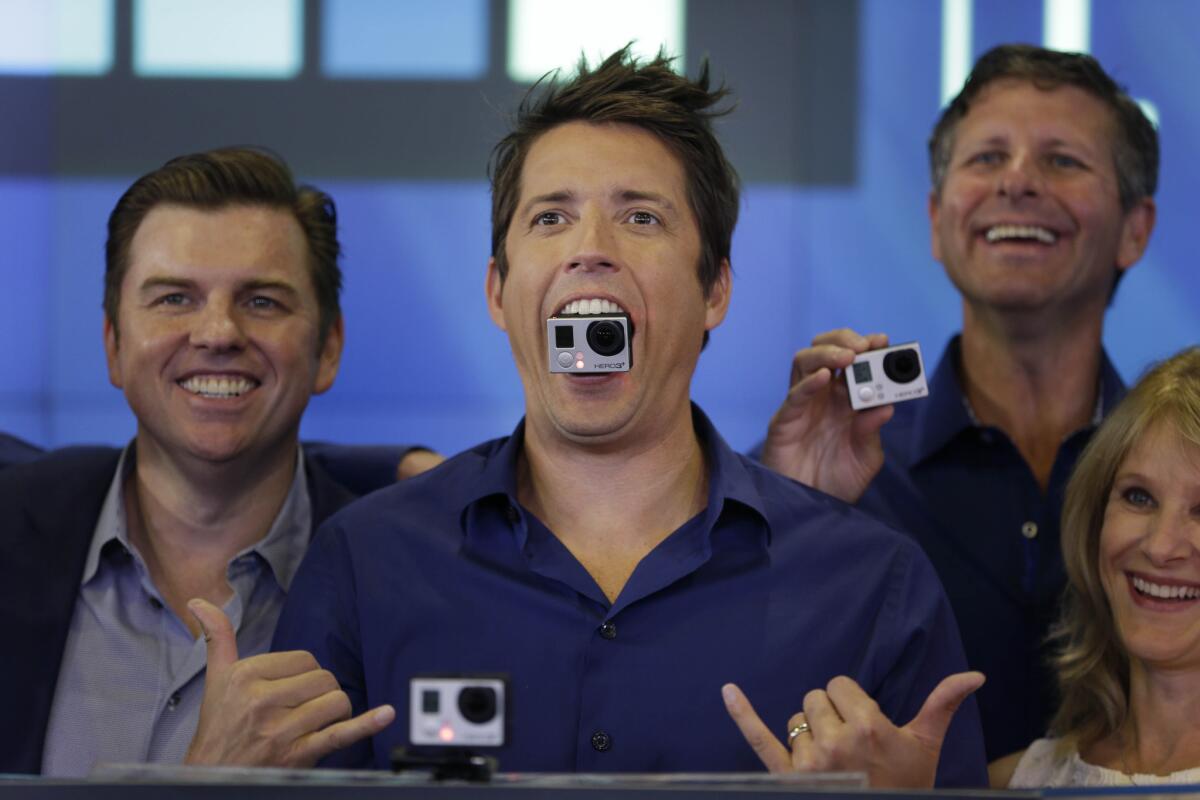
As I noted a few posts back, GoPro disclosed they are now a "going concern". I dug into what exactly happened and posted it to my substack for those interestd.
The short version won't surprise anyone in this forum...
-DJI kicked their ass from the top -Smart phones kicked their ass from the bottom -They never really were a technology company, more of a lifestyle company masquerading as a technology company -There was some arrogance, especially when it came to their tangle up with DJI in 2013 (which you guys will hear on VitalMTB pod soon) -They became memetic as opposed to aiming at high stakes problems.
As I noted a few posts back, GoPro disclosed they are now a "going concern". I dug into what exactly happened and posted it to my...
As I noted a few posts back, GoPro disclosed they are now a "going concern". I dug into what exactly happened and posted it to my substack for those interestd.
The short version won't surprise anyone in this forum...
-DJI kicked their ass from the top -Smart phones kicked their ass from the bottom -They never really were a technology company, more of a lifestyle company masquerading as a technology company -There was some arrogance, especially when it came to their tangle up with DJI in 2013 (which you guys will hear on VitalMTB pod soon) -They became memetic as opposed to aiming at high stakes problems.
It seems like a case of being the first doesn't make you the best..
Didnt the amazon ceo guy say they were fine aslong as they could sell full price? I think What ultimately took them down was that at...
Didnt the amazon ceo guy say they were fine aslong as they could sell full price? I think What ultimately took them down was that at some point they needed cash and the pe guys said no more. So they had to do discounts and the customers got used to only buy at discounts as they were almost always at discount anyway.
Yeah, Sam said at full price the model worked. Don't forget however, "full price" is arbitrary. We don't know the BOM/gross margin on their latest announcement.
What took them down was discounting product and low demand. The combination put them in a spot where they were losing more money than they were making, hence why the PE guys said "we're done".
The sociological concept of Mimetic Desire, as posited by Rene Girard, is pretty crucial to understanding consumer sentiment in these markets that have (de)evolved into near-perfect competition. In Girard’s conception of the Mimetic the inaccessibility of the desired object leads to Scapegoating, and has dark sociopolitical consequences.
Mimetic Desire and Memetics(as conceived by Richard Dawkins)are related, but not the same, but the fundamental theme that connects them is desire.
I posit that there just isn’t as much demand in the marketplace as the marketers of goods need to survive, so the churn, failure and adaptation that we are living through now is indefinite and inescapable.
The takehome form both memetics and mimetics is that corrosive social pressures drive poor decision making.
Education alone is the only thing that can drive Metamemetic thinking- i.e. the discussion on this thread.
I know pedal bikes are an afterthought when it comes to making money in the bike industry these days, but I was wondering if the concept of model years has proven to be an obsolete model in the bike industry. It feels like a few big brands have steered away (Transition and some others I can't think of.) I wonder if model years are still worth the squeeze of offering something shiny and "new" to the consumer at the expense of needing to discount inventory that doesn't move. I feel like since the bubble pop of '23-'24 its a better move to release new colors when it works rather than on a set schedule, given how much instability there is.
As I noted a few posts back, GoPro disclosed they are now a "going concern". I dug into what exactly happened and posted it to my...
As I noted a few posts back, GoPro disclosed they are now a "going concern". I dug into what exactly happened and posted it to my substack for those interestd.
The short version won't surprise anyone in this forum...
-DJI kicked their ass from the top -Smart phones kicked their ass from the bottom -They never really were a technology company, more of a lifestyle company masquerading as a technology company -There was some arrogance, especially when it came to their tangle up with DJI in 2013 (which you guys will hear on VitalMTB pod soon) -They became memetic as opposed to aiming at high stakes problems.
Help us out with what this means: GoPro disclosed they are now a "going concern". I'm fortunate to not really know this even though I've been in some kind of management for ages. Google just confused me more given the context.


Thankfully the E bike is the perfect vessel to bridge that power sport product leap.
Jeff's right on the financing side. This is far from the initial foray into it. You were able to get Trek Card financing for like 15 years ago, notwithstanding that it's now been phased out for Klarna or whatever.
Wide-scale rollout is another question.
Margins on ebikes are not as good on the brand side. The drive unit, battery, wiring, charge port, display, controller, charger, brackets, and higher assembly cost due to extra complication all add up to more than the difference between what the equivalent spec pedal bike and ebike are once typical margin calculations are applied. The market has priced ebikes lower than they should be, as crazy as that sounds. It's one of the reasons ebikes are not quite the panacea some people think they are for brands or dealers. Yes ebikes have higher average MSRP so more dollars are coming in but on shorter margins to counter balance that a bit..
the more ebikes get sold, the more a shop can earn through just replacing the faster wearing parts. set the service interval in the software to 1500-2000km and you have a steady flux of people coming who want the service symbol to be gone again.
even easier when financing those bikes. in germany, those contracts come with mandatory service intervals over the whole time the contract runs (usually 3 years).
I do know at one point during the post COVID bust, one of the bigger players had dealer margins at 10 to 15% with their ebikes that were on sale for about 3 straight years.. The only upside was we made up for that a bit in volume.
Now that inventory issues have settled down, I'm pretty sure the margins have improved a bit. However, to your point, the margins on ebikes, and any high end bike in general, tend to be lower..
A couple of interesting ideas here...
A service light on ebikes to get the customer to bring the bike in.. It may not turn into a major service, but it would almost always generate some kind of money, especially if the shop has a good service department. I could see push back on that from the customer who does most of their own repairs.
The 3 year terms on a lease is actually brilliant. That basically guarantees the customer has the lease coming due when the next generation of bike has dropped.
I guess I could see this potentially working if the shop is comfortable with selling used bikes... However, sometimes selling used bikes bring up other issues for the shops as far as local laws and insurance..
Dammit, now you're going to make me start thinking about this..
An idea a friend of mine had was a subscription type of service for sealant.. Every couple of months, the customer is sent a bottle of sealant as a reminder to refresh it.. At first I was on the fence with it, but with so many other companies using this model, maybe it could work..
Just to put a bow on this: I do not expect asset-backed financing to show up in the mountain bike industry anytime soon. I am also not convinced it would matter much even if it did.
A few thoughts...
The riders most likely to use consumer financing are already fairly credit constrained. A lot of that cohort has limited remaining credit capacity, and they are the ones who would theoretically be financing an e-bike or similar product, especially at today's APRs.
Speaking of APRs, I do not think true 0% APR offers are likely to show up in any meaningful way beyond short-term promos like Shop Pay. The interest rate backdrop is very different than it was in 2016. Could 0% financing drive incremental sales? Yes. But 10%+ APR financing probably does not move the needle much especially among the often well educated bike buying demographic.
Asset-backed financing would also require insurance. That seems to exist in some form for commuter e-bikes, but I have no idea what it looks like for mountain bikes that get absolutely hammered. Anything is insurable in theory, but the real question is what the premiums look like over time.
Residual value is another major problem. Trying to forecast residuals in such a fickle market is extremely difficult. It might be worth solving if there were another zero attached to the sale price, but when the high end is roughly $15K and the total addressable market is relatively small, the juice probably is not worth the squeeze.
Leasing is more interesting. Upway is worth looking at for what they are doing with e-bike “leasing” in the U.S. Interestingly, I could not easily figure out how to actually set up a lease. I did not try that hard, but the flow kept pushing me toward a normal checkout to buy the bike. When it comes to leasing an e-mtb however, I still feel this is rife with issues. Bikes would get absolutely hammered and the amount you'd force the customer to pay over 24 months would probably be close to what the bike costs (IE, $300/month). I don't see many going for that. Its car payment level of monthly burn.
Germany seems to have the most proven model, at least from what I can tell. Employers offer e-bike benefits to employees, often structured through a lease. But that is meaningfully different from mountain biking. Those bikes are often transportation substitutes, and the model benefits from local culture, employer involvement, and tax treatment.
That was a lot of words to say: I expect Klarna, Affirm, Shop Pay, and “credit cards disguised as bike financing” to remain the default in our space.
what? margins are usually the same over the whole brand? at least when you are a big retailer. i never worked for a small shop. but the big ones usually negotiate that when putting down the order volumes. the bigger your volume the bigger your margins gets
The service "light" is already there. Most brands allow any shop to set their own service intervals and most bikes will have a wrench or error code show up on their display, showing that they need to bring the bike in for service. You can set it to time frame or amount of kilometers ridden, so you could have different intervals for e mountain bikes, e commuters or e road bikes given the different types of riding they'll encounter. For example I might set an e mountain bike for service every 450 km, but an e commuter or road bike at 750 to 1,000 km. People generally freak out when it happens, but if the shop informs them of the service intervals they should be prepared for it and ready to bring them in when the wrench pops up.
Regarding the information to the customer.
A couple years ago i was in my LBS, and an older couple was there to pick up one of their ebikes from service. The bike hadde been usen around 3000km, and they had changed brake pads, chain and some small parts for a whooping 1750, - Norwegian money (160€/175 $).
The shock from the customers when they heard the price was quite interesting. They could now believe that is was such a high cost to run a 3,5$ bike basically every day.
So i think a lot of the commuting people dont know that a bike need service and maintenance, and either skip it, or feels robbed when they actually do it because their car only needs service once a year max.
Not in NA Seth. Margin varies product to product, including within a model line of bikes. It's true that the bigger your order/booking, the more discount you get, but you might get 35% on an entry level hardtail and 18% on a top of the line ride.
Too bad they couldn't find a buyer...
Bicycle imports hit low point
Imports to the US are down overall, with 1.98 million units imported in the first quarter. This figure is second lowest only to first quarter 2023, at 1.7 million units, when the industry was at the height of the inventory glut. Value is also unusually low, plunging below $200 million to $196 million, and continuing the downward trend from fourth quarter 2025.
From Bike EU.
Less reliance on China (down 42%) given the tariff situation and more reliance on Cambodia, Malaysia, Vietnam, and India. Taiwan dipped slightly as a country of origin as well.
YT decoy x core range launched today with avinox. the bikes are considerably cheaper than competitors. i'm asking w/o trying to judge or throw shade...isn't this what got YT into trouble in the first place? how do they sell an X0 transmission/podium-equipped bike for 8500 euro ($9900 USD) when a similarly spec'd bike from other brands is in the 14k USD range and survive? i figure "this helps them get cash," but how much cash is left over after they pay for the cost of these bikes?
2nd question - would OE brands on these bikes need to be paid up front for parts? i can't imagine any brand would trust them to pay on terms right now.
Yes, this is partially why they almost went out of business last time. From their US site, that $8,999 tag is very agressive. Apples to apples comparison is the COMMENCAL META POWER SX AVINOX PODIUM and that thing is priced at $12K.
A few things that might be helping YT here:
Not saying this is or isn't the right way of doing things, considering it led them to almost no longer exist, but from the consumer side, these prices are definitely appealing. $3K less for the exact same bike is wild.
Alloys helps pricing. The Propain Avinox bikes are similarly priced.
Assuming bike company 2.0 learned anything from what sent bike company 1.0 bankrupt is a bold move https://www.vitalmtb.com/news/press-release/rocky-mountain-launches-new…
Didnt the amazon ceo guy say they were fine aslong as they could sell full price? I think What ultimately took them down was that at some point they needed cash and the pe guys said no more. So they had to do discounts and the customers got used to only buy at discounts as they were almost always at discount anyway.
Hello sir, you'll need to explain your take a bit better:
As I noted a few posts back, GoPro disclosed they are now a "going concern". I dug into what exactly happened and posted it to my substack for those interestd.
The short version won't surprise anyone in this forum...
-DJI kicked their ass from the top
-Smart phones kicked their ass from the bottom
-They never really were a technology company, more of a lifestyle company masquerading as a technology company
-There was some arrogance, especially when it came to their tangle up with DJI in 2013 (which you guys will hear on VitalMTB pod soon)
-They became memetic as opposed to aiming at high stakes problems.
It seems like a case of being the first doesn't make you the best..
Yeah, Sam said at full price the model worked. Don't forget however, "full price" is arbitrary. We don't know the BOM/gross margin on their latest announcement.
What took them down was discounting product and low demand. The combination put them in a spot where they were losing more money than they were making, hence why the PE guys said "we're done".
Jeff,
Thanks for using the term Memetic.
The sociological concept of Mimetic Desire, as posited by Rene Girard, is pretty crucial to understanding consumer sentiment in these markets that have (de)evolved into near-perfect competition. In Girard’s conception of the Mimetic the inaccessibility of the desired object leads to Scapegoating, and has dark sociopolitical consequences.
Mimetic Desire and Memetics(as conceived by Richard Dawkins)are related, but not the same, but the fundamental theme that connects them is desire.
I posit that there just isn’t as much demand in the marketplace as the marketers of goods need to survive, so the churn, failure and adaptation that we are living through now is indefinite and inescapable.
The takehome form both memetics and mimetics is that corrosive social pressures drive poor decision making.
Education alone is the only thing that can drive Metamemetic thinking- i.e. the discussion on this thread.
I bet there's a link between the GoPro's decline and the soul crushing boredom of all the videos that our buddies made us watch.
Maybe the pendulum will swing so far that the next 10 years, the coolest thing is to not film/document anything?
I envy your optimism.
I think Jeff nailed it... Dji started making better cameras and cell phone cameras got better.. Either one giving you better options than the GoPro...
I know pedal bikes are an afterthought when it comes to making money in the bike industry these days, but I was wondering if the concept of model years has proven to be an obsolete model in the bike industry. It feels like a few big brands have steered away (Transition and some others I can't think of.) I wonder if model years are still worth the squeeze of offering something shiny and "new" to the consumer at the expense of needing to discount inventory that doesn't move. I feel like since the bubble pop of '23-'24 its a better move to release new colors when it works rather than on a set schedule, given how much instability there is.
Help us out with what this means: GoPro disclosed they are now a "going concern". I'm fortunate to not really know this even though I've been in some kind of management for ages. Google just confused me more given the context.
Post a reply to: The Bikeconomics (Mega)Thread