Are we sure about that? Its supposedly called Spark DC, 150/140 is not very DC of them, but rather trail numbers no?. I would have thought...
Are we sure about that? Its supposedly called Spark DC, 150/140 is not very DC of them, but rather trail numbers no?. I would have thought 120 rear 130 front, or perhaps 130/140. But maybe im just imagining things
It has Maxxis Rekon Race rear and Forekaster front, often spec’d on other’s 120-130 rear bikes (eg Reya).
Are we sure about that? Its supposedly called Spark DC, 150/140 is not very DC of them, but rather trail numbers no?. I would have thought...
Are we sure about that? Its supposedly called Spark DC, 150/140 is not very DC of them, but rather trail numbers no?. I would have thought 120 rear 130 front, or perhaps 130/140. But maybe im just imagining things
Are we sure about that? Its supposedly called Spark DC, 150/140 is not very DC of them, but rather trail numbers no?. I would have thought...
Are we sure about that? Its supposedly called Spark DC, 150/140 is not very DC of them, but rather trail numbers no?. I would have thought 120 rear 130 front, or perhaps 130/140. But maybe im just imagining things
Wasn’t there a huge discussion here last year about that and the conclusion basically came down to airflow being negligible in cooling an mtb shock?
I think so yeah. I always kind of laughed at the overheating comments because I feel like riders will worry about that so heavily to write it off, then they go ride their Specialized Enduro with 18 of the 20 bearings notching and a lightly blown coil but still enjoy their ride to some degree. (Nothing against people that ride an Enduro, just jabbing at the insane number of bearings to worry about)
I still don't understand how those hidden shocks don't overheat and get weird on longer descents.
Well, they do some, especially the Sidluxe, it'll increase about 10 psi riding hard on a hot day, but you set up for it, and the damping isn't really effected.
I should add that I don't notice any issues on my gambler, but it's a vivid coil in there, a bit different. I would love to try it with an air shock to see if there is a noticeable firming of the shock.
Came across this on Loic’s bike from Les Gets. It looks like the sub-chamber from a push 9.1 modified to fit the Öhlins dh38? I know it’s been rumoured that Loic runs a coil fork, so interesting if he’s play with the sub-chamber on a coil fork now too.
Wasn’t there a huge discussion here last year about that and the conclusion basically came down to airflow being negligible in cooling an mtb shock?
Maybe Scott tries to claim that - heating is definitely an issue but 95% of the time the airflow over an "external" shock is enough that they reach an equilibrium and don't normally exceed 40-50 degrees in regular use. Extreme, high speed descents might get a bit hotter but high speed = high air flow so most of the time things balance out.
On the dyno though if you run a shock at a speed roughly equivalent to the average energy of a DH run, it will heat at a constant rate and can reach 60 degrees in 3 minutes and over 90 in less than 10 minutes. Thats not even a particularly extreme damper, so a stiffer air shock would be even hotter!
Couple insightsYeti MT coming very soon. Some shops already have themNew Specialized enduro coming. My guess is march/april 2027. Apparently specialized believes it will sell better...
Couple insights
Yeti MT coming very soon. Some shops already have them
New Specialized enduro coming. My guess is march/april 2027. Apparently specialized believes it will sell better than the stumpy 15 which was one of there best selling bikes. No clue on design, just being told it’s coming
Man I hope that the new enduro sells super well, I couldn't care less about specialized but if a non ebike in that travel range sells...
Man I hope that the new enduro sells super well, I couldn't care less about specialized but if a non ebike in that travel range sells well it should wake the industry up that there is actually demand for those bikes.
The more I think about this the more I think about the possibility: -the enduro replaces the kenevo as the long travel eeb
Came across this on Loic’s bike from Les Gets. It looks like the sub-chamber from a push 9.1 modified to fit the Öhlins dh38? I know...
Came across this on Loic’s bike from Les Gets. It looks like the sub-chamber from a push 9.1 modified to fit the Öhlins dh38? I know it’s been rumoured that Loic runs a coil fork, so interesting if he’s play with the sub-chamber on a coil fork now too.
I would be curious to know how many run coils still in forks on the WCs... Id bet there's a few still
They've been flex stay for, what, 15 years? The 2017-2021 model was incredibly popular. If they're failing, nobody's been talking about it...
Yeah, I was referring specifically to their shock hardware, which I think was made of cheese for a long time until some of the fairly free cheeses hit the bolt market.
That's still a flex stay mate. Single pivot with a rocker link.
No it's not. It's a regular 4-bar linkage and has one degree of freedom. Nothing needs to flex.
Link 1 (Green): Frame with main pivot and rocker pivot (concentric with BB .) Link 2 (Blue): Rocker Link Link 3 (Purple): Pull Link Link 4 (Red): Rear Triangle
(And then obviously the other side of the rocker with the shock (orange).)
The rear triangle (Link 4) remains of constant length and does not need to flex or require compliance.
A flex stay has 3 bars and 3 joints; thus 0 DoF per Gruebler's equation... which is why you need something to flex.
No it's not. It's a regular 4-bar linkage and has one degree of freedom. Nothing needs to flex.Link 1 (Green): Frame with main pivot and rocker...
No it's not. It's a regular 4-bar linkage and has one degree of freedom. Nothing needs to flex.
Link 1 (Green): Frame with main pivot and rocker pivot (concentric with BB .) Link 2 (Blue): Rocker Link Link 3 (Purple): Pull Link Link 4 (Red): Rear Triangle
(And then obviously the other side of the rocker with the shock (orange).)
The rear triangle (Link 4) remains of constant length and does not need to flex or require compliance.
A flex stay has 3 bars and 3 joints; thus 0 DoF per Gruebler's equation... which is why you need something to flex.
No it's not. It's a regular 4-bar linkage and has one degree of freedom. Nothing needs to flex.Link 1 (Green): Frame with main pivot and rocker...
No it's not. It's a regular 4-bar linkage and has one degree of freedom. Nothing needs to flex.
Link 1 (Green): Frame with main pivot and rocker pivot (concentric with BB .) Link 2 (Blue): Rocker Link Link 3 (Purple): Pull Link Link 4 (Red): Rear Triangle
(And then obviously the other side of the rocker with the shock (orange).)
The rear triangle (Link 4) remains of constant length and does not need to flex or require compliance.
A flex stay has 3 bars and 3 joints; thus 0 DoF per Gruebler's equation... which is why you need something to flex.
If there is a link down there, how do they make the rear triangle (I say triangle, but it's really just two sides of a triangle, so super weak) from flexing under load? It's hard to believe that could make it that stiff, but I suppose the chainstay is primarily under tension, so maybe that's enough.
No it's not. It's a regular 4-bar linkage and has one degree of freedom. Nothing needs to flex.Link 1 (Green): Frame with main pivot and rocker...
No it's not. It's a regular 4-bar linkage and has one degree of freedom. Nothing needs to flex.
Link 1 (Green): Frame with main pivot and rocker pivot (concentric with BB .) Link 2 (Blue): Rocker Link Link 3 (Purple): Pull Link Link 4 (Red): Rear Triangle
(And then obviously the other side of the rocker with the shock (orange).)
The rear triangle (Link 4) remains of constant length and does not need to flex or require compliance.
A flex stay has 3 bars and 3 joints; thus 0 DoF per Gruebler's equation... which is why you need something to flex.
If there is a link down there, how do they make the rear triangle (I say triangle, but it's really just two sides of a triangle...
If there is a link down there, how do they make the rear triangle (I say triangle, but it's really just two sides of a triangle, so super weak) from flexing under load? It's hard to believe that could make it that stiff, but I suppose the chainstay is primarily under tension, so maybe that's enough.
It is in tension but anything pulling on it even remotely off axis (as will happen here) will want to pull it in line.
Honest to god 4-bars are flexing A LOT. Solid rear triangle dual short link rear triangles are flexing, A LOT. It's hard to imagine that little tiny link does everything to prevent any flex of the two sides of the triangle. Especially when you have the two long sides present and are bending them more or less in line with the missing side.
Though looking at the pic the short link is at an angle relative to the chainstay. Maybe the short link wraps around the BB link and is supported by it like a chain link wraps around a chainring. Then squatting into travel, the short link unwraps and effectively extends the chainstay, lessening the flex and playing a bit with the leverage curve?
EDIT: ignore the above, it's probably a completely regular flex stay. The front bolt just connects the two sides of the BB rocker link together. At least that's what's happening on the Spark RC: https://i.imgur.com/6yjKsX0.png


It has Maxxis Rekon Race rear and Forekaster front, often spec’d on other’s 120-130 rear bikes (eg Reya).
And a lockout on the fork
So does the Fox 38 on the Ransom
Forgive me, I'm not a suspension nerd. What is the Scott Spark's suspension linkage classified as?
I believe the Spark is a Linkage-driven single pivot w/ a flex stay, unlike the Genius (4bar) and Ransom (6bar).
If I'm wrong, someone please correct me!
Not a flex stay (those are way too thick to flex), just a normal linkage-driven single pivot à la Kona or Evil.
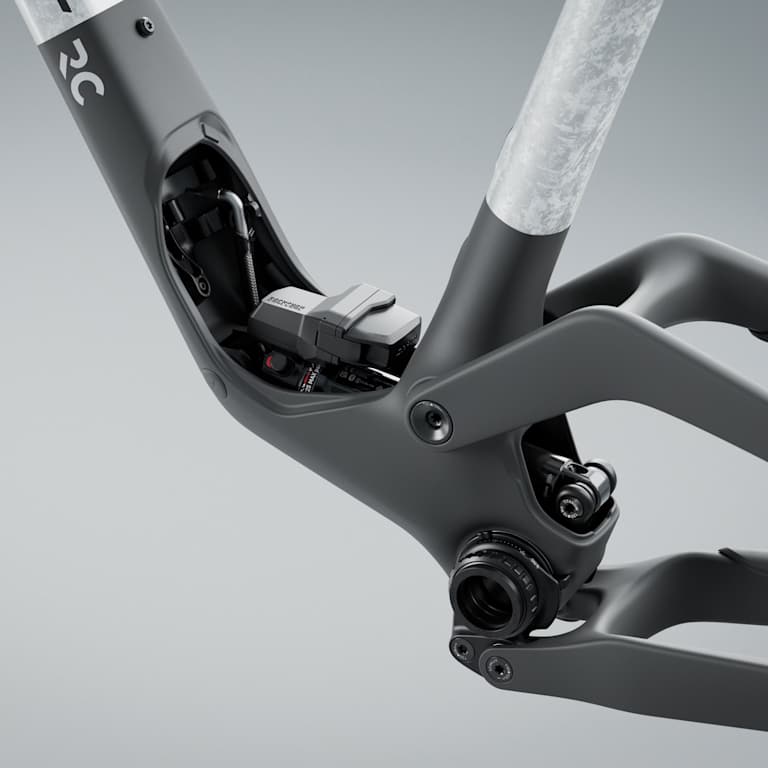
The rocker link is concentric with the BB and there's another tiny link that pulls on it; which itself is driven by the chainstay/rear triangle.
EDIT: At least that's the case on the RC, this DC appears different or maybe the pull-link is yellow?
There seems to be also Factory model with Sid on Flight Attendant and 140mm.
I still don't understand how those hidden shocks don't overheat and get weird on longer descents.
That's still a flex stay mate. Single pivot with a rocker link.
Wasn’t there a huge discussion here last year about that and the conclusion basically came down to airflow being negligible in cooling an mtb shock?
They do. Scott makes terrible bikes. They're a nightmare to work on, fail at multiple points and the finishing touches are utter garbage.
I think so yeah. I always kind of laughed at the overheating comments because I feel like riders will worry about that so heavily to write it off, then they go ride their Specialized Enduro with 18 of the 20 bearings notching and a lightly blown coil but still enjoy their ride to some degree. (Nothing against people that ride an Enduro, just jabbing at the insane number of bearings to worry about)
Well, they do some, especially the Sidluxe, it'll increase about 10 psi riding hard on a hot day, but you set up for it, and the damping isn't really effected.
I should add that I don't notice any issues on my gambler, but it's a vivid coil in there, a bit different. I would love to try it with an air shock to see if there is a noticeable firming of the shock.
The 5 dislikes must be Scott owners
It doesn’t make sense
Came across this on Loic’s bike from Les Gets. It looks like the sub-chamber from a push 9.1 modified to fit the Öhlins dh38? I know it’s been rumoured that Loic runs a coil fork, so interesting if he’s play with the sub-chamber on a coil fork now too.
Maybe Scott tries to claim that - heating is definitely an issue but 95% of the time the airflow over an "external" shock is enough that they reach an equilibrium and don't normally exceed 40-50 degrees in regular use. Extreme, high speed descents might get a bit hotter but high speed = high air flow so most of the time things balance out.
On the dyno though if you run a shock at a speed roughly equivalent to the average energy of a DH run, it will heat at a constant rate and can reach 60 degrees in 3 minutes and over 90 in less than 10 minutes. Thats not even a particularly extreme damper, so a stiffer air shock would be even hotter!
The more I think about this the more I think about the possibility: -the enduro replaces the kenevo as the long travel eeb
I would be curious to know how many run coils still in forks on the WCs... Id bet there's a few still
Historically speaking: fragile.
They've been flex stay for, what, 15 years? The 2017-2021 model was incredibly popular. If they're failing, nobody's been talking about it...
Yeah, I was referring specifically to their shock hardware, which I think was made of cheese for a long time until some of the fairly free cheeses hit the bolt market.
LMAO!!!
No it's not. It's a regular 4-bar linkage and has one degree of freedom. Nothing needs to flex.
Link 1 (Green): Frame with main pivot and rocker pivot (concentric with BB .)
Link 2 (Blue): Rocker Link
Link 3 (Purple): Pull Link
Link 4 (Red): Rear Triangle
(And then obviously the other side of the rocker with the shock (orange).)
The rear triangle (Link 4) remains of constant length and does not need to flex or require compliance.
A flex stay has 3 bars and 3 joints; thus 0 DoF per Gruebler's equation... which is why you need something to flex.
Get @CascadeComponents to chime in.
There are two pivots down there under the BB? Are you sure?
I stand corrected, did not see that actuating link for the rocker. It isn't a flex stay. It is just a single pivot in that case. Apologies.
If there is a link down there, how do they make the rear triangle (I say triangle, but it's really just two sides of a triangle, so super weak) from flexing under load? It's hard to believe that could make it that stiff, but I suppose the chainstay is primarily under tension, so maybe that's enough.
It is in tension but anything pulling on it even remotely off axis (as will happen here) will want to pull it in line.
Honest to god 4-bars are flexing A LOT. Solid rear triangle dual short link rear triangles are flexing, A LOT. It's hard to imagine that little tiny link does everything to prevent any flex of the two sides of the triangle. Especially when you have the two long sides present and are bending them more or less in line with the missing side.
Though looking at the pic the short link is at an angle relative to the chainstay. Maybe the short link wraps around the BB link and is supported by it like a chain link wraps around a chainring. Then squatting into travel, the short link unwraps and effectively extends the chainstay, lessening the flex and playing a bit with the leverage curve?
EDIT: ignore the above, it's probably a completely regular flex stay. The front bolt just connects the two sides of the BB rocker link together. At least that's what's happening on the Spark RC:
![]() https://i.imgur.com/6yjKsX0.png
https://i.imgur.com/6yjKsX0.png
Post a reply to: 2026 MTB Tech Rumors and Innovation - Longer and Slacker