The friction coefficient of glass filled ptfe is only slightly higher than pure ptfe, it just resists compressive forces better (than pure ptfe).
But sooner or later you'll be sliding on the glass fibres and hoping some Teflon flakes will prevent a direct contact with the underlying metal. As soon as there will be direct contact, you'll have wear.
Plastic injection molding tools are very finite precisely because the flow of molten plastic containing glass fibres wears them out.
I'm well aware why it's glass filled, same with bronze sinter, pure PTFE is very weak when trying to compress it. I'm just worried about wear exposing the fibres.
Öhlins USA Announces Transition to Distributor-Only Sales Model with BTI and QBP
Hendersonville, NC – September 24, 2025 – Öhlins USA today announced it will transition to a distributor-only sales model for its mountain bike division, partnering with two of the industry’s leading distributors: Bicycle Technologies Inc. (BTI) and Quality Bicycle Products (QBP).
This strategic move allows Öhlins to concentrate on its core strengths in product development, while BTI and QBP manage distribution logistics. Dealers will benefit from shorter lead times, reduced shipping costs, higher fill rates, and the convenience of consolidated ordering.
“By working with BTI and QBP, we’re ensuring that Öhlins products are easier than ever for dealers to access,” said Jake Thompson, MTB Manager at Öhlins USA. “Our team remains dedicated to innovation and rider support, while our distribution partners deliver industry-leading service and efficiency.”
Beginning September 24, 2025, all dealer orders will transition to BTI or QBP. Dealers without an existing account are encouraged to set one up immediately.
In addition to streamlining dealer operations, this transition also benefits end customers. With Öhlins products now stocked by BTI and QBP, riders can simply place orders through their local bike shop almost anywhere in the United States. This ensures easier access to Öhlins suspension products, service parts, and tools—without added complexity or long wait times.
Key elements of the transition:
End customers can order Öhlins products through most local bike shops nationwide.
BTI and QBP will carry an extensive range of the Öhlins MTB catalog, including spare parts and tools.
Warranty processing will be managed through the Öhlins service center network.
Expanded service network will include BTI’s factory fork and shock repairs and QBP’s in-house suspension service.
Öhlins USA emphasizes that the company itself is not undergoing structural changes. The same staff, warehouse, and workshop will continue to operate as before, with inventory now streamlined through distribution partners.
“With new ownership, new products, and new distribution channels, the future for Öhlins mountain bike is stronger than ever,” Thompson added.
About Öhlins USA Öhlins USA is the U.S. subsidiary of the Öhlins Group, a global leader in suspension technology and a cornerstone of the motorsport, motorcycle, and automotive industries for more than 45 years. From the MotoGP circuit to grassroots racing, Öhlins products are trusted in over 50 countries worldwide. We supply the aftermarket, OEM partners, and professional teams with high-end suspension solutions—always striving to deliver unmatched performance, service, and support, and to exceed the expectations of riders and drivers everywhere.
Sorry if I'm now spamming this, but anyone reading this thread should be interested to know Tony Foales book MOTORCYCLE HANDLING AND CHASSIS DESIGN: the art and science is back in print after 20 years, and in that time I don't think I've found a better reference book on the topic!
Get it now so you don't need to wait decades like I have to buy a copy! I've got a physical copy of the original 80's book but the second edition added a TON of excellent information that is still highly relevant
A thought struck me today while I was bracketing my suspension setup on a rowdy section of trail, about 30 seconds of fast downhill with ledges, roots, and rocks of all sizes. I was timing each run using a stopwatch mounted on the handlebar and doing multiple laps for each setting.
It got me thinking: in this kind of scenario, where you repeat the same trail section and get more confident with every lap, wouldn’t the stiffest setup almost always end up being the fastest? The logic being that as you learn the track and brake less each run, you’re riding closer to a brakeless scenario, where a stiffer setup tends to carry more speed than a softer one.
What do you all think about this? And what’s your approach when bracketing, what do you look for in the trail segment you use for testing?
Hey there, fellow suspension nerds!A thought struck me today while I was bracketing my suspension setup on a rowdy section of trail, about 30 seconds of...
Hey there, fellow suspension nerds!
A thought struck me today while I was bracketing my suspension setup on a rowdy section of trail, about 30 seconds of fast downhill with ledges, roots, and rocks of all sizes. I was timing each run using a stopwatch mounted on the handlebar and doing multiple laps for each setting.
It got me thinking: in this kind of scenario, where you repeat the same trail section and get more confident with every lap, wouldn’t the stiffest setup almost always end up being the fastest? The logic being that as you learn the track and brake less each run, you’re riding closer to a brakeless scenario, where a stiffer setup tends to carry more speed than a softer one.
What do you all think about this? And what’s your approach when bracketing, what do you look for in the trail segment you use for testing?
If you are bracketing for speed using timing, and that is your priority, then yes that is likely where you will end up.
However most people don’t bracket with timing for speed. They usually do it without a clock and base their decisions on subjective feel. Whether that feel is comfort or speed or agility is up to the rider’s requirements and preference
Sorry if I'm now spamming this, but anyone reading this thread should be interested to know Tony Foales book MOTORCYCLE HANDLING AND CHASSIS DESIGN: the art...
Sorry if I'm now spamming this, but anyone reading this thread should be interested to know Tony Foales book MOTORCYCLE HANDLING AND CHASSIS DESIGN: the art and science is back in print after 20 years, and in that time I don't think I've found a better reference book on the topic!
Get it now so you don't need to wait decades like I have to buy a copy! I've got a physical copy of the original 80's book but the second edition added a TON of excellent information that is still highly relevant
Hey there, fellow suspension nerds!A thought struck me today while I was bracketing my suspension setup on a rowdy section of trail, about 30 seconds of...
Hey there, fellow suspension nerds!
A thought struck me today while I was bracketing my suspension setup on a rowdy section of trail, about 30 seconds of fast downhill with ledges, roots, and rocks of all sizes. I was timing each run using a stopwatch mounted on the handlebar and doing multiple laps for each setting.
It got me thinking: in this kind of scenario, where you repeat the same trail section and get more confident with every lap, wouldn’t the stiffest setup almost always end up being the fastest? The logic being that as you learn the track and brake less each run, you’re riding closer to a brakeless scenario, where a stiffer setup tends to carry more speed than a softer one.
What do you all think about this? And what’s your approach when bracketing, what do you look for in the trail segment you use for testing?
Short answer: no. Yes, you can generally ride a firmer setup on a trail that you have memorized, versus one that you're riding blind, and as you get more comfortable you can ride faster and faster and ride a firmer and firmer setup.
But no, because there's a natural limit to that approach. If "the firmest setup" was the fastest, then the fastest bike would be a rigid fork on a hardtail. Obviously that's not the case. Suspension does more than absorb mistakes, it also provides grip for turning, smoothes out chatter which increases rolling speed (i.e. reducing suspension loss), and by smoothing out chatter it also allows your body to be looser and perform more dynamic movements (like pumping to generate speed). So there's always a "too firm" setting for a given track, rider, and conditions, in addition to "too soft," which is why suspension setup is so damn fickle.
I think softer suspension is even more useful when you're not braking, like in your test. Heavy braking, especially in chunk, is what generates some of the highest forces that your suspension will experience. For instance, I generally bump up fork pressure for steep tracks with lots of braking and run less fork pressure on flatter tracks with less braking.
Sorry if I'm now spamming this, but anyone reading this thread should be interested to know Tony Foales book MOTORCYCLE HANDLING AND CHASSIS DESIGN: the art...
Sorry if I'm now spamming this, but anyone reading this thread should be interested to know Tony Foales book MOTORCYCLE HANDLING AND CHASSIS DESIGN: the art and science is back in print after 20 years, and in that time I don't think I've found a better reference book on the topic!
Get it now so you don't need to wait decades like I have to buy a copy! I've got a physical copy of the original 80's book but the second edition added a TON of excellent information that is still highly relevant
Before I hit purchase, what's the quick sales pitch on the motorcycle chassis book and why I would want to read it as a mountain biker?
I think its great because it's not just a suspension book, but a chassis book so even though thetes a sepatate chapter for each topic, he treats the whole vehicle as a system and how each part is influenced by the rest. Each part isn't just theory but there are examples and real world demonstrations of just about every topic (like fork offset and head angle/rake). He was personally modifying bikes 40-50 years ago to test the stuff mtb guys are debating these days and collecting actual data on it. The type of thing I liked is explaining the impact of tyre pressure vs suspension action, ie what happens if you have high tyre pressures and soft spring (send this to the next guy who tries to claim low pressures are bad because "the suspension should do all the work")
So there is tyre construction, contact patch change under turning and braking, wheel flex, Frame flex, wheelbase and head angle changes, damping, spring rates, frequency domain analysis( another favourite), basically every topic there has been technical discussion about on these forums is covered in better detail and more approachable than you will find anywhere else. Still pretty technical but nowhere near as dry as some books!
Hey there, fellow suspension nerds!A thought struck me today while I was bracketing my suspension setup on a rowdy section of trail, about 30 seconds of...
Hey there, fellow suspension nerds!
A thought struck me today while I was bracketing my suspension setup on a rowdy section of trail, about 30 seconds of fast downhill with ledges, roots, and rocks of all sizes. I was timing each run using a stopwatch mounted on the handlebar and doing multiple laps for each setting.
It got me thinking: in this kind of scenario, where you repeat the same trail section and get more confident with every lap, wouldn’t the stiffest setup almost always end up being the fastest? The logic being that as you learn the track and brake less each run, you’re riding closer to a brakeless scenario, where a stiffer setup tends to carry more speed than a softer one.
What do you all think about this? And what’s your approach when bracketing, what do you look for in the trail segment you use for testing?
I think every bracketing advice starts with "don't push for max speed, ride at your comfortable speed that you can reliably repeat run after run". The faster you ride, higher shaft speeds wheel hitting obstacles will generate, so typically yes, stiffer compression and faster rebound is beneficial for that. If you are not racing and even more importantly ride unknown terrain, more forgiving setup is more comfy and also most likely safer.
The setup is done with enduro racing in mind, so the goal is definitely to prioritize speed over comfort. However, I’m aware that the stiffest setup, the one that gives me good results on a short trail section I know by heart (even though it’s as rowdy as they come) might not be the best representation of a real enduro race.
In a race, the terrain changes constantly, it’s unpredictable, and most of the time it’s unfamiliar. That’s why I’m struggling to find the best strategy for determining an ideal base setup. One that I can then fine-tune slightly depending on the terrain and conditions.
Just looked at the graphic on the Diaz site, and while it took me a minute to figure out exactly what I was looking at, dang that's smart.
The lower chamber ramp in a Zeb is a real bummer, and I think (if it works as advertised), the Diaz Lower Runt looks like a great idea to fix it. Bravo.
Just looked at the graphic on the Diaz site, and while it took me a minute to figure out exactly what I was looking at, dang...
Just looked at the graphic on the Diaz site, and while it took me a minute to figure out exactly what I was looking at, dang that's smart.
The lower chamber ramp in a Zeb is a real bummer, and I think (if it works as advertised), the Diaz Lower Runt looks like a great idea to fix it. Bravo.
It's a clever idea, but I take a little bit of issue with the claim of it being "the only air spring capable of duplicating a coil fork spring rate from the vary beginning to the end" when the Vorsprung Secus has been around for 5 years
The secus needed to be outside the fork because of the limited air volume inside, so I guess the lower runt uses very low pressures and the negative coil spring is there to regain some kind of compliance after moving the piston upwards and reducing the negative spring volume. The positive chamber looks smaller, (especially with a runt installed) ie progressive so it seems a bit like robbing peter to pay paul?
Also on the subject of air springs, this popped up on the other site - have people not heard of coil springs?
I'm struggling to get what they are trying to solve when air springs already return with less energy than when they are compressed, and that kicking feeling is normally related to a lack of compression damping/bottomout absorption so this seems like an odd solution
Just looked at the graphic on the Diaz site, and while it took me a minute to figure out exactly what I was looking at, dang...
Just looked at the graphic on the Diaz site, and while it took me a minute to figure out exactly what I was looking at, dang that's smart.
The lower chamber ramp in a Zeb is a real bummer, and I think (if it works as advertised), the Diaz Lower Runt looks like a great idea to fix it. Bravo.
It's a clever idea, but I take a little bit of issue with the claim of it being "the only air spring capable of duplicating...
It's a clever idea, but I take a little bit of issue with the claim of it being "the only air spring capable of duplicating a coil fork spring rate from the vary beginning to the end" when the Vorsprung Secus has been around for 5 years
The secus needed to be outside the fork because of the limited air volume inside, so I guess the lower runt uses very low pressures and the negative coil spring is there to regain some kind of compliance after moving the piston upwards and reducing the negative spring volume. The positive chamber looks smaller, (especially with a runt installed) ie progressive so it seems a bit like robbing peter to pay paul?
Sorry if I'm now spamming this, but anyone reading this thread should be interested to know Tony Foales book MOTORCYCLE HANDLING AND CHASSIS DESIGN: the art...
Sorry if I'm now spamming this, but anyone reading this thread should be interested to know Tony Foales book MOTORCYCLE HANDLING AND CHASSIS DESIGN: the art and science is back in print after 20 years, and in that time I don't think I've found a better reference book on the topic!
Get it now so you don't need to wait decades like I have to buy a copy! I've got a physical copy of the original 80's book but the second edition added a TON of excellent information that is still highly relevant
Rando thinking here in light of Robot's time on the MRP damper: Have we been setting up our forks wrong all along?
Hear me out.
Most testers everywhere end up running more psi than the factory recommended settings and then running close to 0 turns on compression. I'll leave rebound out for the time. MRP recommending backing off psi and adding in comp damping seems to point that to be the case. Personally, I ride pretty damn close to what's called out for the forks on my bikes (Mezzer, Mattoc, 36Factory, Grip damper) and do add in a couple clicks of comp damping and haven't had any issues with finding the bottom on hits that weren't justified, the forks hoover up chatter, and I haven't noticed any significant pitching. The HBO in the Mezz and Mattoc and the IRT in the Mezz definitely account for some of that. Robot's review just kicked that thinking to the foreground for me.
Rando thinking here in light of Robot's time on the MRP damper: Have we been setting up our forks wrong all along? Hear me out.Most testers...
Rando thinking here in light of Robot's time on the MRP damper: Have we been setting up our forks wrong all along?
Hear me out.
Most testers everywhere end up running more psi than the factory recommended settings and then running close to 0 turns on compression. I'll leave rebound out for the time. MRP recommending backing off psi and adding in comp damping seems to point that to be the case. Personally, I ride pretty damn close to what's called out for the forks on my bikes (Mezzer, Mattoc, 36Factory, Grip damper) and do add in a couple clicks of comp damping and haven't had any issues with finding the bottom on hits that weren't justified, the forks hoover up chatter, and I haven't noticed any significant pitching. The HBO in the Mezz and Mattoc and the IRT in the Mezz definitely account for some of that. Robot's review just kicked that thinking to the foreground for me.
Yes?
Öhlins always has a lot more damping than Fox and RS, but in the last few years (Charger 3 and GripX2) much more dampin has been added from the big players.
I personally like a setup with more damping, i feel it are more grippy and less fatiguing to ride than a "active" setup.
Rando thinking here in light of Robot's time on the MRP damper: Have we been setting up our forks wrong all along? Hear me out.Most testers...
Rando thinking here in light of Robot's time on the MRP damper: Have we been setting up our forks wrong all along?
Hear me out.
Most testers everywhere end up running more psi than the factory recommended settings and then running close to 0 turns on compression. I'll leave rebound out for the time. MRP recommending backing off psi and adding in comp damping seems to point that to be the case. Personally, I ride pretty damn close to what's called out for the forks on my bikes (Mezzer, Mattoc, 36Factory, Grip damper) and do add in a couple clicks of comp damping and haven't had any issues with finding the bottom on hits that weren't justified, the forks hoover up chatter, and I haven't noticed any significant pitching. The HBO in the Mezz and Mattoc and the IRT in the Mezz definitely account for some of that. Robot's review just kicked that thinking to the foreground for me.
Pretty much yes - forks for a long time typically have very little compression damping, i guess to be conservative so its harder to screw up. But things like friction and sub optimal spring curves mean adding damping feels worse so people back it out. That makes people think comprrssion damping is bad but really the root cause is somewhere else
The vorsprung telum manual has some great lines about the adjustment range of most stock gear
Rando thinking here in light of Robot's time on the MRP damper: Have we been setting up our forks wrong all along? Hear me out.Most testers...
Rando thinking here in light of Robot's time on the MRP damper: Have we been setting up our forks wrong all along?
Hear me out.
Most testers everywhere end up running more psi than the factory recommended settings and then running close to 0 turns on compression. I'll leave rebound out for the time. MRP recommending backing off psi and adding in comp damping seems to point that to be the case. Personally, I ride pretty damn close to what's called out for the forks on my bikes (Mezzer, Mattoc, 36Factory, Grip damper) and do add in a couple clicks of comp damping and haven't had any issues with finding the bottom on hits that weren't justified, the forks hoover up chatter, and I haven't noticed any significant pitching. The HBO in the Mezz and Mattoc and the IRT in the Mezz definitely account for some of that. Robot's review just kicked that thinking to the foreground for me.
Yes?Öhlins always has a lot more damping than Fox and RS, but in the last few years (Charger 3 and GripX2) much more dampin has been...
Yes?
Öhlins always has a lot more damping than Fox and RS, but in the last few years (Charger 3 and GripX2) much more dampin has been added from the big players.
I personally like a setup with more damping, i feel it are more grippy and less fatiguing to ride than a "active" setup.
The funny thing is, an optimised set up can still retain more of the "active" feel along with decent support and stability. You still make a compromise somewhere buts its much less than what most peope are used to
Rando thinking here in light of Robot's time on the MRP damper: Have we been setting up our forks wrong all along? Hear me out.Most testers...
Rando thinking here in light of Robot's time on the MRP damper: Have we been setting up our forks wrong all along?
Hear me out.
Most testers everywhere end up running more psi than the factory recommended settings and then running close to 0 turns on compression. I'll leave rebound out for the time. MRP recommending backing off psi and adding in comp damping seems to point that to be the case. Personally, I ride pretty damn close to what's called out for the forks on my bikes (Mezzer, Mattoc, 36Factory, Grip damper) and do add in a couple clicks of comp damping and haven't had any issues with finding the bottom on hits that weren't justified, the forks hoover up chatter, and I haven't noticed any significant pitching. The HBO in the Mezz and Mattoc and the IRT in the Mezz definitely account for some of that. Robot's review just kicked that thinking to the foreground for me.
Yes?Öhlins always has a lot more damping than Fox and RS, but in the last few years (Charger 3 and GripX2) much more dampin has been...
Yes?
Öhlins always has a lot more damping than Fox and RS, but in the last few years (Charger 3 and GripX2) much more dampin has been added from the big players.
I personally like a setup with more damping, i feel it are more grippy and less fatiguing to ride than a "active" setup.
The funny thing is, an optimised set up can still retain more of the "active" feel along with decent support and stability. You still make a...
The funny thing is, an optimised set up can still retain more of the "active" feel along with decent support and stability. You still make a compromise somewhere buts its much less than what most peope are used to
Kinda my point. We've all read reviews where the tester sets their goods up way outta spec (Say 5-10psi+) and then little to no compression damping, people of all sizes too. I know it ain't 'correct', but I've been turning the comp knob to 2 or 3 from open and then setting sag. It's ended up near factory psi recommendations and hasn't really shown a detriment on dirt. It allows a quick click or 2 in either direction to make a lot of change for terrain (flow or chunk). It just seems weird that near every mfr is off by that much on their recommended settings, especially with certain testers from other sites/mags.
Kinda my point. We've all read reviews where the tester sets their goods up way outta spec (Say 5-10psi+) and then little to no compression damping...
Kinda my point. We've all read reviews where the tester sets their goods up way outta spec (Say 5-10psi+) and then little to no compression damping, people of all sizes too. I know it ain't 'correct', but I've been turning the comp knob to 2 or 3 from open and then setting sag. It's ended up near factory psi recommendations and hasn't really shown a detriment on dirt. It allows a quick click or 2 in either direction to make a lot of change for terrain (flow or chunk). It just seems weird that near every mfr is off by that much on their recommended settings, especially with certain testers from other sites/mags.
Great question. I think that most stock forks have an underdamped compression shim stack for aggressive riders, so those reviewers are likely trying to get more support out of the fork in high shaft speed scenarios, and the only option (without a re-tune) is to add more air pressure, or tokens, or both.
Cranking the compression knobs on a fork with too light of a compression tune at the shimstack essentially makes for a digressive fork tune- it gives you high damping force on LSC, high damping force on mid-speed (which is the shaft speed that an average HSC knob actually affects), and then soft on HSC (determined by the shim stack). This setup is going to feel harsh off the top. The alternative is opening the LSC and HSC knobs until they feel consistent-ish with the compression shim tune, and then adding lots of air to give you support.
So it's wrong in the platonic sense of an "optimal setup," but it makes sense as the pragmatic solution to that specific problem.
It's also what makes the Lift so cool in my eyes. @j0lsrudmentioned Ohlins forks running more damping, and I totally agree. I got to spend one day on an RXF38 at the Vital Enduro Bike Test Sessions and was super impressed. It felt better everywhere, similar in many ways to the Lift, but maybe even more damped feeling. That's what has me excited to experiment with an even stiffer shim stack on my Lift.
Yes?Öhlins always has a lot more damping than Fox and RS, but in the last few years (Charger 3 and GripX2) much more dampin has been...
Yes?
Öhlins always has a lot more damping than Fox and RS, but in the last few years (Charger 3 and GripX2) much more dampin has been added from the big players.
I personally like a setup with more damping, i feel it are more grippy and less fatiguing to ride than a "active" setup.
The funny thing is, an optimised set up can still retain more of the "active" feel along with decent support and stability. You still make a...
The funny thing is, an optimised set up can still retain more of the "active" feel along with decent support and stability. You still make a compromise somewhere buts its much less than what most peope are used to
Kinda my point. We've all read reviews where the tester sets their goods up way outta spec (Say 5-10psi+) and then little to no compression damping...
Kinda my point. We've all read reviews where the tester sets their goods up way outta spec (Say 5-10psi+) and then little to no compression damping, people of all sizes too. I know it ain't 'correct', but I've been turning the comp knob to 2 or 3 from open and then setting sag. It's ended up near factory psi recommendations and hasn't really shown a detriment on dirt. It allows a quick click or 2 in either direction to make a lot of change for terrain (flow or chunk). It just seems weird that near every mfr is off by that much on their recommended settings, especially with certain testers from other sites/mags.
The issue with a lot of stock dampers is that not only do they not offer a lot of support from compression damping, but they also get harsh quickly when the adjusters are closed to increase damping.
For example the Grip2 chokes and gets peaky/ harsh when LSC is closed, so that limits the amount of damping range is usable.
Less damping feels good in a show room and in a parking lot, but falls short when riding harder. More damped setups feel less impressive on the showroom but feel better the faster /harder they are ridden.
Kinda my point. We've all read reviews where the tester sets their goods up way outta spec (Say 5-10psi+) and then little to no compression damping...
Kinda my point. We've all read reviews where the tester sets their goods up way outta spec (Say 5-10psi+) and then little to no compression damping, people of all sizes too. I know it ain't 'correct', but I've been turning the comp knob to 2 or 3 from open and then setting sag. It's ended up near factory psi recommendations and hasn't really shown a detriment on dirt. It allows a quick click or 2 in either direction to make a lot of change for terrain (flow or chunk). It just seems weird that near every mfr is off by that much on their recommended settings, especially with certain testers from other sites/mags.
Great question. I think that most stock forks have an underdamped compression shim stack for aggressive riders, so those reviewers are likely trying to get more...
Great question. I think that most stock forks have an underdamped compression shim stack for aggressive riders, so those reviewers are likely trying to get more support out of the fork in high shaft speed scenarios, and the only option (without a re-tune) is to add more air pressure, or tokens, or both.
Cranking the compression knobs on a fork with too light of a compression tune at the shimstack essentially makes for a digressive fork tune- it gives you high damping force on LSC, high damping force on mid-speed (which is the shaft speed that an average HSC knob actually affects), and then soft on HSC (determined by the shim stack). This setup is going to feel harsh off the top. The alternative is opening the LSC and HSC knobs until they feel consistent-ish with the compression shim tune, and then adding lots of air to give you support.
So it's wrong in the platonic sense of an "optimal setup," but it makes sense as the pragmatic solution to that specific problem.
It's also what makes the Lift so cool in my eyes. @j0lsrudmentioned Ohlins forks running more damping, and I totally agree. I got to spend one day on an RXF38 at the Vital Enduro Bike Test Sessions and was super impressed. It felt better everywhere, similar in many ways to the Lift, but maybe even more damped feeling. That's what has me excited to experiment with an even stiffer shim stack on my Lift.
TLDR:
More air or adding tokens is a work around for suboptimal support from the damper.
When I put a tuned damper on the 150mm factory 36 on my trail bike I ended up 10psi lower (dropped to 78 from 88psi) as a final setting. Average travel used is the same, support is better, and small bump performance is improved also especially at slower speeds.
It's a clever idea, but I take a little bit of issue with the claim of it being "the only air spring capable of duplicating...
It's a clever idea, but I take a little bit of issue with the claim of it being "the only air spring capable of duplicating a coil fork spring rate from the vary beginning to the end" when the Vorsprung Secus has been around for 5 years
The secus needed to be outside the fork because of the limited air volume inside, so I guess the lower runt uses very low pressures and the negative coil spring is there to regain some kind of compliance after moving the piston upwards and reducing the negative spring volume. The positive chamber looks smaller, (especially with a runt installed) ie progressive so it seems a bit like robbing peter to pay paul?
The main reason I was excited about it is that Diaz managed to do something productive with the lower leg air volume on the Zeb, which I think really brings down the total performance of that chassis. This is based on my best attempt at interpreting the graphic and the copy, which is highly fallible. But yes, it looks like the coil spring on the negative chamber is a necessary evil to fit everything in there and make up for an undersized air negative chamber at full extension.
If it makes the Zeb less progressive and doesn't feel super whack at full extension, that seems like a decent trade off, to me.


The friction coefficient of glass filled ptfe is only slightly higher than pure ptfe, it just resists compressive forces better (than pure ptfe).
But sooner or later you'll be sliding on the glass fibres and hoping some Teflon flakes will prevent a direct contact with the underlying metal. As soon as there will be direct contact, you'll have wear.
Plastic injection molding tools are very finite precisely because the flow of molten plastic containing glass fibres wears them out.
I'm well aware why it's glass filled, same with bronze sinter, pure PTFE is very weak when trying to compress it. I'm just worried about wear exposing the fibres.
Öhlins USA news:
------------------------
Öhlins USA Announces Transition to Distributor-Only Sales Model with BTI and QBP
Hendersonville, NC – September 24, 2025 – Öhlins USA today announced it will transition to a distributor-only sales model for its mountain bike division, partnering with two of the industry’s leading distributors: Bicycle Technologies Inc. (BTI) and Quality Bicycle Products (QBP).
This strategic move allows Öhlins to concentrate on its core strengths in product development, while BTI and QBP manage distribution logistics. Dealers will benefit from shorter lead times, reduced shipping costs, higher fill rates, and the convenience of consolidated ordering.
“By working with BTI and QBP, we’re ensuring that Öhlins products are easier than ever for dealers to access,” said Jake Thompson, MTB Manager at Öhlins USA. “Our team remains dedicated to innovation and rider support, while our distribution partners deliver industry-leading service and efficiency.”
Beginning September 24, 2025, all dealer orders will transition to BTI or QBP. Dealers without an existing account are encouraged to set one up immediately.
In addition to streamlining dealer operations, this transition also benefits end customers. With Öhlins products now stocked by BTI and QBP, riders can simply place orders through their local bike shop almost anywhere in the United States. This ensures easier access to Öhlins suspension products, service parts, and tools—without added complexity or long wait times.
Key elements of the transition:
End customers can order Öhlins products through most local bike shops nationwide.
BTI and QBP will carry an extensive range of the Öhlins MTB catalog, including spare parts and tools.
Warranty processing will be managed through the Öhlins service center network.
Expanded service network will include BTI’s factory fork and shock repairs and QBP’s in-house suspension service.
Öhlins USA emphasizes that the company itself is not undergoing structural changes. The same staff, warehouse, and workshop will continue to operate as before, with inventory now streamlined through distribution partners.
“With new ownership, new products, and new distribution channels, the future for Öhlins mountain bike is stronger than ever,” Thompson added.
About Öhlins USA
Öhlins USA is the U.S. subsidiary of the Öhlins Group, a global leader in suspension technology and a cornerstone of the motorsport, motorcycle, and automotive industries for more than 45 years. From the MotoGP circuit to grassroots racing, Öhlins products are trusted in over 50 countries worldwide. We supply the aftermarket, OEM partners, and professional teams with high-end suspension solutions—always striving to deliver unmatched performance, service, and support, and to exceed the expectations of riders and drivers everywhere.
Oil retention dimples by RockShox, including patent.
I'd be interested in how they make those for production. Machined? Formed like the equalization dimples then machined?
@Dave_Camp 😉
FWIW Dave wondered that as well in the rumors thread. I think it's quite well known he left RS a while ago?
Sorry if I'm now spamming this, but anyone reading this thread should be interested to know Tony Foales book MOTORCYCLE HANDLING AND CHASSIS DESIGN: the art and science is back in print after 20 years, and in that time I don't think I've found a better reference book on the topic!
Get it now so you don't need to wait decades like I have to buy a copy! I've got a physical copy of the original 80's book but the second edition added a TON of excellent information that is still highly relevant
https://a.co/d/bmfsZFI
Hey there, fellow suspension nerds!
A thought struck me today while I was bracketing my suspension setup on a rowdy section of trail, about 30 seconds of fast downhill with ledges, roots, and rocks of all sizes. I was timing each run using a stopwatch mounted on the handlebar and doing multiple laps for each setting.
It got me thinking: in this kind of scenario, where you repeat the same trail section and get more confident with every lap, wouldn’t the stiffest setup almost always end up being the fastest? The logic being that as you learn the track and brake less each run, you’re riding closer to a brakeless scenario, where a stiffer setup tends to carry more speed than a softer one.
What do you all think about this? And what’s your approach when bracketing, what do you look for in the trail segment you use for testing?
If you are bracketing for speed using timing, and that is your priority, then yes that is likely where you will end up.
However most people don’t bracket with timing for speed. They usually do it without a clock and base their decisions on subjective feel. Whether that feel is comfort or speed or agility is up to the rider’s requirements and preference
Before I hit purchase, what's the quick sales pitch on the motorcycle chassis book and why I would want to read it as a mountain biker?
Short answer: no. Yes, you can generally ride a firmer setup on a trail that you have memorized, versus one that you're riding blind, and as you get more comfortable you can ride faster and faster and ride a firmer and firmer setup.
But no, because there's a natural limit to that approach. If "the firmest setup" was the fastest, then the fastest bike would be a rigid fork on a hardtail. Obviously that's not the case. Suspension does more than absorb mistakes, it also provides grip for turning, smoothes out chatter which increases rolling speed (i.e. reducing suspension loss), and by smoothing out chatter it also allows your body to be looser and perform more dynamic movements (like pumping to generate speed). So there's always a "too firm" setting for a given track, rider, and conditions, in addition to "too soft," which is why suspension setup is so damn fickle.
I think softer suspension is even more useful when you're not braking, like in your test. Heavy braking, especially in chunk, is what generates some of the highest forces that your suspension will experience. For instance, I generally bump up fork pressure for steep tracks with lots of braking and run less fork pressure on flatter tracks with less braking.
I think its great because it's not just a suspension book, but a chassis book so even though thetes a sepatate chapter for each topic, he treats the whole vehicle as a system and how each part is influenced by the rest. Each part isn't just theory but there are examples and real world demonstrations of just about every topic (like fork offset and head angle/rake). He was personally modifying bikes 40-50 years ago to test the stuff mtb guys are debating these days and collecting actual data on it. The type of thing I liked is explaining the impact of tyre pressure vs suspension action, ie what happens if you have high tyre pressures and soft spring (send this to the next guy who tries to claim low pressures are bad because "the suspension should do all the work")
So there is tyre construction, contact patch change under turning and braking, wheel flex, Frame flex, wheelbase and head angle changes, damping, spring rates, frequency domain analysis( another favourite), basically every topic there has been technical discussion about on these forums is covered in better detail and more approachable than you will find anywhere else. Still pretty technical but nowhere near as dry as some books!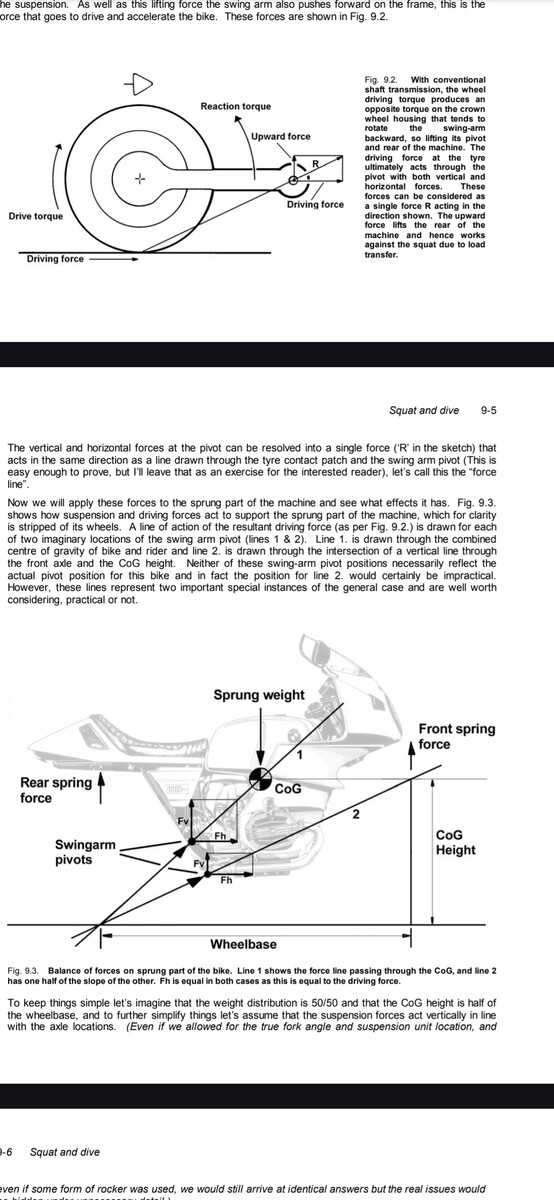


spring go boing
I think every bracketing advice starts with "don't push for max speed, ride at your comfortable speed that you can reliably repeat run after run". The faster you ride, higher shaft speeds wheel hitting obstacles will generate, so typically yes, stiffer compression and faster rebound is beneficial for that. If you are not racing and even more importantly ride unknown terrain, more forgiving setup is more comfy and also most likely safer.
The setup is done with enduro racing in mind, so the goal is definitely to prioritize speed over comfort. However, I’m aware that the stiffest setup, the one that gives me good results on a short trail section I know by heart (even though it’s as rowdy as they come) might not be the best representation of a real enduro race.
In a race, the terrain changes constantly, it’s unpredictable, and most of the time it’s unfamiliar. That’s why I’m struggling to find the best strategy for determining an ideal base setup. One that I can then fine-tune slightly depending on the terrain and conditions.
Diaz just dropped the Zeb Lower Runt so now you can double Runt. Thoughts?
https://diazsuspensiondesign.com/the-lower-runt
Just looked at the graphic on the Diaz site, and while it took me a minute to figure out exactly what I was looking at, dang that's smart.
The lower chamber ramp in a Zeb is a real bummer, and I think (if it works as advertised), the Diaz Lower Runt looks like a great idea to fix it. Bravo.
It's a clever idea, but I take a little bit of issue with the claim of it being "the only air spring capable of duplicating a coil fork spring rate from the vary beginning to the end" when the Vorsprung Secus has been around for 5 years
The secus needed to be outside the fork because of the limited air volume inside, so I guess the lower runt uses very low pressures and the negative coil spring is there to regain some kind of compliance after moving the piston upwards and reducing the negative spring volume. The positive chamber looks smaller, (especially with a runt installed) ie progressive so it seems a bit like robbing peter to pay paul?
Also on the subject of air springs, this popped up on the other site - have people not heard of coil springs?
I'm struggling to get what they are trying to solve when air springs already return with less energy than when they are compressed, and that kicking feeling is normally related to a lack of compression damping/bottomout absorption so this seems like an odd solution
No free lunch
Had gotten the PDF he had some time ago and was wondering who was spamming me when that email came through. Excellent intel inside.
Rando thinking here in light of Robot's time on the MRP damper: Have we been setting up our forks wrong all along?
Hear me out.
Most testers everywhere end up running more psi than the factory recommended settings and then running close to 0 turns on compression. I'll leave rebound out for the time. MRP recommending backing off psi and adding in comp damping seems to point that to be the case. Personally, I ride pretty damn close to what's called out for the forks on my bikes (Mezzer, Mattoc, 36Factory, Grip damper) and do add in a couple clicks of comp damping and haven't had any issues with finding the bottom on hits that weren't justified, the forks hoover up chatter, and I haven't noticed any significant pitching. The HBO in the Mezz and Mattoc and the IRT in the Mezz definitely account for some of that. Robot's review just kicked that thinking to the foreground for me.
Yes?
Öhlins always has a lot more damping than Fox and RS, but in the last few years (Charger 3 and GripX2) much more dampin has been added from the big players.
I personally like a setup with more damping, i feel it are more grippy and less fatiguing to ride than a "active" setup.
Pretty much yes - forks for a long time typically have very little compression damping, i guess to be conservative so its harder to screw up. But things like friction and sub optimal spring curves mean adding damping feels worse so people back it out. That makes people think comprrssion damping is bad but really the root cause is somewhere else
The vorsprung telum manual has some great lines about the adjustment range of most stock gear
The funny thing is, an optimised set up can still retain more of the "active" feel along with decent support and stability. You still make a compromise somewhere buts its much less than what most peope are used to
Kinda my point. We've all read reviews where the tester sets their goods up way outta spec (Say 5-10psi+) and then little to no compression damping, people of all sizes too. I know it ain't 'correct', but I've been turning the comp knob to 2 or 3 from open and then setting sag. It's ended up near factory psi recommendations and hasn't really shown a detriment on dirt. It allows a quick click or 2 in either direction to make a lot of change for terrain (flow or chunk). It just seems weird that near every mfr is off by that much on their recommended settings, especially with certain testers from other sites/mags.
I have a v1 Era, so I'm definitely not running too little damping haha
Great question. I think that most stock forks have an underdamped compression shim stack for aggressive riders, so those reviewers are likely trying to get more support out of the fork in high shaft speed scenarios, and the only option (without a re-tune) is to add more air pressure, or tokens, or both.
Cranking the compression knobs on a fork with too light of a compression tune at the shimstack essentially makes for a digressive fork tune- it gives you high damping force on LSC, high damping force on mid-speed (which is the shaft speed that an average HSC knob actually affects), and then soft on HSC (determined by the shim stack). This setup is going to feel harsh off the top. The alternative is opening the LSC and HSC knobs until they feel consistent-ish with the compression shim tune, and then adding lots of air to give you support.
So it's wrong in the platonic sense of an "optimal setup," but it makes sense as the pragmatic solution to that specific problem.
It's also what makes the Lift so cool in my eyes. @j0lsrud mentioned Ohlins forks running more damping, and I totally agree. I got to spend one day on an RXF38 at the Vital Enduro Bike Test Sessions and was super impressed. It felt better everywhere, similar in many ways to the Lift, but maybe even more damped feeling. That's what has me excited to experiment with an even stiffer shim stack on my Lift.
The issue with a lot of stock dampers is that not only do they not offer a lot of support from compression damping, but they also get harsh quickly when the adjusters are closed to increase damping.
For example the Grip2 chokes and gets peaky/ harsh when LSC is closed, so that limits the amount of damping range is usable.
Less damping feels good in a show room and in a parking lot, but falls short when riding harder. More damped setups feel less impressive on the showroom but feel better the faster /harder they are ridden.
TLDR:
More air or adding tokens is a work around for suboptimal support from the damper.
When I put a tuned damper on the 150mm factory 36 on my trail bike I ended up 10psi lower (dropped to 78 from 88psi) as a final setting. Average travel used is the same, support is better, and small bump performance is improved also especially at slower speeds.
The main reason I was excited about it is that Diaz managed to do something productive with the lower leg air volume on the Zeb, which I think really brings down the total performance of that chassis. This is based on my best attempt at interpreting the graphic and the copy, which is highly fallible. But yes, it looks like the coil spring on the negative chamber is a necessary evil to fit everything in there and make up for an undersized air negative chamber at full extension.
If it makes the Zeb less progressive and doesn't feel super whack at full extension, that seems like a decent trade off, to me.
Post a reply to: Suspension Component Technology/Functionality Discussion