quotes from canyon's PR. does not say why C/S length is non-negotiable
"With the Sender CFR we decided on a mullet plat- form across the board; 27.5” rear wheel, 29” up front. The smaller rear wheel achieves the responsiveness and manoeuvrability that riders want while the larger front maintains the stability and control necessary. This is non-negotiable. Same with the 438mm chainstay length. We built a ton of adjustability into this bike (as you’ll read in the next section), but this was not an area we wanted to compromise."
and
"The chainstay length is fixed at 438mm, striking a balance between agility and stability."
quotes from canyon's PR. does not say why C/S length is non-negotiable"With the Sender CFR we decided on a mullet plat- form across the board; 27.5”...
quotes from canyon's PR. does not say why C/S length is non-negotiable
"With the Sender CFR we decided on a mullet plat- form across the board; 27.5” rear wheel, 29” up front. The smaller rear wheel achieves the responsiveness and manoeuvrability that riders want while the larger front maintains the stability and control necessary. This is non-negotiable. Same with the 438mm chainstay length. We built a ton of adjustability into this bike (as you’ll read in the next section), but this was not an area we wanted to compromise."
and
"The chainstay length is fixed at 438mm, striking a balance between agility and stability."
From the other site... 438mm + 17.5mm at sag (although the sag % wasn't mentioned). Max rear center growth of 23.5mm.
So you're effectively getting a 455mm rear center. Pretty much spot on these days.
I just don't get it. They are Horst Link on all their other bikes and previous DH bikes. The axle path difference between a Horst link...
I just don't get it. They are Horst Link on all their other bikes and previous DH bikes. The axle path difference between a Horst link or single pivot is negligible unless you have a dramatic pivot placement like Kavenz. The rocker link(s) control the compression curve, so really the only purpose of the Horst Link is for anti-rise (or in most cases for Horst links, just rise). Why is managed rise desirable on a trail bike, enduro bike, and freeride bike, but not on a DH bike?
Its also related to those silly floating brake arms that Frameworks, Cube, and other Horst link bikes are playing around with. Why have the Horst Link at all if you're just going to put something else on the bike to manage rise?
quotes from canyon's PR. does not say why C/S length is non-negotiable"With the Sender CFR we decided on a mullet plat- form across the board; 27.5”...
quotes from canyon's PR. does not say why C/S length is non-negotiable
"With the Sender CFR we decided on a mullet plat- form across the board; 27.5” rear wheel, 29” up front. The smaller rear wheel achieves the responsiveness and manoeuvrability that riders want while the larger front maintains the stability and control necessary. This is non-negotiable. Same with the 438mm chainstay length. We built a ton of adjustability into this bike (as you’ll read in the next section), but this was not an area we wanted to compromise."
and
"The chainstay length is fixed at 438mm, striking a balance between agility and stability."
Wtf does non-negotiable mean here? Honestly an unhinged way to talk about these specs lol
Wtf does non-negotiable mean here? Honestly an unhinged way to talk about these specs lol
I agree. That sentence is bizarre. I'm weirded out by the implication that choosing a longer or shorter chainstay length would be a compromise, but somehow choosing a 438mm chainstay length isn't a compromise? Every geometry decision you make on a bike represents a compromise. They're all trade-offs.
Either that, or Canyon and friends have stumbled upon the Platonic ideal of the form "chainstay length." We're all in the cave over here, but at Canyon they've unshackled and transcended bodily existence to discovered the one true form of bike geometry. So meta of them.
I agree. That sentence is bizarre. I'm weirded out by the implication that choosing a longer or shorter chainstay length would be a compromise, but somehow...
I agree. That sentence is bizarre. I'm weirded out by the implication that choosing a longer or shorter chainstay length would be a compromise, but somehow choosing a 438mm chainstay length isn't a compromise? Every geometry decision you make on a bike represents a compromise. They're all trade-offs.
Either that, or Canyon and friends have stumbled upon the Platonic ideal of the form "chainstay length." We're all in the cave over here, but at Canyon they've unshackled and transcended bodily existence to discovered the one true form of bike geometry. So meta of them.
Maybe it's a translation thing?
It is an odd statement.
I haven't seen it mentioned but the Sender prototypes had threaded inserts for all the bolts and pivots to improve repairability. But it appears they ditched it on the production frame.
I agree. That sentence is bizarre. I'm weirded out by the implication that choosing a longer or shorter chainstay length would be a compromise, but somehow...
I agree. That sentence is bizarre. I'm weirded out by the implication that choosing a longer or shorter chainstay length would be a compromise, but somehow choosing a 438mm chainstay length isn't a compromise? Every geometry decision you make on a bike represents a compromise. They're all trade-offs.
Either that, or Canyon and friends have stumbled upon the Platonic ideal of the form "chainstay length." We're all in the cave over here, but at Canyon they've unshackled and transcended bodily existence to discovered the one true form of bike geometry. So meta of them.
In the german press release it says: "Das Zusammenspiel zwischen Stabilität und Reaktionsfähigkeit ist nicht immer leicht miteinander zu vereinbaren, aber diese beiden Eigenschaften sind entscheidend bei einem Downhill-Bike."
I would roughly translate it to "achiving a compromise between stability and responsiveness (which is essentiell for a DH bike) is not easy and leads to trade offs of some form". And I think the last part was meant by the "non negotiable" term.
I agree. That sentence is bizarre. I'm weirded out by the implication that choosing a longer or shorter chainstay length would be a compromise, but somehow...
I agree. That sentence is bizarre. I'm weirded out by the implication that choosing a longer or shorter chainstay length would be a compromise, but somehow choosing a 438mm chainstay length isn't a compromise? Every geometry decision you make on a bike represents a compromise. They're all trade-offs.
Either that, or Canyon and friends have stumbled upon the Platonic ideal of the form "chainstay length." We're all in the cave over here, but at Canyon they've unshackled and transcended bodily existence to discovered the one true form of bike geometry. So meta of them.
Extra bonus points for weaving The Republic into the chainstay conversation. I'm here for it.
Some new stuff and some other clones from Lewis, shame i didn't manage to screenshot a story with the chainrings cause those look really good ( and as far as i know they look like nothing else in the market ) laughable 3d printed levers, again clone from Trickstuff, the other stuff looks interesting, not too sure about those huge bearings in the pedals...
Rotors are again a clone from some Chinese brand that months ago kept getting pushed as an Ad on IG
Fuck those cranks. There's SUCH a good structural reason why holes in cranks are a bad idea, with the exception of the sram cranks. The reason that all those 5dev cranks break despite not being very lightweight is 100 level shit, and I hate that the mtb industry is stupid enough to entertain it.
A 2 dimensional truss structure is fucking terrible in torsion, and most of the crank arm sees a LOT of torsion. Then you've got all the stress concentrations with all the internal corners, and that multiplies your max stresses by a lot again. The reason why the sram cranks with the hole through them are somewhat acceptable is because the part of the crank near the bb where the hole is, is angled directly at the centre of pressure of the pedal, so the torsion through that part of the crank is low and it's mostly just a bending load, which is fine. There are no holes in the part where it changes angle and becomes more parallel with the centreline of the bike, because that would be really stupid.
You get the best performance in torsion from closed section (box section, tube section etc) cranks like shimano hollowtech, or garbaruk, eewings etc. Or carbon stuff.
You see similar attention paid to the torsional loads vs bending loads in something like the raceface atlas crank where it's more like an I-beam (good in bending) on the bit near the bb where that part of the arm is pointed at the load centre, then it moves to more of a C-section with stiffeners on the inside of the C (better in torsion) for the latter half of the crank arm.
Fuck those cranks. There's SUCH a good structural reason why holes in cranks are a bad idea, with the exception of the sram cranks. The reason...
Fuck those cranks. There's SUCH a good structural reason why holes in cranks are a bad idea, with the exception of the sram cranks. The reason that all those 5dev cranks break despite not being very lightweight is 100 level shit, and I hate that the mtb industry is stupid enough to entertain it.
A 2 dimensional truss structure is fucking terrible in torsion, and most of the crank arm sees a LOT of torsion. Then you've got all the stress concentrations with all the internal corners, and that multiplies your max stresses by a lot again. The reason why the sram cranks with the hole through them are somewhat acceptable is because the part of the crank near the bb where the hole is, is angled directly at the centre of pressure of the pedal, so the torsion through that part of the crank is low and it's mostly just a bending load, which is fine. There are no holes in the part where it changes angle and becomes more parallel with the centreline of the bike, because that would be really stupid.
You get the best performance in torsion from closed section (box section, tube section etc) cranks like shimano hollowtech, or garbaruk, eewings etc. Or carbon stuff.
You see similar attention paid to the torsional loads vs bending loads in something like the raceface atlas crank where it's more like an I-beam (good in bending) on the bit near the bb where that part of the arm is pointed at the load centre, then it moves to more of a C-section with stiffeners on the inside of the C (better in torsion) for the latter half of the crank arm.
The best choice is for sure a box section but if you don't have the volumes for forging, the only option is glued two piece construction (if aluminium). Which might delaminate if you're unlucky...
Oh for sure. Closed section has its issues when you're actually designing a real product, but unlike something like the 5dev or its many knock offs, it isn't just all downsides with zero advantages.
Hence why a GX crankset is lighter, stronger, stiffer, and cheaper than that 5dev bullshit.
Well production methods and volumes is also a big part why it's cheaper, but yeah, it's hard to go with these niche products (Actofive Signature X is in the same boat) when you get more performance for a quarter of the price...
Yeah true. At least Actofive appears to have a good understanding of engineering fundamentals. I like that brand, even if I can't afford their products.
Yeah true. At least Actofive appears to have a good understanding of engineering fundamentals. I like that brand, even if I can't afford their products.
Let's just say I can't really agree with that and leave it at that.
Fuck those cranks. There's SUCH a good structural reason why holes in cranks are a bad idea, with the exception of the sram cranks. The reason...
Fuck those cranks. There's SUCH a good structural reason why holes in cranks are a bad idea, with the exception of the sram cranks. The reason that all those 5dev cranks break despite not being very lightweight is 100 level shit, and I hate that the mtb industry is stupid enough to entertain it.
A 2 dimensional truss structure is fucking terrible in torsion, and most of the crank arm sees a LOT of torsion. Then you've got all the stress concentrations with all the internal corners, and that multiplies your max stresses by a lot again. The reason why the sram cranks with the hole through them are somewhat acceptable is because the part of the crank near the bb where the hole is, is angled directly at the centre of pressure of the pedal, so the torsion through that part of the crank is low and it's mostly just a bending load, which is fine. There are no holes in the part where it changes angle and becomes more parallel with the centreline of the bike, because that would be really stupid.
You get the best performance in torsion from closed section (box section, tube section etc) cranks like shimano hollowtech, or garbaruk, eewings etc. Or carbon stuff.
You see similar attention paid to the torsional loads vs bending loads in something like the raceface atlas crank where it's more like an I-beam (good in bending) on the bit near the bb where that part of the arm is pointed at the load centre, then it moves to more of a C-section with stiffeners on the inside of the C (better in torsion) for the latter half of the crank arm.
We learned this in the 90s the last time machined parts were cool.
I agree. That sentence is bizarre. I'm weirded out by the implication that choosing a longer or shorter chainstay length would be a compromise, but somehow...
I agree. That sentence is bizarre. I'm weirded out by the implication that choosing a longer or shorter chainstay length would be a compromise, but somehow choosing a 438mm chainstay length isn't a compromise? Every geometry decision you make on a bike represents a compromise. They're all trade-offs.
Either that, or Canyon and friends have stumbled upon the Platonic ideal of the form "chainstay length." We're all in the cave over here, but at Canyon they've unshackled and transcended bodily existence to discovered the one true form of bike geometry. So meta of them.
Probs hired that guy from the mullet only hardtail company...
Fuck those cranks. There's SUCH a good structural reason why holes in cranks are a bad idea, with the exception of the sram cranks. The reason...
Fuck those cranks. There's SUCH a good structural reason why holes in cranks are a bad idea, with the exception of the sram cranks. The reason that all those 5dev cranks break despite not being very lightweight is 100 level shit, and I hate that the mtb industry is stupid enough to entertain it.
A 2 dimensional truss structure is fucking terrible in torsion, and most of the crank arm sees a LOT of torsion. Then you've got all the stress concentrations with all the internal corners, and that multiplies your max stresses by a lot again. The reason why the sram cranks with the hole through them are somewhat acceptable is because the part of the crank near the bb where the hole is, is angled directly at the centre of pressure of the pedal, so the torsion through that part of the crank is low and it's mostly just a bending load, which is fine. There are no holes in the part where it changes angle and becomes more parallel with the centreline of the bike, because that would be really stupid.
You get the best performance in torsion from closed section (box section, tube section etc) cranks like shimano hollowtech, or garbaruk, eewings etc. Or carbon stuff.
You see similar attention paid to the torsional loads vs bending loads in something like the raceface atlas crank where it's more like an I-beam (good in bending) on the bit near the bb where that part of the arm is pointed at the load centre, then it moves to more of a C-section with stiffeners on the inside of the C (better in torsion) for the latter half of the crank arm.
It's blatantly obvious that Lewis just straight up copies prestigious products with the objective of selling them to people who love the looks/bling factor of the absolute high-end stuff but don't want to pay for it. The structural integrity of the design has nothing to do with it.
Some new stuff and some other clones from Lewis, shame i didn't manage to screenshot a story with the chainrings cause those look really good (...
Some new stuff and some other clones from Lewis, shame i didn't manage to screenshot a story with the chainrings cause those look really good ( and as far as i know they look like nothing else in the market ) laughable 3d printed levers, again clone from Trickstuff, the other stuff looks interesting, not too sure about those huge bearings in the pedals...
Rotors are again a clone from some Chinese brand that months ago kept getting pushed as an Ad on IG
Those chainrings look very similar to some from Absolute Black
Fw was just using it to test different AR values to possibly incorporate into future designs. Look at that image as a testing rig, not a...
Fw was just using it to test different AR values to possibly incorporate into future designs. Look at that image as a testing rig, not a prototype
Ah, good to know. Part of the appeal of Neko's projects are his Practicality First approach. I guess if you look closer, its on one of his bonded frames as well, which they haven't raced yet so ya I get that its just testing.
Canyon, however, remains. They have Horst Links on all their bikes EXCEPT their DH bike? The "F1" of mountain biking? Still makes no sense.
Oh for sure. Closed section has its issues when you're actually designing a real product, but unlike something like the 5dev or its many knock offs...
Oh for sure. Closed section has its issues when you're actually designing a real product, but unlike something like the 5dev or its many knock offs, it isn't just all downsides with zero advantages.
Hence why a GX crankset is lighter, stronger, stiffer, and cheaper than that 5dev bullshit.
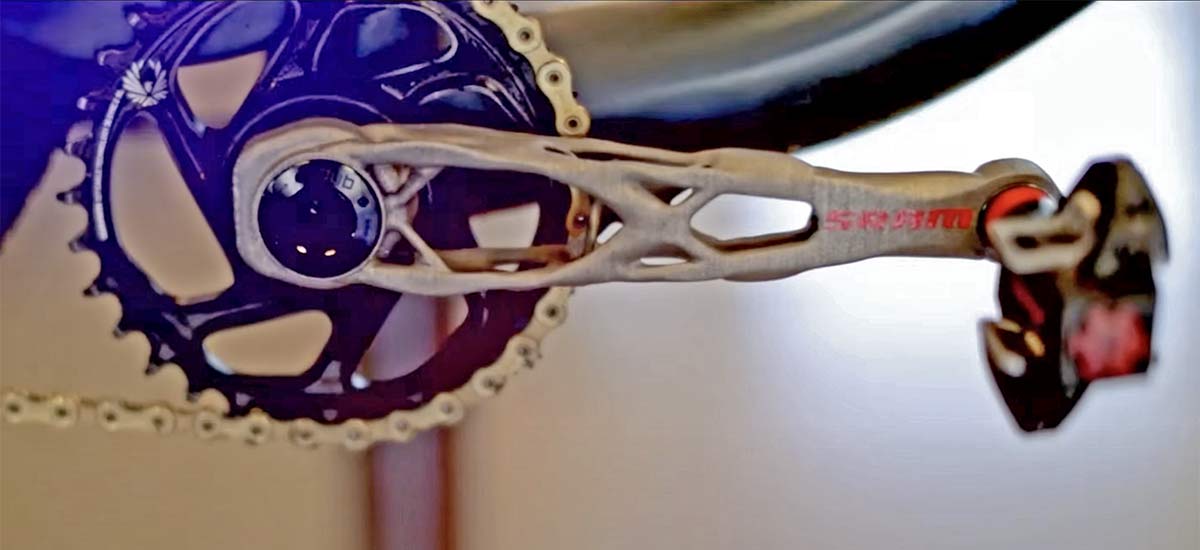
Remeber those generatively designed cranks Sram played around with? Shame that the closest we got to an actual product is this latest generation with a single machined hole in them.
They did both machined:
And 3D printed:
Since we are 3D printing lugs and entire head tubes now, why not cranks?
quotes from canyon's PR. does not say why C/S length is non-negotiable"With the Sender CFR we decided on a mullet plat- form across the board; 27.5”...
quotes from canyon's PR. does not say why C/S length is non-negotiable
"With the Sender CFR we decided on a mullet plat- form across the board; 27.5” rear wheel, 29” up front. The smaller rear wheel achieves the responsiveness and manoeuvrability that riders want while the larger front maintains the stability and control necessary. This is non-negotiable. Same with the 438mm chainstay length. We built a ton of adjustability into this bike (as you’ll read in the next section), but this was not an area we wanted to compromise."
and
"The chainstay length is fixed at 438mm, striking a balance between agility and stability."
Oh for sure. Closed section has its issues when you're actually designing a real product, but unlike something like the 5dev or its many knock offs...
Oh for sure. Closed section has its issues when you're actually designing a real product, but unlike something like the 5dev or its many knock offs, it isn't just all downsides with zero advantages.
Hence why a GX crankset is lighter, stronger, stiffer, and cheaper than that 5dev bullshit.
Remeber those generatively designed cranks Sram played around with? Shame that the closest we got to an actual product is this latest generation with a single...
Remeber those generatively designed cranks Sram played around with? Shame that the closest we got to an actual product is this latest generation with a single machined hole in them.
They did both machined:
And 3D printed:
Since we are 3D printing lugs and entire head tubes now, why not cranks?
I could be wrong, but aren't the chainstays on the new Sender a little short for a race bike? Perhaps they are trying to strike a...
I could be wrong, but aren't the chainstays on the new Sender a little short for a race bike? Perhaps they are trying to strike a balance between playful park bike and race machine.
Race bikes want short but growing on the right path.Which is why they've specifically mentioned the at sag number. Short to load the front in a corner...
Race bikes want short but growing on the right path. Which is why they've specifically mentioned the at sag number.
Short to load the front in a corner and come out with more corner exit speed and help in the tighter stuff. but growing enough to assist in Balance for the fast rough stuff. Go ride a trek slash gen 6, Perfect example of this.
Short chainstays don't help you load the front...they do the reverse...
I could be wrong, but aren't the chainstays on the new Sender a little short for a race bike? Perhaps they are trying to strike a...
I could be wrong, but aren't the chainstays on the new Sender a little short for a race bike? Perhaps they are trying to strike a balance between playful park bike and race machine.
Race bikes want short but growing on the right path.Which is why they've specifically mentioned the at sag number. Short to load the front in a corner...
Race bikes want short but growing on the right path. Which is why they've specifically mentioned the at sag number.
Short to load the front in a corner and come out with more corner exit speed and help in the tighter stuff. but growing enough to assist in Balance for the fast rough stuff. Go ride a trek slash gen 6, Perfect example of this.
Race bikes want short but growing on the right path.Which is why they've specifically mentioned the at sag number. Short to load the front in a corner...
Race bikes want short but growing on the right path. Which is why they've specifically mentioned the at sag number.
Short to load the front in a corner and come out with more corner exit speed and help in the tighter stuff. but growing enough to assist in Balance for the fast rough stuff. Go ride a trek slash gen 6, Perfect example of this.


quotes from canyon's PR. does not say why C/S length is non-negotiable
"With the Sender CFR we decided on a mullet plat- form across the board; 27.5” rear wheel, 29” up front. The smaller rear wheel achieves the responsiveness and manoeuvrability that riders want while the larger front maintains the stability and control necessary. This is non-negotiable. Same with the 438mm chainstay length. We built a ton of adjustability into this bike (as you’ll read in the next section), but this was not an area we wanted to compromise."
and
"The chainstay length is fixed at 438mm, striking a balance between agility and stability."
From the other site... 438mm + 17.5mm at sag (although the sag % wasn't mentioned). Max rear center growth of 23.5mm.
So you're effectively getting a 455mm rear center. Pretty much spot on these days.
watch the video. neko explains what he's up to
Wtf does non-negotiable mean here? Honestly an unhinged way to talk about these specs lol
I agree. That sentence is bizarre. I'm weirded out by the implication that choosing a longer or shorter chainstay length would be a compromise, but somehow choosing a 438mm chainstay length isn't a compromise? Every geometry decision you make on a bike represents a compromise. They're all trade-offs.
Either that, or Canyon and friends have stumbled upon the Platonic ideal of the form "chainstay length." We're all in the cave over here, but at Canyon they've unshackled and transcended bodily existence to discovered the one true form of bike geometry. So meta of them.
Maybe it's a translation thing?
It is an odd statement.
I haven't seen it mentioned but the Sender prototypes had threaded inserts for all the bolts and pivots to improve repairability. But it appears they ditched it on the production frame.
Non negotiable financially?
In the german press release it says: "Das Zusammenspiel zwischen Stabilität und Reaktionsfähigkeit ist nicht immer leicht miteinander zu vereinbaren, aber diese beiden Eigenschaften sind entscheidend bei einem Downhill-Bike."
I would roughly translate it to "achiving a compromise between stability and responsiveness (which is essentiell for a DH bike) is not easy and leads to trade offs of some form". And I think the last part was meant by the "non negotiable" term.
Extra bonus points for weaving The Republic into the chainstay conversation. I'm here for it.
Some new stuff and some other clones from Lewis, shame i didn't manage to screenshot a story with the chainrings cause those look really good ( and as far as i know they look like nothing else in the market ) laughable 3d printed levers, again clone from Trickstuff, the other stuff looks interesting, not too sure about those huge bearings in the pedals...
Rotors are again a clone from some Chinese brand that months ago kept getting pushed as an Ad on IG
At least one benefit is they are using torx pin screws...
Weather we like it or not, they’re coming in strong into the market, and fast as well
Fuck those cranks. There's SUCH a good structural reason why holes in cranks are a bad idea, with the exception of the sram cranks. The reason that all those 5dev cranks break despite not being very lightweight is 100 level shit, and I hate that the mtb industry is stupid enough to entertain it.
A 2 dimensional truss structure is fucking terrible in torsion, and most of the crank arm sees a LOT of torsion. Then you've got all the stress concentrations with all the internal corners, and that multiplies your max stresses by a lot again. The reason why the sram cranks with the hole through them are somewhat acceptable is because the part of the crank near the bb where the hole is, is angled directly at the centre of pressure of the pedal, so the torsion through that part of the crank is low and it's mostly just a bending load, which is fine. There are no holes in the part where it changes angle and becomes more parallel with the centreline of the bike, because that would be really stupid.
You get the best performance in torsion from closed section (box section, tube section etc) cranks like shimano hollowtech, or garbaruk, eewings etc. Or carbon stuff.
You see similar attention paid to the torsional loads vs bending loads in something like the raceface atlas crank where it's more like an I-beam (good in bending) on the bit near the bb where that part of the arm is pointed at the load centre, then it moves to more of a C-section with stiffeners on the inside of the C (better in torsion) for the latter half of the crank arm.
The best choice is for sure a box section but if you don't have the volumes for forging, the only option is glued two piece construction (if aluminium). Which might delaminate if you're unlucky...
Oh for sure. Closed section has its issues when you're actually designing a real product, but unlike something like the 5dev or its many knock offs, it isn't just all downsides with zero advantages.
Hence why a GX crankset is lighter, stronger, stiffer, and cheaper than that 5dev bullshit.
Well production methods and volumes is also a big part why it's cheaper, but yeah, it's hard to go with these niche products (Actofive Signature X is in the same boat) when you get more performance for a quarter of the price...
Yeah true. At least Actofive appears to have a good understanding of engineering fundamentals. I like that brand, even if I can't afford their products.
Let's just say I can't really agree with that and leave it at that.
I'll just be over here hugging my Saint cranks if anyone needs me.
We learned this in the 90s the last time machined parts were cool.
(yes I'm old)
Probs hired that guy from the mullet only hardtail company...
It's blatantly obvious that Lewis just straight up copies prestigious products with the objective of selling them to people who love the looks/bling factor of the absolute high-end stuff but don't want to pay for it. The structural integrity of the design has nothing to do with it.
Those chainrings look very similar to some from Absolute Black
Ah, good to know. Part of the appeal of Neko's projects are his Practicality First approach. I guess if you look closer, its on one of his bonded frames as well, which they haven't raced yet so ya I get that its just testing.
Canyon, however, remains. They have Horst Links on all their bikes EXCEPT their DH bike? The "F1" of mountain biking? Still makes no sense.
Remeber those generatively designed cranks Sram played around with? Shame that the closest we got to an actual product is this latest generation with a single machined hole in them.
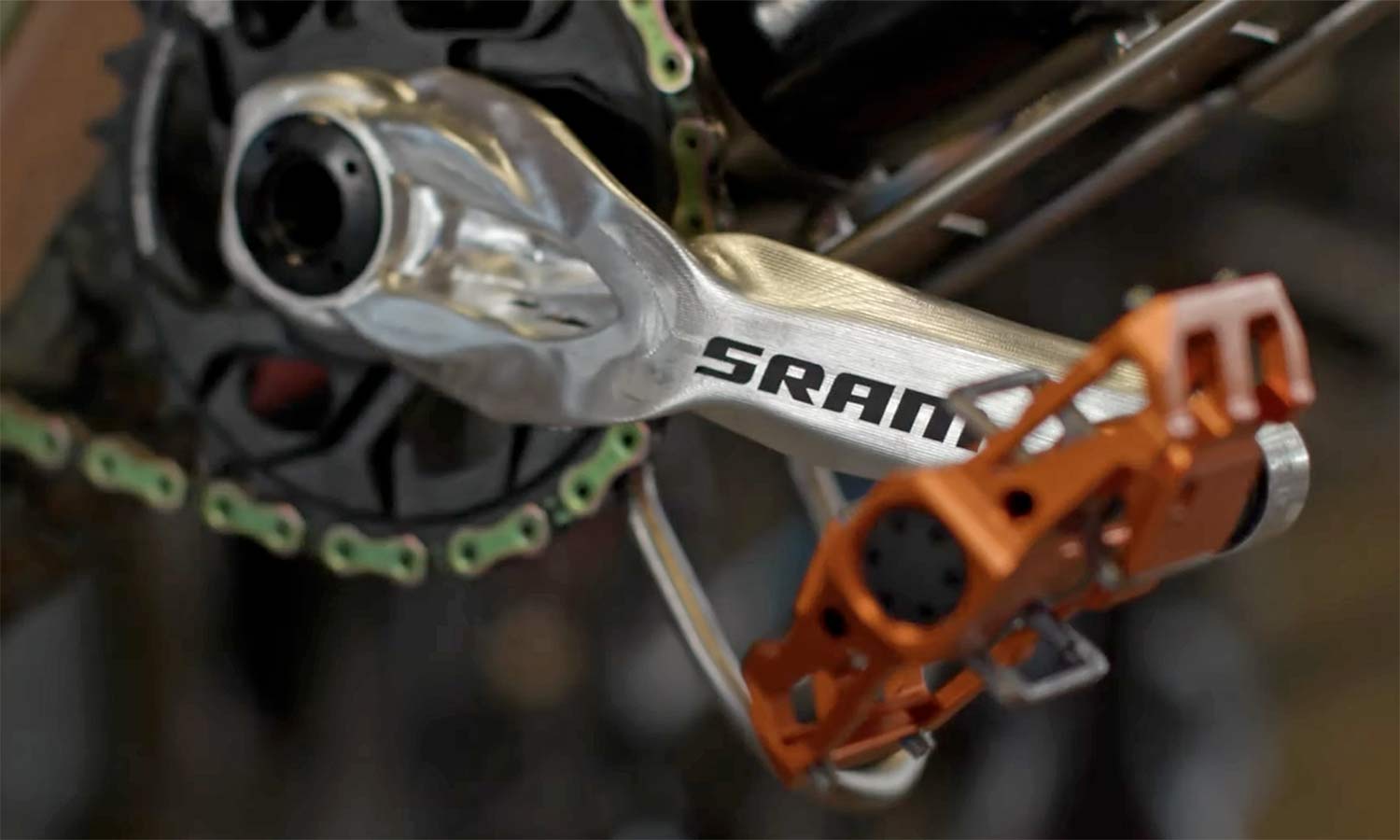
They did both machined:
And 3D printed:
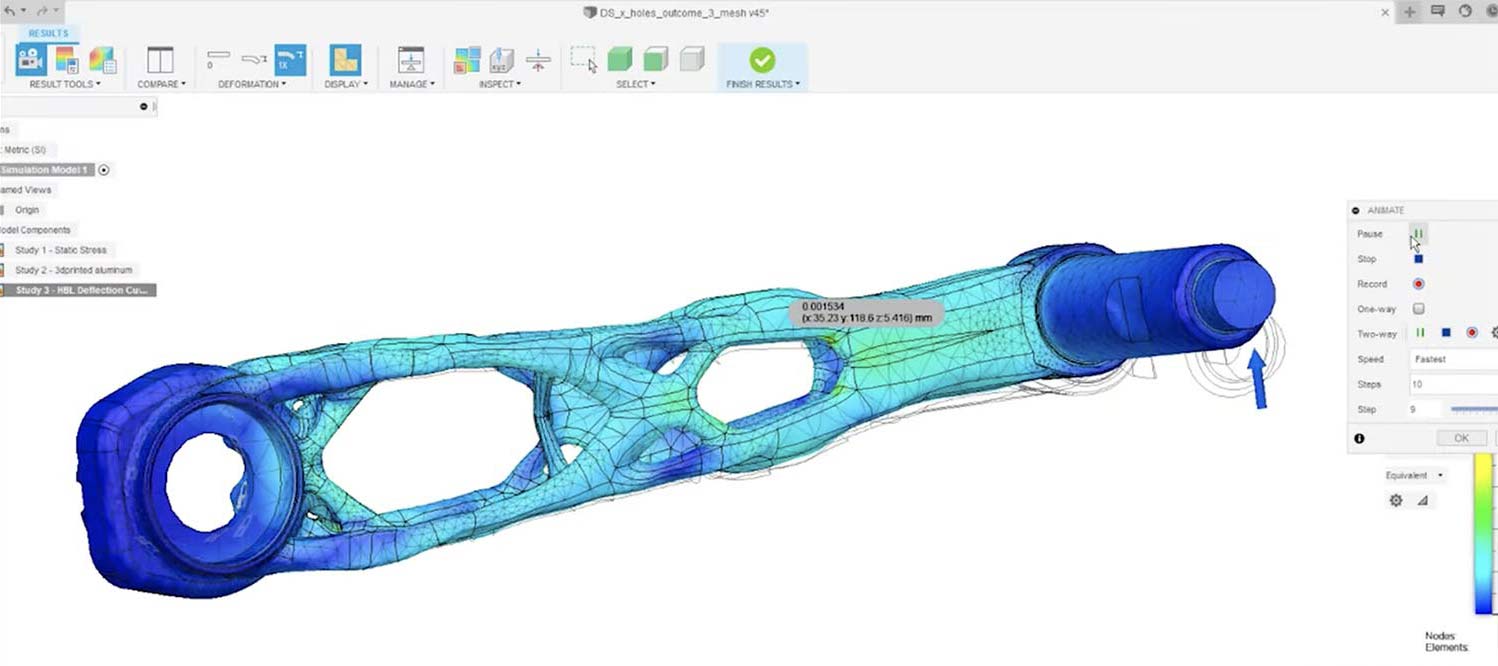
Since we are 3D printing lugs and entire head tubes now, why not cranks?
Non negotiable because if it was any longer the frame would be an instant warranty.
Sturdy Cycles makes some (on the roadie side)
Short chainstays don't help you load the front...they do the reverse...
Theres now a forum for this that will allow you get super nerdy https://www.vitalmtb.com/forums/hub/modern-geo-talk-chainstays-stack-reach-and-bitching-about-it?page=4#comment-610846
“NO DISCUSSIONS IN THE TECH RUMOR THREAD.” Cmon man