



If you like riding with your feet attached to your bike, you’re likely well aware that many variables affect this union. It’s more complicated than how a flat pedal and shoe interact. Not only do you have the contact patch between the sole and pedal, but there are also different cleat styles, cleat height and channel depth, pedal mechanism height relative to the pedal body, and on and on.
The cleat style and pedal mechanism interface are probably the main factors someone considers when deciding which clipless pedal to choose. Most long-time users have a preferred style. For new users, it can be confusing deciding what you like. Hopefully, this article will help experienced and new clipless users alike find the pedal that’s best for them.
Skip ahead to individual pedal performance and overview.
- How We Tested
- Clipless Pedals by the Numbers
- Tenet Osiris
- Crankbrothers Mallet Enduro
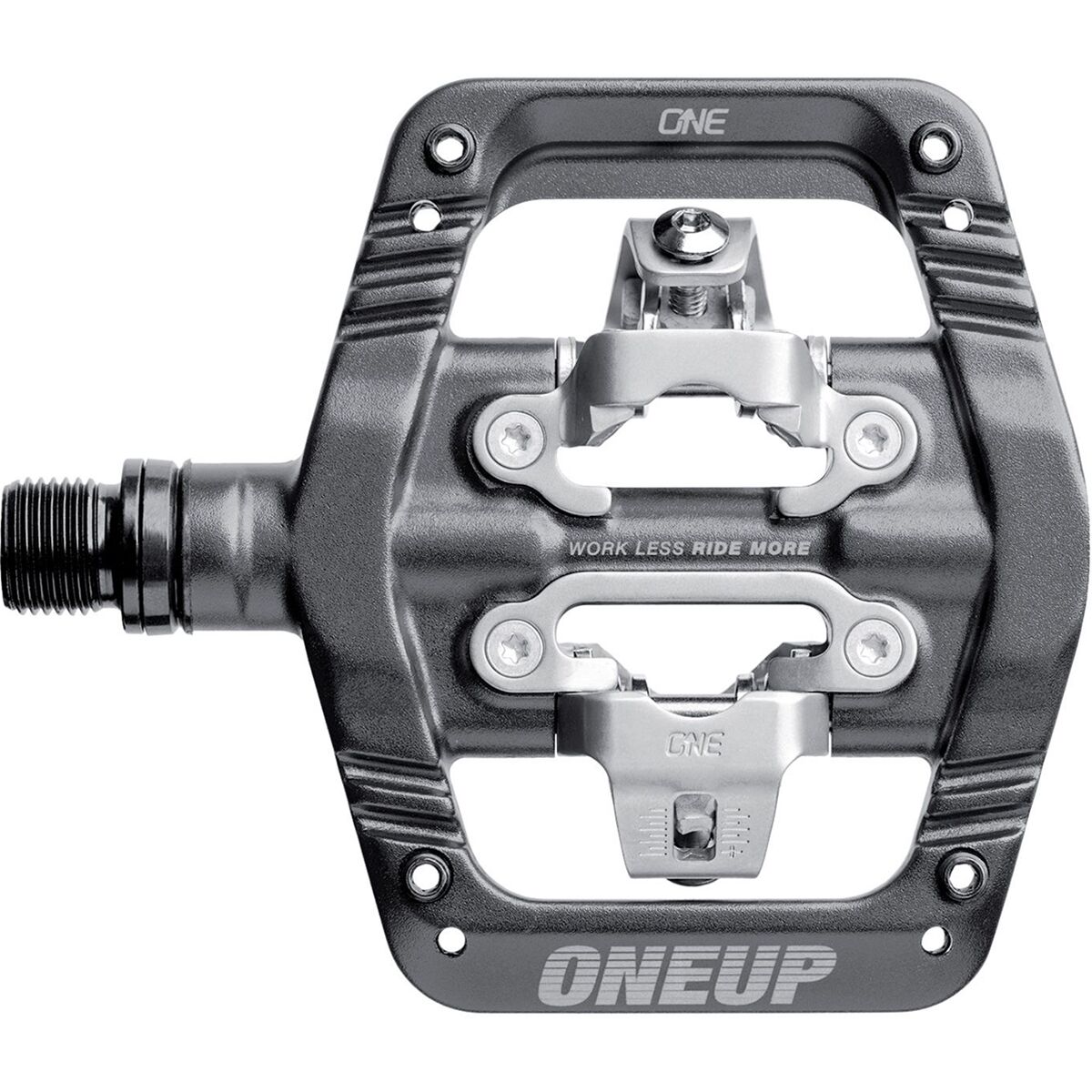
- OneUp Clipless
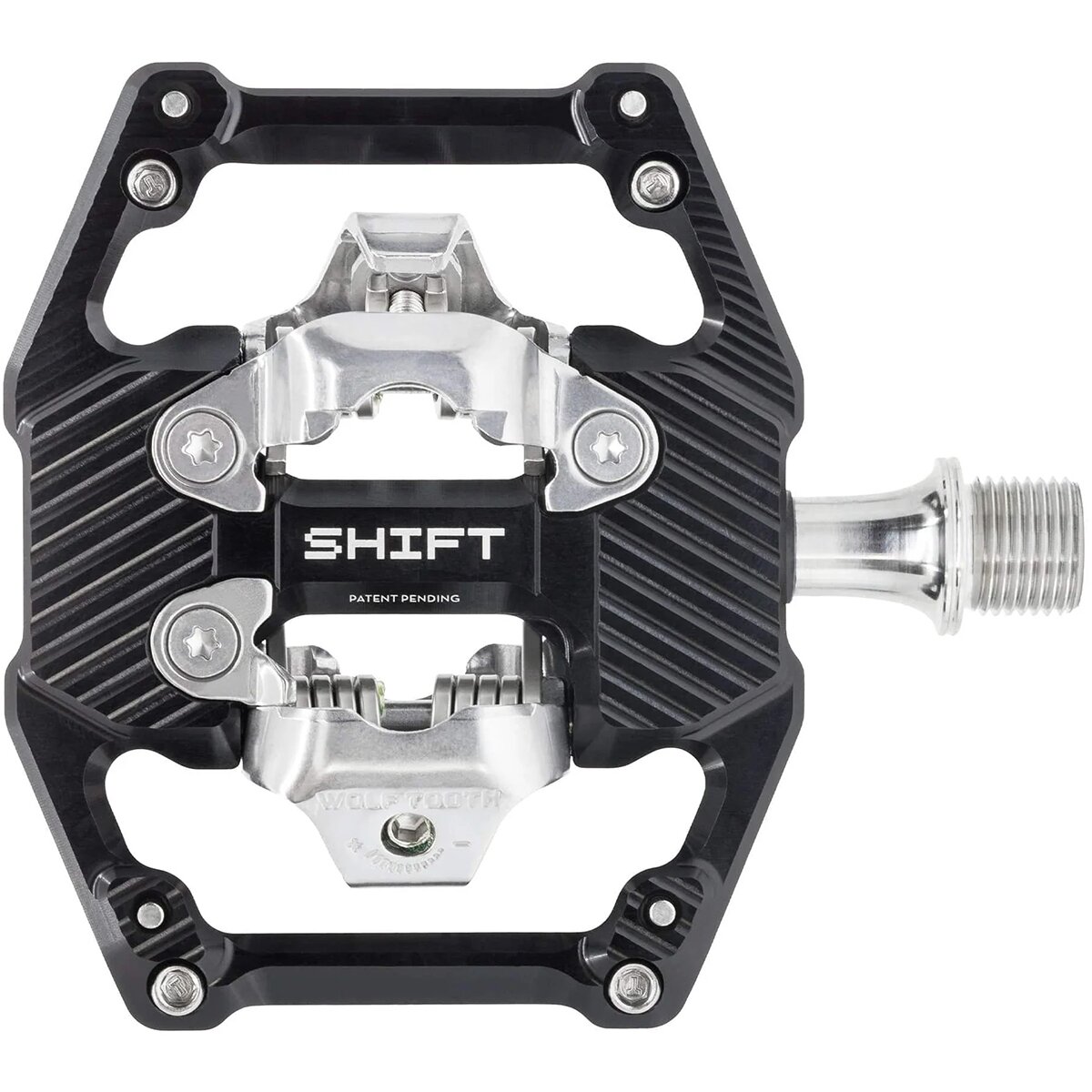
- Wolf Tooth Shift
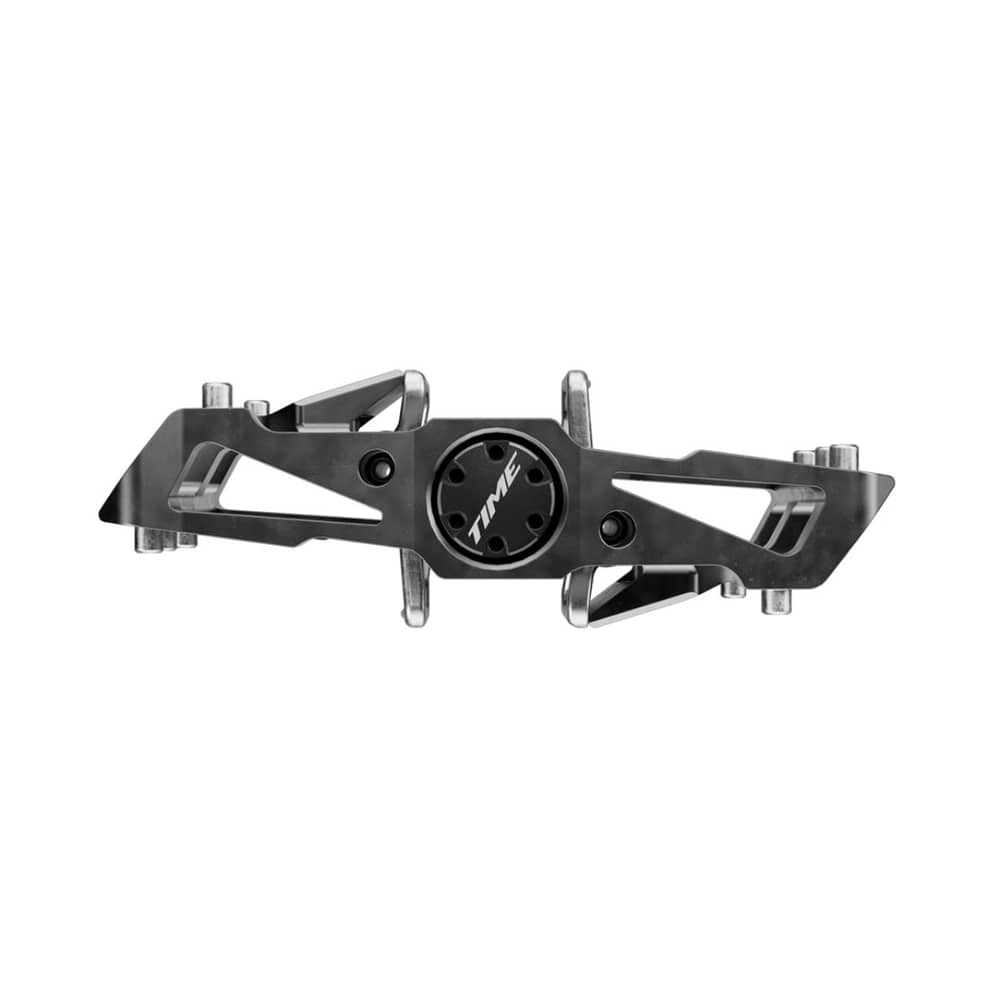
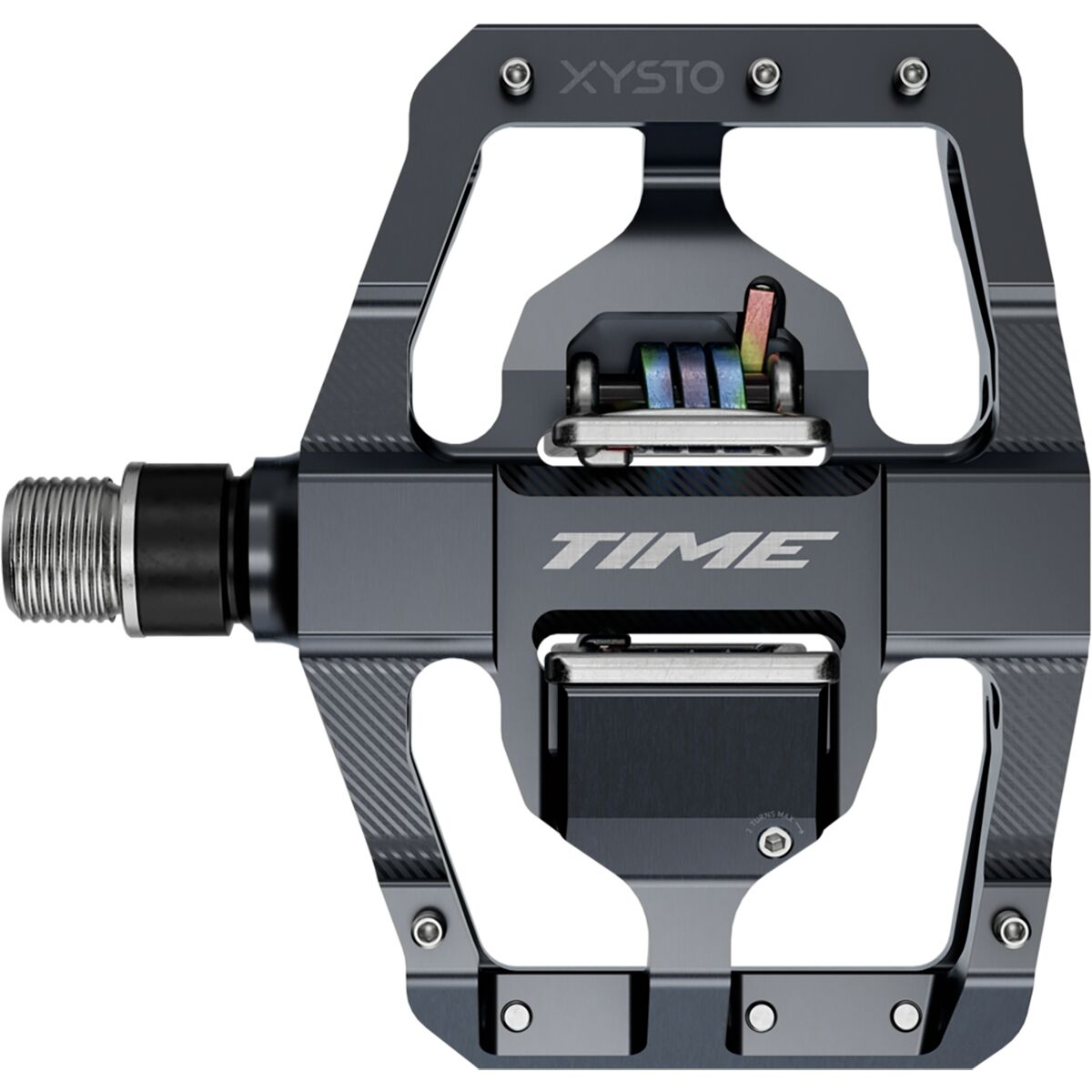
- Time XYSTO
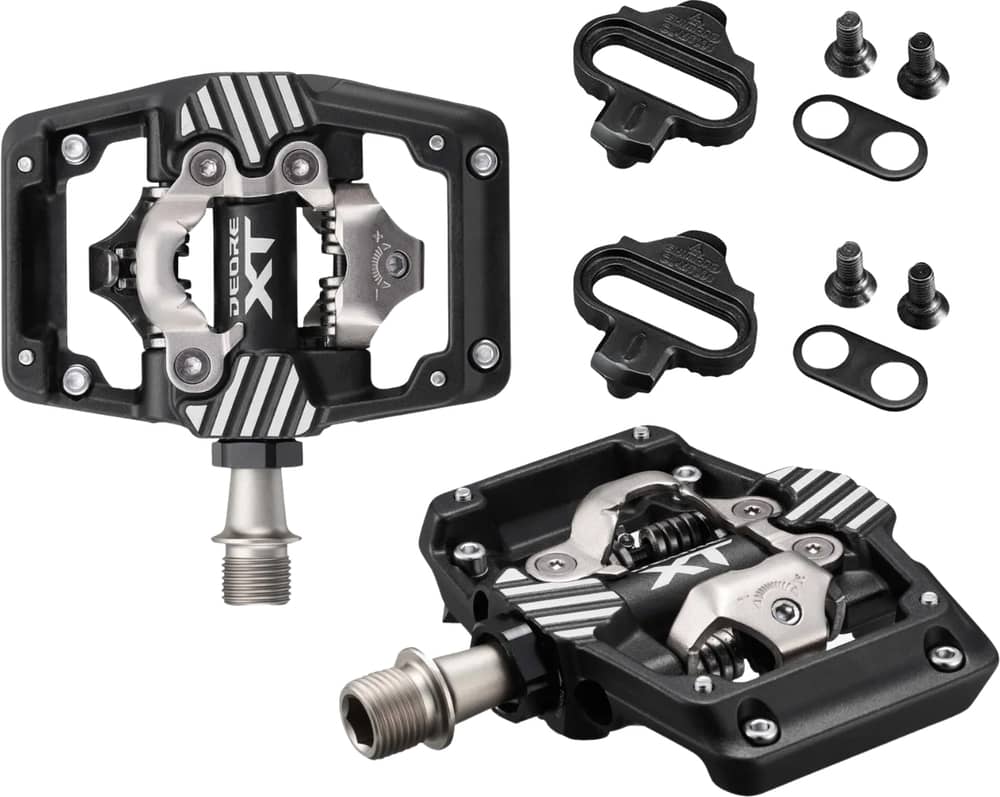
- Shimano Enduro XTR
- Stats and Scoring
- Comments
Clipless Pedal 101
- There are two key components of a clipless pedal: the cleat and the mechanism.
- The cleat mounts to the sole of the shoe in a channel and clicks into the receiving mechanism on the pedal.
- Once the cleat is engaged with the pedal mechanism, there is a predetermined amount of left-right movement that the foot can make while remaining engaged. This is called ‘Float.’
- To release the shoe from the pedal, you must twist your foot (usually in an outward motion) beyond the float zone, causing the mechanism to release and the shoe to detach from the pedal.
Let's break down the three most common cleat and pedal brand interfaces:
- Shimano Pedaling Dynamics (SPD): Introduced in 2000, this is the most commonly recognized system, with many brands beyond Shimano utilizing the design. It uses a fixed two-sided entry mechanism and a steel cleat. Tension is adjustable, and there is a very distinguishable engagement and disengagement feel, usually accompanied by an audible click. Once the cleat is engaged into the mechanism, you can achieve different levels of float by using third-party SPD cleats.
- Time ATAC system: Introduced around 1995 and used exclusively by Time, it features a fixed, two-sided entry mechanism and a brass cleat. Tension is adjustable, and engagement is a bit less distinct than an SPD system. Once engaged, you can choose between a 10 °, 13 °, or 17° release angle depending on cleat orientation. This will also affect the amount of float.
- Crankbrothers Eggbeater Technology: Introduced around 2001 and used exclusively by Crankbrothers, its popularity stems from the mechanism's ability to shed mud and provide a seamless entry and release. It uses a rotating 4-sided entry mechanism and a brass cleat. It does not have an adjustable mechanism; instead, it relies on pedal body and shoe sole friction to create tension. Crankbrothers offers two cleat models that require 10° or 15° of outward rotation to disengage the mechanism. Float is determined by cleat orientation, with the option of 0° or 6°. Crankbrothers explains the difference in release angle and float between its Standard and Easy cleats in this video.

How We Tested
To keep things as consistent as possible, we tested all pedals with the same shoes. When testing SPD pedals, we also opted for standard Shimano cleats as a starting point.

The Fox Union Boa in size 9.5 / 42.5 was the shoe of choice, providing the desired shank stiffness and ample cleat channel and adjustability. At the time of this article, we’ve logged roughly 800 miles collectively on these initial six pedals. The trails ridden included a variety of low-angle mellow singletrack and flow trails, as well as steeper technical trails. Testing has spanned every condition, ranging from cold, wet, and muddy to warm and dry. Classic PNW weather.
Setting out to test several pedals and systems was a really enlightening experience, and we learned quite a bit about the nuances of each design. We focused on the overall feel of each pedal rather than highly technical minutiae. We also rode the SPD pedals consecutively before moving to another system.
Field notes:
We will use the term ‘locating’ as a regular reference point to indicate how natural it is to find and achieve proper engagement with the pedal in a less-than-ideal scenario. For example, after unclipping to put a foot out through a corner, how easily can you clip back in as you continue down the trail? This is a critical element of a clipless pedal and cleat system. There isn’t really a scientific method for measuring this. It’s more of a feeling.
Different shoes have different cleat channel dimensions and sole characteristics. All of which affect the interface with a clipless pedal. So, depending on the shoes you use, your results may differ from ours. We attempted to control as many variables as possible between our Fox Union BOA shoes and pedals. Cleats were installed in the same position on the shoe channel: centered, aligned as close to 0 ° as possible, and roughly ¾ of the way rearward in the cleat channel (our preference). Cleat spacers or shields were not used unless our initial step-in test indicated they were necessary to achieve proper pedal-to-sole contact.
We tried to use the pedals as supplied. With two exceptions:
- We adjusted the pedal mechanism tension to achieve a consistent release feel across the board.
- If pre-installed pins restricted the initial step-in engagement, the corresponding pins were either adjusted or removed until the desired engagement was achieved.


The jury is out on clipless pedal pins. While pins on a clipless pedal can provide traction when not clipped in and the foot is on the pedal, they can also prevent locating. Additionally, as you clip in and out and your foot floats when engaged, the pins will slowly cut a channel into your outsole, rendering their grip irrelevant except when your foot is perched on the pedal, not clipped in. During these stressful moments, we rarely find the pins provide enough traction to ride unclipped, and every ounce of our mental capacity is rather focused on locating and clipping in as quickly as possible.
The last note, and this might already be common knowledge to some: most caged clipless pedals have a dropped design on the forward leading edge of the body. This seems to be to aid toe-in engagement of the cleat into the mechanism. If this area is too tall, it can make it harder to clip in. Once the cleat is engaged and the shoe is connected to the pedal, the shoe's natural upward slope doesn’t contact the pedal body anyway.
Clipless Pedals by the Numbers
Brand | Model | Clip Mechanism | Pins Per Side | Float Angle | Release Angle | Adjustments | Q-Factor | Surface Shape | Thickness at Axle | Width | Length | Weight | MSRP |
| Shimano | XTR Enduro PD-M9220 | Shimano SPD | 4 | 4° | 13-15° | Tension and pin height | 55mm | Dropped leading edge | 18.23mm | 72mm | 99mm | 444g | $260.00 |
| OneUp Components | Clip Pedal | Shimano SPD | 4 | 5° | 12° | Tension and pin height | 58mm | Symmetrically convex | 14.39mm | 79mm | 95mm | 412g | $159.99 |
| Tenet | Osiris | Shimano SPD | 4 | 6° | 15° | Tension and pin height | 56mm | Dropped leading edge | 21.20mm | 75mm | 110mm | 558g | $159.00 |
| Wolf Tooth | Shift | Shimano SPD | 4 | 5° | 12° | Tension and pin height | 55mm | Dropped leading edge | 15.17mm | 79mm | 95mm | 412g | $239.95 |
| Crankbrothers | Mallet Enduro | Crankbrothers Eggbeater | 6 | 5° | 12° | Pin height | 57mm | Symmetrically concaved | 18.38mm | 75mm | 95mm | 444g | $199.99 |
| Time | XYSTO | Time ATAC | 5 | 2.5° | 10, 13, 17° | Tension and pin height | 57mm | Dropped leading edge | 21.17mm | 79mm | 108mm | 456g | $220.00 |
Tenet Osiris
- Custom extruded and post-CNC'd from 6061-T6 aluminum
- SPD-Compatible Stainless Steel Mechanism (Cleats Included)
- 3º of float & 12º release angle
- Sealed bearings + IGUS bushing internal system
- Heat-treated cromoly steel spindle with 6mm broach
- Height-adjustable thread-thru pins and washers OR grub screws (both included)
- 110mm x 85mm Platform Dimensions
- EFBE Tri-Test Ebike-Gravity Certified
- Lifetime Warranty + Lifetime Crash Replacement + Lifetime Bearings and Bushings + 1 Free Pedal Refresh
- Available in Onyx, Silver, or Umber
- 558 grams
- $159 USD
Strengths | Weaknesses |
|
|

The incorporation of an SPD system made familiarizing with the Osiris pretty easy. The pedal body is quite large; in fact, it was the largest pedal in the first batch tested, and also the heaviest by 100g. They definitely feel burly, and the pins are pretty gnarly should you happen to catch an old school shinner. The exposed area of the pin is a taller, non-threaded end of a small hex bolt that threads in from the opposing side. This might make pin extraction tricky should you bend one over.

The Osiris is a relatively straightforward pedal that requires minimal adjustment to get comfy with. The mechanism has a good range of tension. I ended up winding the tension screw in about 8 clicks to feel right for me. I found myself using the Osiris on the DH bike the most, as I tend to prefer a slightly more svelte pedal body shape on my trail bikes in case of an unexpected encounter with an object or the ground. I rode the pedals with the stock pin configuration once, then removed the forward pins to aid in cleat disengagement and engagement.
I really appreciate the approach Tenent has taken, making these as serviceable as possible and on the affordable end. While bigger and heavier than the competition, these are a great option for someone looking to invest once in a pedal with great lifespan, support, and easy serviceability.
| Where To Buy | |||
|---|---|---|---|

|
Free shipping on orders over $49 (continental U.S. only).
International shipping available. Some exclusions apply. |
Free shipping on orders over $49 (continental U.S. only).
International shipping available. Some exclusions apply. $159.00
|
|

|
|||

|
|||

|
|||

|
Free shipping on orders over $50 (continental U.S. only).
International shipping available. Some exclusions apply. |
||
Crankbrothers Mallet Enduro
- Concave platform for secure foothold
- 6 adjustable pins per side for grip
- 6º of float & 15º release angle (Standard)
- Integrated traction pad technology to optimize the shoe/pedal interface
- Ribbed body for better traction when unclipped
- Chamfered edges to reduce impacts/hanging up
- 57mm q-factor for maneuverability on tight trails
- 4-way cleat entry
- Superior mud shedding
- Customizable float & release angle
- Premium bearings & double seal system
- 5-year warranty
- Available in Blue & Black
- 444 grams
- $199 USD
Strengths | Weaknesses |
|
|

I have used Crankbrothers in the past, so I was prepared for the different feel of the mechanism and cleat system. For first-time users, the best way I can describe it is that it feels a bit more organic than the precise, mechanical feel of an SPD. It is probably closer to the feel of a flat pedal once you are engaged. The system as a whole seems to rely more on shoe sole-to-pedal body tension and friction than hard-stop engagement of cleat and mechanism. The float feels a bit more natural, but can also feel almost vague. Sometimes, with shoe pressure on the pedal, it’s hard to tell whether you’re actually clipped in. The system also lacks the slight audible click when an SPD pedal engages. However, some may like this, as it feels less like a clipless system for the same reasons.
The eggbeater mechanism rotates freely within the pedal body, providing a bit more flexibility in how you engage the cleat. It doesn’t have to happen toe-first; you can step directly down onto the mechanism. I believe this is why Crankbrothers can get away with the symmetrically concave pedal body surface without a dropped forward edge. That is another reason some may find the Mallet feels a bit more like a flat pedal.

I did find that the brass cleat wore down pretty quickly, which changed the positivity of engagement and disengagement. As the cleat wore in, everything became a bit more vague. The Mallet was also one of two pedals I could ride with all the pins installed without them interfering with location and disengagement. I do like the feel of the pedal and system, but would like them to retain the feeling they have with fresh cleats.
Also worth noting, there’s no way to tension the actual mechanism; you increase resistance by installing or removing shims under the cleat on the shoe, which affects the friction and tension of the shoe sole and pedal body. 1 or more shims for less friction; fewer or no shims for more friction.
| Where To Buy | |||
|---|---|---|---|

|
Free shipping on orders over $50 (contiguous U.S. only).
International shipping available. Some exclusions apply. |
Free shipping on orders over $50 (contiguous U.S. only).
International shipping available. Some exclusions apply. $159.99
|
|

|
|||

|
|||

|
|||

|
Free shipping on orders over $69 (continental U.S. only).
International shipping available. Some exclusions apply. |
||
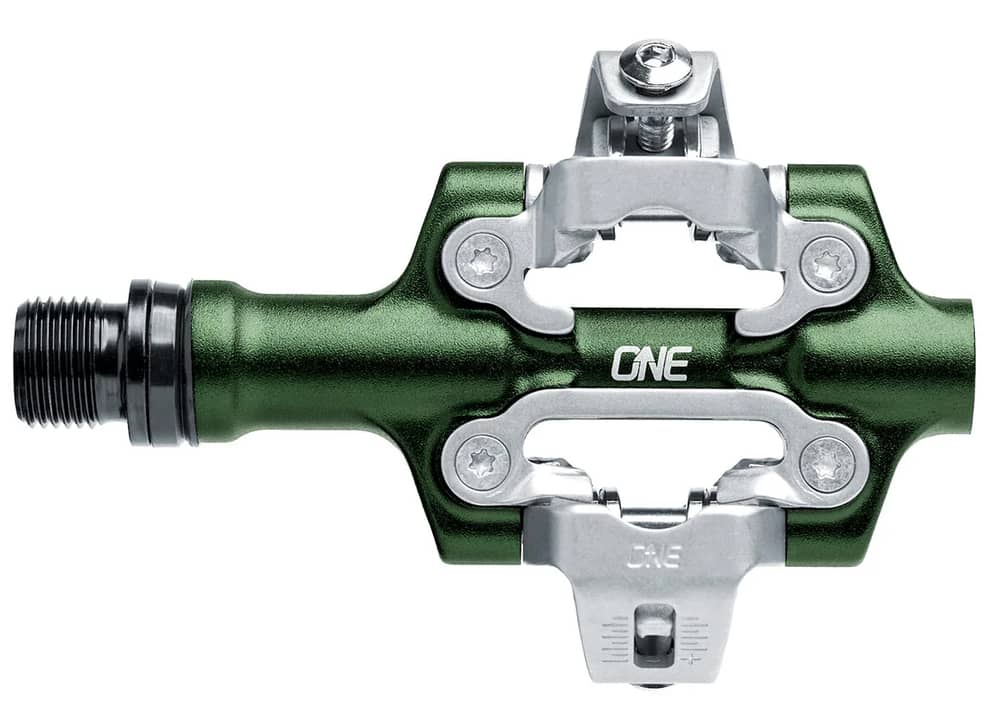
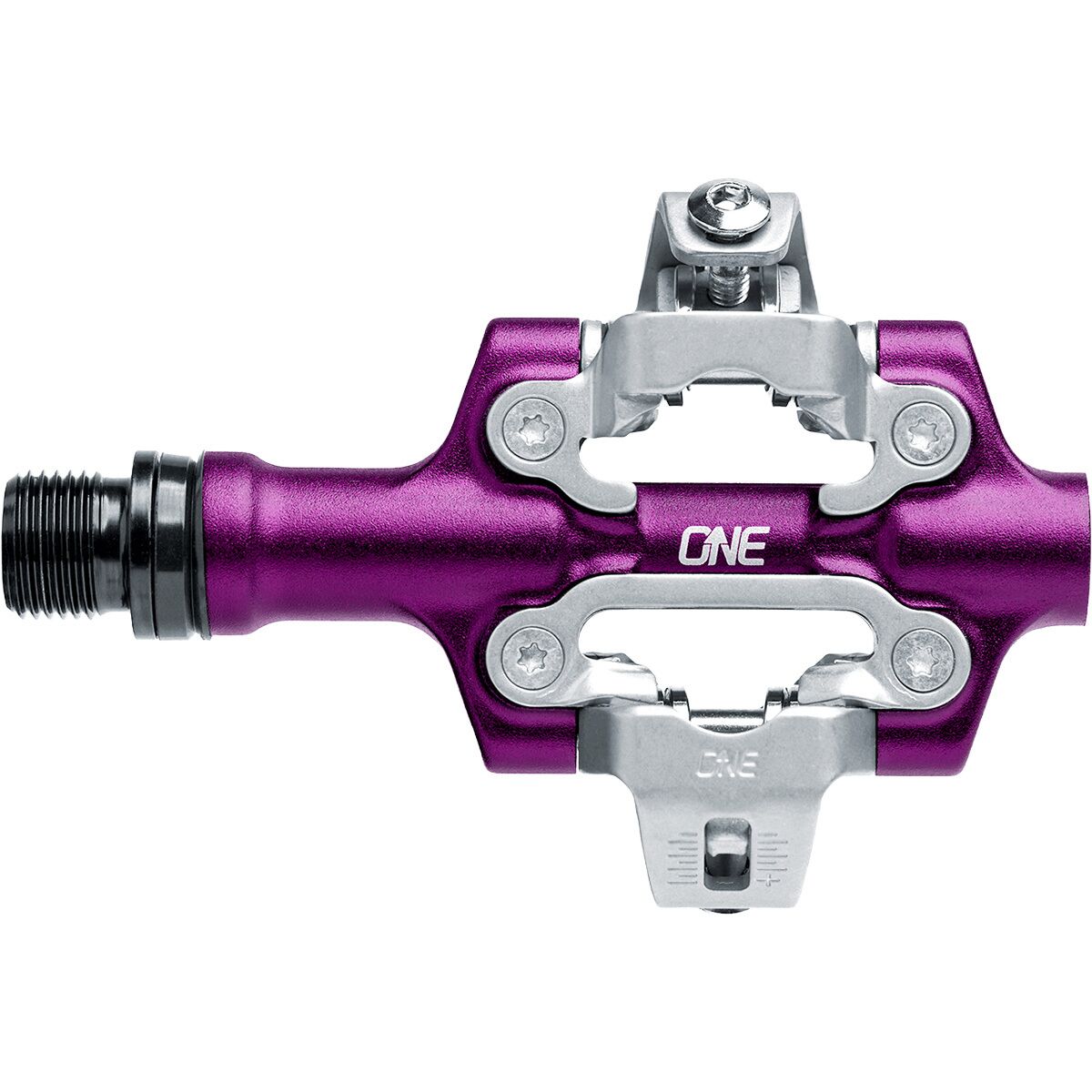
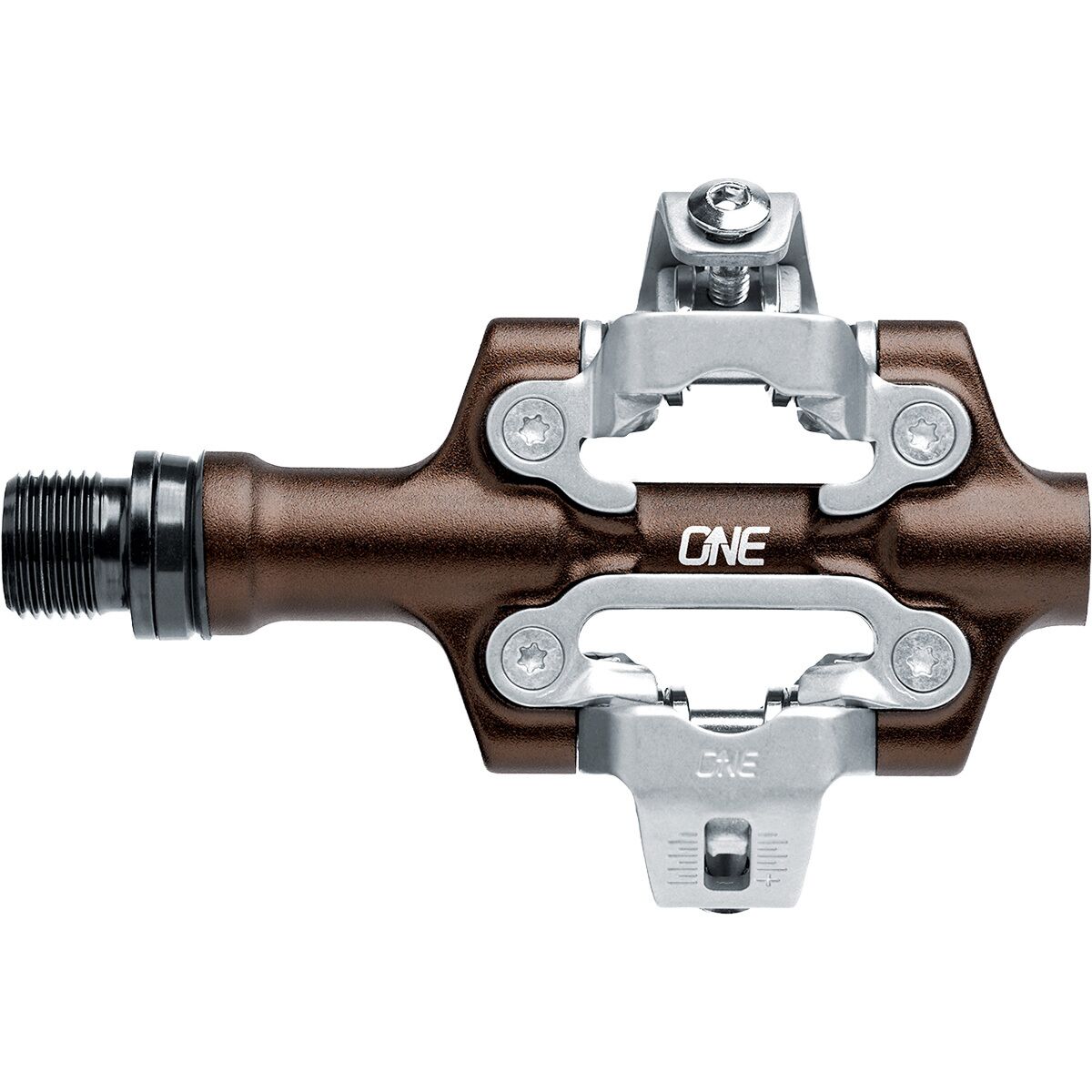
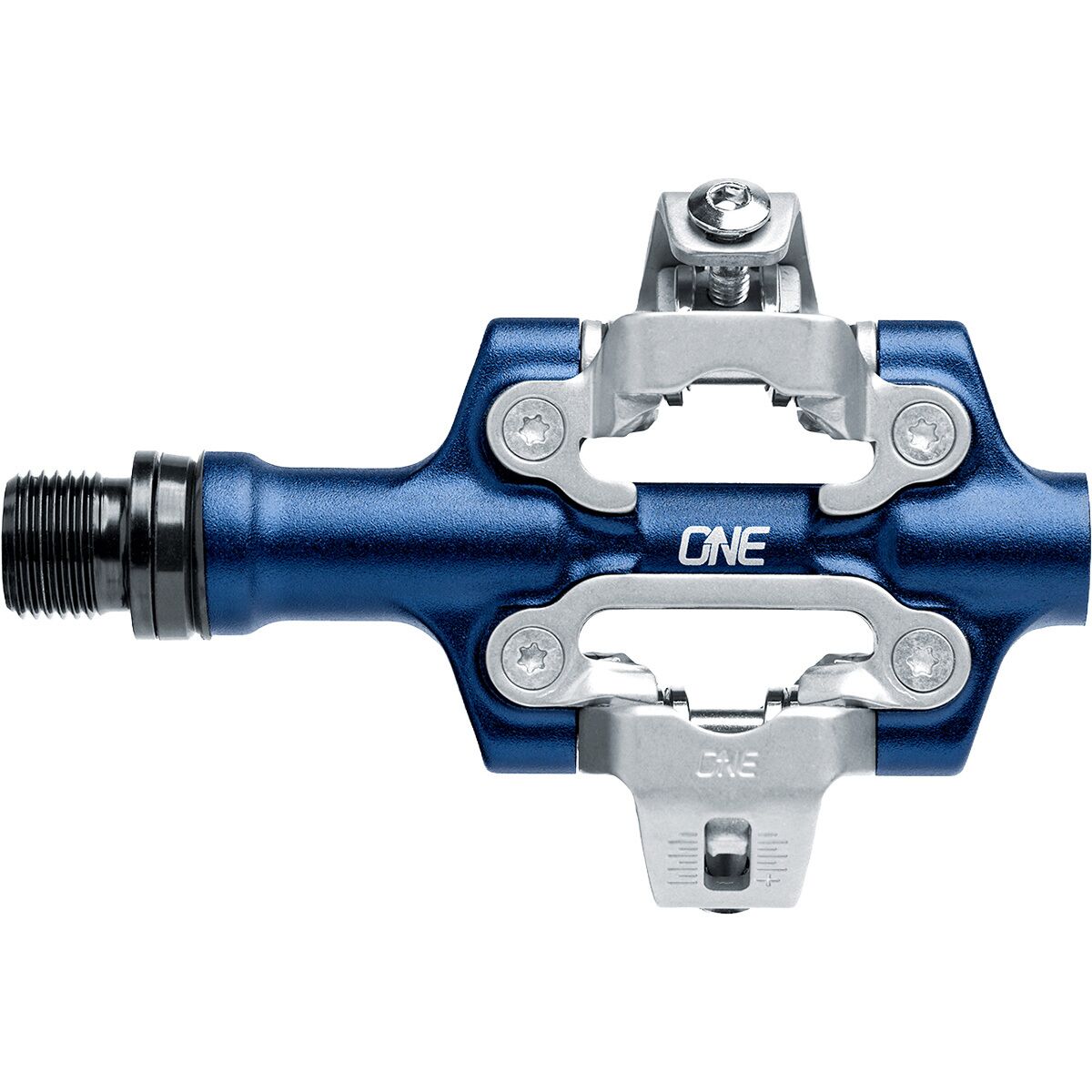
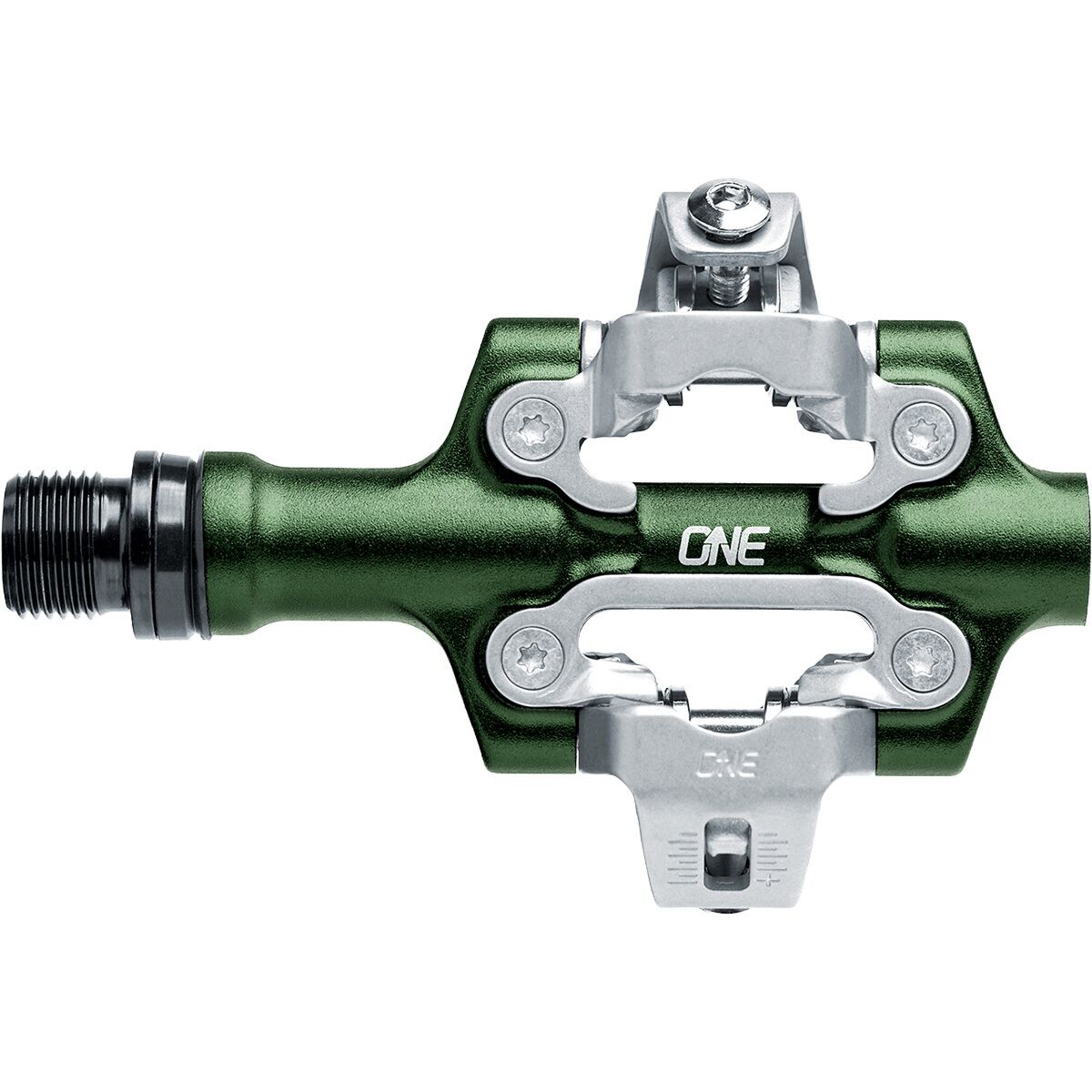
OneUp Clipless
- Thickness: 14.4mm (body), 26.8mm (binding)
- Size: 80mm x 90mm (W x L)
- Stance width: 57.5mm (center of clip to outside of crank face)
- 5° of float & 12° release angle
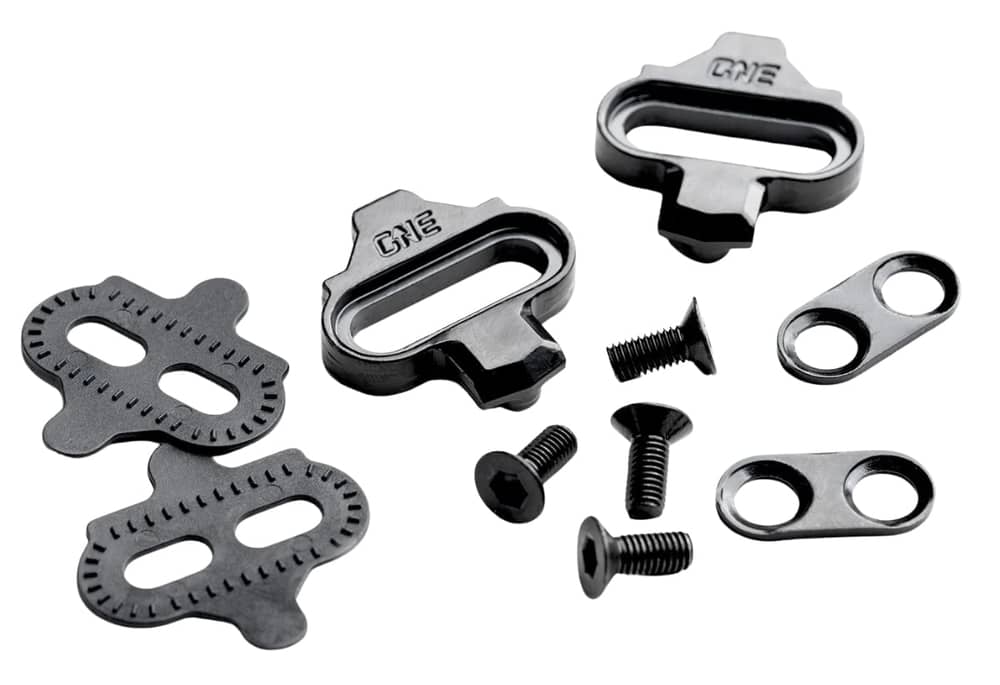
- Cleats: SPD™ Compatible (includes 1mm cleat spacers for shoe fit tuning )
- Bearing configuration: Inboard igus® Bushing and 3x outboard sealed cartridge bearings
- Axle: Chromoly Steel with Black ED coating
- Pins: Hollow M5x8mm threaded pins (self-cleaning hex through hole)
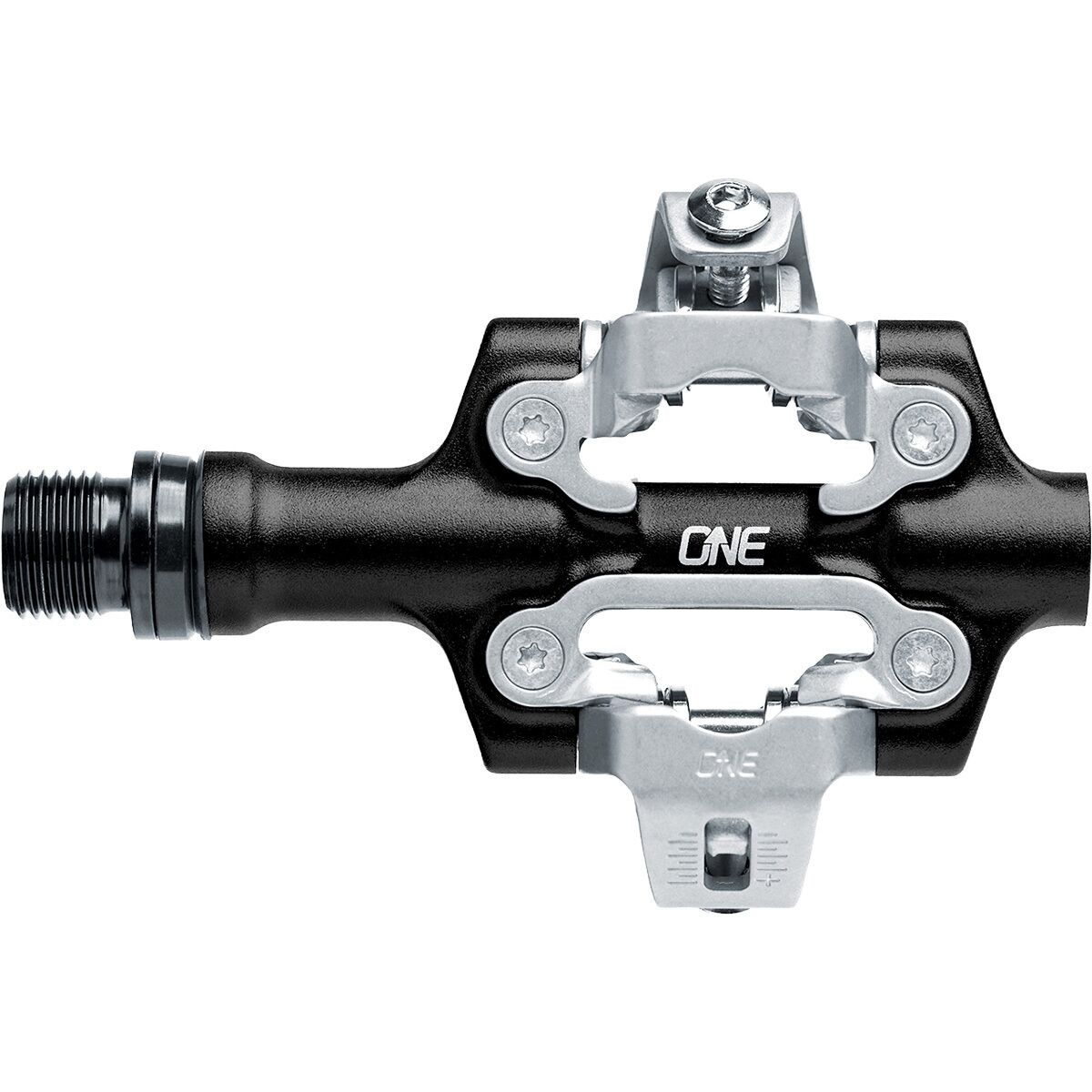
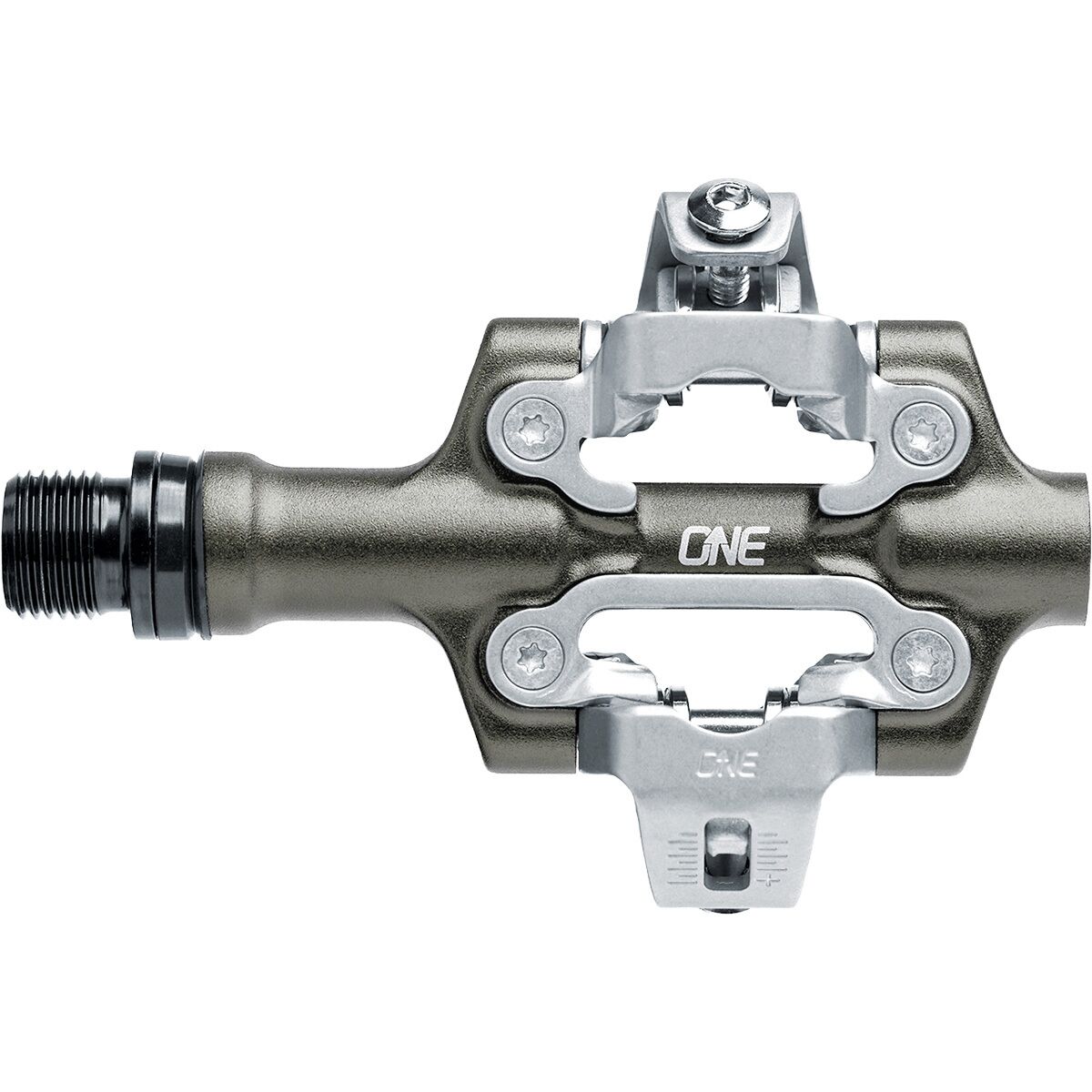
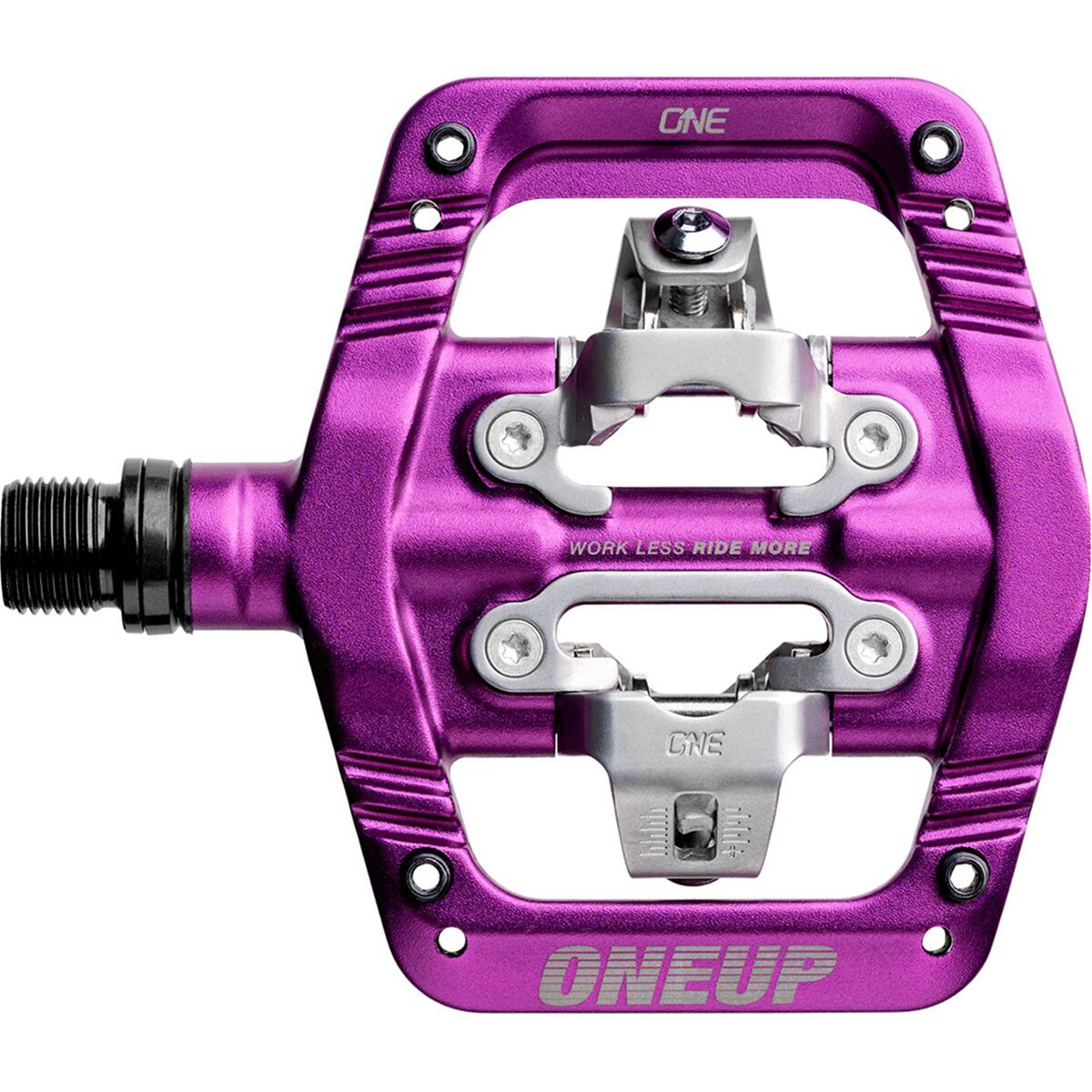
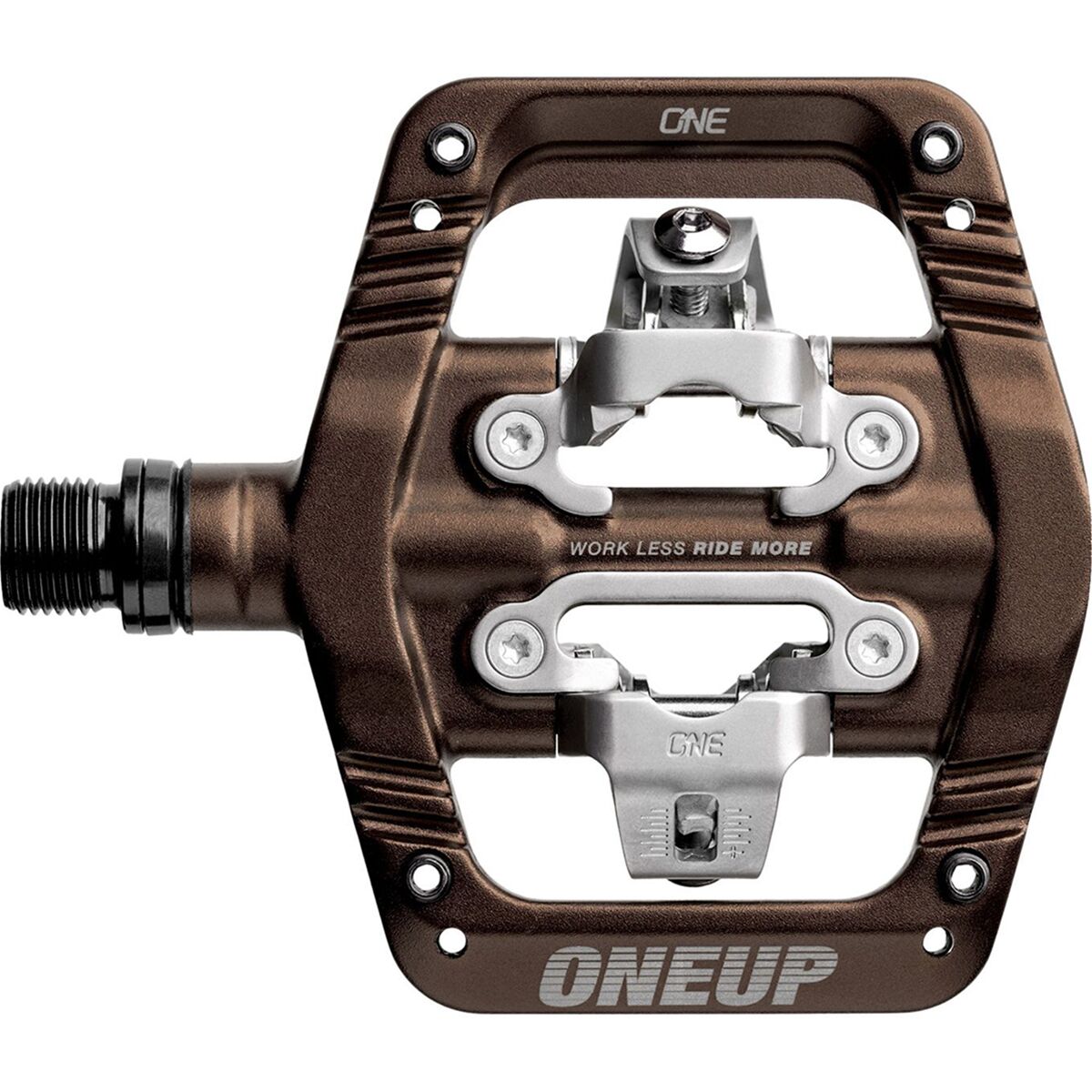
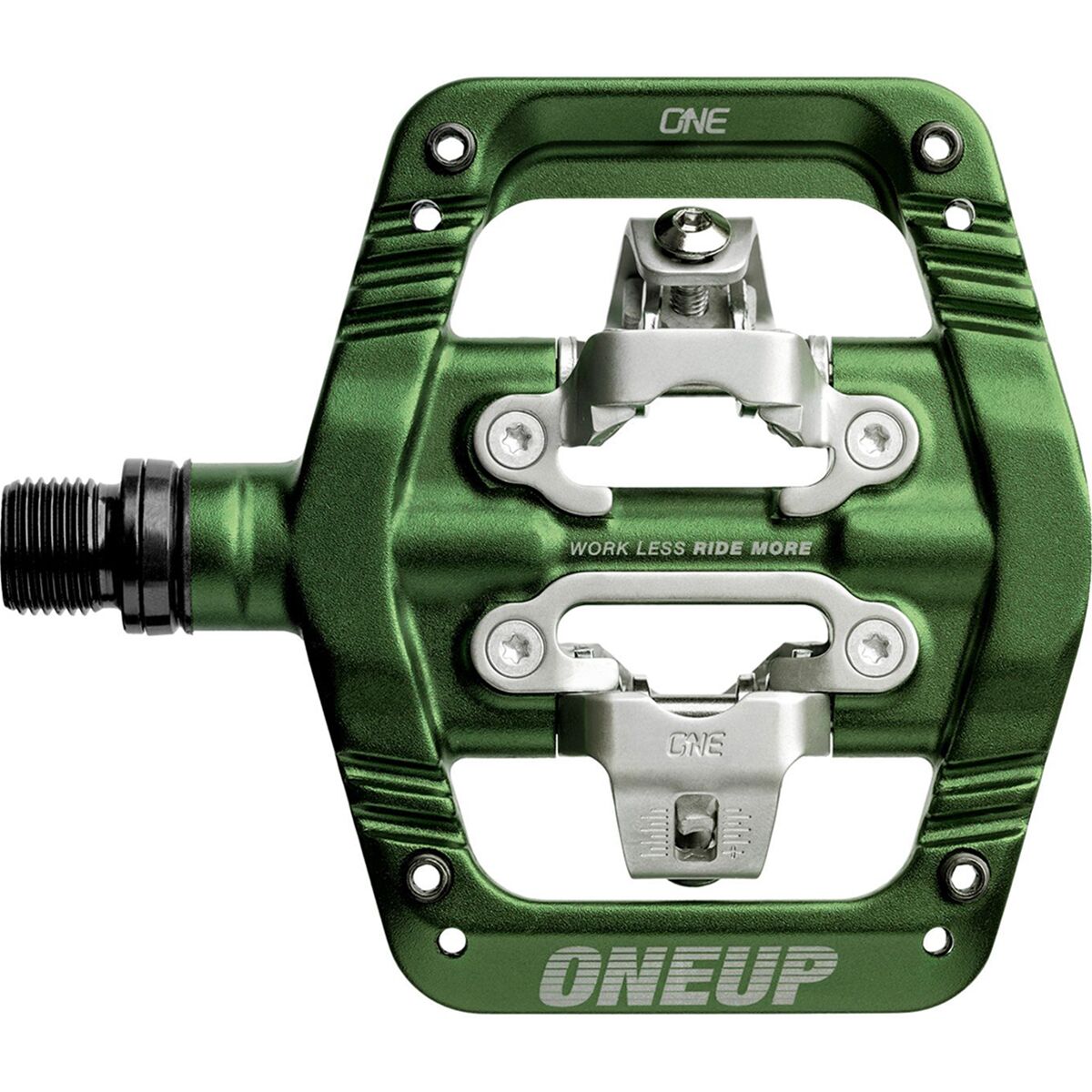
- Available in Black, Red, Green, Blue, Orange, Purple, Grey, Bronze
- 2-year warranty
- 412 grams
- $159.99 USD
Strengths | Weaknesses |
|
|

The OneUp pedal is nice and slim, with a decently sized pedal body and a familiar SPD mech. Its pins are slightly larger in diameter than the rest and are hollow, allowing cleaning with a smaller Allen key or pick. I had to remove the front pins, as they made it harder to clip in. I found these pedals to be really good in most ways. However, I did consistently find it a bit more challenging to locate the clip mech. I ran the tension screw about 6-8 clicks in from the supplied position, with plenty of room to go tighter or looser.

The pedals seemed grippier than the rest, which for me resulted in less seamless engagement than a few of the other pedals. Other people might like that. I didn’t dislike it; I just felt it made it slightly harder to clip back in after dabbing a foot. It took a few months of going back and forth between some of the SPD options to realize this, as it was something I adapted to while riding the pedals for a period. The shape of the pedal is a bit more convex front to rear, which might also play a part in the stickiness I encountered.
Overall, the OneUp clip pedals are a solid choice—they’re on the more affordable end, with a tried-and-true SPD interface and lots of color options.
| Where To Buy | |||
|---|---|---|---|
|
|
Free shipping on orders over $50 (continental U.S. only).
International shipping available. Some exclusions apply. |
Free shipping on orders over $50 (continental U.S. only).
International shipping available. Some exclusions apply. $119.99
|
|

|
|||
|
|||
|
|||
|
|
Free shipping on orders over $69 (continental U.S. only).
International shipping available. Some exclusions apply. |
Free shipping on orders over $69 (continental U.S. only).
International shipping available. Some exclusions apply. $159.99
|
|
|
|||
|
|||
|
|||
|
|||
|
|||
|
|||
|
|||
|
|||
|
|||
|
|||
Wolf Tooth Shift
- 5º of float & 12º release
- SPD-compatible (Wolf Tooth cleats included)
- Adjustable Q factor range of 51, 55, and 59 mm (additional 53 and 57 mm options available as 2 mm spacers sold separately with spacer kit). Pedals ship in 55 mm position.
- Eight optional stainless steel grip pins per pedal for increased connection – four per side, with two in front and two in rear
- Same axle and bearing design from Waveform Aluminum Pedals
- Available in Black & Ultraviolet Purple
- 5-year warranty
- 412 grams
- $239.95 USD
Strengths | Weaknesses |
|
|

The Shift pedals are similar to the OneUP clipless in size and weight. Nice and slim, with a surprisingly usable platform for shoe support. The SPD system works as advertised. The Shift pins are similar in function to those used on the Tenet Osiris. A smooth pin shaft on the end of a small hex bolt that threads in from the underside. However, they’re a bit less prominent and shorter. This, combined with a little more drop at the forward edge relative to the platform surface, let me leave all the pins installed without any interference during locating, engagement, or disengagement. I also ran the tension screw about 6-8 clicks in.
The finish quality on the spindle and threads felt higher quality than the rest. Over the course of many, many pedal swaps across different bikes, the Shift pedals had a consistently smooth and accurate feel when installing and removing them.

The amount of available platform, surface finish, and overall shape made for a combo I kept returning to. For me, the Shift was the SPD pedal that I gravitated towards and had minimal issues with throughout the testing process. I was able to get in and out without much fuss, and they work really well for me. They are more expensive, but the price feels justified. I never played with changing the pedal offset, but it seems like a cool extra feature for those who want to experiment with micro-adjusting their stance width.
| Where To Buy | |||
|---|---|---|---|
|
|
Free shipping on orders over $50 (continental U.S. only).
International shipping available. Some exclusions apply. |
Free shipping on orders over $50 (continental U.S. only).
International shipping available. Some exclusions apply. $239.95
|
|

|
|||
|
|
Free shipping on orders over $69 (continental U.S. only).
International shipping available. Some exclusions apply. |
Free shipping on orders over $69 (continental U.S. only).
International shipping available. Some exclusions apply. $239.95
|
|
|
|||
Time XYSTO
- 79x94mm alloy anodized platform
- Asymmetrical design fits the natural shape of your sole
- Customizable grip pin placement
- ATAC mechanism design
- 2.5º of float & 10º, 13º, or 17º release angle
- Steel spindle
- 57mm spindle length
- Available in Grey
- 456 grams
- $220 USD
Strengths | Weaknesses |
|
|

Having never used Time’s ATAC interface before, I was curious to try these. The engagement felt somewhere in between SPD and Crankbrothers Eggbeater. More organic feeling in terms of actual engagement and float than the SPD, without the fully flexible benefit of an Eggbeater’s independently rotating mechanism.
The XYSTO had the 2nd-largest platform in this initial batch of pedals, behind Wolf Tooth’s Shift. I removed the forward top row of pins on the pedals after riding with them all installed. As with most of the others, this forward row of pins seemed to interfere with the shoe sole when locating and disengaging. The pedal body also has a fairly open shape, with some channels on the trailing cross bars. Something about this made me feel a bit more confident when getting in and out in muddy conditions.

While the Time system uses a brass cleat, I didn’t notice the positive engagement degrading as the cleat wore down, as I did with the Crankbrothers. Perhaps it’s something to do with the shape of the cleat itself. I would continue to ride these more if it weren’t for having only one set to use across multiple bikes and shoes. Worth noting the Time cleat has no lateral slide, so there’s no way to adjust the cleat laterally along the shoe channel.
Overall, I really liked the blend of attributes the ATAC system provides. I also didn’t mind the shape, even after hearing that some Time-dedicated users preferred the smaller Speciale model. There’s something slightly rugged and utilitarian about the pedal body and shape that I liked. Quiet on engagement and disengagement, but with a bit more positive lock than the Crankbrothers.
| Where To Buy | |||
|---|---|---|---|
|
|
Free shipping on orders over $50 (continental U.S. only).
International shipping available. Some exclusions apply. |
Free shipping on orders over $50 (continental U.S. only).
International shipping available. Some exclusions apply. $220.00
|
|
|
|||
|
|
Free shipping on orders over $69 (continental U.S. only).
International shipping available. Some exclusions apply. |
Free shipping on orders over $69 (continental U.S. only).
International shipping available. Some exclusions apply. $220.00
|
|
|
|||
Shimano Enduro XTR
- Pedaling Stability and Efficiency: Wide contact area improves pedaling efficiency
- Raised pedal platform and four adjustable traction pins per side
- Robust outer cage protects pedal binding mechanism from trail impacts
- Improved seal design
- Pairs with SHIMANO CL-MT001 cleats (included) that feature multi-direction engagement | Also compatible with existing SPD cleats
- Up to a 3-year warranty
- Available in Black
- 444 grams
- $260 USD
Strengths | Weaknesses |
|
|

In my opinion, Shimano still holds the gold standard for SPD pedals. The latest Enduro XTR model seems to have lost a bit of the slipperiness that some previous-generation Shimano platform pedals had. While simultaneously retaining all of the good parts. Positive engagement and locating, easy exiting when needed, and durable. The main downside is they’re on the spendier side.

I removed all the pins after a few rides. I just never felt like they were necessary. The dropped leading edge on the XTR is really prominent, and probably the best visual example of this design feature. I really do believe there’s something to this general shape that enhances locating and engagement on an SPD pedal system. It orients the pedal at the right angle relative to the cleat and shoe sole, helping the cleat and mechanism interface. These pedals are a great modern evolution of Shimano’s SPD pedals and will remain in my regular rotation because they simply work.
| Where To Buy | |||
|---|---|---|---|

|
Free U.S. shipping on everything.
International shipping available. Some exclusions apply. |
Free U.S. shipping on everything.
International shipping available. Some exclusions apply. $260.00
|
|

|
|||

|
|||

|
|||
|
|
Free shipping on orders over $50 (continental U.S. only).
International shipping available. Some exclusions apply. |
Free shipping on orders over $50 (continental U.S. only).
International shipping available. Some exclusions apply. $260.00
|
|

|
|||

|
|||

|
|||

|
|||

|
|||

|
|||
|
|||
Stats and Scoring
The following is an attempt at scoring the pedals from 1 - 10, with 10 referencing a perfect score, and 0, well, bad. The most affordable option was scored higher, while the most expensive scored lowest. The following results depend on overall pedal size bias, so we included scores for largest and smallest preferred. Interestingly, the total scores don't necessarily align with our personal bias.
Overall score based on smaller pedal size bias
| Brand/Model | Locating Score | Price Score | Weight Score | Size - Smaller Biased | Total Score |
| Crankbrothers Mallet Enduro | 8.5 | 8.5 | 8.5 | 9 | 34.5 |
| One Up Clip Pedal | 8 | 9 | 9 | 8 | 34 |
| Wolf Tooth Shift | 9 | 7.5 | 9 | 8 | 33.5 |
| Shimano XTR Enduro PD-M9220 | 9 | 7 | 8.5 | 8.5 | 33 |
| Tenet Osiris | 8.5 | 9 | 7.5 | 7.5 | 32.5 |
| Time XYSTO | 9 | 8 | 8 | 7 | 32 |
Overall score based on larger pedal size bias
| Brand/Model | Locating Score | Price Score | Weight Score | Size - Larger Biased | Total Score |
| Time XYSTO | 9 | 8 | 8 | 9 | 34 |
| One Up Clip Pedal | 8 | 9 | 9 | 8 | 34 |
| Wolf Tooth Shift | 9 | 7.5 | 9 | 8 | 33.5 |
| Tenet Osiris | 8.5 | 9 | 7.5 | 8.5 | 33.5 |
| Crankbrothers Mallet Enduro | 8.5 | 8.5 | 8.5 | 7 | 32.5 |
| Shimano XTR Enduro PD-M9220 | 9 | 7 | 8.5 | 7.5 | 32 |
Collecting all this data to clearly see how they stack up against one another is great, but also a little misleading if that's your only metric. Personal preference played a big part of identifying which pedal we gravitated towards. Foot size, shoe type, and familiarity with the cleat and mechanism interface all came into play. Thankfully, there are a lot of great options out there to choose from, and there are aspects of each pedal that we appreciated. If you're clip-curious, our best suggestion is to pick an option and commit to using them long enough to get fully comfortable with being attached to the pedal. It will take a while for the entry and release technique to become second nature.
Let us know if you have any questions, and feel free to provide your experience with any of the pedals tested! More clipless pedals will be tested and added to the article over time. Let us know if there are any pedals you'd like reviewed!
11/20/2026 9:14am


View replies to: Face Off: The Best MTB Clipless Pedals Tested
Comments