I expect it would simply be a setting in the app. Similar for when you change a chainring size on a transmission bike you're supposed to...
I expect it would simply be a setting in the app. Similar for when you change a chainring size on a transmission bike you're supposed to re-setup your derailleur with the app.
FWIW this is the app. Plug in the info, hit calculate and it spits out chain length. Chainstay length is preset by model/side/etc but I'm sure if that data point was editable it would spit out a different chain length.
I expect it would simply be a setting in the app. Similar for when you change a chainring size on a transmission bike you're supposed to...
I expect it would simply be a setting in the app. Similar for when you change a chainring size on a transmission bike you're supposed to re-setup your derailleur with the app.
I agree, But if the app told them they needed a longer chain because they changed the chainstay length, how many people would actually drop the...
I agree, But if the app told them they needed a longer chain because they changed the chainstay length, how many people would actually drop the $$$ for a new chain? Or re-stup their drive-train with the app in the parking lot before hitting the trail? Most people would probably just "run it." Then bitch to all their friends how much Transmission sucks.
Well that falls under people following directions and applies to literally every part of a bike. That's a whole other topic.
I expect it would simply be a setting in the app. Similar for when you change a chainring size on a transmission bike you're supposed to...
I expect it would simply be a setting in the app. Similar for when you change a chainring size on a transmission bike you're supposed to re-setup your derailleur with the app.
FWIW this is the app. Plug in the info, hit calculate and it spits out chain length. Chainstay length is preset by model/side/etc but I'm sure...
FWIW this is the app. Plug in the info, hit calculate and it spits out chain length. Chainstay length is preset by model/side/etc but I'm sure if that data point was editable it would spit out a different chain length.
Exactly like that. Either two different Decoy models in your example with chips in different positions or a new data field for chip position. It'd be simple enough to incorporate. No different than someone with Transmission changing a chainring.
I hate to be the bearer of bad new, but you are going to see less and less adjustable chainstays moving forward. The wide adoption of...
I hate to be the bearer of bad new, but you are going to see less and less adjustable chainstays moving forward. The wide adoption of UDH means no more chainstay adjustments. The only adjustable UDH dropouts I've seen are from small steel hardtail builders.
I think there are others, just not coming to mind right now.
Yes, Rocky has done this for some bike platforms. It's worth noting that for the ones that do have it in the short mode use a specific hanger to Rocky and then the long uses the UDH. Therefore to above points yes, Transmission only compatible in the longer of the two adjustments.
I recall seeing something in pit bits many moons ago.. Atherton DH bike very clearly had a UDH dropout that looked like a potential 2-3 position puck system for RC adjustment. Couldn't get a direct view of how it worked from interior/hub side, but it was spotted and discussed nonetheless. Pretty neat if there was a viable solution brands could adopt into frame design.
Thinking from a 30k foot view on the design side: modular dropouts might just be the best solution to adequately offer adjustment with keeping mounting secure and kinematics in line. However, thinking with the brain that I have, they just may be a Product Manager or Engineer's nightmare in terms of additional SKU's on a BOM and multitude of additions to development test plans.
Yes, Rocky has done this for some bike platforms. It's worth noting that for the ones that do have it in the short mode use a...
Yes, Rocky has done this for some bike platforms. It's worth noting that for the ones that do have it in the short mode use a specific hanger to Rocky and then the long uses the UDH. Therefore to above points yes, Transmission only compatible in the longer of the two adjustments.
I recall seeing something in pit bits many moons ago.. Atherton DH bike very clearly had a UDH dropout that looked like a potential 2-3 position puck system for RC adjustment. Couldn't get a direct view of how it worked from interior/hub side, but it was spotted and discussed nonetheless. Pretty neat if there was a viable solution brands could adopt into frame design.
Thinking from a 30k foot view on the design side: modular dropouts might just be the best solution to adequately offer adjustment with keeping mounting secure and kinematics in line. However, thinking with the brain that I have, they just may be a Product Manager or Engineer's nightmare in terms of additional SKU's on a BOM and multitude of additions to development test plans.
I realize not all brands can do this given their different suspension designs, but Specialized does this in a brilliant way with having a flip chip at the Horst link pivot.
Enough with the chainstay and transmission discussion - We have something else to scold Sram for.
Some really clear pics from ESMTB of the electric dropper we discussed about a few pages back. I see why they did it, but it still looks terrible. But having the battery be a part of the collar, probably greatly decreases the stack height of the whole dropper, which is positive at least.
Enough with the chainstay and transmission discussion - We have something else to scold Sram for.Some really clear pics from ESMTB of the electric dropper we...
Enough with the chainstay and transmission discussion - We have something else to scold Sram for.
Some really clear pics from ESMTB of the electric dropper we discussed about a few pages back. I see why they did it, but it still looks terrible. But having the battery be a part of the collar, probably greatly decreases the stack height of the whole dropper, which is positive at least.
In the PB comments, many are asking why not put the battery internal, but then you have to plug your whole bike into a USB-C charger instead of just popping the battery out and leaving your bike in the garage
Reading the last few pages, I am definitely convinced to keep my 1x11 drivetrain until I go for an electric motor + gearbox setup. Seems like not long now, and I am not in a hurry anyway.
Enough with the chainstay and transmission discussion - We have something else to scold Sram for.Some really clear pics from ESMTB of the electric dropper we...
Enough with the chainstay and transmission discussion - We have something else to scold Sram for.
Some really clear pics from ESMTB of the electric dropper we discussed about a few pages back. I see why they did it, but it still looks terrible. But having the battery be a part of the collar, probably greatly decreases the stack height of the whole dropper, which is positive at least.
In the PB comments, many are asking why not put the battery internal, but then you have to plug your whole bike into a USB-C charger...
In the PB comments, many are asking why not put the battery internal, but then you have to plug your whole bike into a USB-C charger instead of just popping the battery out and leaving your bike in the garage
Yeah, while I also understand why people would want that. The reason sram/fox hasnt done it is most likely because it then increases the total length of the post. And on pretty much everything except for an XC bike, people want as long of a post as possible, and to run it slammed. And adding 1-2 inches of battery to that dropper, makes so one has to run a 1-2 inch shorter dropper, the opposite of what they want. Some bikes are the exception though, that have a massive seat tube. But most bikes wont fit one of those droppers.
The batteries dimensions are now "built in" to the collar. So the top part of the dropper can be significantly smaller. I am guessing if you ran a 170mm AXS dropper before, you could probably run a 200mm one now. The stack height of the "old" one is quite big.
I believe at 170mm axs one is similar in total length to a OneUp 200mm one. Just because the top part with the battery increases the stack so much.
We can quite clearly see the difference here - Probably a good 20mm, or close to an inch of difference?
Enough with the chainstay and transmission discussion - We have something else to scold Sram for.Some really clear pics from ESMTB of the electric dropper we...
Enough with the chainstay and transmission discussion - We have something else to scold Sram for.
Some really clear pics from ESMTB of the electric dropper we discussed about a few pages back. I see why they did it, but it still looks terrible. But having the battery be a part of the collar, probably greatly decreases the stack height of the whole dropper, which is positive at least.
In the PB comments, many are asking why not put the battery internal, but then you have to plug your whole bike into a USB-C charger...
In the PB comments, many are asking why not put the battery internal, but then you have to plug your whole bike into a USB-C charger instead of just popping the battery out and leaving your bike in the garage
Pretty sure this has been proposed before but I don't see why there isn't built in wiring with power and a data line like Can bus that has ports near the cranks, dropper, derailleur and suspension which can all run to a single battery (which e bikes basically already have). Would give flexibility for using wired or wireless droppers without their own power source - you could just tap in to the power for a wireless post, or have the actuator signal transmitted on the CAN bus as well
Reading the last few pages, I am definitely convinced to keep my 1x11 drivetrain until I go for an electric motor + gearbox setup. Seems like...
Reading the last few pages, I am definitely convinced to keep my 1x11 drivetrain until I go for an electric motor + gearbox setup. Seems like not long now, and I am not in a hurry anyway.
1 x 11 was a great generation - especially the sram stuff. I feel like certain eras of drivetrain were better than others in performance, and the main thing that let 11 speed down was the range not being quite enough to get a good spread of gears without any massive jumps
Yeah, while I also understand why people would want that. The reason sram/fox hasnt done it is most likely because it then increases the total length...
Yeah, while I also understand why people would want that. The reason sram/fox hasnt done it is most likely because it then increases the total length of the post. And on pretty much everything except for an XC bike, people want as long of a post as possible, and to run it slammed. And adding 1-2 inches of battery to that dropper, makes so one has to run a 1-2 inch shorter dropper, the opposite of what they want. Some bikes are the exception though, that have a massive seat tube. But most bikes wont fit one of those droppers.
The batteries dimensions are now "built in" to the collar. So the top part of the dropper can be significantly smaller. I am guessing if you ran a 170mm AXS dropper before, you could probably run a 200mm one now. The stack height of the "old" one is quite big.
I believe at 170mm axs one is similar in total length to a OneUp 200mm one. Just because the top part with the battery increases the stack so much.
We can quite clearly see the difference here - Probably a good 20mm, or close to an inch of difference?
New one:
Old one
I've got some bad news: it doesn't matter where the added stack height is located, it's still added stack height. A 180mm post with 20mm of added stack height for a battery and motor at the top of the seatpost is just as tall as a 180mm post with 20mm of added stack height at the collar. At least if the added stack height is integrated at the very bottom of the post some people will be able to slam the post all the way into a deep-insertion seat tube. But for most people, it's probably just added stack height.
I've got some bad news: it doesn't matter where the added stack height is located, it's still added stack height. A 180mm post with 20mm of...
I've got some bad news: it doesn't matter where the added stack height is located, it's still added stack height. A 180mm post with 20mm of added stack height for a battery and motor at the top of the seatpost is just as tall as a 180mm post with 20mm of added stack height at the collar. At least if the added stack height is integrated at the very bottom of the post some people will be able to slam the post all the way into a deep-insertion seat tube. But for most people, it's probably just added stack height.
Wasn’t the point of moving the battery/motor to allow for more rear wheel clearance with the back of the saddle and thus allow for longer drop options?
I’m sure we’ll see 200mm or greater drop with next gen Reverb AXS, same as Fox did with their post.
I've got some bad news: it doesn't matter where the added stack height is located, it's still added stack height. A 180mm post with 20mm of...
I've got some bad news: it doesn't matter where the added stack height is located, it's still added stack height. A 180mm post with 20mm of added stack height for a battery and motor at the top of the seatpost is just as tall as a 180mm post with 20mm of added stack height at the collar. At least if the added stack height is integrated at the very bottom of the post some people will be able to slam the post all the way into a deep-insertion seat tube. But for most people, it's probably just added stack height.
The collar is already pretty fat on the AXS V1, and by the looks of it, it hasnt increased in size very much adding a battery to it on the V2
So by doing this, they've dropped a significant ammount of stack from the seat mount part/top of the dropper. Sorry if that wasnt clear enough in the above post.
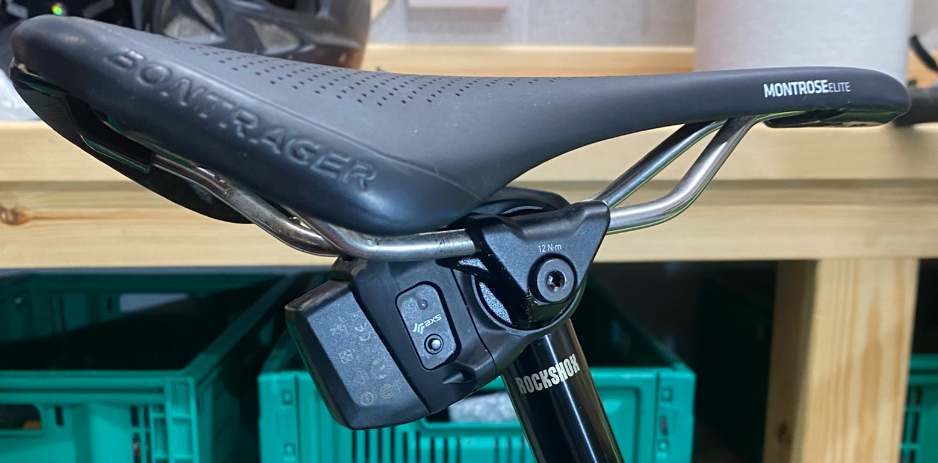
The old "collar" is quite fat on the old version:
So by putting the battery there instead of at the top, I'd say they lost a good ammount of stack - as pictured in my last post
I just measured bottom of the seat rail, to top of dropper stanchion on my bike - And its just about 25mm/1 inch~
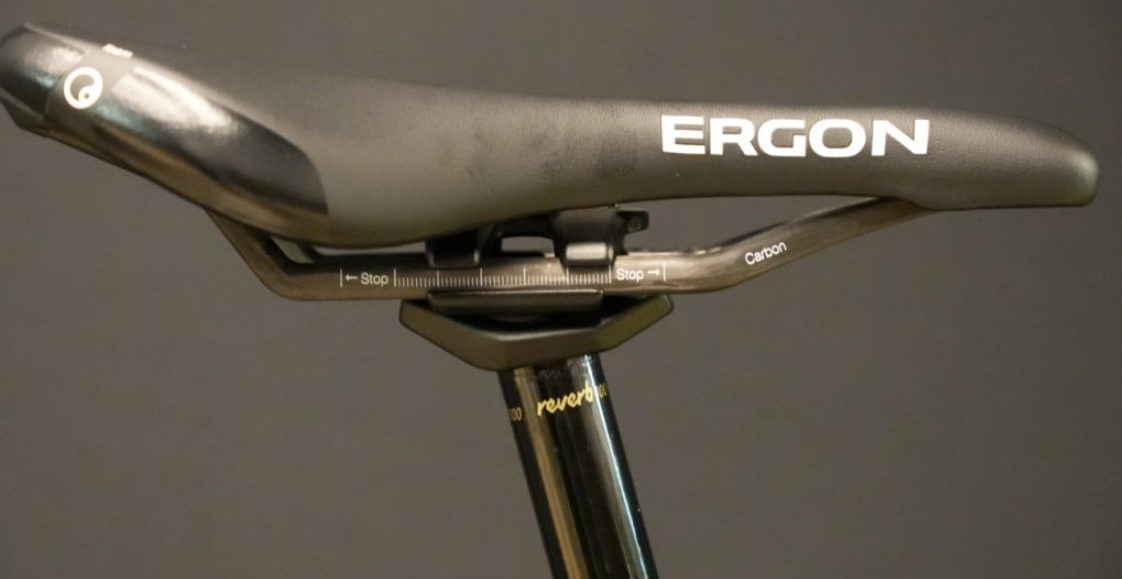
And looking at the new post, if we estimate the saddle rails to be about 7mm (I dont have a ergon seat with carbon rails, just the regular metal rails - Which are 6-7mm) - You'll now have to excuse my horrendeus MS paint skills - But the "stack" of the new seat seems to be about 2 seat rails high, so lets call it 15mm. So maybe not as much as I thought from the beginning, since the collar might still be a bit thicker with the new battery.
But then again, as mentioned above by chriskief, the main objective was probably to get the battery away from where it currently is. But take that with maybe a decrease in stack by 10-15mm, its still pretty good.
Regardless, it looks very ugly, and will probably be like $1000. So I will not be replacing my V1 any time soon
The collar is already pretty fat on the AXS V1, and by the looks of it, it hasnt increased in size very much adding a battery...
The collar is already pretty fat on the AXS V1, and by the looks of it, it hasnt increased in size very much adding a battery to it on the V2
So by doing this, they've dropped a significant ammount of stack from the seat mount part/top of the dropper. Sorry if that wasnt clear enough in the above post.
The old "collar" is quite fat on the old version:
So by putting the battery there instead of at the top, I'd say they lost a good ammount of stack - as pictured in my last post
I just measured bottom of the seat rail, to top of dropper stanchion on my bike - And its just about 25mm/1 inch~
And looking at the new post, if we estimate the saddle rails to be about 7mm (I dont have a ergon seat with carbon rails, just the regular metal rails - Which are 6-7mm) - You'll now have to excuse my horrendeus MS paint skills - But the "stack" of the new seat seems to be about 2 seat rails high, so lets call it 15mm. So maybe not as much as I thought from the beginning, since the collar might still be a bit thicker with the new battery.
But then again, as mentioned above by chriskief, the main objective was probably to get the battery away from where it currently is. But take that with maybe a decrease in stack by 10-15mm, its still pretty good.
Regardless, it looks very ugly, and will probably be like $1000. So I will not be replacing my V1 any time soon
Not just uglier but the tilt adjust on the V1 is one of the best features on my entire bike. It looks like that goes away in V2.
Enough with the chainstay and transmission discussion - We have something else to scold Sram for.Some really clear pics from ESMTB of the electric dropper we...
Enough with the chainstay and transmission discussion - We have something else to scold Sram for.
Some really clear pics from ESMTB of the electric dropper we discussed about a few pages back. I see why they did it, but it still looks terrible. But having the battery be a part of the collar, probably greatly decreases the stack height of the whole dropper, which is positive at least.
As for the chain length app for Transmission, it's not only the chainstay length, I'm sure a factor is also dynamic chainstay length going through the travel.
Enough with the chainstay and transmission discussion - We have something else to scold Sram for.Some really clear pics from ESMTB of the electric dropper we...
Enough with the chainstay and transmission discussion - We have something else to scold Sram for.
Some really clear pics from ESMTB of the electric dropper we discussed about a few pages back. I see why they did it, but it still looks terrible. But having the battery be a part of the collar, probably greatly decreases the stack height of the whole dropper, which is positive at least.
Reading the last few pages, I am definitely convinced to keep my 1x11 drivetrain until I go for an electric motor + gearbox setup. Seems like...
Reading the last few pages, I am definitely convinced to keep my 1x11 drivetrain until I go for an electric motor + gearbox setup. Seems like not long now, and I am not in a hurry anyway.
1 x 11 was a great generation - especially the sram stuff. I feel like certain eras of drivetrain were better than others in performance, and...
1 x 11 was a great generation - especially the sram stuff. I feel like certain eras of drivetrain were better than others in performance, and the main thing that let 11 speed down was the range not being quite enough to get a good spread of gears without any massive jumps
More specifically the SRAM 1 x 11 with the type 2 or 2.1 Clutches. These you can "easily" modify the clutch tension on. Running it crasy strong on all our bikes here with the Ethirteen cassettes. The same 510% wide cassette with more ground clearance than any 1 x 12 setup available.
More specifically the SRAM 1 x 11 with the type 2 or 2.1 Clutches. These you can "easily" modify the clutch tension on. Running it crasy...
More specifically the SRAM 1 x 11 with the type 2 or 2.1 Clutches. These you can "easily" modify the clutch tension on. Running it crasy strong on all our bikes here with the Ethirteen cassettes. The same 510% wide cassette with more ground clearance than any 1 x 12 setup available.
More specifically the SRAM 1 x 11 with the type 2 or 2.1 Clutches. These you can "easily" modify the clutch tension on. Running it crasy...
More specifically the SRAM 1 x 11 with the type 2 or 2.1 Clutches. These you can "easily" modify the clutch tension on. Running it crasy strong on all our bikes here with the Ethirteen cassettes. The same 510% wide cassette with more ground clearance than any 1 x 12 setup available.
This one is pretty good and show the Type 2. The Type 2.1 has a metal pin thru the housing that you also need to get rid of to be able to work on the T55 bolt. The conspiracy theory behind that metal pin is that Shimano has the patent on the clutch mechanism and sram is only licencing the clutch, and not the option to change the tension of that said clutch. I have no idea if thats the thing or not.
Yeah, while I also understand why people would want that. The reason sram/fox hasnt done it is most likely because it then increases the total length...
Yeah, while I also understand why people would want that. The reason sram/fox hasnt done it is most likely because it then increases the total length of the post. And on pretty much everything except for an XC bike, people want as long of a post as possible, and to run it slammed. And adding 1-2 inches of battery to that dropper, makes so one has to run a 1-2 inch shorter dropper, the opposite of what they want. Some bikes are the exception though, that have a massive seat tube. But most bikes wont fit one of those droppers.
The batteries dimensions are now "built in" to the collar. So the top part of the dropper can be significantly smaller. I am guessing if you ran a 170mm AXS dropper before, you could probably run a 200mm one now. The stack height of the "old" one is quite big.
I believe at 170mm axs one is similar in total length to a OneUp 200mm one. Just because the top part with the battery increases the stack so much.
We can quite clearly see the difference here - Probably a good 20mm, or close to an inch of difference?
I've got some bad news: it doesn't matter where the added stack height is located, it's still added stack height. A 180mm post with 20mm of...
I've got some bad news: it doesn't matter where the added stack height is located, it's still added stack height. A 180mm post with 20mm of added stack height for a battery and motor at the top of the seatpost is just as tall as a 180mm post with 20mm of added stack height at the collar. At least if the added stack height is integrated at the very bottom of the post some people will be able to slam the post all the way into a deep-insertion seat tube. But for most people, it's probably just added stack height.
It still adds stack height, yes; but moving the stanchion part upwards relative to the saddle rails means the insertion depth/length below the seat post's collar for any given drop length is reduced.
Especially with longer travel bikes where there often isnt a straight seat tube all the way to the bottom bracket, this is more of a limiting factor in these days of extremely low standover
Atherton S.200 aluminum DH bike now for sale - https://www.athertonbikes.com/bike/s200-downhill.html- 3 builds £6,299, £5,650 and £4,165 (according to their website on this particular day)- 12 standard...
- 3 builds £6,299, £5,650 and £4,165 (according to their website on this particular day)
- 12 standard sizes and the combination of Atherton’s “perfect-fit" sizing
- mixed wheel configuration
- 200 mm travel front and rear.
- DW4 suspension platform
- single-piece CNC'd rear triangle
S.200.1 build below
It looks like the same rear triangle (with different links and wider hub spacing), and mostly the same front triangle with the head tube lug being different to account for the different cable routing that dual crowns have. If I'm correct, and the links were available to purchase you would be able to have all 3 S-Series bikes in one!
Atherton S.200 aluminum DH bike now for sale - https://www.athertonbikes.com/bike/s200-downhill.html- 3 builds £6,299, £5,650 and £4,165 (according to their website on this particular day)- 12 standard...
- 3 builds £6,299, £5,650 and £4,165 (according to their website on this particular day)
- 12 standard sizes and the combination of Atherton’s “perfect-fit" sizing
- mixed wheel configuration
- 200 mm travel front and rear.
- DW4 suspension platform
- single-piece CNC'd rear triangle
S.200.1 build below
Looks great but I'm waiting for an S.170.G as the ultimate big enduro or bike part bike. Just enough gears in the hub to get up to speed or slog up a hill for those parks without lift access.
Then a little rework to swap out the gearbox for the motor gearbox combo and I'll buy that too. Not sure what you'd do with the battery but I'm sure they could find a solution that doesn't leave it on the outside like the Cotic.
I'm going to poke Dan next time he's driving my uplift at Dyfi.
Atherton S.200 aluminum DH bike now for sale - https://www.athertonbikes.com/bike/s200-downhill.html- 3 builds £6,299, £5,650 and £4,165 (according to their website on this particular day)- 12 standard...
- 3 builds £6,299, £5,650 and £4,165 (according to their website on this particular day)
- 12 standard sizes and the combination of Atherton’s “perfect-fit" sizing
- mixed wheel configuration
- 200 mm travel front and rear.
- DW4 suspension platform
- single-piece CNC'd rear triangle
S.200.1 build below
I'm not sure if it ever got mentioned, but during Hardline Tasi Gee's bike was making a hell of racket everytime it was caught on film, whilst Charlie's belt drive was silent.
Looks great but I'm waiting for an S.170.G as the ultimate big enduro or bike part bike. Just enough gears in the hub to get up...
Looks great but I'm waiting for an S.170.G as the ultimate big enduro or bike part bike. Just enough gears in the hub to get up to speed or slog up a hill for those parks without lift access.
Then a little rework to swap out the gearbox for the motor gearbox combo and I'll buy that too. Not sure what you'd do with the battery but I'm sure they could find a solution that doesn't leave it on the outside like the Cotic.
I'm going to poke Dan next time he's driving my uplift at Dyfi.


FWIW this is the app. Plug in the info, hit calculate and it spits out chain length. Chainstay length is preset by model/side/etc but I'm sure if that data point was editable it would spit out a different chain length.
Well that falls under people following directions and applies to literally every part of a bike. That's a whole other topic.
Exactly like that. Either two different Decoy models in your example with chips in different positions or a new data field for chip position. It'd be simple enough to incorporate. No different than someone with Transmission changing a chainring.
Yes, Rocky has done this for some bike platforms. It's worth noting that for the ones that do have it in the short mode use a specific hanger to Rocky and then the long uses the UDH. Therefore to above points yes, Transmission only compatible in the longer of the two adjustments.
I recall seeing something in pit bits many moons ago.. Atherton DH bike very clearly had a UDH dropout that looked like a potential 2-3 position puck system for RC adjustment. Couldn't get a direct view of how it worked from interior/hub side, but it was spotted and discussed nonetheless. Pretty neat if there was a viable solution brands could adopt into frame design.
Thinking from a 30k foot view on the design side: modular dropouts might just be the best solution to adequately offer adjustment with keeping mounting secure and kinematics in line. However, thinking with the brain that I have, they just may be a Product Manager or Engineer's nightmare in terms of additional SKU's on a BOM and multitude of additions to development test plans.
I realize not all brands can do this given their different suspension designs, but Specialized does this in a brilliant way with having a flip chip at the Horst link pivot.
Enough with the chainstay and transmission discussion - We have something else to scold Sram for.
Some really clear pics from ESMTB of the electric dropper we discussed about a few pages back. I see why they did it, but it still looks terrible. But having the battery be a part of the collar, probably greatly decreases the stack height of the whole dropper, which is positive at least.
https://esmtb.com/asi-es-la-canyon-lux-world-cup-cfr-de-jenny-rissveds-…
In the PB comments, many are asking why not put the battery internal, but then you have to plug your whole bike into a USB-C charger instead of just popping the battery out and leaving your bike in the garage
Seems like the only reason for this to exist is to save on labour costs in installing the post in the factory. Another innovation I can live without.
Reading the last few pages, I am definitely convinced to keep my 1x11 drivetrain until I go for an electric motor + gearbox setup. Seems like not long now, and I am not in a hurry anyway.
Yeah, while I also understand why people would want that. The reason sram/fox hasnt done it is most likely because it then increases the total length of the post. And on pretty much everything except for an XC bike, people want as long of a post as possible, and to run it slammed. And adding 1-2 inches of battery to that dropper, makes so one has to run a 1-2 inch shorter dropper, the opposite of what they want. Some bikes are the exception though, that have a massive seat tube. But most bikes wont fit one of those droppers.
The batteries dimensions are now "built in" to the collar. So the top part of the dropper can be significantly smaller. I am guessing if you ran a 170mm AXS dropper before, you could probably run a 200mm one now. The stack height of the "old" one is quite big.
I believe at 170mm axs one is similar in total length to a OneUp 200mm one. Just because the top part with the battery increases the stack so much.
We can quite clearly see the difference here - Probably a good 20mm, or close to an inch of difference?
New one:
Old one
Pretty sure this has been proposed before but I don't see why there isn't built in wiring with power and a data line like Can bus that has ports near the cranks, dropper, derailleur and suspension which can all run to a single battery (which e bikes basically already have). Would give flexibility for using wired or wireless droppers without their own power source - you could just tap in to the power for a wireless post, or have the actuator signal transmitted on the CAN bus as well
1 x 11 was a great generation - especially the sram stuff. I feel like certain eras of drivetrain were better than others in performance, and the main thing that let 11 speed down was the range not being quite enough to get a good spread of gears without any massive jumps
I've got some bad news: it doesn't matter where the added stack height is located, it's still added stack height. A 180mm post with 20mm of added stack height for a battery and motor at the top of the seatpost is just as tall as a 180mm post with 20mm of added stack height at the collar. At least if the added stack height is integrated at the very bottom of the post some people will be able to slam the post all the way into a deep-insertion seat tube. But for most people, it's probably just added stack height.
Wasn’t the point of moving the battery/motor to allow for more rear wheel clearance with the back of the saddle and thus allow for longer drop options?
I’m sure we’ll see 200mm or greater drop with next gen Reverb AXS, same as Fox did with their post.
The collar is already pretty fat on the AXS V1, and by the looks of it, it hasnt increased in size very much adding a battery to it on the V2
So by doing this, they've dropped a significant ammount of stack from the seat mount part/top of the dropper. Sorry if that wasnt clear enough in the above post.

The old "collar" is quite fat on the old version:
So by putting the battery there instead of at the top, I'd say they lost a good ammount of stack - as pictured in my last post
I just measured bottom of the seat rail, to top of dropper stanchion on my bike - And its just about 25mm/1 inch~

And looking at the new post, if we estimate the saddle rails to be about 7mm (I dont have a ergon seat with carbon rails, just the regular metal rails - Which are 6-7mm) - You'll now have to excuse my horrendeus MS paint skills - But the "stack" of the new seat seems to be about 2 seat rails high, so lets call it 15mm. So maybe not as much as I thought from the beginning, since the collar might still be a bit thicker with the new battery.

But then again, as mentioned above by chriskief, the main objective was probably to get the battery away from where it currently is. But take that with maybe a decrease in stack by 10-15mm, its still pretty good.
Regardless, it looks very ugly, and will probably be like $1000. So I will not be replacing my V1 any time soon
Not just uglier but the tilt adjust on the V1 is one of the best features on my entire bike. It looks like that goes away in V2.
But can you stand on it?
You can. Should you though?
As for the chain length app for Transmission, it's not only the chainstay length, I'm sure a factor is also dynamic chainstay length going through the travel.
Looks like a perfect step to me 🤷♂️
More specifically the SRAM 1 x 11 with the type 2 or 2.1 Clutches. These you can "easily" modify the clutch tension on. Running it crasy strong on all our bikes here with the Ethirteen cassettes. The same 510% wide cassette with more ground clearance than any 1 x 12 setup available.
How do you modify it?
This one is pretty good and show the Type 2. The Type 2.1 has a metal pin thru the housing that you also need to get rid of to be able to work on the T55 bolt. The conspiracy theory behind that metal pin is that Shimano has the patent on the clutch mechanism and sram is only licencing the clutch, and not the option to change the tension of that said clutch. I have no idea if thats the thing or not.
https://www.mtbiking.com.au/workshop/sram-type-2-derailleur-clutch-overhaul
The looks so bad. Who the hell wants a battery penis on their seat post.
All this because some frame manufacturers cant figure how not to slam the rear wheel into the seat post on big compressions
Paging Dr. Freud…
Atherton S.200 aluminum DH bike now for sale - https://www.athertonbikes.com/bike/s200-downhill.html
- 3 builds £6,299, £5,650 and £4,165 (according to their website on this particular day)
- 12 standard sizes and the combination of Atherton’s “perfect-fit" sizing
- mixed wheel configuration
- 200 mm travel front and rear.
- DW4 suspension platform
- single-piece CNC'd rear triangle
S.200.1 build below
It still adds stack height, yes; but moving the stanchion part upwards relative to the saddle rails means the insertion depth/length below the seat post's collar for any given drop length is reduced.
Especially with longer travel bikes where there often isnt a straight seat tube all the way to the bottom bracket, this is more of a limiting factor in these days of extremely low standover
It looks like the same rear triangle (with different links and wider hub spacing), and mostly the same front triangle with the head tube lug being different to account for the different cable routing that dual crowns have. If I'm correct, and the links were available to purchase you would be able to have all 3 S-Series bikes in one!
Looks great but I'm waiting for an S.170.G as the ultimate big enduro or bike part bike. Just enough gears in the hub to get up to speed or slog up a hill for those parks without lift access.
Then a little rework to swap out the gearbox for the motor gearbox combo and I'll buy that too. Not sure what you'd do with the battery but I'm sure they could find a solution that doesn't leave it on the outside like the Cotic.
I'm going to poke Dan next time he's driving my uplift at Dyfi.
I'm not sure if it ever got mentioned, but during Hardline Tasi Gee's bike was making a hell of racket everytime it was caught on film, whilst Charlie's belt drive was silent.
Waves at fellow Wrexhamite. 🤪