For all the people questioning why front 27.5 dying it’s simply a question of the direction the major parts suppliers commited to heading. Simply they want...
For all the people questioning why front 27.5 dying it’s simply a question of the direction the major parts suppliers commited to heading. Simply they want to commit to 27.5 front for kids market only. Meaning they only need to produce 29 front wheels/forks for the adult market. And while I fully expect brands to design frames to accept 29er forks with 27.5 wheels as the stock setup in adult sizes in conservative production runs in the future. The vast majority of bike brands had already committed to 29 front before manufacturers started telling them they were going to wind down availability. And I’d imagine if tire buzz wasn’t such an issue for such a large portion of riders the parts manufacturers would be pushing more brands to commit to full 29 across sizes. But luckily enough riders are demanding the smaller rear wheel that frame builders and part suppliers see the mullet option as indispensable.
27.5 wheel in 29er fork works just fine. Might even be preferable to a 27.5 in a 27.5 if you like the extra axle to crown. But assuming you are putting a 27.5 wheel in front to improve maneuverability at the cost of braking/rolling speed rather than that’s the wheel you have then the shorter axle to crown for travel and reduced offset of a dedicated 27.5 fork is going to increase that maneuverability further.
I think it also probably also has alot to do with what the racers are riding. Racing seems to get more exposure then freeride so its...
I think it also probably also has alot to do with what the racers are riding. Racing seems to get more exposure then freeride so its better marketing. Dont get me wrong, there are still alot of people who want full 27.5 but alot of people are going to by mullet just because its what (insert favorite pro racer name here) is riding
It could also be that 29ers are retty dang good these days... But I digress.
Now for an actual rumor. Sounds like Sram is dropping DOT fluid brakes due to EU regulations.
I wonder how/if at all this will affect other brands like hope, who continue to use DOT for their fluid.
For all the people questioning why front 27.5 dying it’s simply a question of the direction the major parts suppliers commited to heading. Simply they want...
For all the people questioning why front 27.5 dying it’s simply a question of the direction the major parts suppliers commited to heading. Simply they want to commit to 27.5 front for kids market only. Meaning they only need to produce 29 front wheels/forks for the adult market. And while I fully expect brands to design frames to accept 29er forks with 27.5 wheels as the stock setup in adult sizes in conservative production runs in the future. The vast majority of bike brands had already committed to 29 front before manufacturers started telling them they were going to wind down availability. And I’d imagine if tire buzz wasn’t such an issue for such a large portion of riders the parts manufacturers would be pushing more brands to commit to full 29 across sizes. But luckily enough riders are demanding the smaller rear wheel that frame builders and part suppliers see the mullet option as indispensable.
27.5 wheel in 29er fork works just fine. Might even be preferable to a 27.5 in a 27.5 if you like the extra axle to crown. But assuming you are putting a 27.5 wheel in front to improve maneuverability at the cost of braking/rolling speed rather than that’s the wheel you have then the shorter axle to crown for travel and reduced offset of a dedicated 27.5 fork is going to increase that maneuverability further.
I think it also probably also has alot to do with what the racers are riding. Racing seems to get more exposure then freeride so its...
I think it also probably also has alot to do with what the racers are riding. Racing seems to get more exposure then freeride so its better marketing. Dont get me wrong, there are still alot of people who want full 27.5 but alot of people are going to by mullet just because its what (insert favorite pro racer name here) is riding
I want to know this too. And does it apply to cars too? Surely if there's an exemption for cars, there can be a (safety related) exemption for bikes too?
For all the people questioning why front 27.5 dying it’s simply a question of the direction the major parts suppliers commited to heading. Simply they want...
For all the people questioning why front 27.5 dying it’s simply a question of the direction the major parts suppliers commited to heading. Simply they want to commit to 27.5 front for kids market only. Meaning they only need to produce 29 front wheels/forks for the adult market. And while I fully expect brands to design frames to accept 29er forks with 27.5 wheels as the stock setup in adult sizes in conservative production runs in the future. The vast majority of bike brands had already committed to 29 front before manufacturers started telling them they were going to wind down availability. And I’d imagine if tire buzz wasn’t such an issue for such a large portion of riders the parts manufacturers would be pushing more brands to commit to full 29 across sizes. But luckily enough riders are demanding the smaller rear wheel that frame builders and part suppliers see the mullet option as indispensable.
27.5 wheel in 29er fork works just fine. Might even be preferable to a 27.5 in a 27.5 if you like the extra axle to crown. But assuming you are putting a 27.5 wheel in front to improve maneuverability at the cost of braking/rolling speed rather than that’s the wheel you have then the shorter axle to crown for travel and reduced offset of a dedicated 27.5 fork is going to increase that maneuverability further.
I think it also probably also has alot to do with what the racers are riding. Racing seems to get more exposure then freeride so its...
I think it also probably also has alot to do with what the racers are riding. Racing seems to get more exposure then freeride so its better marketing. Dont get me wrong, there are still alot of people who want full 27.5 but alot of people are going to by mullet just because its what (insert favorite pro racer name here) is riding
I want to know this too. And does it apply to cars too? Surely if there's an exemption for cars, there can be a (safety related)...
I want to know this too. And does it apply to cars too? Surely if there's an exemption for cars, there can be a (safety related) exemption for bikes too?
It's being pushed by manufacturers (at bike assembly stage) who are trying to minimise damage to bikes because as DOT 4/5.1 can be very damaging to paint and anodising if not noticed/cleaned. Mineral oils (used by the bike industry) are less damaging. And of course there's worker safety too.
I heard about this being talked about in Magura at least 3 years ago. So I guess it's finally making its way through the process of becoming a "law".
I'd imagine automotive will be exempt because they have a more mechanised assembly process so can get brake systems filled and tested by non-humans.
Honestly I'm not sure what the actual regulation is... Or if its some kind of duty for hazardous waste/something along those lines. I just happened to hear this from multiple sources in relation to some new product offerings from Sram, and was curious if someone in the region knew more regarding any regulatory changes.
I've had lots of experience dealing with tightening restrictions for waste/hazardous materials in electronics for another industry, so it tracks for the EU to be limiting hazardous materials where it can. These electrical restrictions have exemptions for industrial/automotive purposes, so I doubt cars will be giving up DOT anytime soon.
Okay Im out of the loop with this kind of stuff with brakes. Is there a big deal to Sram not using DOT and transitioning to mineral oil? I dont service my own brakes because I do not have the setup for it since I switch bikes. So Ive never really invested into the deep knowledge. All I know is DOT can be rough on surfaces and health as someone mentioned before.
DOT fluid is a paint thinner but is not particularly toxic to humans. I mean, it is if you drink it and can be irritating for the skin after prolonged exposure, but it's nothing wearing gloves doesn't remedy. Otherwise it is more or less completely deactivated by just spraying it with water as opposed to mineral oil which is not water solluble.
Based on the comments as to why Sram was pushed to move to mineral oil vs. DOT fluid, looks like it's mostly the paint that is the issue...
DOT fluid is a paint thinner but is not particularly toxic to humans. I mean, it is if you drink it and can be irritating for...
DOT fluid is a paint thinner but is not particularly toxic to humans. I mean, it is if you drink it and can be irritating for the skin after prolonged exposure, but it's nothing wearing gloves doesn't remedy. Otherwise it is more or less completely deactivated by just spraying it with water as opposed to mineral oil which is not water solluble.
Based on the comments as to why Sram was pushed to move to mineral oil vs. DOT fluid, looks like it's mostly the paint that is the issue...
Having had a shop replace my sram brakes with some maguras before and them not wiping the spilled dot fluid off the frame, the paint issue is real. It totally ate my frames finish away. On the other hand, it's not a super good reason to move away from it entirely. I honestly like dot fluid, and I think dot fluid brakes remain more consistent in wet areas because it mixes with the water. Sure it reduces the boiling point a bit, but it's consistently reduced across the whole system, unlike with mineral oil where you'll have water in the line with one boiling point and mineral oil with a different one. Brakes get hot, water turns to steam, becomes compressible, spongy brakes. Bleed your brakes regularly and there are no issues with either fluid so it's all moot anyways. The real question is "Dot 4 or dot 5.1?"
DOT fluid is a paint thinner but is not particularly toxic to humans. I mean, it is if you drink it and can be irritating for...
DOT fluid is a paint thinner but is not particularly toxic to humans. I mean, it is if you drink it and can be irritating for the skin after prolonged exposure, but it's nothing wearing gloves doesn't remedy. Otherwise it is more or less completely deactivated by just spraying it with water as opposed to mineral oil which is not water solluble.
Based on the comments as to why Sram was pushed to move to mineral oil vs. DOT fluid, looks like it's mostly the paint that is the issue...
Having had a shop replace my sram brakes with some maguras before and them not wiping the spilled dot fluid off the frame, the paint issue...
Having had a shop replace my sram brakes with some maguras before and them not wiping the spilled dot fluid off the frame, the paint issue is real. It totally ate my frames finish away. On the other hand, it's not a super good reason to move away from it entirely. I honestly like dot fluid, and I think dot fluid brakes remain more consistent in wet areas because it mixes with the water. Sure it reduces the boiling point a bit, but it's consistently reduced across the whole system, unlike with mineral oil where you'll have water in the line with one boiling point and mineral oil with a different one. Brakes get hot, water turns to steam, becomes compressible, spongy brakes. Bleed your brakes regularly and there are no issues with either fluid so it's all moot anyways. The real question is "Dot 4 or dot 5.1?"
Dot 5.1 has a slightly better minimum spec than dot 4, but once you get into high performance fluids it really doesn’t matter.
For example, the minimum “wet” boiling point for dot 4 and 5.1 is 311 or 356 Fahrenheit respectively.
Redline RF-600 dot 4 has a wet boiling point of 400f.
Wilwood XR race dot 5.1 has a wet boiling point of 432f.
Dry boiling points for both are over 600f. Higher than any mineral oil I’m aware of.
DOT fluid is a paint thinner but is not particularly toxic to humans. I mean, it is if you drink it and can be irritating for...
DOT fluid is a paint thinner but is not particularly toxic to humans. I mean, it is if you drink it and can be irritating for the skin after prolonged exposure, but it's nothing wearing gloves doesn't remedy. Otherwise it is more or less completely deactivated by just spraying it with water as opposed to mineral oil which is not water solluble.
Based on the comments as to why Sram was pushed to move to mineral oil vs. DOT fluid, looks like it's mostly the paint that is the issue...
Having had a shop replace my sram brakes with some maguras before and them not wiping the spilled dot fluid off the frame, the paint issue...
Having had a shop replace my sram brakes with some maguras before and them not wiping the spilled dot fluid off the frame, the paint issue is real. It totally ate my frames finish away. On the other hand, it's not a super good reason to move away from it entirely. I honestly like dot fluid, and I think dot fluid brakes remain more consistent in wet areas because it mixes with the water. Sure it reduces the boiling point a bit, but it's consistently reduced across the whole system, unlike with mineral oil where you'll have water in the line with one boiling point and mineral oil with a different one. Brakes get hot, water turns to steam, becomes compressible, spongy brakes. Bleed your brakes regularly and there are no issues with either fluid so it's all moot anyways. The real question is "Dot 4 or dot 5.1?"
Dot 5.1 has a slightly better minimum spec than dot 4, but once you get into high performance fluids it really doesn’t matter.For example, the minimum...
Dot 5.1 has a slightly better minimum spec than dot 4, but once you get into high performance fluids it really doesn’t matter.
For example, the minimum “wet” boiling point for dot 4 and 5.1 is 311 or 356 Fahrenheit respectively.
Redline RF-600 dot 4 has a wet boiling point of 400f.
Wilwood XR race dot 5.1 has a wet boiling point of 432f.
Dry boiling points for both are over 600f. Higher than any mineral oil I’m aware of.
Is it a real issue for Mtb tho ? I boil my pads and discs at will, yet I haven't had any issues with fluid boiling and having me pump the lever. Maybe if I could find a pad/disc combo that I am unable to boil and have them fade, but then tue system would probably not je hot enough to boil the fluid in my calipers. That's my experience riding mineral fluid brakes for the last 10 years or so, usually bled with some Ferodo LHM+ bought more than 10 years ago lol.
There have been numerous report where mixing and matching mineral oils between manufacturers caused some changes in the seals. Maybe not structural, but something was happening. And all manufacturers state their brakes can only be used with such and such brake oil.
Any DOT x fluid can be put in any DOT x compatible brake. You can get the correct fluid in any local automotive parts shop, unlike mineral oil for a finnicky brake if it's too esoteric.
DOT fluid is a paint thinner but is not particularly toxic to humans. I mean, it is if you drink it and can be irritating for...
DOT fluid is a paint thinner but is not particularly toxic to humans. I mean, it is if you drink it and can be irritating for the skin after prolonged exposure, but it's nothing wearing gloves doesn't remedy. Otherwise it is more or less completely deactivated by just spraying it with water as opposed to mineral oil which is not water solluble.
Based on the comments as to why Sram was pushed to move to mineral oil vs. DOT fluid, looks like it's mostly the paint that is the issue...
Having had a shop replace my sram brakes with some maguras before and them not wiping the spilled dot fluid off the frame, the paint issue...
Having had a shop replace my sram brakes with some maguras before and them not wiping the spilled dot fluid off the frame, the paint issue is real. It totally ate my frames finish away. On the other hand, it's not a super good reason to move away from it entirely. I honestly like dot fluid, and I think dot fluid brakes remain more consistent in wet areas because it mixes with the water. Sure it reduces the boiling point a bit, but it's consistently reduced across the whole system, unlike with mineral oil where you'll have water in the line with one boiling point and mineral oil with a different one. Brakes get hot, water turns to steam, becomes compressible, spongy brakes. Bleed your brakes regularly and there are no issues with either fluid so it's all moot anyways. The real question is "Dot 4 or dot 5.1?"
Yup, both fluids are about equally bad - I think its just a perception that people think mineral oil is "friendlier" despite being you know, a petroleum product....
So it seems weird to target dot fluid when so much more of it is used in cars and there are far worse materials like PTFE still being used in chain lubes and suspension oil
There have been numerous report where mixing and matching mineral oils between manufacturers caused some changes in the seals. Maybe not structural, but something was happening...
There have been numerous report where mixing and matching mineral oils between manufacturers caused some changes in the seals. Maybe not structural, but something was happening. And all manufacturers state their brakes can only be used with such and such brake oil.
Any DOT x fluid can be put in any DOT x compatible brake. You can get the correct fluid in any local automotive parts shop, unlike mineral oil for a finnicky brake if it's too esoteric.
You can see the differences in the mineral oils between brands too, pour a little out and magura, Shimano, maxima, and finish line oils all have a slightly different viscosity, finish line is the thickest and sram/maxima seems the thinnest to me. TRP/tektro and Shimano are pretty much the same though. I wonder if the different viscosities and frictions are what can cause issues with the seals, premature wear or something like that. I would love to test out running different oils in different brakes to see how the wear changes.
There have been numerous report where mixing and matching mineral oils between manufacturers caused some changes in the seals. Maybe not structural, but something was happening...
There have been numerous report where mixing and matching mineral oils between manufacturers caused some changes in the seals. Maybe not structural, but something was happening. And all manufacturers state their brakes can only be used with such and such brake oil.
Any DOT x fluid can be put in any DOT x compatible brake. You can get the correct fluid in any local automotive parts shop, unlike mineral oil for a finnicky brake if it's too esoteric.
Oh you DOT fan boys 😆
It is a shame that there is no standard for mineral oils. A “DOT M” would suffice.
I never have found it hard to keep a personal stock of my preferred mineral oil though. And i do like that when you open the bottle it lasts more than 6 months.
I should clarify that whilst i’m a fan of a good quality mineral brake, my last and current brakes are DOT. And they’ve both been good.
DOT fluid is a paint thinner but is not particularly toxic to humans. I mean, it is if you drink it and can be irritating for...
DOT fluid is a paint thinner but is not particularly toxic to humans. I mean, it is if you drink it and can be irritating for the skin after prolonged exposure, but it's nothing wearing gloves doesn't remedy. Otherwise it is more or less completely deactivated by just spraying it with water as opposed to mineral oil which is not water solluble.
Based on the comments as to why Sram was pushed to move to mineral oil vs. DOT fluid, looks like it's mostly the paint that is the issue...
Having had a shop replace my sram brakes with some maguras before and them not wiping the spilled dot fluid off the frame, the paint issue...
Having had a shop replace my sram brakes with some maguras before and them not wiping the spilled dot fluid off the frame, the paint issue is real. It totally ate my frames finish away. On the other hand, it's not a super good reason to move away from it entirely. I honestly like dot fluid, and I think dot fluid brakes remain more consistent in wet areas because it mixes with the water. Sure it reduces the boiling point a bit, but it's consistently reduced across the whole system, unlike with mineral oil where you'll have water in the line with one boiling point and mineral oil with a different one. Brakes get hot, water turns to steam, becomes compressible, spongy brakes. Bleed your brakes regularly and there are no issues with either fluid so it's all moot anyways. The real question is "Dot 4 or dot 5.1?"
Yup, both fluids are about equally bad - I think its just a perception that people think mineral oil is "friendlier" despite being you know, a...
Yup, both fluids are about equally bad - I think its just a perception that people think mineral oil is "friendlier" despite being you know, a petroleum product....
So it seems weird to target dot fluid when so much more of it is used in cars and there are far worse materials like PTFE still being used in chain lubes and suspension oil
DOT fluid is a paint thinner but is not particularly toxic to humans. I mean, it is if you drink it and can be irritating for...
DOT fluid is a paint thinner but is not particularly toxic to humans. I mean, it is if you drink it and can be irritating for the skin after prolonged exposure, but it's nothing wearing gloves doesn't remedy. Otherwise it is more or less completely deactivated by just spraying it with water as opposed to mineral oil which is not water solluble.
Based on the comments as to why Sram was pushed to move to mineral oil vs. DOT fluid, looks like it's mostly the paint that is the issue...
Having had a shop replace my sram brakes with some maguras before and them not wiping the spilled dot fluid off the frame, the paint issue...
Having had a shop replace my sram brakes with some maguras before and them not wiping the spilled dot fluid off the frame, the paint issue is real. It totally ate my frames finish away. On the other hand, it's not a super good reason to move away from it entirely. I honestly like dot fluid, and I think dot fluid brakes remain more consistent in wet areas because it mixes with the water. Sure it reduces the boiling point a bit, but it's consistently reduced across the whole system, unlike with mineral oil where you'll have water in the line with one boiling point and mineral oil with a different one. Brakes get hot, water turns to steam, becomes compressible, spongy brakes. Bleed your brakes regularly and there are no issues with either fluid so it's all moot anyways. The real question is "Dot 4 or dot 5.1?"
Dot 5.1 has a slightly better minimum spec than dot 4, but once you get into high performance fluids it really doesn’t matter.For example, the minimum...
Dot 5.1 has a slightly better minimum spec than dot 4, but once you get into high performance fluids it really doesn’t matter.
For example, the minimum “wet” boiling point for dot 4 and 5.1 is 311 or 356 Fahrenheit respectively.
Redline RF-600 dot 4 has a wet boiling point of 400f.
Wilwood XR race dot 5.1 has a wet boiling point of 432f.
Dry boiling points for both are over 600f. Higher than any mineral oil I’m aware of.
https://www.radicperformance.com/brake-fluid-tech Bionol and Gold Hydraulic oil boil over 400 celsius, although it seems that one of the best performing mineral fluids is the plutoline, which has a way lower boil point, so i'm not sure how this influences performances on mtb brakes
Having had a shop replace my sram brakes with some maguras before and them not wiping the spilled dot fluid off the frame, the paint issue...
Having had a shop replace my sram brakes with some maguras before and them not wiping the spilled dot fluid off the frame, the paint issue is real. It totally ate my frames finish away. On the other hand, it's not a super good reason to move away from it entirely. I honestly like dot fluid, and I think dot fluid brakes remain more consistent in wet areas because it mixes with the water. Sure it reduces the boiling point a bit, but it's consistently reduced across the whole system, unlike with mineral oil where you'll have water in the line with one boiling point and mineral oil with a different one. Brakes get hot, water turns to steam, becomes compressible, spongy brakes. Bleed your brakes regularly and there are no issues with either fluid so it's all moot anyways. The real question is "Dot 4 or dot 5.1?"
Dot 5.1 has a slightly better minimum spec than dot 4, but once you get into high performance fluids it really doesn’t matter.For example, the minimum...
Dot 5.1 has a slightly better minimum spec than dot 4, but once you get into high performance fluids it really doesn’t matter.
For example, the minimum “wet” boiling point for dot 4 and 5.1 is 311 or 356 Fahrenheit respectively.
Redline RF-600 dot 4 has a wet boiling point of 400f.
Wilwood XR race dot 5.1 has a wet boiling point of 432f.
Dry boiling points for both are over 600f. Higher than any mineral oil I’m aware of.
https://www.radicperformance.com/brake-fluid-tech Bionol and Gold Hydraulic oil boil over 400 celsius, although it seems that one of the best performing mineral fluids is the plutoline, which has...
https://www.radicperformance.com/brake-fluid-tech Bionol and Gold Hydraulic oil boil over 400 celsius, although it seems that one of the best performing mineral fluids is the plutoline, which has a way lower boil point, so i'm not sure how this influences performances on mtb brakes
Because their claimed performance is such an outlier, I’m slightly skeptical of the Bionol and Gold fluid claims. I haven’t been able to find any real information on them other than marketing material.
I’d love to see an actual Technical Data Sheet for them.
Past a certain point it doesn’t matter though. The ETFE liner in your brake hose will melt at 260-280C anyway.
Dot 5.1 has a slightly better minimum spec than dot 4, but once you get into high performance fluids it really doesn’t matter.For example, the minimum...
Dot 5.1 has a slightly better minimum spec than dot 4, but once you get into high performance fluids it really doesn’t matter.
For example, the minimum “wet” boiling point for dot 4 and 5.1 is 311 or 356 Fahrenheit respectively.
Redline RF-600 dot 4 has a wet boiling point of 400f.
Wilwood XR race dot 5.1 has a wet boiling point of 432f.
Dry boiling points for both are over 600f. Higher than any mineral oil I’m aware of.
https://www.radicperformance.com/brake-fluid-tech Bionol and Gold Hydraulic oil boil over 400 celsius, although it seems that one of the best performing mineral fluids is the plutoline, which has...
https://www.radicperformance.com/brake-fluid-tech Bionol and Gold Hydraulic oil boil over 400 celsius, although it seems that one of the best performing mineral fluids is the plutoline, which has a way lower boil point, so i'm not sure how this influences performances on mtb brakes
Because their claimed performance is such an outlier, I’m slightly skeptical of the Bionol and Gold fluid claims. I haven’t been able to find any real...
Because their claimed performance is such an outlier, I’m slightly skeptical of the Bionol and Gold fluid claims. I haven’t been able to find any real information on them other than marketing material.
I’d love to see an actual Technical Data Sheet for them.
Past a certain point it doesn’t matter though. The ETFE liner in your brake hose will melt at 260-280C anyway.
Having had a shop replace my sram brakes with some maguras before and them not wiping the spilled dot fluid off the frame, the paint issue...
Having had a shop replace my sram brakes with some maguras before and them not wiping the spilled dot fluid off the frame, the paint issue is real. It totally ate my frames finish away. On the other hand, it's not a super good reason to move away from it entirely. I honestly like dot fluid, and I think dot fluid brakes remain more consistent in wet areas because it mixes with the water. Sure it reduces the boiling point a bit, but it's consistently reduced across the whole system, unlike with mineral oil where you'll have water in the line with one boiling point and mineral oil with a different one. Brakes get hot, water turns to steam, becomes compressible, spongy brakes. Bleed your brakes regularly and there are no issues with either fluid so it's all moot anyways. The real question is "Dot 4 or dot 5.1?"
Yup, both fluids are about equally bad - I think its just a perception that people think mineral oil is "friendlier" despite being you know, a...
Yup, both fluids are about equally bad - I think its just a perception that people think mineral oil is "friendlier" despite being you know, a petroleum product....
So it seems weird to target dot fluid when so much more of it is used in cars and there are far worse materials like PTFE still being used in chain lubes and suspension oil
I have faith in Radic and tirckstuff that those fluids work well in their products and have been tested for it, but my experience with bio-based oils replacing mineral oil in suspension products (seal swelling etc) would make me wary of putting it in mainstream brands not designed for it
I’m not a petrochemical engineer, but I’m assuming there’s a 0-100% range because the fluid is a mix of chemicals with different heat capacities and boiling points? If so, I’m not sure the 100% boiling temperature would matter.
I think as soon as any significant percentage of the fluid boils, your brake is useless until it cools. (No idea what percent would be the threshold, my guess would be 2-5%)
DOT fluid is a paint thinner but is not particularly toxic to humans. I mean, it is if you drink it and can be irritating for...
DOT fluid is a paint thinner but is not particularly toxic to humans. I mean, it is if you drink it and can be irritating for the skin after prolonged exposure, but it's nothing wearing gloves doesn't remedy. Otherwise it is more or less completely deactivated by just spraying it with water as opposed to mineral oil which is not water solluble.
Based on the comments as to why Sram was pushed to move to mineral oil vs. DOT fluid, looks like it's mostly the paint that is the issue...
Having had a shop replace my sram brakes with some maguras before and them not wiping the spilled dot fluid off the frame, the paint issue...
Having had a shop replace my sram brakes with some maguras before and them not wiping the spilled dot fluid off the frame, the paint issue is real. It totally ate my frames finish away. On the other hand, it's not a super good reason to move away from it entirely. I honestly like dot fluid, and I think dot fluid brakes remain more consistent in wet areas because it mixes with the water. Sure it reduces the boiling point a bit, but it's consistently reduced across the whole system, unlike with mineral oil where you'll have water in the line with one boiling point and mineral oil with a different one. Brakes get hot, water turns to steam, becomes compressible, spongy brakes. Bleed your brakes regularly and there are no issues with either fluid so it's all moot anyways. The real question is "Dot 4 or dot 5.1?"
Yup, both fluids are about equally bad - I think its just a perception that people think mineral oil is "friendlier" despite being you know, a...
Yup, both fluids are about equally bad - I think its just a perception that people think mineral oil is "friendlier" despite being you know, a petroleum product....
So it seems weird to target dot fluid when so much more of it is used in cars and there are far worse materials like PTFE still being used in chain lubes and suspension oil
Some of the chemicals used in DOT 4/5.1 are used as ingredients in consumer goods at low levels, but then petroleum byproducts are used in some foods and as the sole ingredient in some consumer goods (e.g. baby oil and vaseline).
The DOT 4/5.1 fluids we're talking about are derived from petrochemicals too, but they require more significant chemical synthesis. Either way it's probably not a very meaningful point of difference given the amounts we deal with. But I'm not a chemical engineer so I've already gone way outside my expertise.
Check out this shock. Looks like a new coil shock from Intend…
according to Harz enduro in the comments, a german guy that makes heaps of video with all the small companies in germany "we might know more wednesday" so let's see
Check out this shock. Looks like a new coil shock from Intend…
Intend built a coil shock a couple years ago with an adjustable coil in collaboration with a student's graduate engineering program. Very cool concept.


It could also be that 29ers are retty dang good these days... But I digress.
Now for an actual rumor. Sounds like Sram is dropping DOT fluid brakes due to EU regulations.
I wonder how/if at all this will affect other brands like hope, who continue to use DOT for their fluid.
What's the regulation?
I want to know this too. And does it apply to cars too? Surely if there's an exemption for cars, there can be a (safety related) exemption for bikes too?
i‘m saying this for 3 years now, not really news anymore
It's being pushed by manufacturers (at bike assembly stage) who are trying to minimise damage to bikes because as DOT 4/5.1 can be very damaging to paint and anodising if not noticed/cleaned. Mineral oils (used by the bike industry) are less damaging. And of course there's worker safety too.
I heard about this being talked about in Magura at least 3 years ago. So I guess it's finally making its way through the process of becoming a "law".
I'd imagine automotive will be exempt because they have a more mechanised assembly process so can get brake systems filled and tested by non-humans.
Honestly I'm not sure what the actual regulation is... Or if its some kind of duty for hazardous waste/something along those lines. I just happened to hear this from multiple sources in relation to some new product offerings from Sram, and was curious if someone in the region knew more regarding any regulatory changes.
I've had lots of experience dealing with tightening restrictions for waste/hazardous materials in electronics for another industry, so it tracks for the EU to be limiting hazardous materials where it can. These electrical restrictions have exemptions for industrial/automotive purposes, so I doubt cars will be giving up DOT anytime soon.
Okay Im out of the loop with this kind of stuff with brakes. Is there a big deal to Sram not using DOT and transitioning to mineral oil? I dont service my own brakes because I do not have the setup for it since I switch bikes. So Ive never really invested into the deep knowledge. All I know is DOT can be rough on surfaces and health as someone mentioned before.
DOT fluid is a paint thinner but is not particularly toxic to humans. I mean, it is if you drink it and can be irritating for the skin after prolonged exposure, but it's nothing wearing gloves doesn't remedy. Otherwise it is more or less completely deactivated by just spraying it with water as opposed to mineral oil which is not water solluble.
Based on the comments as to why Sram was pushed to move to mineral oil vs. DOT fluid, looks like it's mostly the paint that is the issue...
Having had a shop replace my sram brakes with some maguras before and them not wiping the spilled dot fluid off the frame, the paint issue is real. It totally ate my frames finish away. On the other hand, it's not a super good reason to move away from it entirely. I honestly like dot fluid, and I think dot fluid brakes remain more consistent in wet areas because it mixes with the water. Sure it reduces the boiling point a bit, but it's consistently reduced across the whole system, unlike with mineral oil where you'll have water in the line with one boiling point and mineral oil with a different one. Brakes get hot, water turns to steam, becomes compressible, spongy brakes. Bleed your brakes regularly and there are no issues with either fluid so it's all moot anyways. The real question is "Dot 4 or dot 5.1?"
Dot 5.1 has a slightly better minimum spec than dot 4, but once you get into high performance fluids it really doesn’t matter.
For example, the minimum “wet” boiling point for dot 4 and 5.1 is 311 or 356 Fahrenheit respectively.
Redline RF-600 dot 4 has a wet boiling point of 400f.
Wilwood XR race dot 5.1 has a wet boiling point of 432f.
Dry boiling points for both are over 600f. Higher than any mineral oil I’m aware of.
Is it a real issue for Mtb tho ? I boil my pads and discs at will, yet I haven't had any issues with fluid boiling and having me pump the lever. Maybe if I could find a pad/disc combo that I am unable to boil and have them fade, but then tue system would probably not je hot enough to boil the fluid in my calipers. That's my experience riding mineral fluid brakes for the last 10 years or so, usually bled with some Ferodo LHM+ bought more than 10 years ago lol.
There have been numerous report where mixing and matching mineral oils between manufacturers caused some changes in the seals. Maybe not structural, but something was happening. And all manufacturers state their brakes can only be used with such and such brake oil.
Any DOT x fluid can be put in any DOT x compatible brake. You can get the correct fluid in any local automotive parts shop, unlike mineral oil for a finnicky brake if it's too esoteric.
Yup, both fluids are about equally bad - I think its just a perception that people think mineral oil is "friendlier" despite being you know, a petroleum product....
So it seems weird to target dot fluid when so much more of it is used in cars and there are far worse materials like PTFE still being used in chain lubes and suspension oil
You can see the differences in the mineral oils between brands too, pour a little out and magura, Shimano, maxima, and finish line oils all have a slightly different viscosity, finish line is the thickest and sram/maxima seems the thinnest to me. TRP/tektro and Shimano are pretty much the same though. I wonder if the different viscosities and frictions are what can cause issues with the seals, premature wear or something like that. I would love to test out running different oils in different brakes to see how the wear changes.
Oh you DOT fan boys 😆
It is a shame that there is no standard for mineral oils. A “DOT M” would suffice.
I never have found it hard to keep a personal stock of my preferred mineral oil though. And i do like that when you open the bottle it lasts more than 6 months.
I should clarify that whilst i’m a fan of a good quality mineral brake, my last and current brakes are DOT. And they’ve both been good.
that's just plain wrong, there are options:
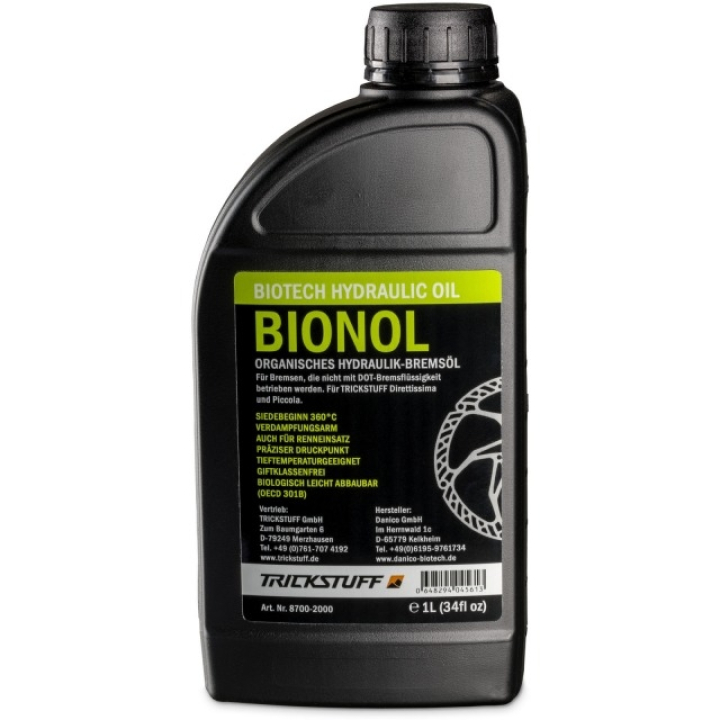
https://www.radicperformance.com/brake-fluid-tech Bionol and Gold Hydraulic oil boil over 400 celsius, although it seems that one of the best performing mineral fluids is the plutoline, which has a way lower boil point, so i'm not sure how this influences performances on mtb brakes
Because their claimed performance is such an outlier, I’m slightly skeptical of the Bionol and Gold fluid claims. I haven’t been able to find any real information on them other than marketing material.
I’d love to see an actual Technical Data Sheet for them.
Past a certain point it doesn’t matter though. The ETFE liner in your brake hose will melt at 260-280C anyway.
https://www.mrc-trading.de/media/db/63/36/1715758579/VAR-D-BHO-0.pdf (in german of course, since you could't be bothered to use si units earlier instead of your imperial units)
there you go, the one for bionol
That's a safety data sheet which is far from a technical specification...
I think it does have the relevant info though.
If I’m correctly looking at that, “Siedebeginn” is “start of boiling” which is 360c And they test per astm d2887.
I don’t know why they say there’s a 60c range on it though.
I have faith in Radic and tirckstuff that those fluids work well in their products and have been tested for it, but my experience with bio-based oils replacing mineral oil in suspension products (seal swelling etc) would make me wary of putting it in mainstream brands not designed for it
because its the range in which boiling occurs:
SECTION 9: Physical and Chemical Properties
9.1. Information on Basic Physical and Chemical Properties
• Physical State: Liquid
• Color: Not specified
• Odor: Characteristic
Testing Standards
• pH Value: Not determined
Changes of State
• Melting Point: Not determined
• Initial Boiling Point / Boiling Range / Temperature at 50% Mass Loss:
• Approx. 360°C / 360°C-460°C / 420°C
• ASTM D2887 / DIN 51435
• Flash Point: >190°C (ASTM D92)
Flammability
• Solid: Not applicable
• Gas: Not applicable
• Lower Explosive Limit: Not determined
• Upper Explosive Limit: Not determined
Self-Ignition Temperature
• Solid: Not applicable
• Gas: Not applicable
• Decomposition Temperature: Not determined
Oxidizing Properties: Non-oxidizing
• Vapor Pressure: Not determined
• Density (at 20°C): 0.88 g/cm³
• Water Solubility: Insoluble
• Solubility in Other Solvents: Not determined
• Partition Coefficient: Not determined
Kinematic Viscosity (at 40°C / 100°C):
• Approx. 8.56 mm²/s / Approx. 2.80 mm²/s
• ASTM D7279 / ASTM D2270
• Vapor Density: Not determined
• Evaporation Loss (NOACK, 250°C, 1 hour): 15.6%
• ASTM D5800 / DIN 51581
Other Information
• Solid Content: Not determined
• Viscosity Index: 200
petrus hydrauliköl (labelled bionol, only available like that in switzerland) vs. market leader (shimano) liquid to 100% gaseous chart:
Back to rumors.
Check out this shock. Looks like a new coil shock from Intend…
I’m not a petrochemical engineer, but I’m assuming there’s a 0-100% range because the fluid is a mix of chemicals with different heat capacities and boiling points? If so, I’m not sure the 100% boiling temperature would matter.
I think as soon as any significant percentage of the fluid boils, your brake is useless until it cools. (No idea what percent would be the threshold, my guess would be 2-5%)
Let's stop arguing about boiling points and get back to rumors.
I go by which mineral oil tastes the best anyways.
Some of the chemicals used in DOT 4/5.1 are used as ingredients in consumer goods at low levels, but then petroleum byproducts are used in some foods and as the sole ingredient in some consumer goods (e.g. baby oil and vaseline).
The DOT 4/5.1 fluids we're talking about are derived from petrochemicals too, but they require more significant chemical synthesis. Either way it's probably not a very meaningful point of difference given the amounts we deal with. But I'm not a chemical engineer so I've already gone way outside my expertise.
according to Harz enduro in the comments, a german guy that makes heaps of video with all the small companies in germany "we might know more wednesday" so let's see
Intend built a coil shock a couple years ago with an adjustable coil in collaboration with a student's graduate engineering program. Very cool concept.
https://www.diva-portal.org/smash/get/diva2:1609691/FULLTEXT01.pdf
The shock was built and there are photos of it somewhere on the internet but I can't find them.