



After months of leaked manufacturer spec sheets, clandestine mystery photos, and Jackson Goldstone's winning brakes covered in electrical tape at Bielsko-Biała and Loudenvielle, Shimano is finally ready to show the wireless drivetrain they've been working on.
This update is a big one, featuring all-new everything for 2025: new brakes, drivetrain, cranks, and wheels. We've ridden the new XTR 9200 for over 600 miles and 80 hours of testing. Jason has been riding the full groupset since early December, and I've been on it since the press camp in February. Here's what we've learned and how things have fared.
Highlights
- It's wireless now!
- Shift ergonomics are highly adjustable and mimic mechanical shifter
- Derailleur is designed with wedge shape and impact feature to shrug off rocks
- No clutch! Two springs instead, arranged in series to manage cage position
- Backward compatible Hyperglide+ cassette, chainring, and chain design
- Drivetrain runs on a 55mm chain line
- New low-viscosity mineral oil to improve lever consistency
- Cranks are still aluminum and come in sizes down to 160mm
- Shimano offers cartridge bearing hubs for the first time ever
- Brakes - $330 left // $335 right
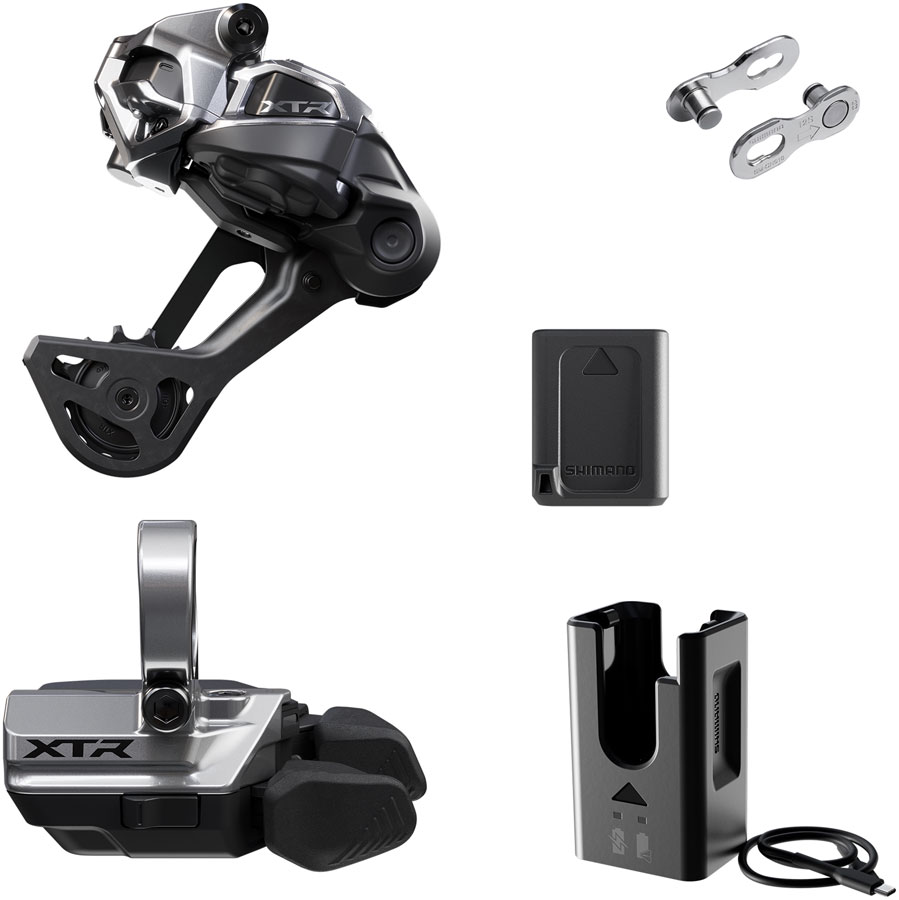
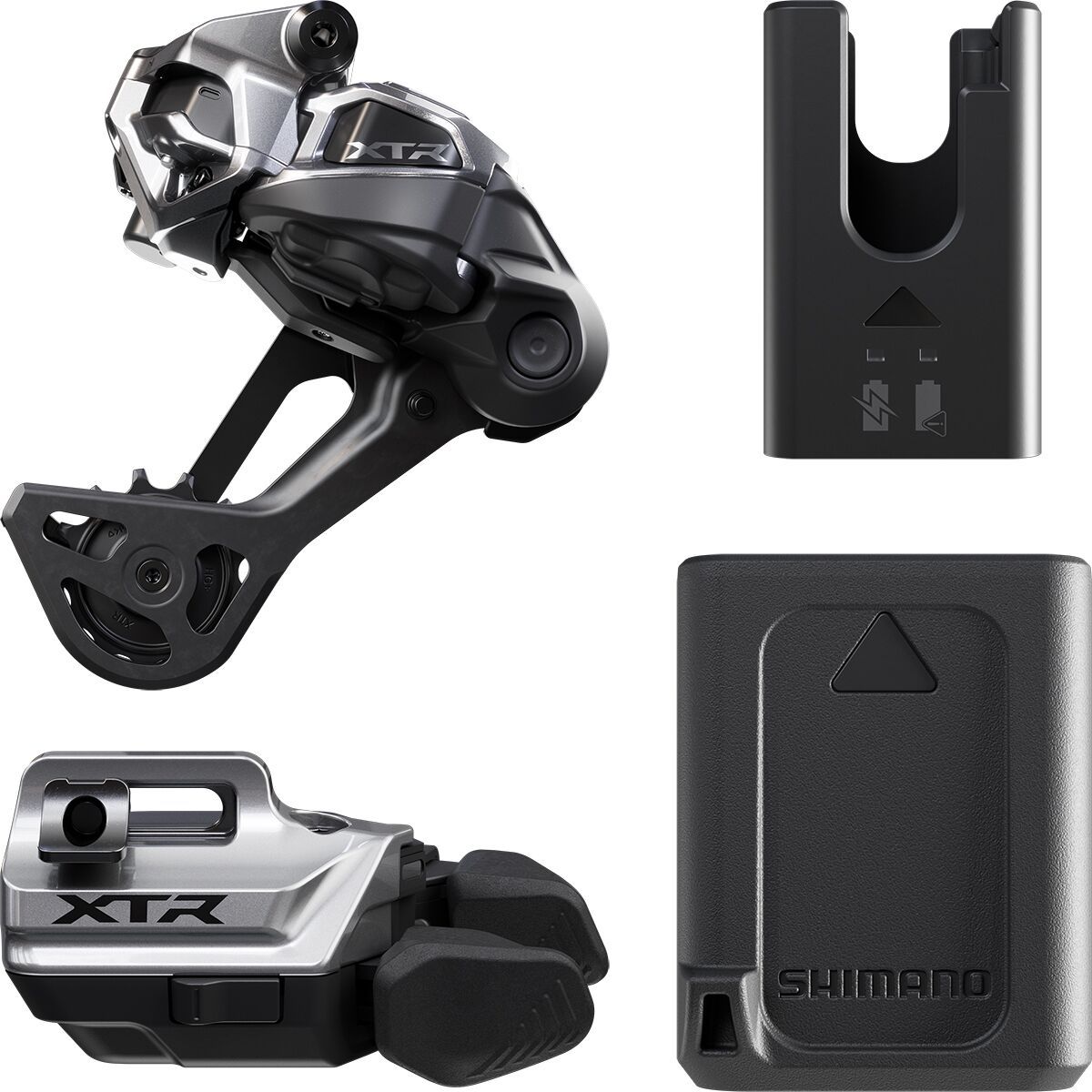
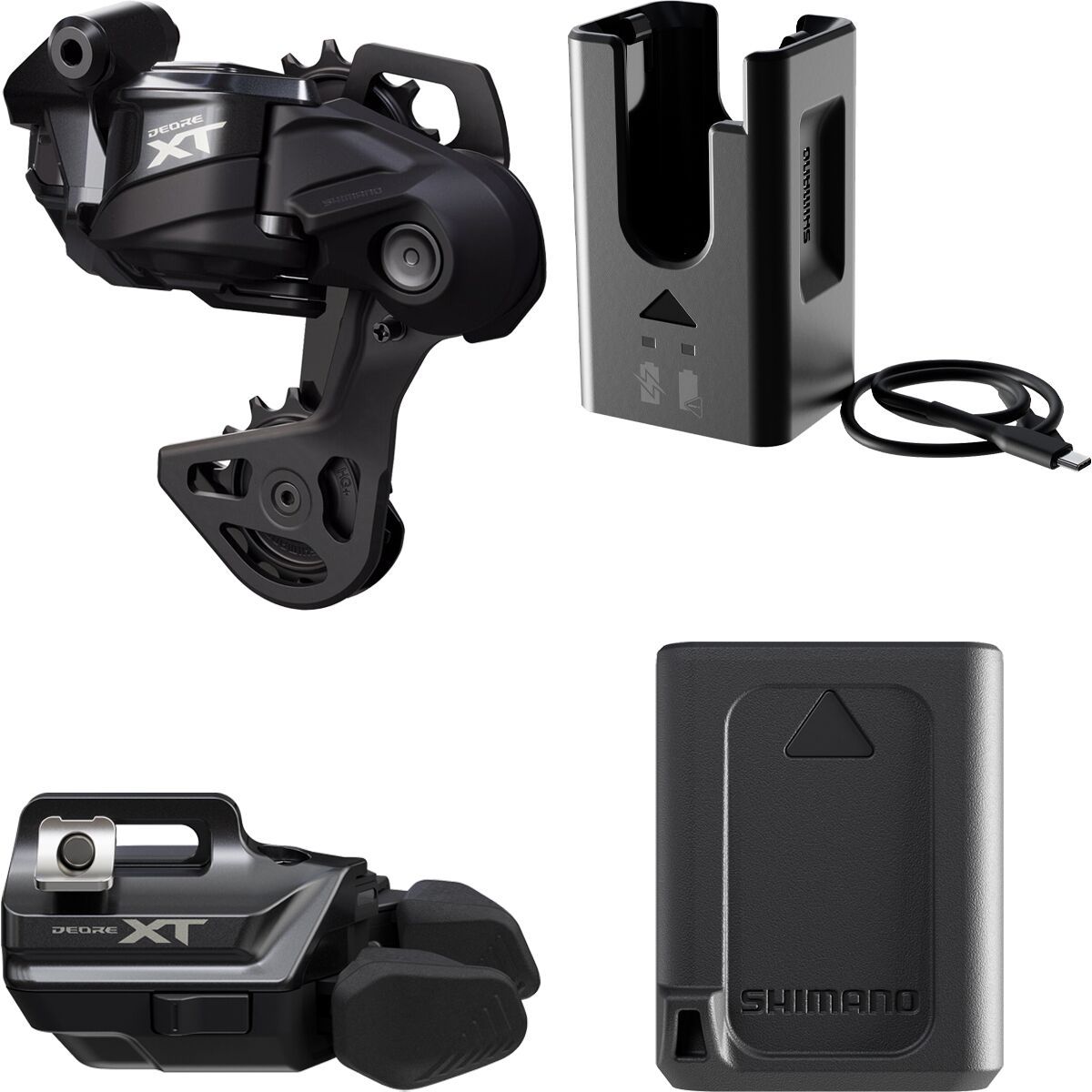
- Complete groupset (Derailleur, Shifter Switch, Cassette, Chain, Cranks, Chainring, Battery, Charger, Quick Link) - $2,030 USD
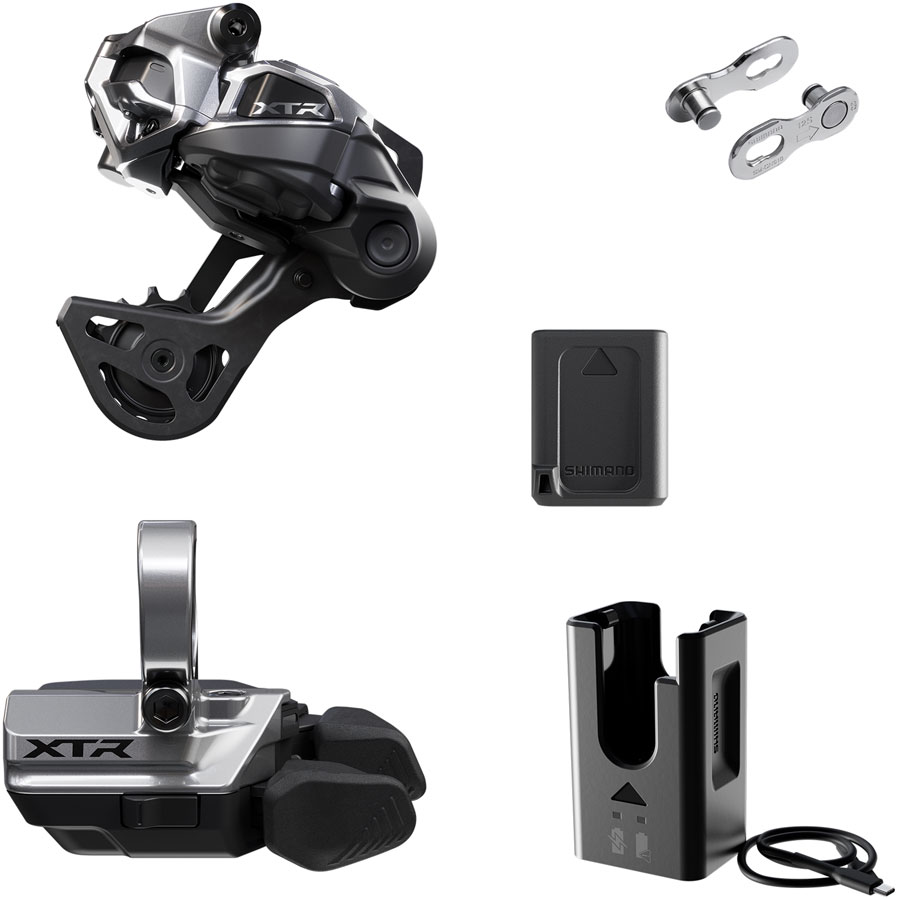
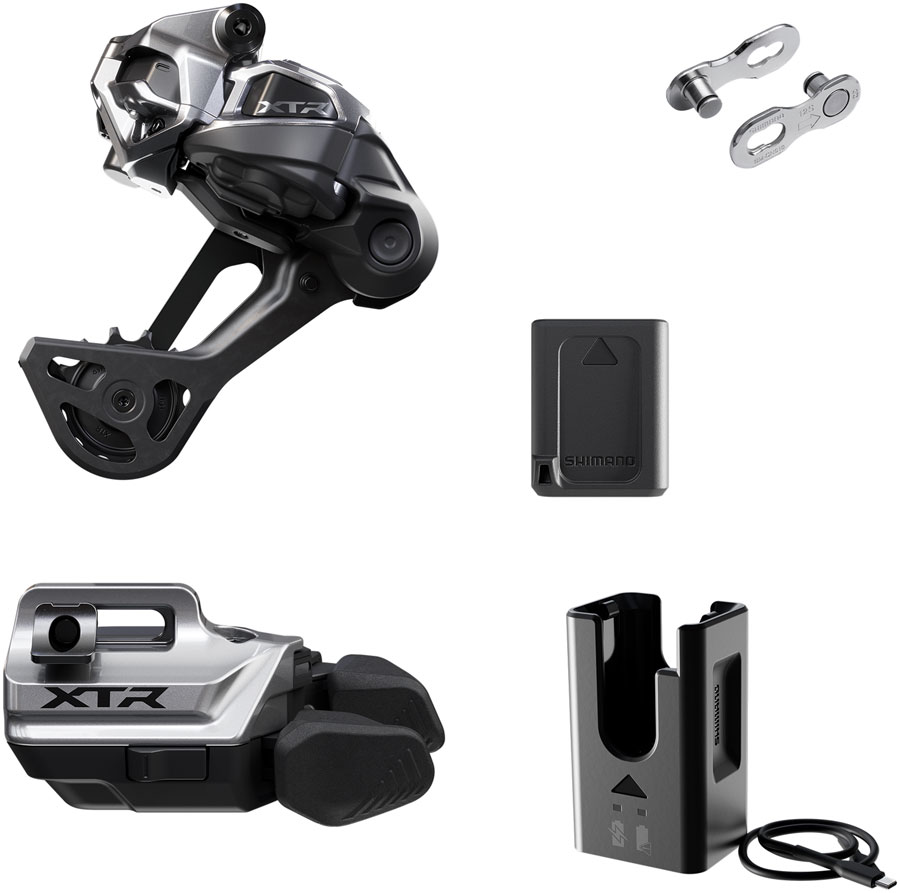
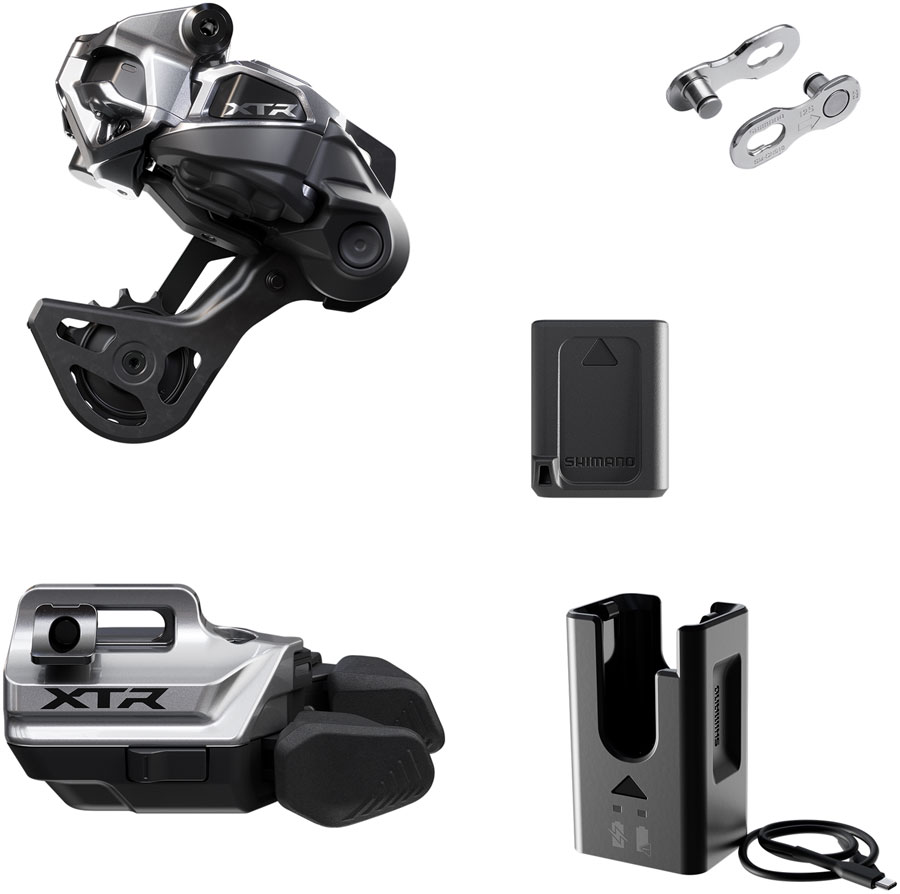
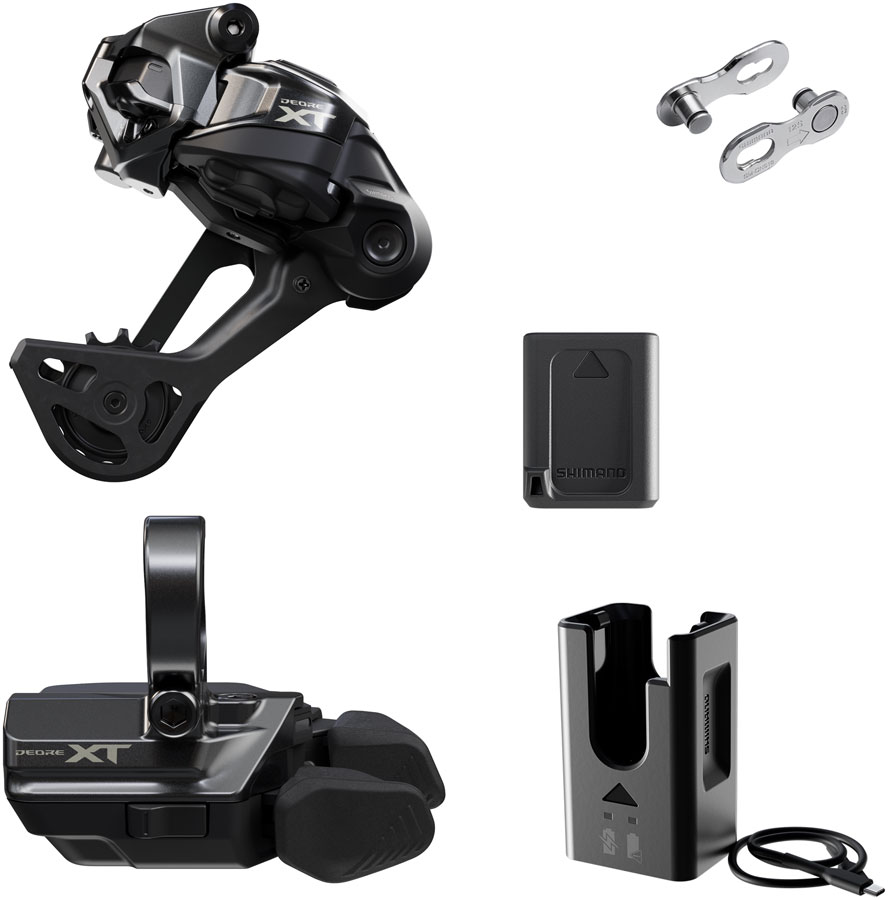
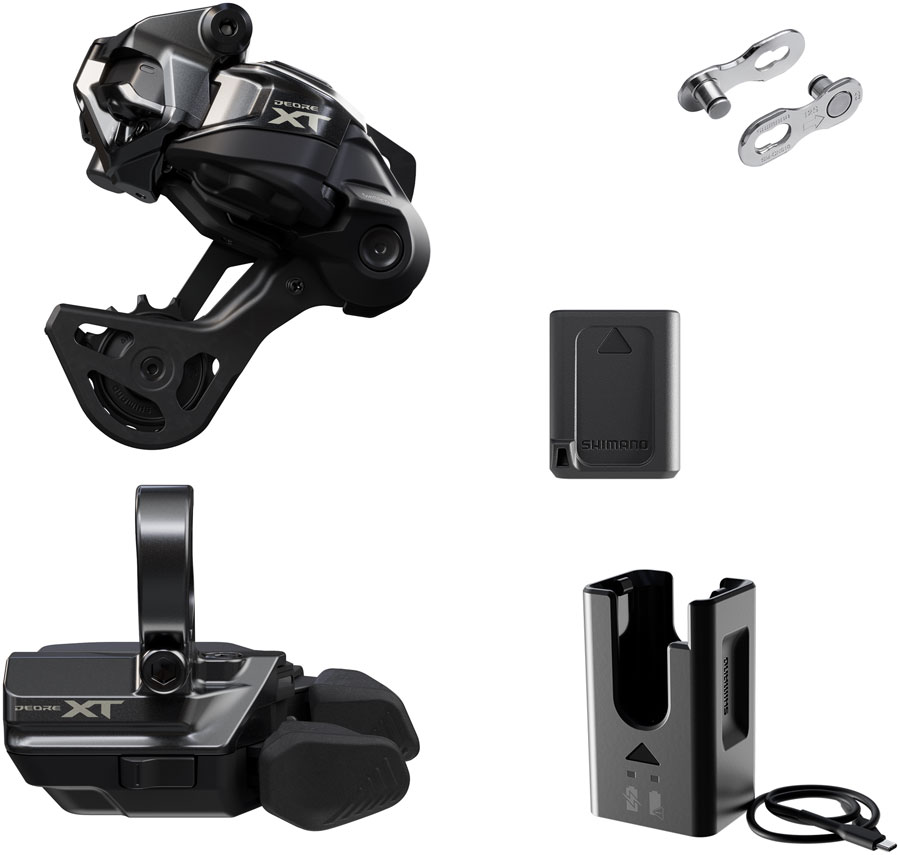
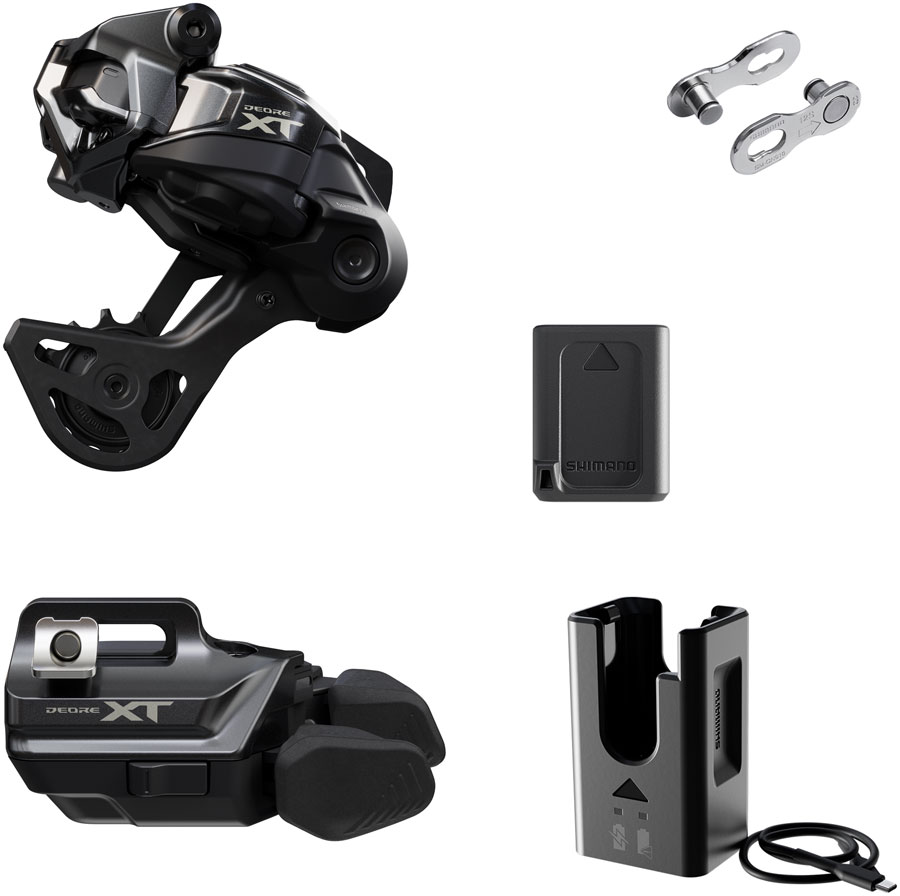
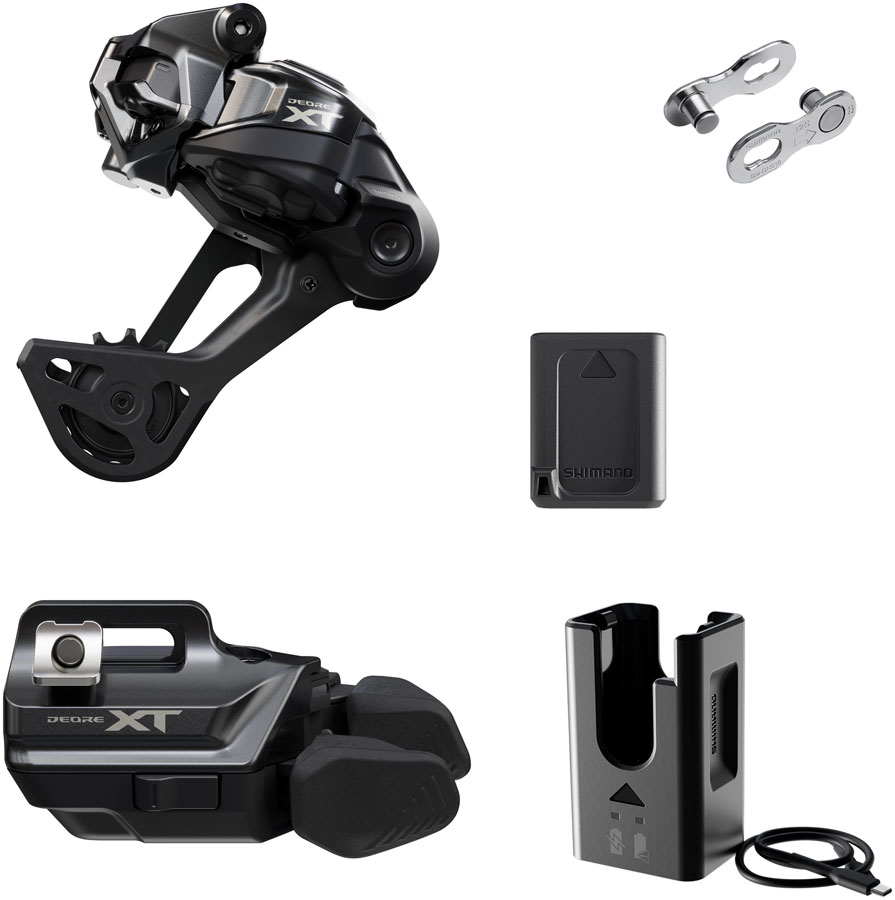
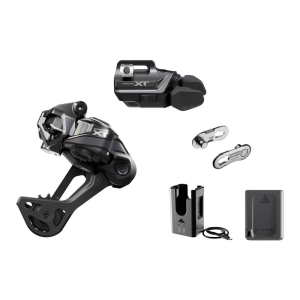
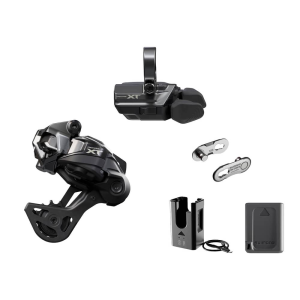
- Upgrade kit (Derailleur, Shifter Switch, Battery, Charger, Quick Link) - $985 USD
Strengths | Weaknesses |
|
|
Table of Contents
- Di2 history
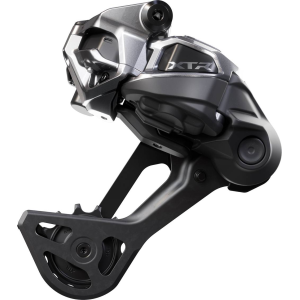
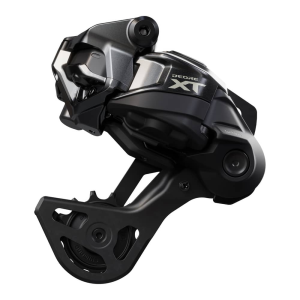
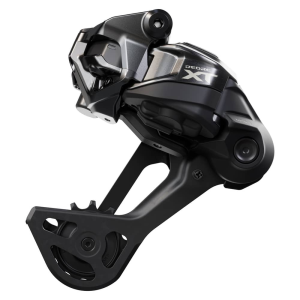
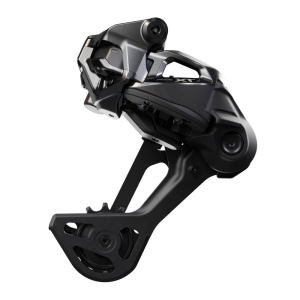
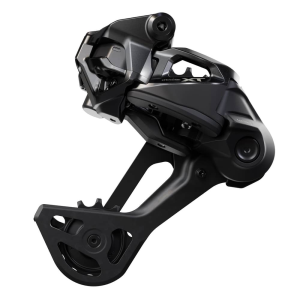
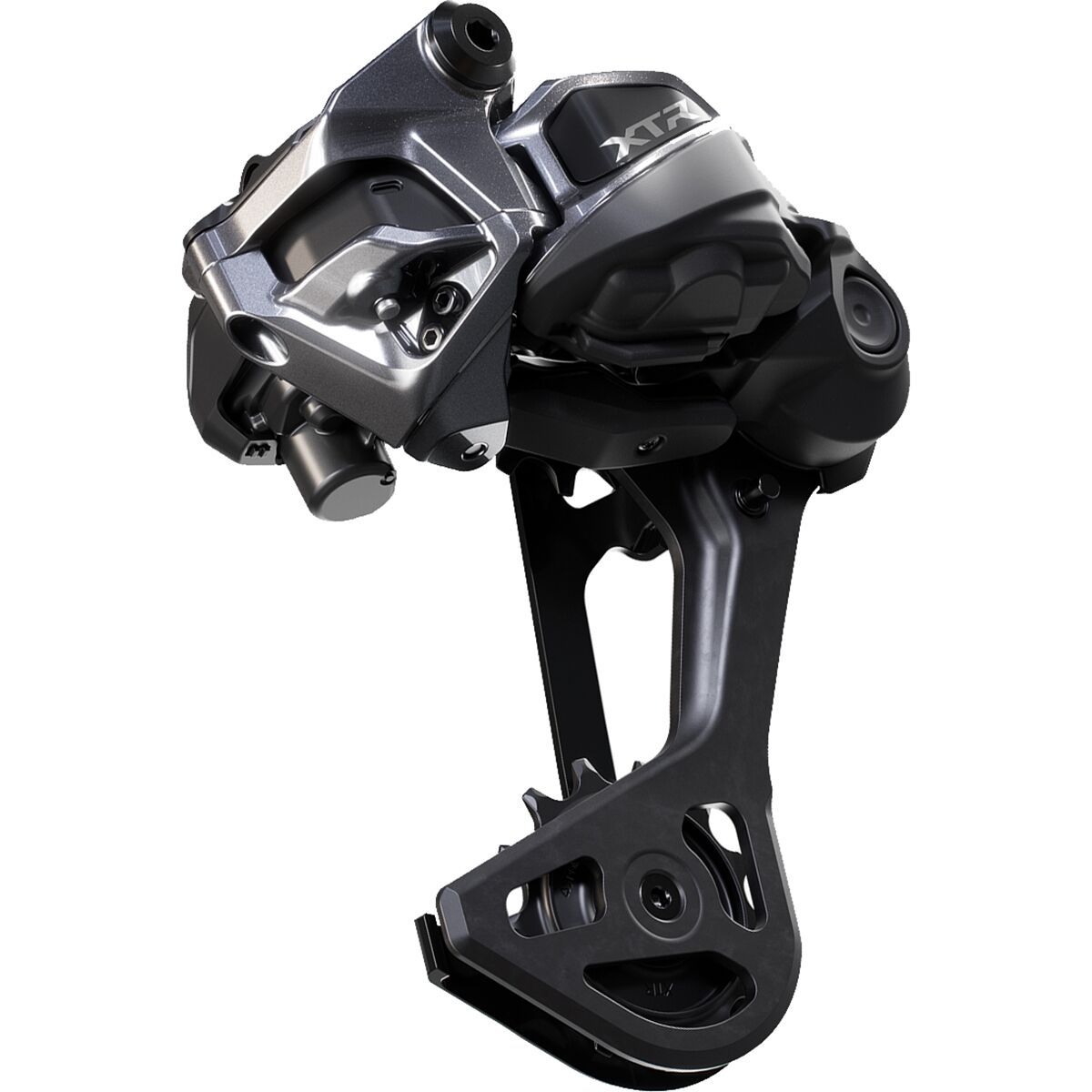
- RD-M9250 Derailleur
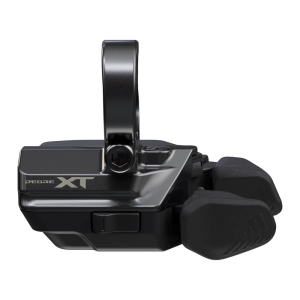
- SW-M9250 Shifter Switch
- CS-M9200 Cassette
- M9200/M9220 Crank
- BR-M9220 Brake
- M9200/M9220 Wheelset
- On Trail Performance
- What's The Bottom Line?
A Journey Through Shimano's Di2 History
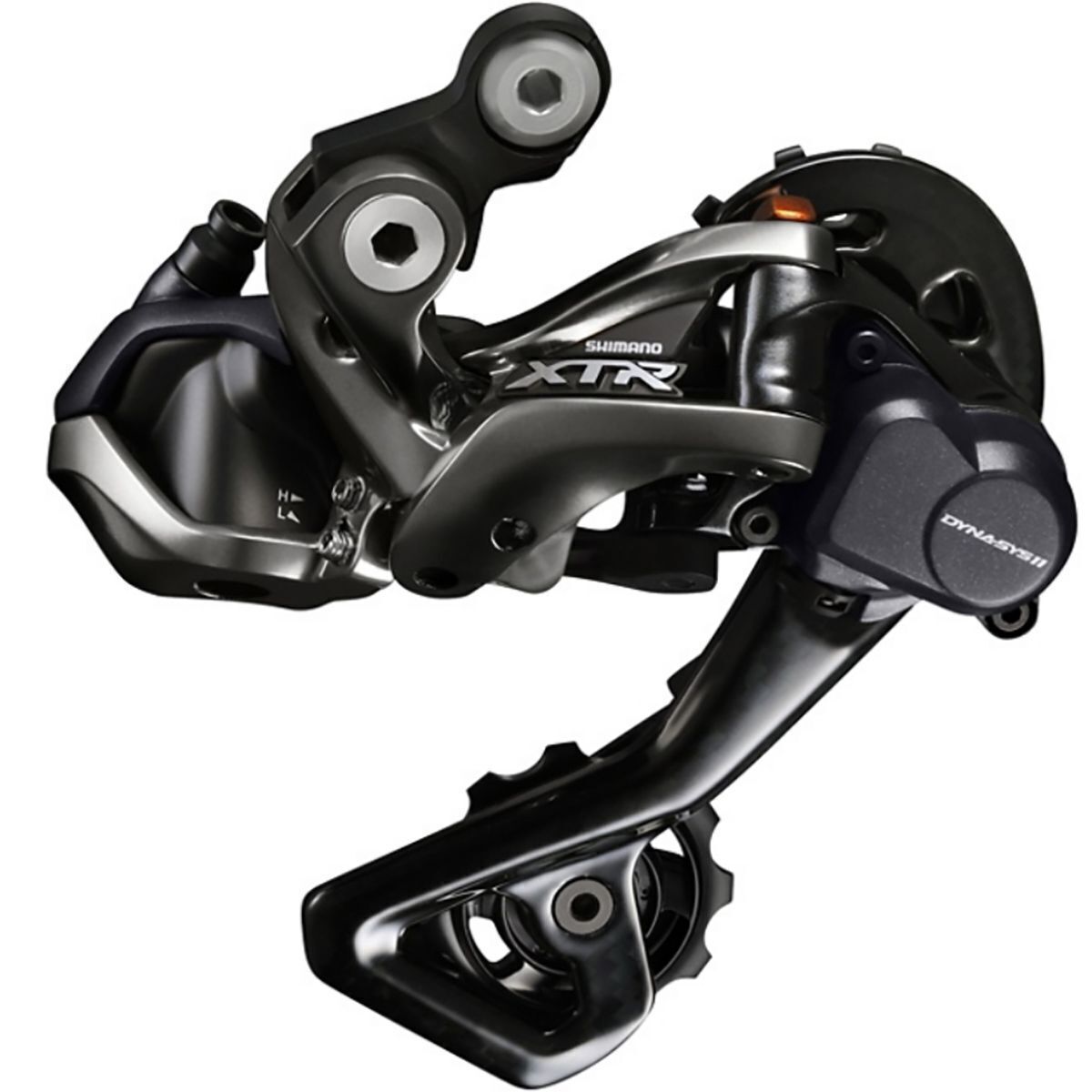
It's been a long time coming. Shimano was the first manufacturer to bring electronic shifting to MTB with XTR Di2 in 2014 and, amazingly, Shimano's "Di2" label dates all the way back to a commercially available Nexave electronic trekking drivetrain released in 2001. But Di2 never enjoyed widespread adoption in mountain biking, and no updates followed after their initial foray.

Issues included Di2's high price and the need to run electronic wires, junction boxes, and hidden batteries across the frame and handlebars. Especially after SRAM released AXS electronic shifting in 2019 and Transmission in 2023, there was little interest from MTBers in Di2, including recent Olympic MTB winners PFP and Tom Pidcock, who won their gold medals on good ol' M9100 mechanical shifting.

The last update to XTR came in May 2018, which included the move to the then-new Hyperglide+ shifting tech, a much wider-range 10-51T cassette, Microspline freehub interface, and Shimano's first direct-mount interface chainring. 4-piston enduro XTR brakes also trickled down from being a Saint and Zee-exclusive. After this year's big update, Shimano is all in on Di2 for XTR. If you want a Shimano mechanical drivetrain in 2026, it'll be XT or below in their lineup.
One of Shimano's strong suits has always been the quality of its engineering, and those engineers have been working behind closed doors for a decade to get the details right on this new groupset. We spoke with Shimano brand reps and engineers at their American HQ in Irvine, California, and at the multi-day XTR press camp in Tucson, Arizona to get up to speed.
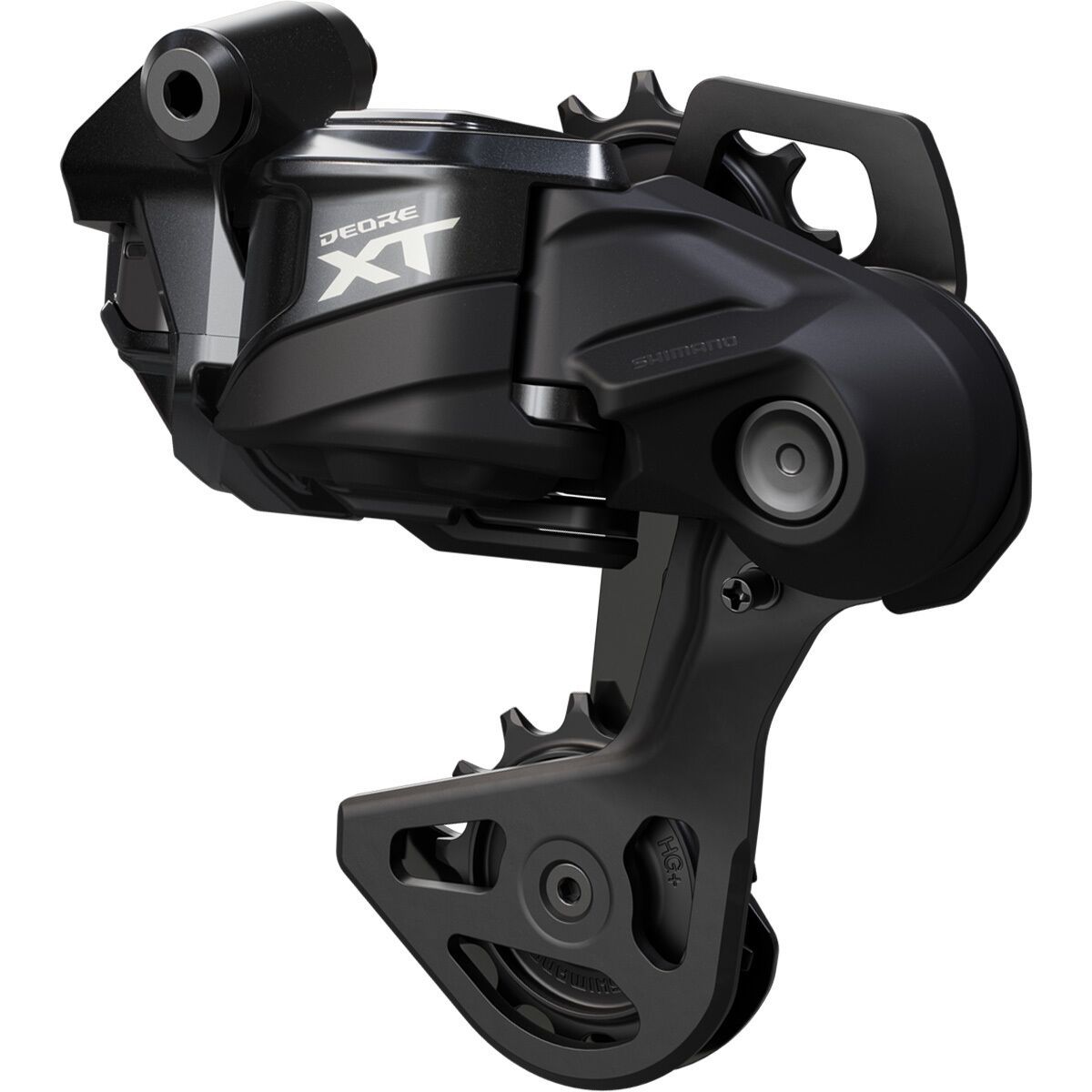
RD-M9250 Rear Derailleur Highlights
- Still uses a derailleur hanger!
- Wedge-shaped B-knuckle to slide off rocks
- New clutchless dual-spring mechanism to manage chain tension
- Impact feature disengages motor and allows the parallelogram to absorb frontal impacts
- Two cage sizes: long for 10-51 cassette or mid for 9-45 cassette
- Solid pulley wheels
- Removable battery (spares available for $55)
- Wired M9260 eMTB version connects directly to bikes' battery, with 12-speed Hyperglide+ and 11-speed Linkglide options for Shimano, Bosch, and TQ drive units currently
- Comes in wicked cool dark grey color
- Weight: 417g
- MSRP: $665

The derailleur is the best starting point for the story of why it took Shimano 10 years to bring this wireless group to market. Shimano's MTB product manager, Nick Murdick, said, "Frankly, It's a challenge getting a battery inside a derailleur. There are a lot of patents to work around, which is why we're talking to you in 2025 instead of sooner." They knew they didn't want to make new a new Di2 system unless it was wireless, so finding a place to put a battery was one of many challenges.
Shimano made the most of those ten years by going back to square one to study how and why derailleurs fail. There was a great slide from press camp (that we're not allowed to show you) featuring a literal pile of XTR mechanical derailleurs from EWS pros at the end of a season of racing. Some derailleurs were scuffed, some broken, and others obliterated, all being sent back to Japan HQ to identify post-mortem where impacts tended to occur, which impacts were fatal for the derailleur, and which ones weren't.
Prioritizing survivability meant "looking at things from the rock's point of view." One temptation in this process was to build every part of the new derailleur to be as big, stiff, and strong as possible. Famously, another major MTB manufacturer whose name starts with "S" and ends with "RAM" advertised the ability to stand on their derailleur. Shimano came to a different set of priorities for their new derailleur. "We examined real-world riding situations," Nick said, "There's a difference between designing a product that gives the appearance of robustness and one that is actually robust. Robust does not mean 'strong,' it means survivability."

Taking the rock's point of view, Shimano's engineers quickly discovered which part of their outgoing derailleur was the least survivable. In their post-mortem analyses, the clutch location on the front of the old M9100 B-knuckle was both the most common impact point and the weakest part of the derailleur. "The clutch assembly sticking out was the first thing that a rock was going to see on the derailleur." As Murdick tells it, "the most likely part to get hit was also the weakest part, and the most likely to fail."

Knowing that the B-knuckle would be the primary impact point, they decided to turn that part of the derailleur into a wedge shape, allowing the B-knuckle area to act as a ramp and brush off rock strikes. As an engineering-centric company, Murdick said, "We love our six simple machines." Inside the derailleur's electronic motor system, an "Impact Feature" allows the derailleur to go slack in the case of an impact and absorb the blow without damaging the internals, similar to SRAM's overload clutch.
They also decided early on that the derailleur needed to retain the ability to swing back from frontal impacts, but they also wanted the ability to pivot up and forwards in the rare cases when the derailleur comes straight down on an obstacle vertically. According to Murdick, "Coming down on a derailleur happens. Our EWS athletes call it the "Huck and pray" scenario, where they make a bargain that 'Whoever's going to win this stage is going to gap this section, so I have to try.' Occasionally, this means coming up very short on a rock."
This ability to pivot away from impacts in both directions informed their decision to stick with a conventional derailleur hanger. They had explored going hangerless via various methods, but when Murdick asked engineers, what he heard back was that they didn't want to get rid of the hanger for a few reasons. Murdick told us that the derailleur hanger continues to be a simple and elegant solution—it's nice to have an engineered failure point that doesn't retail for $700 or isn't your rear triangle. Plus, with the rise of electronic shifting and UDH, mountain bike hangers have generally gotten stiffer and stronger in the last 5-10 years. The days of flimsy MTB hangers made of soft cheese are over.

The blank slate design approach also resulted in the biggest surprise of the whole groupset, which is the total absence of a clutch mechanism in the rear derailleur. Instead, they've gone with a dual-rate spring mechanism. According to Murdick, there continue to be a bunch of downsides to the derailleur clutch, including unpredictable suspension interference, variable resistance over time, premature wear, and water ingress. According to Murdick, a clutch derailleur is (basically) never going to produce more resistance than it does on day one, regardless of fine-tuning of the mechanism by a mechanic. They wear out, sometimes shockingly quickly. Going back to springs allowed them to create a much more consistent chain management system over the lifespan of the product, and should help the derailleur and chain to play nice with modern suspension platforms.
Another benefit of the new clutch is that it provides a consistent level of tension as suspension cycles, as opposed to a standard breakaway derailleur clutch that's stiff at first and then gives way all at once. So why are there two springs in the new "clutch" mechanism? Apparently, the dual spring system was devised as a solution to a packaging problem. Using two staggered spring rates arranged in series allowed a stronger spring system to fit in a smaller space than what would otherwise be possible.
And speaking of small spaces, there's a battery in there! The 305mAh battery is snuggly packaged inside the body of the derailleur, accessed via a removable hatch on the bottom. As a further ode to Shimano's love of simple machines, the battery hatch uses another ramp to preload the battery contacts as it shuts and keeps the hatch fastened tight. The battery wasn't easy for me to locate or retrieve the first time it needed charging, but I promise it's in there. For reference, a SRAMAXS battery has a 300mah capacity, so they're very comparable in capacity.
Overall, I was really impressed with the thought and design philosophy that went into the derailleur, and it has a lot of features that I think can trickle down to all Shimano mountain RD's, electronic or cable, and probably even to Shimano's road and gravel lines. For instance, ditching the clutch for a stronger and more intentionally designed spring system could be a win for all high-performance Shimano derailleurs.
Once I figured out the battery hatch the first time, charging the derailleur battery was pretty painless. I've had a road bike with an older generation of Ultegra Di2 6800, and Jason has a road bike right now with the current generation 105 Di2, which is way better. Having to physically take the bike to an outlet to be plugged in is a bummer by comparison. The only downside is there isn't an indication of when the battery is charged. As it is, the orange light just turns off, which makes it hard to tell if your battery is full or your USB connection is bad.
A clarification about 12-speed vs. 11-speed XTR rear derailleurs [added to this article Thursday, June 12, 2025]:
"The M9250 wireless derailleur is available for 12-speed Hyperglide+ drivetrains only, but can be used on normal bikes or e-bikes. However, there are 12 speed Hyperglide+ and Linkglide 11 speed options for e-bike only, but these M9260 derailleurs hard wire to the e-bike drive unit and can only be used with an e-bike, because they don’t have their own battery. There is compatibility between Shimano’s M9260 Di2 EBIKE rear derailleurs and Bosch, Shimano, and TQ drive units, with Shimano expecting expanded compatibility from other drive unit manufacturers in the near future.
So, there are no wireless derailleurs available for 11-speed Linkglide, only hardwire derailleurs for e-bike usage. And bad news for those wanting to hack a Linkglide M9260 Di2 RD onto a normal bike, it is unfortunately not possible to connect the e-bike Linkglide derailleur to the Shimano BT-DN300 battery for road bike Di2 systems. That means Di2 Linkglide is not possible without a compatible e-bike, unless you're ready to go rogue and MacGuyver a wired battery solution and maybe burn your garage/house/apartment down. This is not recommended by Shimano or Vital, or by your landlord, roommates, or romantic partner."
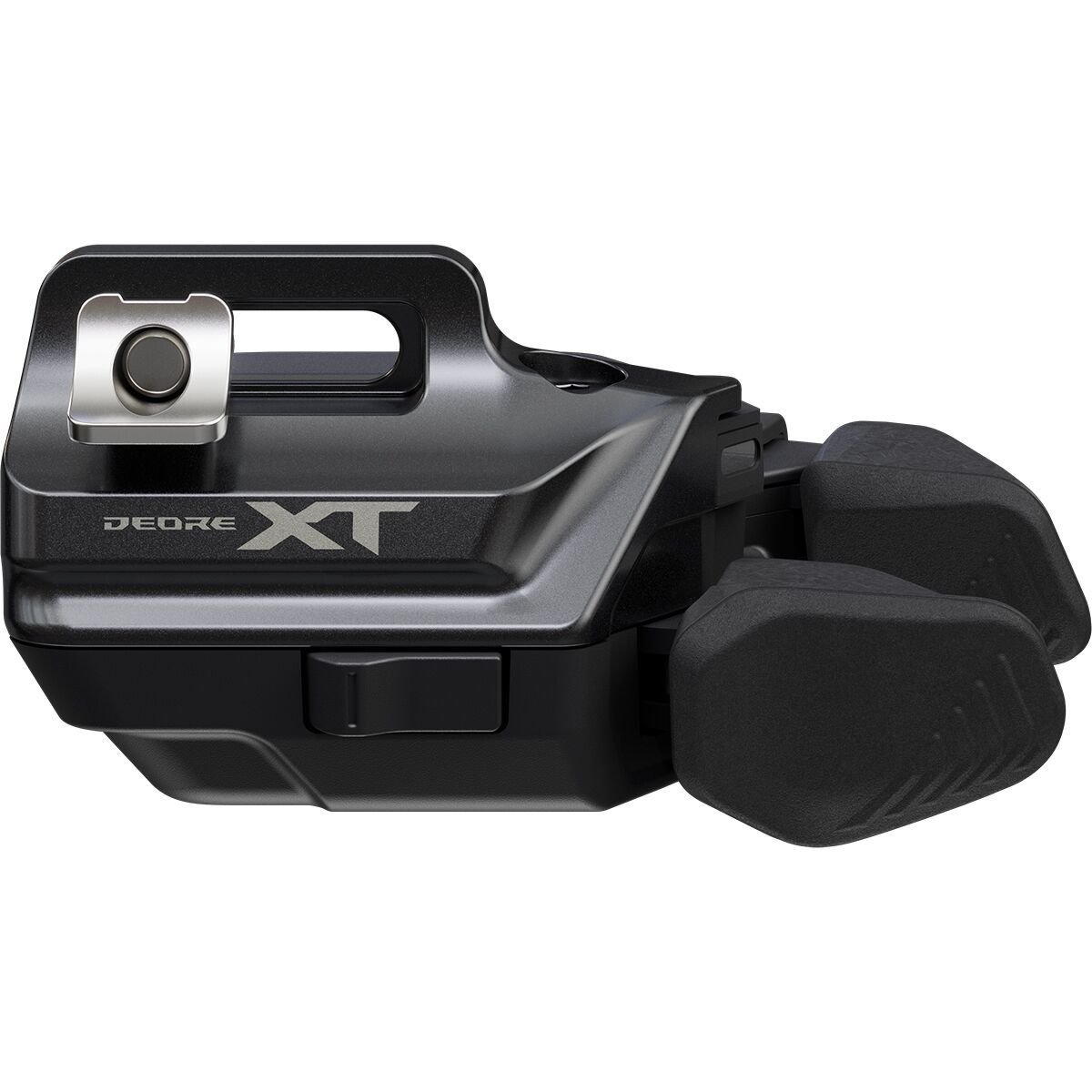
SW-M9250 Shifter Switch Highlights
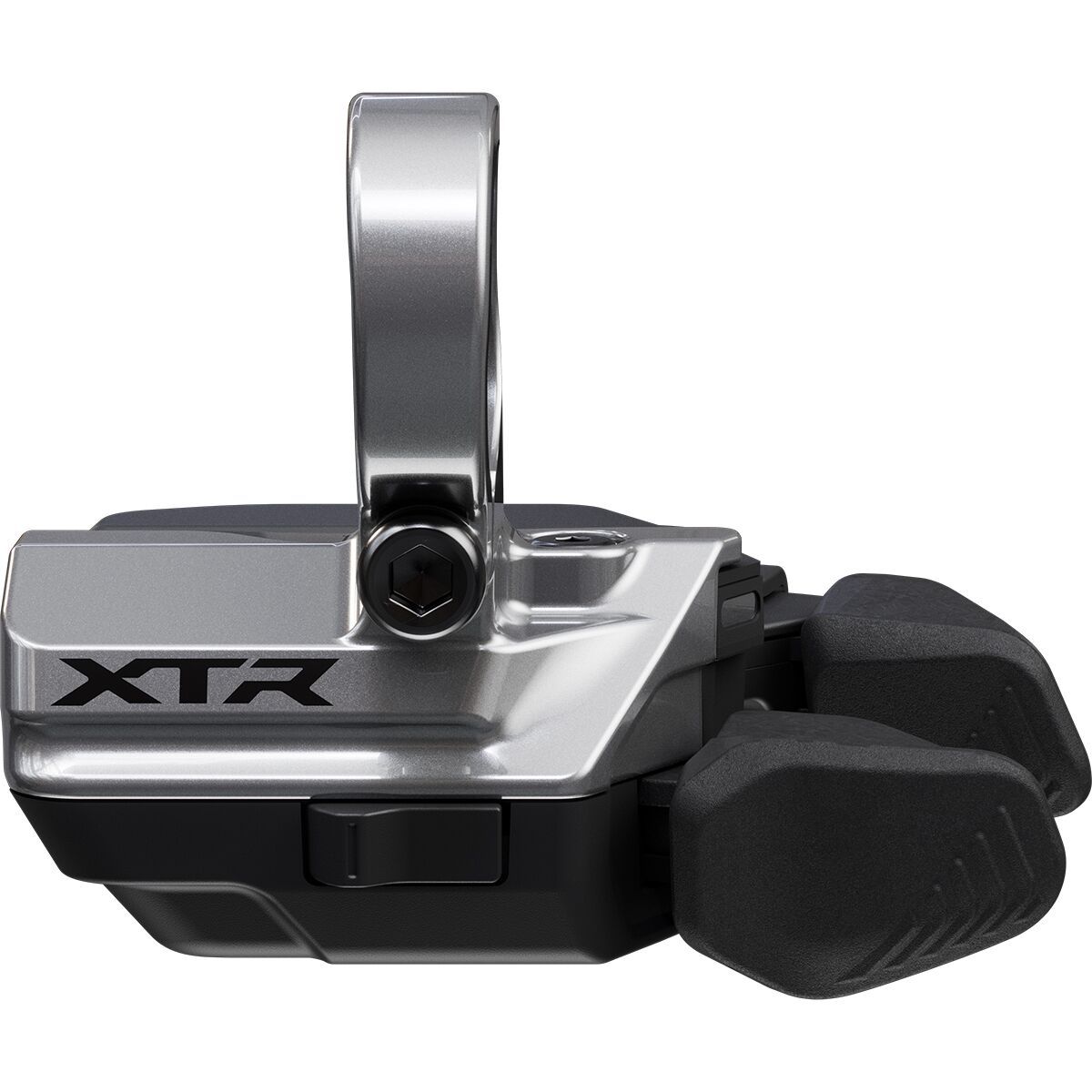
- Ergonomics designed to mimic classic mechanical MTB shifter
- Hyper-adjustable shifter paddles can be moved in multiple different planes
- Double-shift and multi-shift options
- Adjustable shift speed in the App
- Programmable third button acts as a 'barrel adjuster' to adjust the derailleur, or it can be used to control e-bike or ANT+/Bluetooth compatible devices
- I-Spec EV and 22.2mm band clamp mounting options (97 grams & 104 grams)
- Uses two replaceable CR1632 coin batteries with expected life span of three years
- MSRP: $220

If the distinct shape (and not insignificant size) of the rear derailleur is the first thing to catch your eye, the new shifter is likely going to be your first touch point on the new groupset, and it makes a strong first impression because of how shockingly similar it feels to a classic mechanical shift lever.
This isn't a coincidence. Despite trying different shift lever arrangements during the M9250 development process, including one completely god-awful-sounding touchscreen interface that mimicked the buttons on a microwave, Shimano's Skunkworks Athletes consistently came back to the product team asking if they could "try to make a prototype that works like a mechanical shifter?"
I'm sympathetic. Before riding the new XTR shifter, I'd never gotten along with SRAM or Shimano's electronic shifting simply because I couldn't remember which way to press the buttons. Decades of hard wiring are apparently hard to overcome. I honestly couldn't have told you whether a mechanical shift layout was inherently better or whether I was just an old dog who couldn't learn new tricks. Either way, it was confirming to hear from Bryn Atkinson and the other Skunkwords athletes that I wasn't alone in my experience.

Still, the blank slate approach yielded lessons. In those dreadful sounding "microwave button" shifter trials, Shimano learned that even when a rider finds an "ideal" location mapped out on a large blank slate, that button position is only helpful in a parking lot. On the trail, their thumb bounces around and jostles so much that it often misshifts or misses the button completely. The less Shimano's engineers tried to reinvent the wheel, and the more they tried to mimic the dynamic range and tactile feedback of a mechanical shifter, the better the feedback they got from testers of varying abilities. The more physically distinct the button locations on the shifter were, and the more distinct their shape was, the easier it was for riders to locate and remember which button did what.
However, even as they "came home" to the ergonomics of classic mechanical shifting, the electronic shifter did allow them to do one thing better. Without having to worry about the mechanics of cable actuation, they were able to add in huge amounts of adjustment, allowing riders to optimize and customize the shifter layout for their own unique anatomy. Each shifter paddle allows a 15-degree range of rotational adjustment in two different planes, which I'll refer to as the horizontal or "yaw" plane and the front-to-back or "pitch" plane. According to Murdick, Shimano's engineers left in as much adjustability as possible on the shifter, and all these adjustments mean that you can set it up so it's dead flush with your thumb.
My thumb agrees. The new shifter is stupid adjustable, and it didn't take long with a 3mm allen wrench to find a bespoke position for my very special snowflake thumb. This extreme range of adjustability means that riders with unusually small or large hands are in luck, as well as riders with lingering thumb injuries (like the surgically repaired but then unwisely reinjured skier's thumb on my right hand). Heads up, not all of the adjustments are easy to do trailside. For two of the three 3mm Allen bolts on the shifter, I needed to be back at my toolbox using a small individual L-bend Allen wrench because a multi-tool or even a 3-way Allen wouldn't quite fit.
Fine-tuning the feel of the double shift feature was especially time-consuming for the engineering team to work out. They wanted the first shift to come easily and the second shift to feel harder when a rider pushed the upshift lever further in the same direction. "That was hard. Hundreds of hours," according to Kentaro Kosaka from Shimano HQ in Japan. According to Kentaro, there were around 50 different engineers who worked on the XTR 9250 project during it's development, which was crazy to hear because a lot of products in the bike industry are lucky to get two.


The shifter also features a multi-shift option that enables continuous gear changes for as long as you hold the button down. Lastly, the shifter has an on-the-go "barrel adjuster" feature if you slam your hanger out of alignment and need to coax your shifting back into harmony. There's a small button labeled "A" on the shifter facing the rider, and if you hold it down for 2 seconds, your shifter enters "adjustment mode," which basically turns into a barrel adjuster to adjust the trim of the rear derailleur. Then, press and hold switch “A” for 2 second or more to exit adjustment mode. Worth noting, if you change the function of the “A” switch to control your Garmin or another available function, it will no longer be a shortcut to adjustment mode, but you can use the app to tune the derailleur if needed.
CS-M9200 Cassette Highlights
- Two cassette options
- Standard 10-51 tooth cassette is 369 grams
- Compact 9-45 tooth cassette is 327 grams
- Thicker tooth profile
- Tougher surface treatment
- MSRP: $500 USD

The cassette is the most familiar new part in the groupset, featuring the same Hyperglide+ tooth profile and ramps as the outgoing model, and running on the same XTR 9100 chain. The two significant changes are the overall durability of the cassette and the addition of a 9-tooth small cog, which was made possible by combining the smallest sprocket and the cassette lockring into a single part.
One of the trade-offs of the phenomenal shifting speed Hyperglide+ cassettes is the less-than-stellar durability I've experienced from the small cogs and thinner teeth. If you've had a similar experience, good news! Shimano has heard your cries, and the new XTR cassette includes thicker teeth and a new extra-durable surface treatment, apparently the toughest one Shimano has ever made. Because of the decreased chain wrap on the smaller 9-tooth cog, increasing the durability of the cogs is doubly important. Like the outgoing cassette, the two largest cogs are still alloy, the next five are titanium, and the rest are steel, but each of those cogs on the new cassette should significantly outlast their elder brethren. Time will tell how that 9-tooth cog holds up over the long haul, but according to Shimano, the 9-45T cassette is not e-bike compatible. [Editor's Note: an earlier version of this article incorrectly stated that the breakdown of cog materials on the cassette was 3 aluminum, 3 titanium, and 6 steel)


Because of the similarities between the new and old cassettes, the new derailleur and shifter are backward compatible with existing Hyperglide+ 12-speed cassettes, chains, and cranks. The inverse is also true: you're able to run the new cassette on existing Shimano 12-speed drivetrains and on GRX gravel groups. This cassette fills an OEM need for high-end e-bikes, but will also be available aftermarket and can be used with a pedal-powered XTR groupset.
M9200/M9220 Crank Highlights
- Still aluminum
- New race spindle crank is stronger
- Crank arms are stiffer and stronger
- Available in sizes down to 160mm, plus 175, 170, and 175mm
- 55mm chain line
- 0mm offset chainring
- Chainring sizes: 28T, 30T, 32T, 34T, 36T, 38T
- Chainrings use the same direct-mount interface
- XTR returns to the same non-driveside 2-bolt clamp as XT, SLX, and Deore
- There is also a lighter M9200 XC crankset available
- Weight (32T chainring, 170mm): 584g
- MSRP: Crankset - $310 // Chainring - $150

For most readers, the biggest news in the crank section will likely be the introduction of shorter 160mm cranks. This is a big change for a slower-moving and more conservative company like Shimano and hopefully shows that shorter cranks are here to stay. As with many other positive recent developments in mountain biking, like 38mm stanchions on single crown forks, Linkglide cassettes, and the wider availability of DH-casing tire SKUs, we probably have e-bikes to thank for Shimano's investment in shorter cranks. But either way, having more fit options is always a win for riders.
The new Enduro crank is stiffer and stronger, and features a beefy new "race spindle" that's Richie Rude approved. To accommodate 55mm chain lines, XTR uses a new chainring offset, which differs by 3mm from existing Shimano MTB cranks. The chainring interface didn't change from the old crank, so old rings could be used. However, the previous rings had a -3mm offset, so when installed on a new crank, it will give a 52mm chain line.

An official crank weight is coming soon, but not here yet. I learned this week that Shimano takes an average weight from a crazy amount of each product as it rolls out of final production, so it's not as simple as picking one up and weighing it. Jason weighed his six-month-old, 170mm cranks with a 32-tooth chainring installed, and they weighed 584g. Which is in the ballpark of 50g heavier than the previous XTR cranks and chainring.
For me, the biggest news here is the continued reign of the aluminum crank at the top of Shimano's product pyramid.According to Shimano Product Manager Nick Murdick, he worked hard to kill efforts for a carbon mountain crank, but apparently, the ultimate decision came down from the big guy himself. While every other major drivetrain company is offering a high-end carbon crank, the president of the company, Mr. Taizo Shimano, stepped in to make a ruling: unless Shimano's engineers could figure out how to make a carbon crank that was lighter, stronger, and stiffer than their aluminum hollow-forged Hollowtech 2 design, then XTR cranks would continue to be aluminum. They couldn't beat the existing aluminum crank, so aluminum it is.
BR-M9220 Brake Highlights
- Four-piston enduro brake
- Familiar Shimano Servolink brake feel, but with more modulation
- New seals and lower viscosity mineral oil to fix wandering bite point issues and better manage heat
- New one-piece brake caliper
- No more ceramic pistons
- Uses the same old bleed kit (thank God)
- Weight (including hose): front - 307 grams // rear - 327
- 220 Icetech rotors are on the way, but there's no new "full fat" heavy duty Shimano e-bike brake at this time
- MSRP: per brake - $330 // Upgrade kit - $670

To their credit, wandering bite point was the first thing the product team at Shimano addressed when they brought upbrakes in the XTR media camp product presentation. According to Shimano's Nick Murdick, it's a tricky problem to solve, involving lots of design trade-offs, such as lever feel, mechanical advantage, seal durability, and intended operating temps. "There are lots of causes of an inconsistent bite point." Even worse, according to Murdick, chasing overall system power as a brake manufacturer can make the situation worse. "As a brake gets more powerful, we're increasing mechanical advantage, which amplifies feedback when changes occur." I'm not an engineer, and I don't know about any of that stuff, but here's a quick rundown of everything Shimano did to overcome the reputation of wandering bite point.
First, XTR does away with Shimano's signature ceramic pistons. "Ceramics are great with heat, but [from a manufacturing standpoint] they're hard to make smooth." Any sort of surface undulation, pore, or imperfection creates opportunities for air, fluid, and contaminants to transfer from outside the brake system inside and vice versa. The new four piston "Enduro" brakes use 15mm and 17mm resin pistons, whereas the ultralight XC brakes get two 22mm pistons. Not really a product for our crowd, but worth mentioning that the 2-piston non-servo wave 9200 brakes are stupid light at 192 grams for a complete front brake and 212 for rear.

Second and most surprising, XTR M9250 brakes use a new "Lighter Viscosity Oil" (or LVO) to pair with the new pistons, and new fluid means new seals. All of this should create a more consistent brake feel across a wider range of temperatures. This also means that the new brakes are not backward compatible with older brakes or brake fluid, even though the bleed kit is the same. According to Shimano, you can use the same bleed kit between Shimano brakes with different viscosity mineral oil; just make sure to spray out your bleed cup, syringe, and hoses between uses. To help you keep things straight, the new LVO comes in a Kool-Aid-like orange color.
For those of us at Vital, it's at least a little bit funny that Shimano is releasing their new top-end brakes with lower viscosity brake fluid, because our brake forum nerds have been recommending alternate brake fluids in Shimano brakes for years. Our forum users are particularly fond of ultra-thin Putoline fork oil, which many claim will fix the dreaded wandering bite point. Murdick's answer to the Putoline idea was pretty straightforward: "Yeah… don't do that." According to Murdick, each brake seal and its material is designed to pair with a specific range of qualities in the brake fluid. Mismatching brake fluids and seals could result in a catastrophic brake failure: "That would be bad." Murdick said, "It's very dangerous to use the wrong mineral oil. DO NOT use the new LVO in the old brakes, or vice versa."

Murdick's brake oil puritanicalism was new to me. COVID supply chain shortages introduced me to Finish Line Mineral Oil, which claims "to work in all mineral oil bicycle disk brakes," and from my limited observations, it seemed to work fine. I'm not dead yet. But recently, talking with reps at Shimano and SRAM, both on and off the record, both companies have taken a similarly hard line on their proprietary mineral oils. In the tech docs and press releases for SRAM's new mineral oil brake lineup, they insist that only Maxima brand brake fluid be paired with the seals in their new brakes. When I talked with SRAM's Chris Mandell for my recent DB8 review, he shared similar concerns about mismatched fluid and echoed a lot of the same things I'd heard from Shimano at the XTR press camp: "SRAM chooses the seal shape and material to provide a very specific rebound force for the brake. The surface treatment of the piston, the seal friction, and tolerances are scientifically tested and selected to create a very specific coefficient of friction, which relies on a particular and consistent set of qualities in brake fluid." Speaking of the risks of catastrophic failure, Murdick added, "A failure is obviously not going to happen right away or every time. But brakes are pretty important. Think about when you need your brakes. You really want them to work."
Addressing another longtime nitpick of Shimano brakes, the new XTR caliper sees small adjustments to the brake pad shape and retention pin to reduce the noise of pads rattling in the caliper over bumps. We'll tell you what we thought of those claims below.

Lastly, the brakes feature a new lever blade shape, with a unique 5-degree ergonomic upsweep to them. This design came again from a blank slate approach after studying riders' body and hand positions, how their wrists rest on the handlebar, and how muscles get deployed during brake events. The goal was to increase control and reduce arm pump, but unlike other changes in the new groupset, this wasn't intended to be groundbreaking. Speaking of the upsweep, Murdick said, "It's subtle, but we're pretty excited about it." Skunkworks rider Bryn Atkinson agreed but suggested that riders run their levers rotated a little further down on the bars than they're used to. Bryn's used to setting up his cockpits using an angle finder, and not surprisingly, he had to adapt a different angle for the new up swept lever.

One thing I was particularly excited to hear is that 220mm Icetech rotors are on the way. I've been on the 220-all-the-time program, and it's tough to go back. They're not available yet, but they're coming soon. In a related story, there's no new "full fat" Maven-equivalent heavy duty Shimano e-bike brake at this time. Piston size is only part of the hydraulic leverage equation, but for reference, XTR's 15mm and 17mm pistons put it squarely between SRAM's 15/16mm Motive pistons and the Maven's super sized 18/19.5mm pistons. I wonder if Shimano is already working on a mega e-bike brake for the future.
M9200/M9220 Wheelset Highlights
- Carbon tubeless rim
- M9220 Enduro wheelset features 28 spokes front and rear, slightly wider 30mm rim
- M9200 XC/Trail wheelset features 24 spokes and a slightly narrower 29mm rim
- Cartridge ball bearings!!! A first for Shimano?
- Ultra thick 4mm rim bead to safeguard tire sidewalls and minimize pinch flats
- 3.5-degree/102-point engagement freehub
- "Direct Engagement" freehub design creates "Lower drag while coasting"
- Weight: 1,791 grams
- MSRP: $1,715.00

This isn't the sexiest part of the new groupset, but it's significant that Shimano has moved away from cup and cone adjustable ball bearings in their hubs, for maybe the first time ever. It's another huge shift for the company, which has long prized the durability, efficiency, and adjustability of cup and cone hubs.


In addition, the extra beefed-up rim bead is a great addition to the rim profile to help keep air in the tires. The weight is extremely competitive for a carbon enduro wheelset, and the price puts it squarely in carbon wheel territory.
ROBOT'S On Trail Impressions
As mentioned in the intro, we've been on the new XTR group since December and have over 600 miles of testing so far, including trails in Southern California, Northern California, Finale Ligure, Italy, and at the press camp in Tucson. Jason has been riding the full groupset on his personal bike since early December, and I've been on it since the press camp in February, where I received a brand new Transition Sentinel built up with the full kit, wheels, and pedals. I'm going to give a brief summary of our impressions, but be sure to check out Jason's video because he's able to go in much greater depth and detail on the finer points via video.
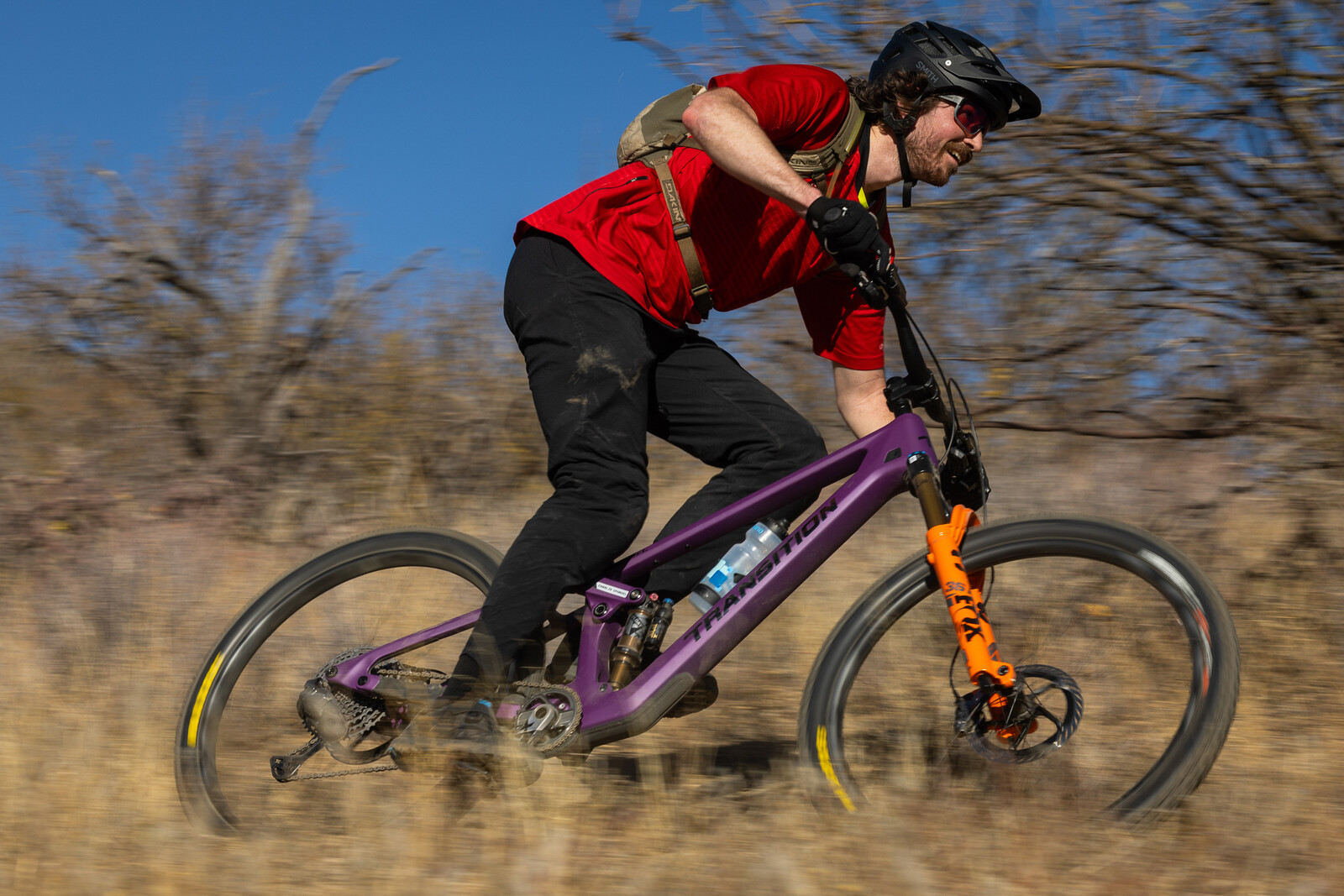
I think Tucson was the perfect place for the XTR camp, because those trails kicked my ass. It was hot and unfamiliar desert riding with relentless chunky technical climbs and endless chunky descents. Riding Tucson's famous Lemmon Drop trail gave me the chance to shift about 4000 times, often in an act of last-minute desperation at the bottom of an unforeseen punchy climb.It was so rocky and chunky that it felt like riding down and then back up a staircase for 15 miles. I want to give a big thank you to the entire team at Shimano for the invite and for such a great time, and I also want to give a huge shoutout to the incredible Sterling Lorence and right-hand man Lear Miller for their efforts to make me look good in photos.
Before riding the new XTR, I had never gotten along with electronic shifting from Shimano or SRAM because I couldn't remember which way to press the buttons, which meant that I'd accidentally shift the wrong direction on every single ride, even after months on the group. In four months on XTR I've only forgotten which way to shift once, and I maybe had heat stroke at the time during one of our Tucson desert rides, which tells me that the new shifting is lightyears more intuitive than anything else electronic that's come before it.

I really enjoyed being able to shift anytime I wanted, as fast or as slow as I wanted. I never quite got along with the double shift feature, but that's more of a personal preference thing. Jason loved it. Because my thumb is too dumb to not accidentally double shift, I also prefer single shift mechanical levers, and luckily with the new XTR shifter, switching from the double shift setting to single shift takes about three seconds with a flathead screwdriver. I loved the adjustable shift feel, and was able to get the levers exactly where I want them.
Jason and I both had to rebleed our rear brakes a few times to get them where we wanted them, so they weren't perfect out of the gate, but once sorted the brakes were good. As mentioned in the brake section, these are not the absolute most powerful brakes, so certain riders on e-bikes, people living in Champery, or those carrying around a few extra kilograms may not love them. On my own personal bike, I'd bump up to bigger rotors for sure. But for what they are, they're great.
The brakes have an unusual feel to them when you yank on them hard. They have a firm bite point, like every other Shimano brake, but they have this interesting give after the bite point that Jason and I have been referring to as the mush zone. Now, "mush" sounds terrible when you're talking about brakes, but it really isn't on these brakes when I'm riding. They don't feel mushy at all at the lever. The "mush zone" is much more noticeable in the work stand or when I'm sitting on the bike mid-ride and pulling on the brakes really hard, typically out of a combination of curiosity, boredom, and nervous energy. On the trail, I'm not actually noticing the "mush zone" almost at all, and when I do experience it, it's more of a pleasant modulation feel, something that's been lacking from Shimano brakes for a long time. So I've come to appreciate the brake feel, even as it continues to feel a little bizarre in the workstand. Jackson Goldstone seems to be getting along with them, based on his wins at Hardline and Loudenvielle.
Other random ride impressions, in no particular order:
- I hit the derailleur on a rock in Tucson. Didn’t feel it, but there’s a deep scuff in the derailleur body that tells me I made a bad decision and the derailleur probably saved me from the consequences.
- Jason and I both love that it still uses I-spec EV mount because it means no new adapters.
- It’s pretty simple and intuitive to get the shift levers adjusted to your thumb. Once Jason got the shifters adjusted where we wanted them the first time, we haven’t needed to make any adjustments since.
- Jason did his best to try and overwhelm the system, shifting multiple gears up and down the cassette in one go, but it handled it with ease. So we can confirm, it’s Jerry-proof for all you hack shifters out there.
- The slowest shifting setting reminded us of the lag of a mechanical shifter or the speed of Transmission. It’s kind of nice when you’re standing and pedaling as it’s easier to keep power through down shifts, but it’s less ideal when you’re climbing technical trails and need an easier gear right now.
- Jason’s first derailleur charge lasted 220 miles before running out of juice.
- I’m not organized enough to track MTB miles like Jason, but I commend his effort.
- We’ll need another 2.5 years to test Shimano’s battery life claims about the shifter batteries.
- Jason thinks the new derailleur is slightly louder than Transmission, but I feel like I’ve heard ZERO derailleur noise compared to my current XT rear derailleur. I’m excited for the super secret embargo period to be over so I can try XTR on my personal bike for an even better comparison
- Jason’s chain is a tad stretched after 6 months, but it doesn’t need to be replaced just yet.
- Did I mention how sick the XTR camp in Tucson was? It was so good. A HUGE thank you to Eddie, Nick, Ryan, Dylan, Kristin, Brendan, Sam, Ryan, Mike, Kentaro, Matt, the other Matt, Sterling, Lear, everyone at Ventana Tours, and everyone at the LOEWS Ventana resort. THANK YOU!!!

What's The Bottom Line?
To bring a novel electronic drivetrain to market, Shimano had to put their thinking caps on to navigate the maze of existing drivetrain patents, and we think they nailed it. The new XTR is a super impressive groupset and effort by Team Blue from Japan. The shifting is phenomenally fast and smooth, probably the fastest on the market, and the shifting is incredibly intuitive. Listening to the presentation and riding the groupset gave me the impression that the team at Shimano really did think through every detail. Experiencing firsthand and witnessing how well Jason's drivetrain has survived six months of abuse proves that those details didn't come at the cost of durability.
XTR is a lot of money, but luckily, it's also really good. To quote the great Ferris Bueller, "if you have the means, I highly recommend you try it."
View key specs, compare parts, and review Shimano's XTR M9200 Di2 in the Vital MTB Product section.
| Where To Buy | |||
|---|---|---|---|

|
Free U.S. shipping on everything.
International shipping available. Some exclusions apply. |
Free U.S. shipping on everything.
International shipping available. Some exclusions apply. $985.00
|
|
|
|||
|
|||
|
|||
|
|||
|
|||
|
|||
|
|||
|
|||

|
Free shipping on orders over $50 (continental U.S. only).
International shipping available. Some exclusions apply. |
Free shipping on orders over $50 (continental U.S. only).
International shipping available. Some exclusions apply. $985.00
|
|
|
|||
|
|||
|
|||
|
|||
|
|||
|
|||
|
|||
|
|||
|
|||
|
|||
|
|||

|
Free shipping on orders over $69 (continental U.S. only).
International shipping available. Some exclusions apply. |
Free shipping on orders over $69 (continental U.S. only).
International shipping available. Some exclusions apply. $665.00
|
|
|
|||
|
|||
|
|||
|
|||
|
|||
|
|||
|
|||
6/4/2025 9:00am


View replies to: Shimano Wireless XTR Di2 Six-Month Review
Comments