


Recent Activity
All

jalopyj Liked a reply to forum topic First ride on Maxxis Minion DHX front and rear
9/17/2026 6:33pm

Great review. Keen on giving these ago if and when it trickles down to DD or exo+
This forum topic has 17 replies.
FrontRangeFriend Liked a reply to forum topic 2026 MTB Tech Rumors and Innovation - Longer and Slacker
9/17/2026 3:23pm
I hear the suspension kinematics are pretty revolutionary.
This forum topic has 6830 replies.

63expert Liked a reply to forum topic 2026 MTB Tech Rumors and Innovation - Longer and Slacker
9/17/2026 3:22pm

A certain newly active member should be along to shit all over this with a quickness
This forum topic has 6830 replies.

sspomer Liked a reply to forum topic 2026 MTB Tech Rumors and Innovation - Longer and Slacker
9/17/2026 3:22pm

"micro dyno" for your race truck or small shop. $6,800 USD. PR below LABA7 Launches MICRO Shock Dyno for Trackside Testing Built for race teams, service trucks, and workshops that could not fit a dyno before. VILNIUS, Lithuania - Racing teams can now test dampers at the track more easily, on a machine that occupies just 0.14 m2. LABA7 launches the MICRO Shock Dyno, a tabletop machine with lab-grade testing quality. It runs from a standard single-phase socket and holds velocity as low as 1 mm/s throughout the cycle. “Until now, a shock dyno meant a room. If teams could...
This forum topic has 6830 replies.

slimshady Liked a reply to forum topic 2026 MTB Tech Rumors and Innovation - Longer and Slacker
9/17/2026 3:21pm

Maybe because the Jade is made at the SunTour factory, as the rest of the DVO products? I bought a SunTour TriAir a few years ago, and when I disassembled it to service it, the main piston wasn't anodized in SR Blue, but in DVO's signature green.
This forum topic has 6830 replies.

hamncheez2003 Liked a reply to forum topic 2026 MTB Tech Rumors and Innovation - Longer and Slacker
9/17/2026 3:20pm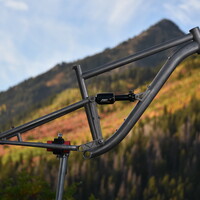

If you're doing the sharpie thing to use a shock that isn't your sponsors, why would you choose that one?
This forum topic has 6830 replies.
sspomer Liked a reply to forum topic 2026 MTB Tech Rumors and Innovation - Longer and Slacker
9/17/2026 3:20pm
to everyone bummed on the discussions and derailment, there is that novel idea of starting unique threads for unique topics.
This forum topic has 6830 replies.

amanitas Liked a reply to forum topic 2026 MTB Tech Rumors and Innovation - Longer and Slacker
9/13/2026 8:32pm

I don’t think the discussion was meant to deride Asian engineering or manufacturing. I fully agree with you that Taiwan and China are better at manufacturing bikes than western countries. My thought is as a bike designer how do you make products better when you don’t have a firm grasp on how they are made? That’s what I think a company has to gain from bringing additional depth of knowledge in house. Does knowing more of the nitty gritty allow those designers to push boundaries a bit further?
This forum topic has 6830 replies.

monarchmason Liked a reply to forum topic 2026 MTB Tech Rumors and Innovation - Longer and Slacker
9/13/2026 8:15pm

This forum at the moment (not actually just poking fun)
This forum topic has 6830 replies.

2supple Liked a reply to forum topic 2026 MTB Tech Rumors and Innovation - Longer and Slacker
9/13/2026 7:13pm

Give it a rest we get it. It’s a mtb site not a corporate HR class.
This forum topic has 6830 replies.
amanitas Liked a reply to forum topic 2026 MTB Tech Rumors and Innovation - Longer and Slacker
9/13/2026 7:13pm
Giant likely has a pretty healthy composites engineering staff, but based overseas since they own their factory. If you’re interested, YouTube “Giant Bicycles Factory Tour”. The TCR and Anthem videos show how they’ve gone to the Nth degree by even making their own pre-preg line for carbon. A single composite nerd at the company doesn’t get you to that point.
This forum topic has 6830 replies.
amanitas Liked a reply to forum topic 2026 MTB Tech Rumors and Innovation - Longer and Slacker
9/13/2026 7:13pm
Based on what I’ve seen at least a half dozen at Specialized alone and SC certainly has a few. ENVE used to be full of composites experts, less so now that most of their production is in Asia. TR is much smaller, but Ibis being similar in size had a composite/structures engineer even before the in-house stuff started. To the extreme small-end Unno is heavily engineered and optimized. Even if the liaison engineer (the person living in Asia who interfaces directly with the factory) were doing the composites and analysis that would be reasonable. I guess my assumption was a...
This forum topic has 6830 replies.

Primoz Liked a reply to forum topic 2026 MTB Tech Rumors and Innovation - Longer and Slacker
9/13/2026 7:13pm
How many composites engineers do you think are there in the whole industry? And how many stress analysists? FWIW, from what I've heard (obviously could be wrong or could be old info) apparently Yeti's process was quite similar. Engineering firm doing the suspension (Switch link was done by Sotto Design Group for example, not sure what the situation is like for Switch Infinity or Sixfinity) and an industrial design firm doing the surface modelling of the frame (the 'looks') and an overseas firm doing molds, carbon layup based on their experience, testing, if it breaks, strengthen the breaking point, once...
This forum topic has 6830 replies.
amanitas Liked a reply to forum topic 2026 MTB Tech Rumors and Innovation - Longer and Slacker
9/13/2026 7:13pm
Recently learned how hands-off Transition is for manufacturing. They basically do the industrial design and pivot layout then the factory does the rest. No in-house composite engineer or stress analysts at least double checking what the factory is doing. I know they’re not unique in this, but they’re charging a lot for what is basically a Transition shaped catalog frame. They give a lot back to the riding community here, so as a local it’s a little easier to stomach, but if I were outside Washington it would be a much harder sell.
This forum topic has 6830 replies.
amanitas Liked a reply to forum topic 2026 MTB Tech Rumors and Innovation - Longer and Slacker
9/13/2026 7:09pm
I certainly wouldn’t consider them catalog. But if I remember right in an early Frameworks video Neko talked about using that strategy for their carbon seat stay. Basically design a part, find a factory, have that factory build a mold and design the laminate, then have finished parts delivered. The bulk of composites manufacturing knowledge in the bike industry “lives” in Asia where things are being built. I personally have no problem with that, or companies that outsource their engineering either domestically or overseas. Having worked with foreign and domestic suppliers across a few industries the strategy is always “Trust...
This forum topic has 6830 replies.

jason.west.750 Liked a reply to forum topic 120-130mm forks
9/13/2026 6:24pm

Manitou Mattoc
This forum topic has 34 replies.
VTTYeahYouKnowMe Liked a reply to forum topic 120-130mm forks
9/13/2026 6:24pm
Manitou Mattock Pro. Easily maintained at home, easy to do damper changes, stiff enough for a trail bike and I bet lighter than all those other options. I find the best way to limit myself from taking the smaller bike over its head is tires. Put on some fast rolling and slightly sketchy tires and you won’t be tempted to drop into the loose and gnarly stuff, even with burly suspension. Bonus is being shocked with how much faster it is when climbing compared with the big bike. Resist the urge to accidentally make a heavy, slow trail bike!
This forum topic has 34 replies.

iceman2058 Liked a reply to forum topic 120-130mm forks
9/13/2026 6:24pm

We did a 140mm fork test comparing 34 to 36 a while ago that seems relevant to this discussion: https://www.vitalmtb.com/videos/member/trail-bike-fork-selection-34-vs-… TLDR: the Fox 36SL is certainly stiffer than the 34, but it also rides significantly harsher. I could never quite get it to the point where I was happy with the comfort/support tradeoff (I always ended up with a slightly less forgiving fork over small, square-edge trails). For me, the Öhlins RXF36 was the clear winner (as an older guy, I appreciate just how comfortable that fork is able to remain, even when running a fair bit more damping and...
This forum topic has 34 replies.

bigbrett Liked a reply to forum topic 120-130mm forks
9/13/2026 6:23pm

Huge recommendation for the manitou mattoc pro. I love mine. Haven’t tried the latest pike or 34SL but it is far superior to the previous generations of both those forks IMO.
This forum topic has 34 replies.
Ploutre Liked a reply to forum topic Nerding out on Brakes shall we? Not another tech deraliment
9/13/2026 6:21pm
Had a chat with the French distributor of Brembo, they're receiving them "next week" (don't know if that's the week that starts next monday or the one after). Still 900-ish€, only in red, doesn't include rotors or adapters. He got 150 pairs ordered, he had 100-120 pairs pre-ordered back in july but now, a lot of people have just canceled and moved to other brands because of the complete lack of info coming from Brembo ... I'll try to get my hands on a pair to try out but he didn't seem to have a "press" set of brakes unfortunately...
This forum topic has 2984 replies.