Hello Vital MTB Visitor,
We’re conducting a survey and would appreciate your input. Your answers will help Vital and the MTB industry better understand what riders like you want. Survey results will be used to recognize top brands. Make your voice heard!
Five lucky people will be selected at random to win a Vital MTB t-shirt.
Thanks in advance,
The Vital MTB Crew



Nope, bout time for a new one tho, current ones been around for a hot minute. Have heard things about some spesh enduro racers getting along better with the stumpy evo for enduro which isn’t necessarily the look specialized would be wanting.
The reason most pros are running the stumpjumper over enduro is because the enduro isn't UDH and can't use sram transmission.
Charlie Murray is the most notable Enduro athelete that I can think of on the Stumpy Evo. He did a head to head video between the Enduro and the Evo. The Stumpy won out on timed runs. It seems he thought the Enduro was more compliant but less predictable.
https://www.youtube.com/watch?v=XtFKIZziUA4
The advantage of the Vivid would be clear on a more linear leverage bike frame, where coils just don't work well. Anything under 15% progression should be on air unless it also has 200mm of travel.
You are correct, assuming a budget compression tune, or just a bad compression tune. The beauty of the twin tube design is that all adjustments are external and a cane creek can be dialed in to whatever rider weight or frame kinematics without a factory tune. My current frame is a single pivot that has about 4% progression, but I prefer my cane creek coil over the air, and I prefer the EXT Storia over them both (a coil). The downside of the Storia is that it does require an internal adjustment per frame, but the USA distributor factors that into the sale price. It also has that hydraulic bottom out.
But don't take my word for it- look at all the people (joes and pros) running coils on the Starling Murmur, another single pivot but with a slightly regressive curve!
Huh? that's a conceptual error. Twin Tubes give you more adjustability in the rebound circuit than a monotube, but the damping curves are still dictated by the internal valving. The clickers are only a low and a high speed bleed for the internal valving. In a twin tube you can have High and Low speed adjustments for both compression and rebound where as in a Monotube the rebound adjustments are limited to a non preloaded bleed.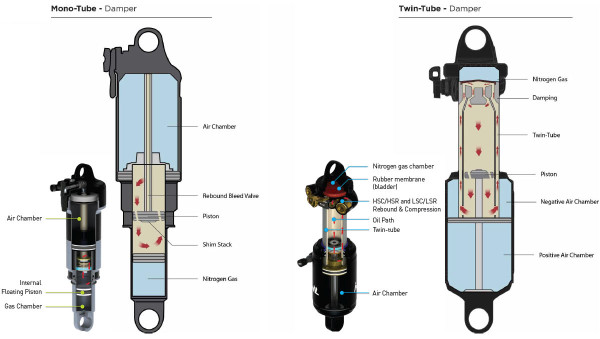

Yes. This agrees with what I sad. A properly tuned shock (least for travel ranges at 160mm and below) can easily perform at the highest levels, even with a flat or slightly regressive suspension curve . External adjustments allows more easily for this.
Are there any Pro's racing Starlings at a high level? (On coil).
https://www.starlingcycles.com/starlingcyclesteam/
Brin can shred
https://www.mtb-news.de/news/trek-enduro-prototyp/?fbclid=PAAabvZzB1Vfk…
on embargo until early september
New slash, confirmed as 170 170, High pivot, mullet gen 6 & std 170/160 29er gen 5 both be for sale.
lots of 9.9 options, 9.8, 9.7 as carbons.
ALLOY slash 8 & 9 gen 6, No slash 7.
Full range of gen 5 available for purchase still.
NOTE: not my image, was on facebook.
Selling both side-by side seems like a pretty good idea, especially for a big brand like Trek. Not everyone looking for an enduro bike needs a straight-line-eating machine, and rather than trying to pretend the new model is a perfect compromise, they can just sell the two different versions instead.
I think the wait is near as it pops online already… that rear brake cable
bet it‘s gonna be a good junk heavier than the gen 5, frame looks massive.
https://es-swinnertoncycles.glopalstore.com/trek-mountain-bike-slash-9-…
Its not a looker is it?
and makes yeti look like good value it seems
At over 7000euros, I'm expecting a motor to be in there somewhere!
That pricing for the slash 9 doesnt seem right. 7k euros for that. Ridiculous, if that is correct and if the cost in New Zealand for it is similar. Thats 14,000 nzd for that, like yes its got transmission and the new vivid but they aren’t even the top of the line versions of those products. Spec on that looks like, alloy frame, gx transmission, code bronze brakes, zeb select, vivid select plus, bontrager dropper, presumably a bontrager line elite 30 wheelset aswell.
With the state of the market I wouldn’t be too surprised if brands tack an extra 10 percent on today and sell for 35 percent off instead of 25 percent off in 10 months. Sure during the pandemic it made sense for brands to compete with each other on price with new bikes but with a huge amount of discounted builds out there why not maximize revenue from those willing to spend on the newest stuff.
plus I wouldn’t be surprised if rockshox/sram is being a little less competitive on their oem pricing at the moment since they got the “hot” products with fox’s qc issues and shimano likely to run its current groups for a few more years.
They fixed the seat tube angle though. I considered a Gen 5 Slash but my legs, they're just too long!
Worked for a guy that would add an extra couple % on to quoted jobs for some people so when they no doubt asked for a discount, he would happily off that % off and seem like they were getting a great deal. Maby Trek is taking that approach?
Frameworks (Neko's brand) getting ready to sell frames!
Email sign-up here: https://rideframeworks.com/
Should have slapped the remedy name on the gen 5 slash. Boom two new models.
Unfortunately, many in MTBing, are often confused on the roles played by first the spring rate and how it's used primarily to manage chassis attitude, balance and support and is mostly specific to rider/ bike combined weight & weight distribution; vs. second the role of damping which is utilized to control the rate of the movement of the suspension and is much more specific to the rider and their aggression level and terrain.
To put it in the most basic terms, a linear rear suspension with a coil would either a) bottom excessively, or b) have to utilize too much compression damping to prevent bottoming therefore rendering the rear suspension to be harsh on chatter and other hits. This is because inherently a spring and damping reacts very differently to a force input. A too stiff spring for instance, can still be a pogo stick going through all of it's travel easily without appropriate damping. The spring doesn't really serve to slow down the rate of shock movement outside of extremes. Stiff damping, when combined with not enough spring rate can still not have enough support and end up riding low, while simultaneously being too stiff to react quickly to bumps. You could of course go the other way with too stiff of a spring and lighter damping to prevent bottom outs, but then the rear suspension doesn't work correctly off the top and skips along with excessive initial spring rate.
I'm happy, that your happy with your set-ups. But really, the bikes work better when the rear shock is selected mostly to fit the leverage ratio of the bicycle.
For some guidance, look here:
Leverage Curves (avalanchedownhillracing.com)
You'll also notice on that very page where Craig shows the set up recommendations for a customer's E29 in the directions it says" If the fork bottoms, turn the compression in 2 clicks, etc. He never says to change the spring rate.
GL
privateers, prototypes and toolbox drool. good stuff from loudenvielle pits today
This was true of last-gen shocks from 10 years ago. Back then compression damping was too primitive and few people put coils on frames with less than 170mm of travel anyways. Now they perform excellent. We can go back and forth on the hows and the whys, but ultimately it comes down to inductive vs deductive reasoning: go out and ride a 150mm enduro bike with a coil and a flat leverage curve. If the coil is of decent quality and tuned properly, it will ride very well, and better for most enthusiast/expert riders than an air.