



It’s hard to beat the simplicity and fun of a dirt jumper. Even though we spend most of our time riding full suspension mountain bikes, we will always advocate for having a DJ in your arsenal. They’re relatively cheap compared to the cost of most mountain bikes or even some high-end components; they’re a great way to build your base skills, and they’re humbling little beasts as you don’t have suspension to make up for lack of talent. Oh, and did I mention they’re ridiculously fun?
With so many public pump tracks and bike parks sprouting up in recent years, the number of brands producing a dirt jumper model has never been greater. So how do you pick the right one? To find out, we gathered six bikes, five testers, and headed to Bradley Bike Park in San Marcos, California, for a day of pumping, jumping and component comparing to find out where each shines.
Video chapters are displayed in player above
Our Test Bikes Donated to Trail Joy's Bike Library
The brands in our test all agreed to donate these bikes to Trail Joy in New Mexico once our test was over. The dirt jumpers will become part of a bike library that gives people who may have never experienced mountain biking, the opportunity to borrow a bike for some laps at their local park. We'll have a follow-up feature this summer showing the bikes in action.
Thank you, Deity, Transition, Pivot, Kona, Haro, YT and Specialized!

Article Contents
- Test Details
- Build Kit Breakdown
- Bike Weights
- Geometry
- How We Tested & Testers
- Pivot Point
- Haro Steel Reserve 3
- Kona Shonky
- YT Dirtlove Core 2
- Specialized P.3
- Transition PBJ
- Comments
Test Details
We tested bikes from Specialized, Haro, Kona, Transition, Pivot, and YT. Here are some common threads shared by all bikes:
- 26-inch wheels
- 100mm fork
- Single-speed gearing
- Rear brake only
- Integrated chain tensioners (except on Transition’s PBJ)
- Weight: 25.62 - 29.70 lbs (11.62 - 13.47 kgs)
- MSRP: $1,199 - $2,000 USD

The bikes can be split into two groups based on frame material: Specialized and YT with aluminum frames, while Haro, Pivot, Kona, and Transition opt for chromoly steel. What separates the two materials comes down to cost, weight, and durability. Aluminum frames are typically lighter and cheaper but are more susceptible to dents or bending. Steel frames are typically heavier and can be more expensive to produce, but are stronger and offer better vibration damping. We’ve ridden both materials over the years, and we wouldn’t say one is better than the other. It all comes down to personal preference. If you plan to knock out intervals on your local pump track, you’ll benefit from the stiffness and weight savings of an aluminum frame. If you are looking to progress your jumping abilities and plan to ditch your bike from time to time, steel will likely fare better.
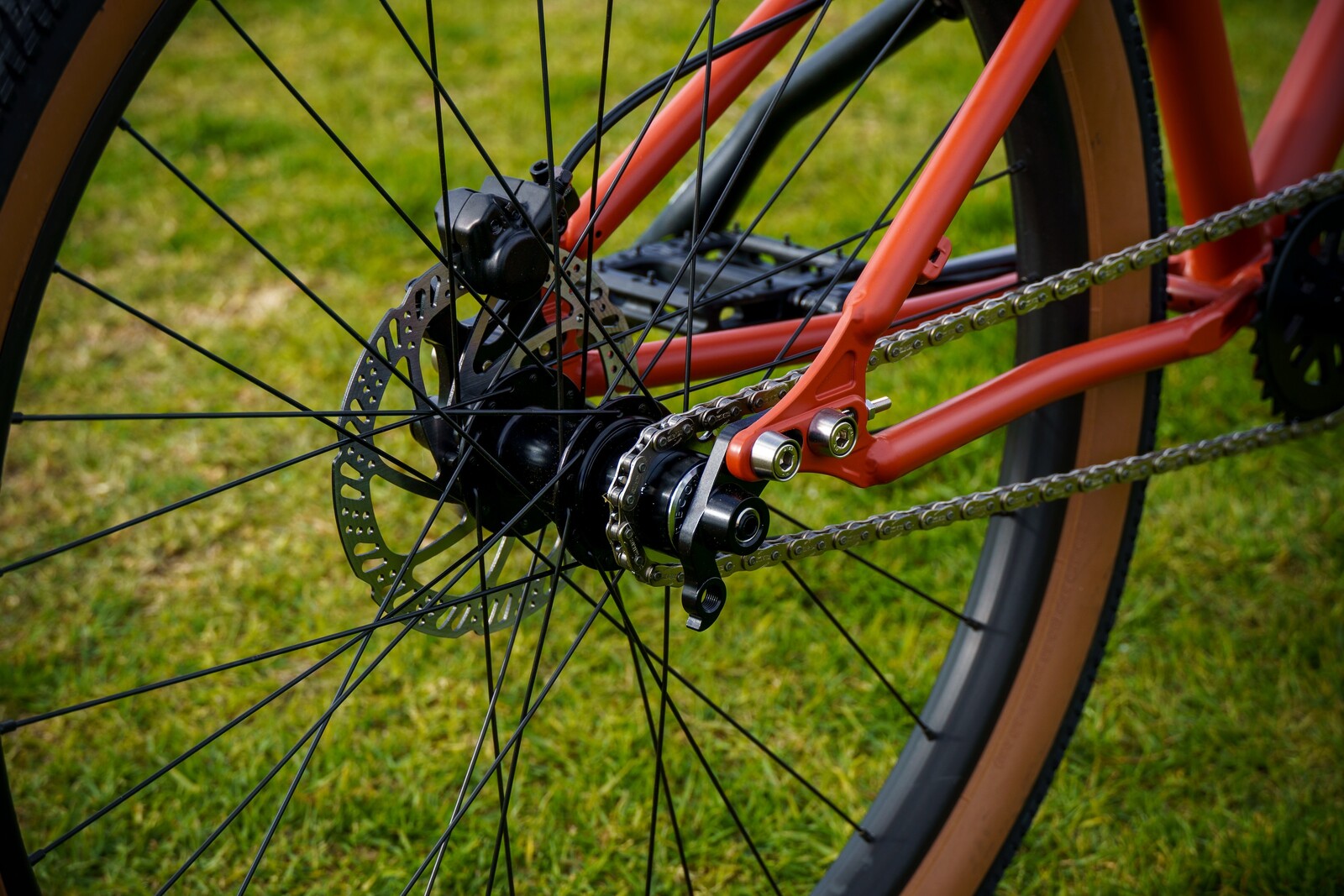
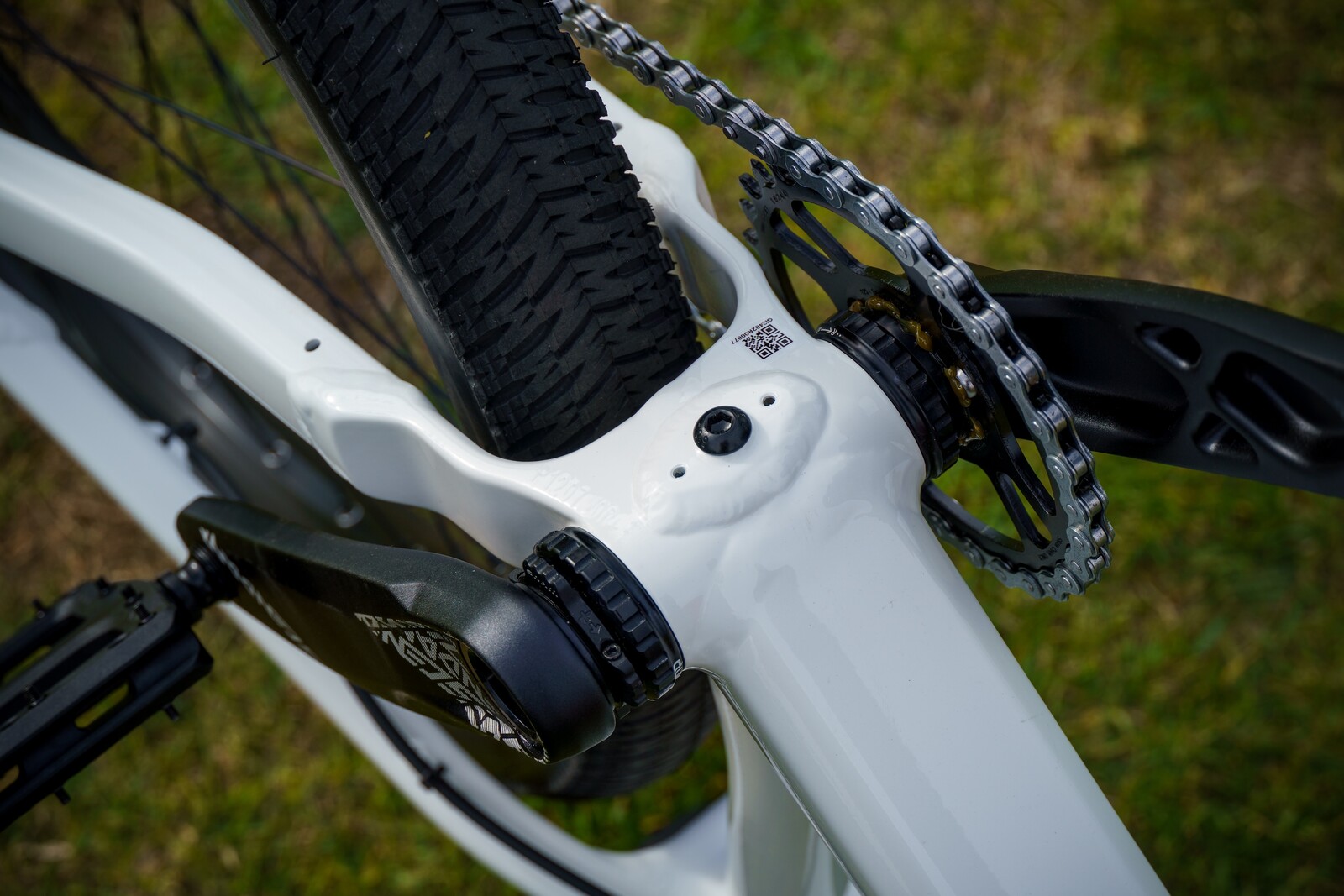
All the bikes, except Transition’s PBJ, offer a way to adjust chain tension. This might seem like a minor detail, but having a well-tensioned chain on a dirt jumper is key. It keeps your bike quiet and allows you to change how hard it is to pedal, which you may want to do depending on if you’re pedaling a lot or doing tricks.

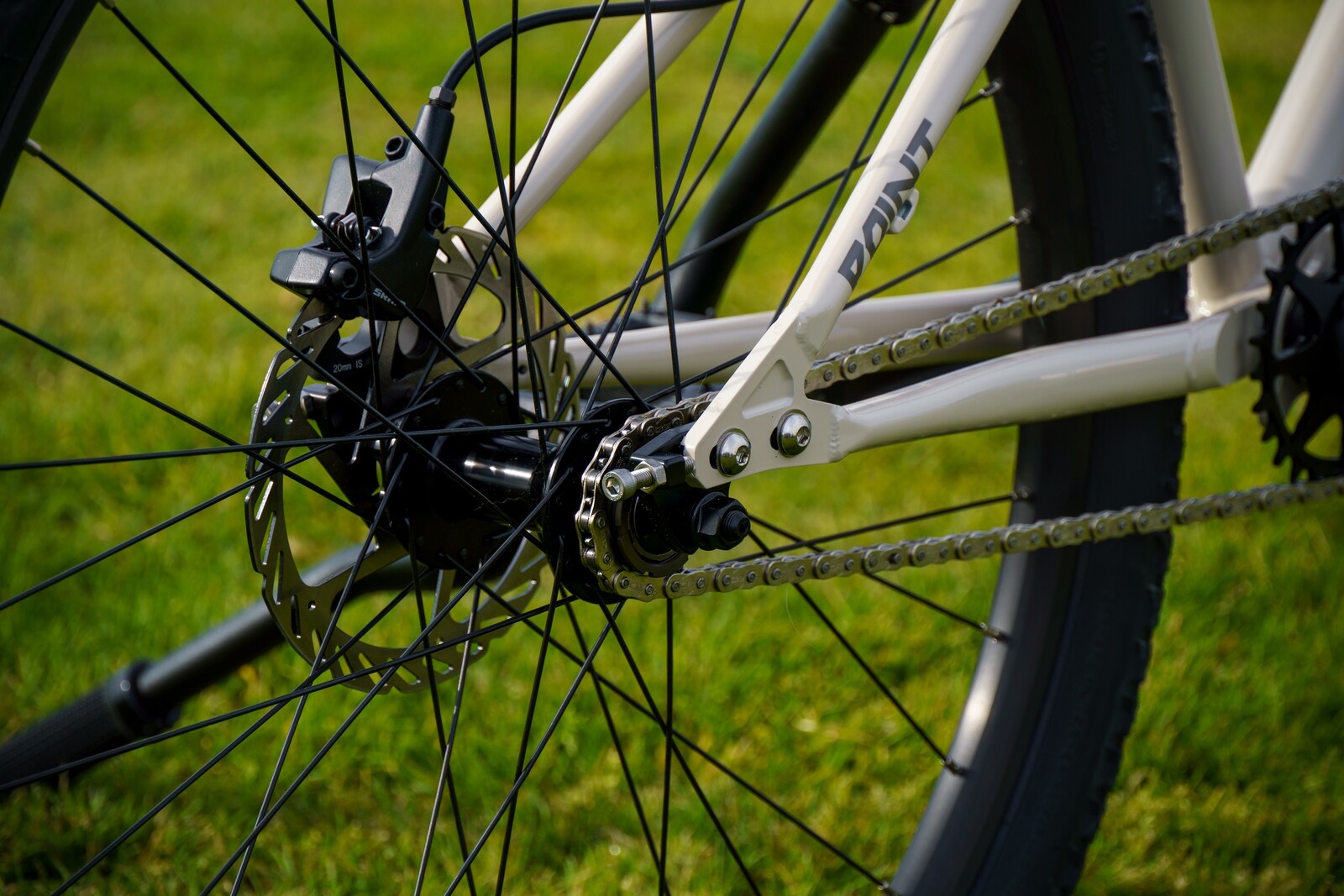
Haro’s Steel Reserve has the simplest tensioner design with its tried-and-true, BMX-inspired horizontal dropouts and built-in tension screws. All you have to do is loosen the bolts on both sides of the hub to change the tension. The rest of the bikes use a multi-bolt design that requires more things be loosened before tensioning the chain. YT and Specialized integrate their design nicely, while Kona and Pivot’s are a bit more chaotic. Pivot’s in particular are pretty long and are just waiting to smack your ankle or shin.
Build Kit Breakdown
We tested complete bikes from each brand. Only YT and Haro offer more than one build kit. Beyond frame material, the most important part of a dirt jumper is the fork. A firm yet supple fork can go a long way in making your DJ fast, responsive, and easy on the hands. It also needs to be capable of managing harsh impacts.
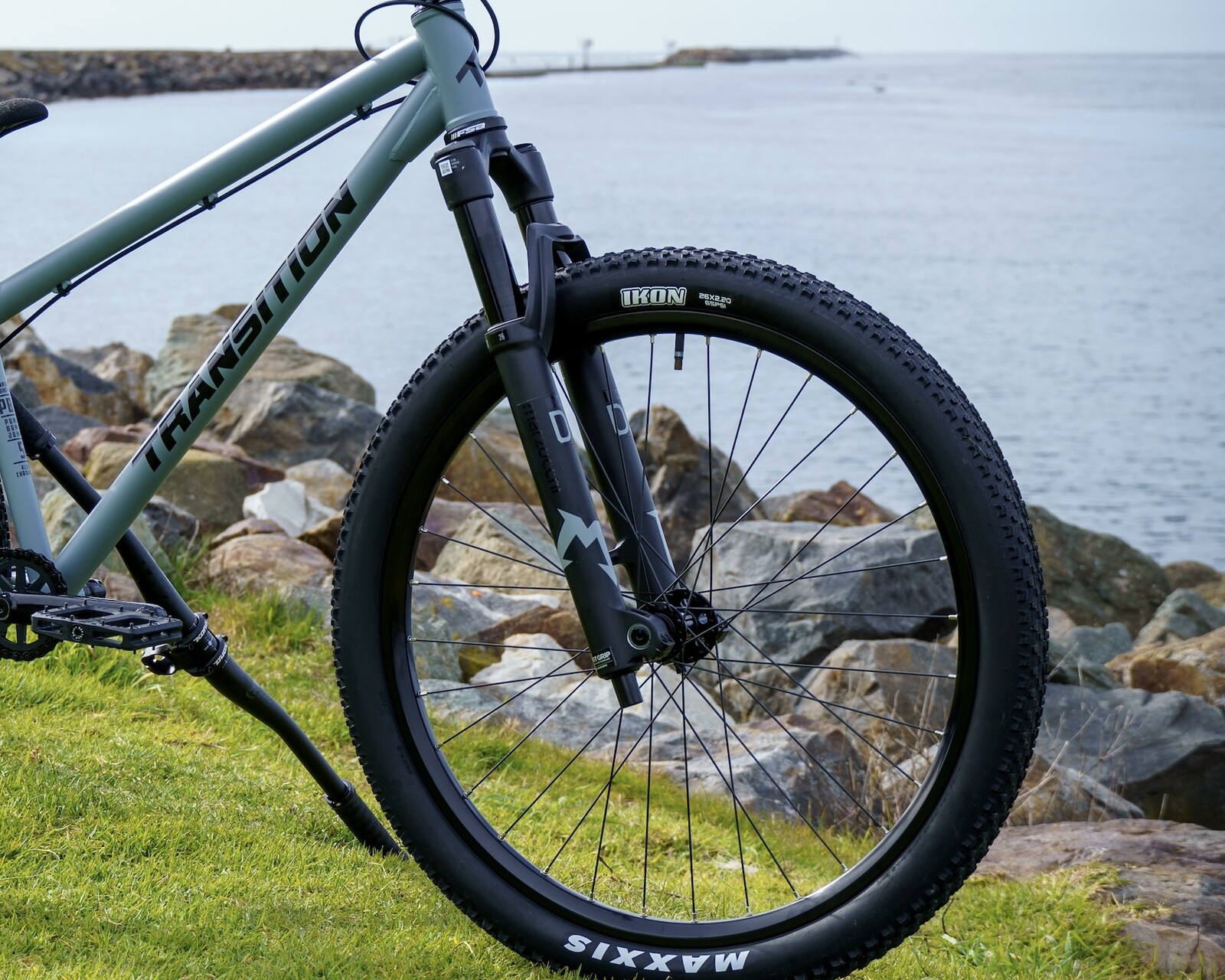

Within our group of test bikes, we have a duel between Manitou’s Circus Expect (Kona, Pivot) and Marzocchi’s Bomber DJ (YT, Haro, Specialized, Transition). On paper, both are very similar, offering rebound, compression, and air pressure external adjustments, a 20x110 non-boost axle spacing, and weighing within 40g of each other. The key differences are the Bomber DJ has 36mm stanchions, a 37mm offset, and a traditional forward arch, while the Circus Expert uses 32mm stanchions, a 31mm offset, and Manitou’s signature reverse arch. The Bomber DJ is also more expensive, retailing for $730, while the Circus Expert retails for $575.

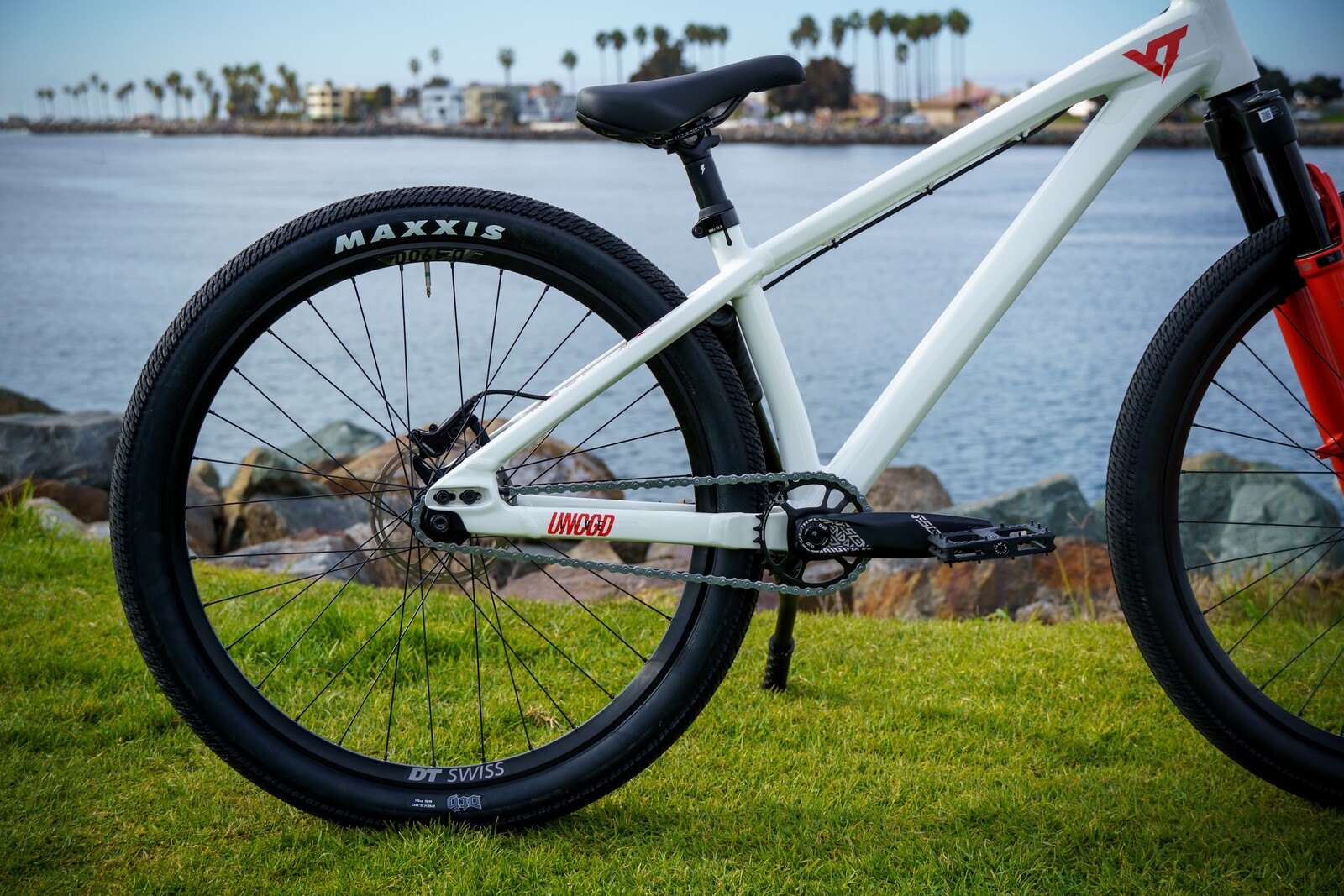
All bikes come with fairly entry-level and basic wheelsets that are nothing to write home about. That’s not to say they won’t withstand some proper riding, but they are second-tier to aftermarket wheelsets that exist. All wheels are 32-spoke except for the Haro, which uses 36-spokes. Kona and Pivot use WTB and Alex Rims with a narrow, 23mm internal width, while all other bikes use 26 or 30mm width rims.
Tire choice is a personal preference depending on where you plan to ride your dirt jumper. Bradley Bike Park features soil-tacked dirt that is smooth, grippy, and rock-hard. Perfect for various tread designs since traction is high and rolling resistance is low. Regardless of tread design and knob height, it’s important to consider width and casing. Ideally, your tires are wide enough to provide stability cornering, stiff enough to withstand harsh landings and light enough to roll fast.


We’ve got a mix of tires from Maxxis, Specialized and Kenda. Most are around 2.2 inches wide, the narrowest being Specialized’s Kicker Sport at 2.1 inches, and the widest being Haro with a 2.4-inch Kenda Booster up front and a 2.25-inch Kenda 360 out back.
Similar to forks, we have a shootout between two brake brands: SRAM and Tektro. YT, Specialized, Transition and Pivot use variants of SRAM’s Level brake. YT and Specialized come with SRAM’s nicer Level T, while Transition and Pivot come with the base-tier Level. The main difference is the Level T lever uses a two-bolt mount, allowing you to remove or install the brake lever without removing your grip. The Level uses a one-piece pinch-bolt lever that has to be slid onto the bars.


Kona’s Shonky comes with Tektro’s 2-piston M275 brake, while Haro’s Steel Reserve uses Tektro’s Gemini 4-piston brake. Both have a lower retail price than the SRAM Level brakes and feature a 2-finger lever, tooled-reach adjustment, and once-piece pinch-bolt lever clamp.
Finally, we did swap out the handlebars, stems, and grips. Contact points are personal, especially on a dirt jumper. In our group of testers, some prefer low rise bars, while some prefer high rise bars. Some like really narrow scooter bars, while others run wide, uncut bars. We decided to meet somewhere in the middle and installed a 38mm rise DEITY Blacklabel bar cut to 740mm, paired with a 42mm Copperhead stem.

We accounted for head tube and fork axle-to-crown lengths to give each bike a similar handlebar height. We also ran DEITY Lockjaw grips and Deftrap pedals, as that’s what most of our testers use on their personal bike.
Bike Weights
With the DEITY parts installed, here is how the bikes tipped the scales:
- Specialized P.3: 25.62 lbs (11.62 kgs)
- YT Dirtlove: 27.04 lbs (12.26 kgs)
- Transition PBJ: 27.70 lbs (12.56 kgs)
- Pivot Point: 28.56 lbs (12.85 kgs)
- Kona Shonky: 29.30 lbs (13.29 kgs)
- Haro Steel Reserve: 29.70 lbs (13.47 kgs)
Geometry

Here are some key geometry similarities and differences between the bikes:
- 68.5° or 69° head tube angle
- Longest reach =Pivot Point at 425mm. Shortest reach = YT Dirtlove at 410mm. All other bikes have a 415mm reach.
- Chainstays are around 385mm. Longest chainstay = Kona Shonky at 400mm. Shortest chainstay = YT Dirtlove at 375mm (*chainstay length can vary by a few mm when adjusting chain tension)
- Tallest stack = Kona Shonky at 584mm. Shortest stack = Pivot Point at 551mm
- Shonky’s tall stack comes from its long steerer tube and low bottom bracket height.
- Tallest standover = Specialized P.3 at 691mm. Shortest standover = Transition PBJ at 620mm
How We Tested
Each bike was ridden by riders of varying abilities and preferences to gather mixed impressions. We want to know which bikes best suited pump tracks, dirt jumps, advanced riders, and everyday rippers. We also want to know where each bike offers quality components and where upgrades would be beneficial.

Jason Schroeder, 30
- Pump or Jump?: Jump
- Whips or Tricks? Whips
- Speed or Style? Style
- Best Stunt? Sub-par seat grab whip
Dante Silva, 22
- Pump or Jump?: Jump
- Whips or Tricks? Whips
- Speed or Style? Speed
- Best Stunt? Shoulder buzzer
Logan Brown, 24
- Pump or Jump?: Jump
- Whips or Tricks? Both
- Speed or Style? Style
- Best Stunt? Left-to-right-to-left-handed bar turn
Merrick Otto, 18
- Pump or Jump?: Jump
- Whips or Tricks? Tricks
- Speed or Style? Style
- Best Stunt? Barspins
Josh Nevelson, 32
- Pump or Jump?: Jump
- Whips or Tricks? Whips
- Speed or Style? Speed
- Best Stunt? 360 on a resi or a t-bog
Pivot Point

- Chromoly steel frame
- Manitou Circus Expert fork
- Alex FR30 rims w/ Novatec S-Team Hubs
- Maxxis Holy Roller tires
- SRAM Level brake
- No name 2-piece cranks
- External brake and shifter routing
- 2-bolt style chain tensioners
- 73mm threaded BB
- 135mm vertical dropouts
- Sizes: One size
- Weight: 28.56 lbs (12.85 kgs)
- MSRP: $1,799 (Currently on sale: $1,099)


Strengths | Weaknesses |
|
|
What's The Bottom Line?
The Point is a solid do-everything dirt jumper whose size makes it stable on jumps and easy to pump through deep rollers. It's not the snappiest or lightest in the air. Tricksters and boosters, beware; this bike will react slow to your inputs. Still, it's a ton of fun for most riders of varying abilities. The build is a touch pricey for the parts received. The most immediate upgrades needed are a more compliant fork, such as Marzocchi's Bomber DJ, and a brake with a nicer, cleaner lever mount.
Haro Bikes Steel Reserve 3
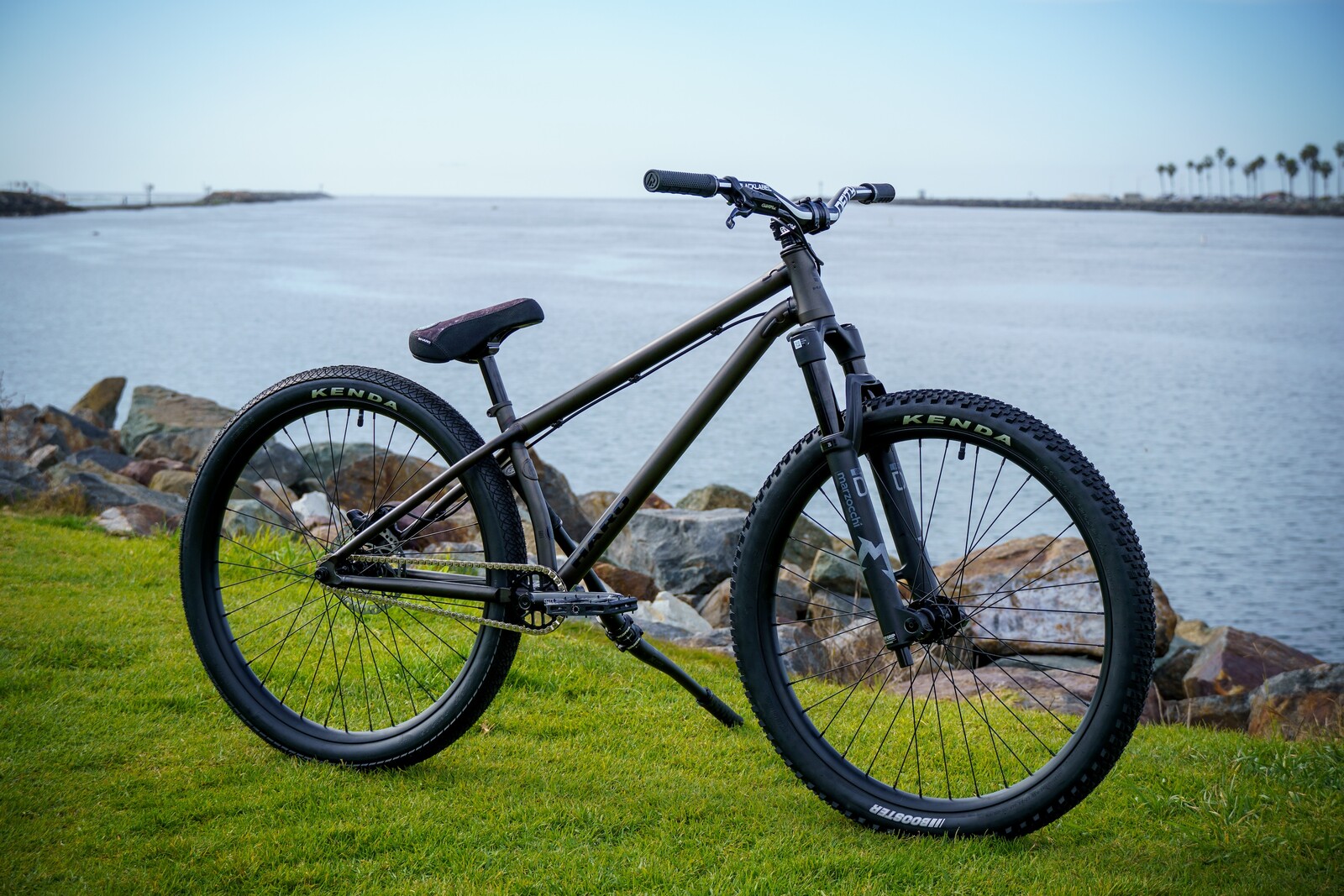
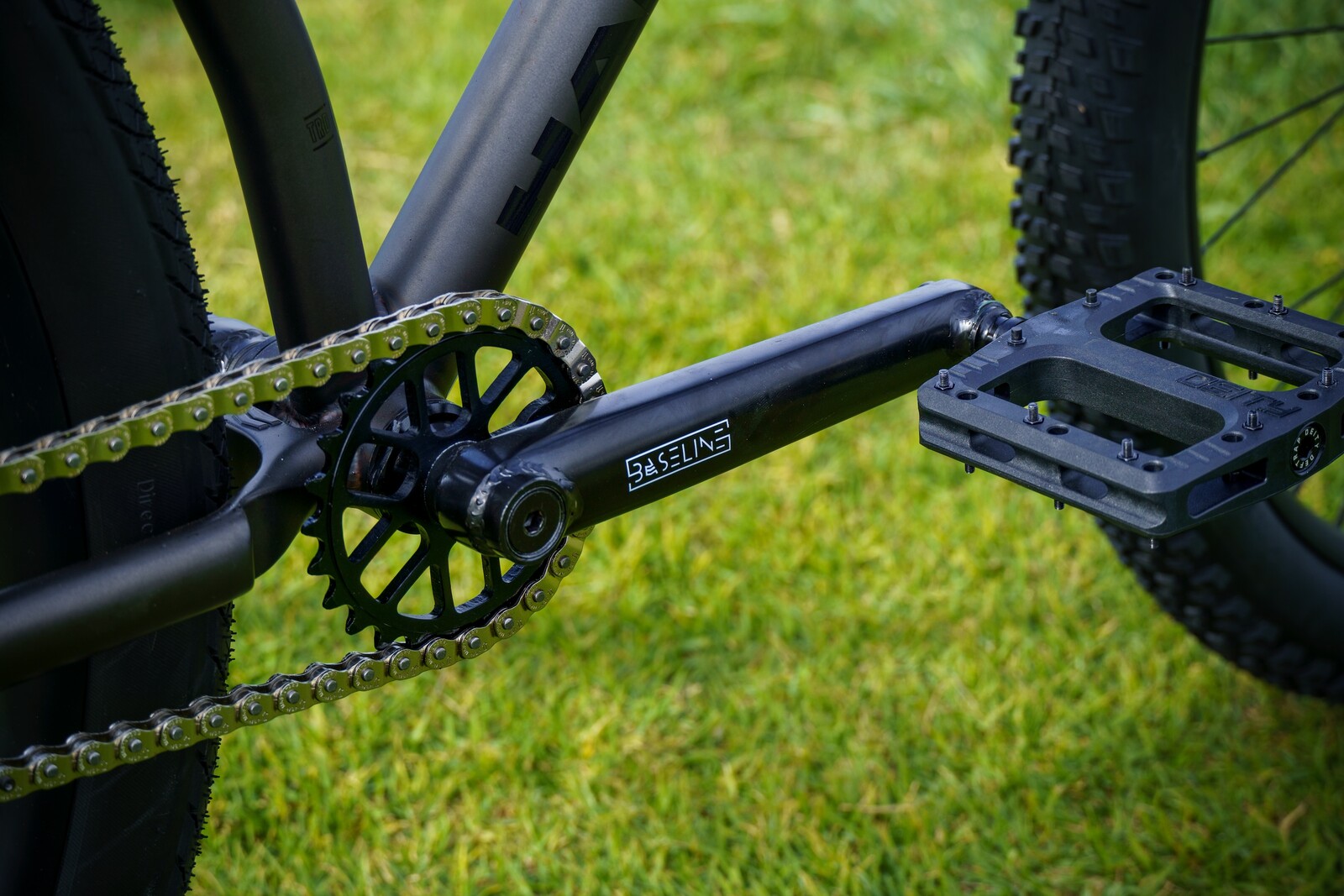
- Chromoly steel frame
- Marzocchi Bomber DJ fork
- Tektro Gemini SL 4-piston brake
- No-name, 36-spoke wheels
- Kenda Booster 2.4" front tire / Kenda 360 2.25" rear tire
- Integrated seat clamp
- Integrated chain tensioners
- 19mm euro bottom bracket
- 165mm Baseline 3-piece cranks
- Half-link chain
- Haro Pivotal saddle
- Sizes: one size
- Weight: 29.70 lbs (13.47 kgs)
- MSRP: $1,999

Strengths | Weaknesses |
|
|
What's The Bottom Line?
Despite weighing nearly 30 pounds, the Steel Reserve was responsive and nimble on jumps. It rode compact and snapped off lips well, making it one of the more fun bikes to flow through the bigger jump lines. It did okay dicing up the pump track but struggled to transfer energy as efficiently as the aluminum bikes. With a lighter set of wheels and less aggressive front tire, the Steel Reserve would be rad for hitting proper trails—from tech lines to big booters.
Kona Shonky
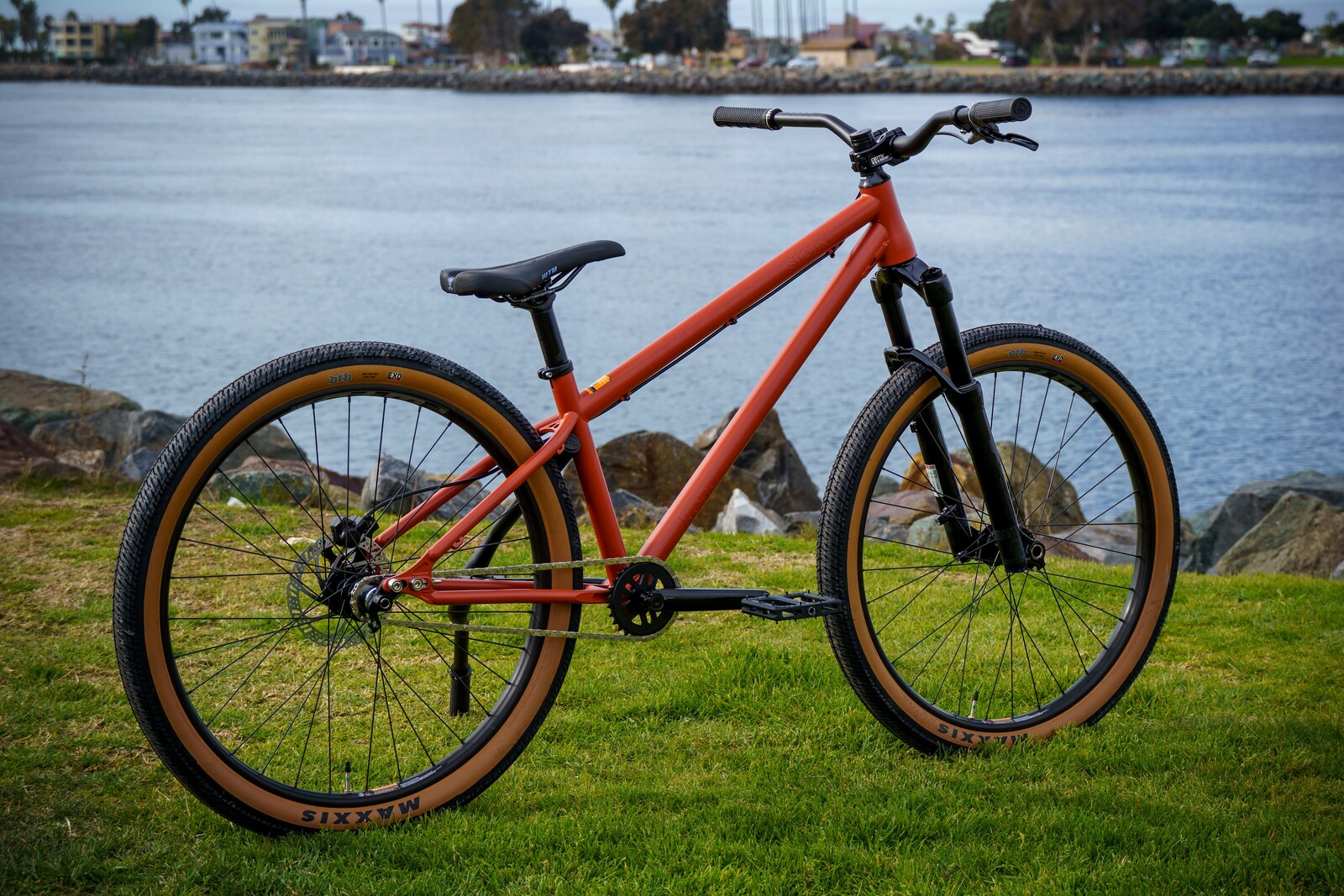
- Chromoly steel frame
- Manitou Circus Expert fork
- Tektro M275 rear brake
- WTB ST i30 rims with Formula hubs
- Maxxis DTH tires
- 170mm Samox DJ 3-piece cranks
- External brake and shifter routing
- 2-bolt style chain tensioners
- 170mm 3-piece cranks
- Sizes: short (tested), long
- Weight: 29.30 lbs (13.29 kgs)
- MSRP: $1,199

Strengths | Weaknesses |
|
|
What's The Bottom Line?
The Shonky was the second-heaviest bike tested. Combining its weight with its tall and low geometry made it the least responsive bike in the test. While this kept us from boosting jumps or hitting transfer, it was the easiest bike to get on and feel safe rolling into jump lines. We referred to the Shonky as the 'mountain bikers' dirt jumper.' If you want a dirt jumper to hit the pump track periodically and don't want to spend half your sessions acclimating to a smaller bike, the Shonky is perfect. We would quickly swap the Circus Expert fork for a Bomber DJ to improve comfort and leave everything else stock until it requires replacing.
YT Dirtlove Core 2
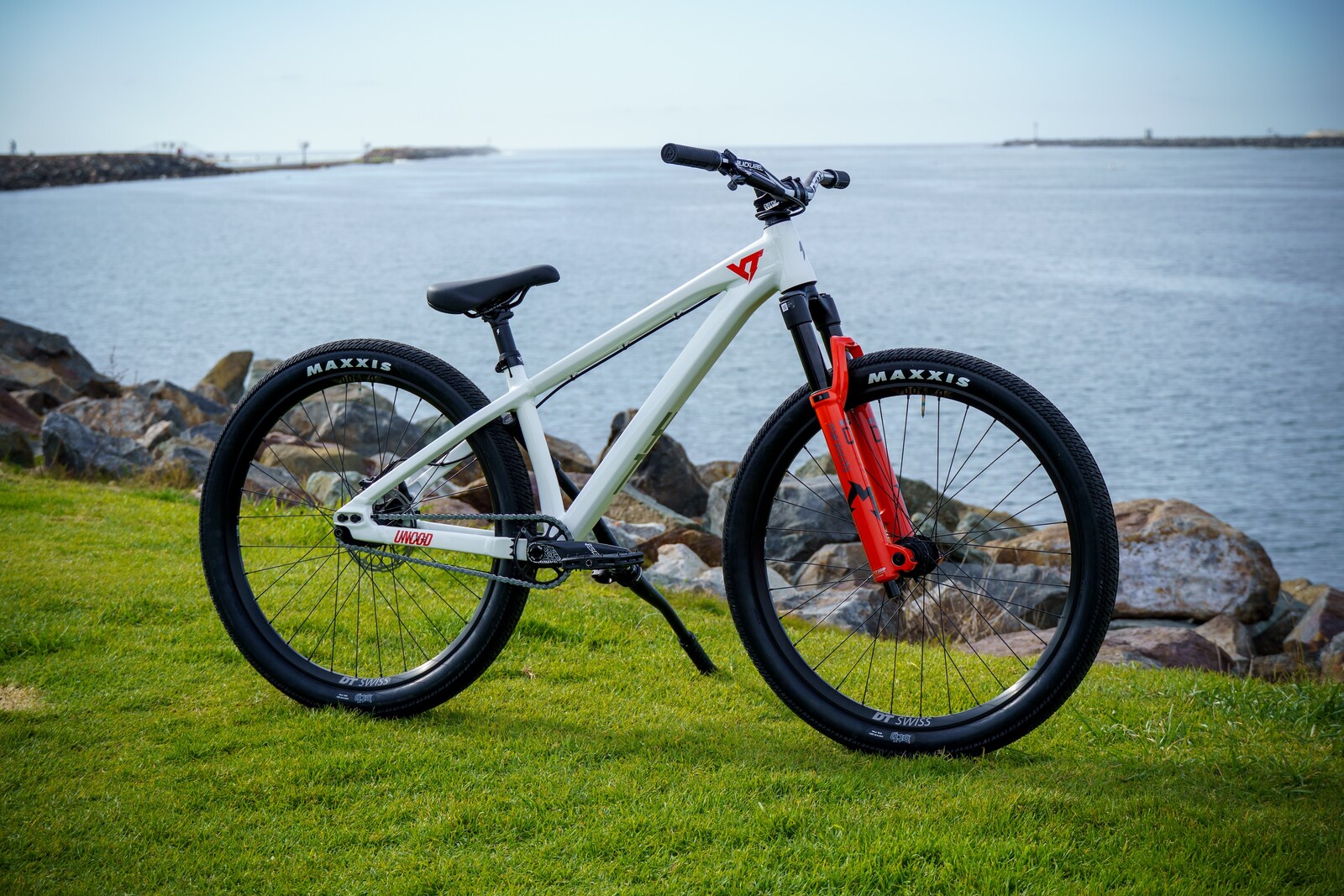
- Aluminum frame
- Marzocchi Bomber DJ fork
- DT Swiss D1900 wheels
- Maxxis DTH tires
- SRAM Level T brake
- 165mm SRAM Descendant 6k cranks
- Integrated 2-bolt chain tensioners
- Integrated crank stopper
- Single-speed only
- 73mm thread bottom bracket
- 10x135mm rear hub spacing w/ vertical drop outs
- Sizes: Regular (tested), Long
- Weight: 27.04 lbs (12.26 kgs)
- MSRP: $1,399

Strengths | Weaknesses |
|
|
What's The Bottom Line?
The Dirtlove Core 2 delivered value and performance that was unmatched by the other bikes. If you are shopping purely based on build kit and price, the Dirtlove is the cheapest way to get nearly a custom build. The only thing we would change is the brake. The SRAM Level T lever clamp is sharp, and the caliper doesn't have a banjo fitting. But the Dirtlove is much more than just a good deal. Its aluminum frame, with its cleanly integrated and sturdy chain tensioners, provided a direct and efficient ride. It's compact and snappy, making the Dirtlove ideal for dirt jumps and less suited for high-speed pumping. We had no problem popping off lips and placing the bike in all kinds of positions in the air. The only downside to this responsiveness was some unpredictability. As Dante put it, it's a pro's dirt jumper. It has the potential to boost, spin, and flip. But if you're not at the same level, it can feel twitchy.
Specialized P.3

- Aluminum frame
- Marzocchi Bomber DJ fork
- P.Series, 32 spoke wheels
- Specialized Kicker Sport tires
- SRAM Level T rear brake
- 165mm Specialized P.series cranks
- Integrated 2-bolt chain tensioners
- Mechanical front brake included
- Internal routing (brake, dropper, shifter)
- 73mm thread bottom bracket
- 12x148mm through axle
- Weight: 25.62 lbs (11.62 kgs)
- MSRP: $2,000


Strengths | Weaknesses |
| Rear brake feels cheap for a $2k build |
What's The Bottom Line?
The P.3 upheld its position as a classic dirt jumper with well-rounded abilities. It didn't feel as compact or snappy through the jumps as Haro's Steel Reserve or YT's Dirtlove, but it was easier to influence than the other bikes. Its aluminum frame delivered a goldilocks amount of stiffness—fast and responsive through rollers and tight berms, with some give during harsh landings. The P.3 is an excellent option for riders of any ability level who want a light bike and don't want to be pigeonholed into one section of a bike park. Like the Dirtlove, the only component we would swap is the rear brake for one with a more refined lever.
Transition PBJ

- Chromoly steel frame
- Marzocchi Bomber DJ fork
- SRAM Level brake
- Kinlin DDT32 rims w/ Novatec S-Team Hubs
- Maxxis Ikon tires
- 170mm Samox BMX 3-piece
- Integrated seat clamp
- Single-speed only
- 19mm euro bottom bracket
- Frame-only available
- 135x10 horizontal drop outs
- Sizes: short (tested), long, XL
- Weight: 29.70 lbs (13.47 kgs)
- MSRP: $1,999


Strengths | Weaknesses |
|
|
What's The Bottom Line?
The PBJ shares the calm and planted personality of Kona's Shonky and Pivot's Point. However, it was more eager to get jiggy on the dirt jumps than its steel counterparts. It snapped off lips well and generated decent speed around the pump track. A bit of a chameleon that morphed to different parts of the bike park, the PBJ rode large and in charge, keeping it feeling safe and predictable. It wasn't the first choice for our dirt jump duo—Merrick and Logan—but held its own against the YT, Haro, and Specialized. The lack of integrated chain tensioners isn't a deal breaker, and for the price, the brake is the only letdown.

Which dirt jumper would you pick? Let us know in the comments below!
View key specs, compare all Dirt Jump / Slopestyle bikes, and rate the latest Haro Steel Reserve, Kona Shonky, Pivot Point, Specialized P. series, Transition PBJ, and YT DirtLove models in the Vital MTB Product Guide.
2/5/2025 11:20pm


View replies to: 6 Dirt Jumpers Tested and Compared - Vital MTB Test Sessions
Comments