

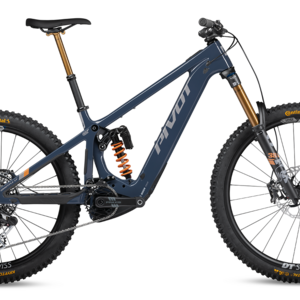
2026 Specialized Turbo Levo 4 S-Works E-Bike


| Where To Buy | |||
|---|---|---|---|

|
Free U.S. shipping on parts and gear orders over $50. $75 flat-rate shipping on bikes.
|
Free U.S. shipping on parts and gear orders over $50. $75 flat-rate shipping on bikes.
$0.00
|
|

|
S-Works Turbo Levo 4
$0.00
|
||

|
S-Works Turbo Levo R
$0.00
|
||

|
S-Works Turbo Levo 4 Frameset
$5,499.99
|
||

|
|||

|
S-Works Turbo Levo SL 2 Framesetset
$4,799.99
|
||

|
S-Works Turbo Levo SL 2 Di2
$11,500.00
|
||

|
Turbo Levo SL 2 Expert
$7,199.99
|
||

|
Turbo Levo SL 2 Comp
$5,999.99
|
||

|
Turbo Levo SL 2 Öhlins Coil
$7,999.99
|
||

|
Turbo Levo SL 2 Comp Alloy
$6,599.99
|
||

|
Free shipping on orders over $50 (continental U.S. only).
International shipping available. Some exclusions apply. |
||

|
Free shipping on orders over $50 (contiguous U.S. only).
International shipping available. Some exclusions apply. |
||

Nine years ago, Specialized whisked us off to the Austrian Alps without even telling us what we were going to be riding. It was of course the first-generation Turbo Levo, which launched to equal amounts of fanfare and handwringing at a time when the very concept of E-MTB was still a gimmick to many or seen as a threat to the sport of mountain biking in some parts of the world. Fast-forward to 2025, and E-MTB has conquered the mainstream, to the point that it makes up a larger portion of sales than conventional mountain bikes for many manufacturers today. Specialized is still trying to make sure they lead the charge, and to do so they have invested heavily in the 4th generation of their flagship e-bike – say hello to the Levo 4.
Specialized Levo 4 Carbon Highlights
- MX 27.5/29 wheels
- Frame - FACT11m Carbon (w/ Carbon Link on S-Works) and SWAT Storage
- Adjustable chain stay length
- Adjustable head angle
- Adjustable BB height
- S-Works 3.1 Motor w/ 720 Watts & 111 Nm, 840 Wh battery, up to 4.75 hour range // OR Specialized 3.1 Motor w/ 666 Watts & 101 Nm, 840 Wh Battery, up to 5.33 hour range
- 150 mm of rear travel
- Side-loading battery
- Weight: 23.53 kg (S4, S-Works, as tested without pedals)
- MSRP from $7999 to $13499 USD

Initial Impressions
Mountain biking in general is a bit of a numbers game, and even more so when it comes to the electrified version of it. So let’s start off with the headline stats of the new Levo 4, the motor and battery system: the S-Works version puts out 720 watts of power and 111 Nm of torque via the entirely new 3.1 motor (made by Brose), while the non S-Works versions make do with 666 watts and 101 Nm of torque. The hardware is identical between the two versions, the difference in power output is controlled by firmware (and no, there is no official upgrade path from regular to S-Works currently planned). The motor has been redesigned from the ground up, with the goal of making it more reliable and quieter in operation. Here is how that was achieved:
- CoreCoat winding encapsulation enhances heat dissipation, boosts durability, and ensures ultra-quiet, reliable performance.
- 2X larger, full metal gears are less susceptible to heat expansion, delivering consistent performance throughout the ride.
- HardDrive surface treatment creates an ultra-smooth, hardened finish on gears, ensuring long-lasting, efficient, and quiet operation.
- Decoupled driveside housing minimizes structure-borne vibrations for quieter, more refined performance.

To power the new motor unit, Specialized developed a side-loading, removable battery that provides either 840 Wh or 600 Wh of juice. The battery occupies the lower part of the downtube, which opens up some space above the battery for a SWAT storage pouch – big enough to be much more than just a gimmick, you can store a fair amount of tools and spares here (you do have to remove the battery to get to it, but that’s a fairly simple operation that only involves a single bolt). The optional 600 Wh battery takes up even less space (and weighs 1.5 kgs less) of course. There is also an optional, 280 Wh range extender that takes the place of the frame mounted water bottle to give you a whopping 1180 Wh of total battery capacity for those really long rides. You can also run the bike ONLY on the battery extender and remove the internal battery completely, but the motor output is reduced by 50% in that case. The bike is delivered with a 5 amp, 200 Watt charger but you can opt for a 12 amp, 700 Watt Super Charger capable of charging the big battery to 80% in less than one hour if you need that.
As the old adage goes, power is nothing without control. Specialized has really done their homework here, with an all-new system control unit (MasterMind T3) that offers an impressive amount of customization to let you really tune your ride how you want it. You can dive into nearly every aspect of tuning, from power assist levels to motor support overrun and more, and there’s a brand new “Dynamic Micro Tune” mode that immediately proved to be one of our favorite support modes. The old Micro Tune mode would basically let you choose the power output in 10% increments, from 10 to 100, with the output linked to your own power. Dynamic Mico Tune makes up to 100% of power available when needed, while still letting you choose how much support you want to match your own power. The cool thing about Dynamic Micro Tune is that you can get 100% of support at any chosen general support level, you just have to pedal harder to get it. That means you can pedal your way out of a surprise steep incline for example, without having to actually adjust the support level via the remote. Of course, there are also the usual Eco/Trail/Turbo modes available to use (which can all be individually tuned as well).

All the riding modes can be accessed via the handlebar mounted remote, with a menu system that is quite easy to navigate (although it's a lot to remember at first, there are many different manipulations you can do with combinations of single-press and long-press in different directions etc). The screen itself is impressively bright and looks great in any light – if you thought it has a familiar air to it, that may be because it’s actually from a previous generation of Apple Watch (without the touch functionality), which should tell you something about resolution and brightness.

Of course, there’s also an app – an equally impressive piece of software that gives access to lots of tuning options as well as performance data tracking. You can monitor and record data like distance, power, battery usage and more. Connect with apps like Strava and Garmin, track your bike with Apple’s “Find My” and lock the motor remotely for extra theft protection and security. You can also connect ANT+ devices (like a heart rate monitor) directly to the onboard system for display on the screen, and you can re-organize the data fields shown on the various onboard screens to suit your preferences.

When it’s all said and done, the motor system needs to be able to deliver power in a smooth and usable way. Specialized addresses this via “Direct Current Injection”, which basically describes the way the firmware and the motor interact to deliver power when and how you need it (if you want more marketing terms, Specialized refers to it as “Super Natural” power delivery…). Starting with the power curve, the new motor is able to hold its max support level even at very high pedal cadence, in stark contrast to the previous generation that dropped off significantly after 60 rpm already. It also does impressive things like match the support instantaneously to compensate for “dead spots” in your pedal stroke at cadences of over 80 rpm. Note that the bike can be configured as a class 1 e-bike under European rules (max 25 km/h), US rules (max 20 mph), or a class 3 (up to 28 mph) via the control system. In the US market, access to those options is open to the user, with Specialized saying it’s “up to the rider to switch modes according to local rules and regulations”.

So, what about the bike itself then? 150 mm of rear travel, 160 mm fork, and fully modern and up to date geo – no surprises there. There’s a ton of adjustability built into the frame as well, with flip chips on the chain stays and on the shock yoke allowing you to adjust BB height and rear-center distance, as well as extra headset cups for tweaking the head angle by +1 or -1 degrees.

The seat tube is quite steep, and there’s plenty of room for a long dropper – average S4 riders should be able to fit a 200 mm post, for example. The S-Works version of the frame gets a carbon rocker link, while the other carbon versions get an alloy link. In terms of weight, our S4 test bike weighed in at 23.53 kgs, with the 850 Wh battery. Specialized also brought along a lightweight build to show what can be done, with a 600 Wh battery, trail tires, a Fox 36 instead of the 38 specced on the production Levos, and inline shock and other lightweight components it tipped the scales at 19.45 kgs.

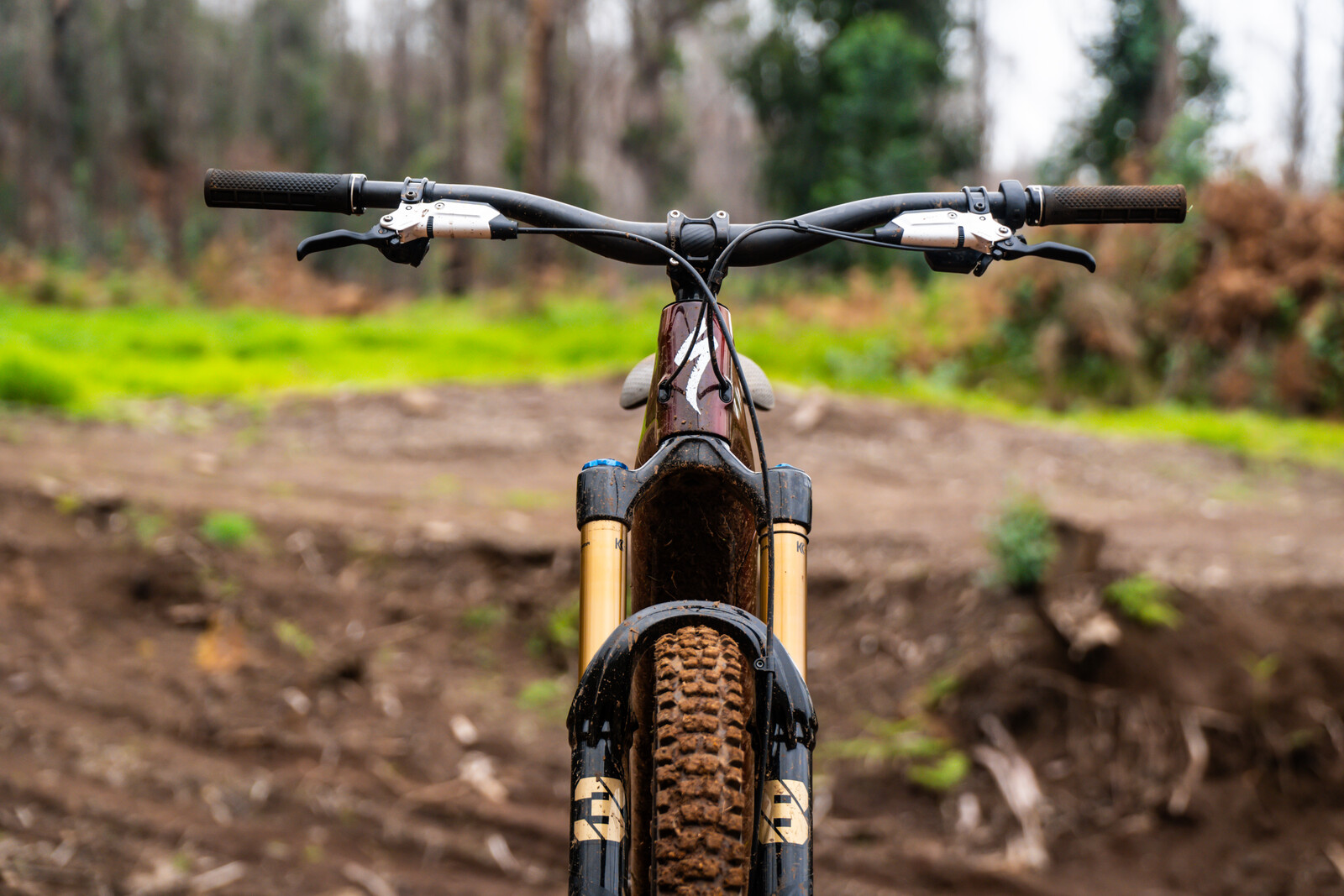


For the rear shock, Specialized naturally chose their new Float X with Genie tech that made its debut on the Stumpjumper 15 last year. The Genie shock features an extra air sleeve and a clever band that closes off said extra air sleeve at a certain point in the stroke. The Genie architecture combines the best of two worlds: the extra plushness and sensitivity of an extremely large air volume with the support of a more progressive unit. The S-Works bike comes with the Factory version while other builds make do with Performance Elite or Performance versions.

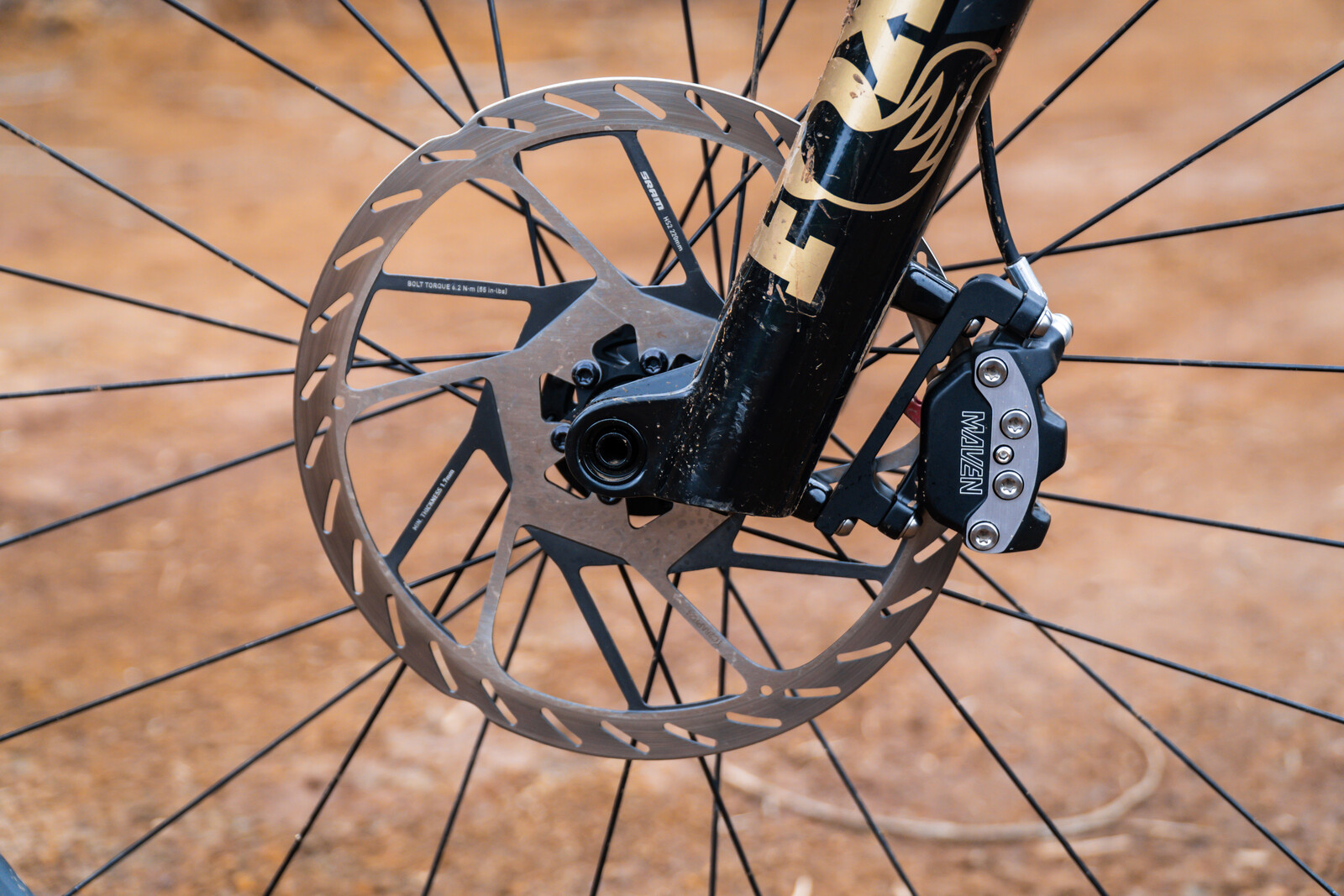
When it comes to the builds, FOX supplies suspension across all the different carbon models, with SRAM shifting (AXS wireless on the higher-end models) and braking (different versions of the Mavens depending on the model). There are new carbon Roval wheels (with DT Swiss 240 DEG hubs) at the higher end, while all the models get the same, newly updated Specialized Butcher Grid Gravity tires front and rear. There are specific color schemes for each build level, from Comp to Expert to Pro and S-Works.
Global Pricing

Specialized Levo 4 S-Works Build Kit


On The Trail
We were invited out to Madeira to ride the new bike for a couple of days, but the weather had some other plans which left us with just one day out on the trails, in pretty wet and windy conditions. Nevertheless, we were able to gather some first impressions of the S-Works Levo 4 in action, and more than anything get a good feel for the work done on the motor system. The increased power is certainly impressive, but the way that power is managed and delivered even more so. There is a sophistication to how the bike engages or disengages the support, never rushed nor jerky, regardless of what support mode you are in. The motor does put out a bit of noise, but it’s not at all overbearing nor particularly unpleasant. There is the tiniest hint of a “clunk” from the transmission internals when descending, but it’s minor and not something we’d notice in the heat of the action.

Manipulating the controller and reading the information on the built-in screen is easy and convenient. The controller allows for plenty of different kinds of operations, accessed by anything from a simple click to longer holds or clicks in different directions. The result is that you can easily manage all the aspects of mode selection and cycle through display configurations with just the controller and the screen, although the app makes it even more handy and offers up deeper functions regarding tuning and data analysis for example.

Our day of riding started with a longer loop, which featured a number of steep and technical climbs, made even more difficult by the slippery conditions (there’s a thing called “Madeira Ice” which is basically a very slick kind of mud that can make your life on the island extra interesting at any given moment during a ride…). We were very impressed by how the bike handled power delivery in these conditions, making it easy to control the traction even with more support dialed in. The “Dynamic Micro Tune” mode is particularly useful to instantly fine tune the amount of support you want, and we were often saved by the ability to then crank out 100% of power without having to switch into Turbo mode. Overall, we had very few wheel spin issues which was surprising given the slick conditions and the amount of power on tap.

Specialized takes racing seriously, and they took input from their pro racers when developing the motor system. For example, they devised a clever way of managing motor “overrun”, which is when the motor keeps delivering support for a few extra moments after you stop pedaling. Enduro World Cup racing rules limit the amount of overrun allowed to 2 meters, which makes it harder to manage in the software. Many manufacturers simply limit the overrun to the time it would take to roll two meters in the tallest gear, but Specialized has built an algorithm that ensures you will always get your two meters regardless of which gear you are in. A small detail maybe, but it shows the amount of effort put into this new motor system and the level of sophistication it was developed to.


The first loop we did covered 989 meters of climbing and 22.3 kms, and we came back to base camp with 41% of battery still left in the tank. This loop was ridden in trail mode with the support level set to 50/100, Dynamic Micro Tune bumping the support to 60/100 or 70/100, and a little bit of Turbo sprinkled in for fun (under this tester’s 90-kg body weight). Carrying good speed up hills that would have you cursing the day you were born on a regular pedal bike is of course satisfying, and having over 100 Nm of torque available at pretty much any cadence is really cool, there’s no two ways about it. Here are a few short clips showing the bike in action, including menu navigation, cruising along and sprinting:
For the second part of the day we lapped a shorter loop to test specific aspects as needed, for example riding the bike with just the range extender installed. 50% of power is still usable, but by then we were already spoiled and couldn’t wait to plop the big battery back in for more power. The bike handles itself well both with the big battery installed as well as in the lighter configurations. The geometry is confidence-inspiring, and the Genie shock really works very well. This was the first time riding Genie tech for this tester, and I was certainly well impressed with how the bike managed to be both very plush and dynamic at the same time. The bike is so comfortable when you first set out that you have a feeling it’s going to behave like a boat, but that’s not the case at all. You get plenty of support through the mid and end sections of the stroke, and the bike provides reserves of pop when you need it.
What’s The Bottom Line?
The full-power e-MTB space has definitely been heating up over the past couple of years, with established players like Bosch pushing their product performance ever higher while new entrants like DJI have disrupted the status quo with their impressively powerful Avinox system. Specialized has done what was asked of them to stay firmly in the race with the Levo 4. Their new 3.1 motor puts out enough power to take on any comers, with a level of sophistication that makes it an absolute pleasure to use on the trail. Power delivery is smooth and consistent, with support available even at the highest cadences, and the amount of control and sophistication offered by the motor management system is second to none. Throw in the confidence-inspiring geo and the excellent suspension performance provided by the Genie shocks and you’re looking at a very serious contender indeed. The carbon models of the Levo 4 presented here today are certainly not cheap, but you’re getting value for money right across the board - from the frame and the motor all the way through to the component spec.
View key specs, compare e-bikes, and review the Turbo Levo in the Vital MTB Product section.
More information at: www.specialized.com.
About The Reviewer
Johan Hjord - Age: 51 // Years Riding MTB: 19 // Weight: 190-pounds (87 kg) // Height: 6'0" (1.84m)
Johan loves bikes, which strangely doesn’t make him any better at riding them. After many years spent practicing falling off cliffs with his snowboard, he took up mountain biking in 2005. Ever since, he’s mostly been riding bikes with too much suspension travel to cover up his many flaws as a rider. His 200-pound body weight coupled with unique skill for poor line choice and clumsy landings make him an expert on durability - if parts survive Johan, they’re pretty much okay for anybody. Johan rides flat pedals with a riding style that he describes as "none" (when in actuality he rips!). Having found most trail features to be not to his liking, Johan uses much of his spare time building his own. Johan’s other accomplishments include surviving this far and helping keep the Vital Media Machine’s stoke dial firmly on 11.
Photos by Johan Hjord and Specialized (action)

Specifications
• Two-position flip chip at rear shock mount adjusts bottom bracket height by 6mm
• Two-position flip chips at Horst links adjust chainstay length by 9mm
• Eccentric upper headset cups allow three head angle positions (+1°/0/-1°)
• All specifications listed are with 160mm travel fork with 577mm axle-to-crown lengths and 44mm offset, for a 132mm trail value (all sizes)
• Saddle heights for effective seat tube angle measurements: 690mm (S2), 735mm (S3), 780mm (S4), 825mm (S5), 870mm (S6)
Option: Specialized 280 Wh range extender
Rotors: SRAM HS2 (220mm front, 200mm rear)
Drop: 150mm (S2), 175mm (S3), 200mm (S4-S6)
• Mixed ("Mullet") wheels: 29" front, 27.5" rear
• Internal cable routing
• SWAT eMTB internal down tube storage above battery
• Custom battery, motor, and display management, plus System Lock and tracking app integration, via Specialized smartphone app
• Includes Specialized 12A 700W smart battery charger with four charge functions (Standard, Fast, Eco, charge to 80%) and ability to charge to 80% in under an hour
• Weight listed for size S4
• European price: 14499 EUR
• UK price: 12499 GBP
• Australian price: 23500 AUD
GENIE dual air spring shock technology:
• Control-enhancing, linear performance of a coil spring in the “bump zone”
• Progressive spring curve at the end of the stroke to prevent bottom-outs
• Simple tunability for riders who want to personalize platform and feel
Adjustable geometry:
• Two-position flip chip at rear shock mount adjusts bottom bracket height by 6mm
• Two-position flip chips at Horst links adjust chainstay length by 9mm
• Eccentric upper headset cups allow three head angle positions (+1°/0/-1°)
| Where To Buy | |||
|---|---|---|---|
|
|
Free U.S. shipping on parts and gear orders over $50. $75 flat-rate shipping on bikes.
|
Free U.S. shipping on parts and gear orders over $50. $75 flat-rate shipping on bikes.
$0.00
|
|
|
|
S-Works Turbo Levo 4
$0.00
|
||
|
|
S-Works Turbo Levo R
$0.00
|
||
|
|
S-Works Turbo Levo 4 Frameset
$5,499.99
|
||
|
|
|||
|
|
S-Works Turbo Levo SL 2 Framesetset
$4,799.99
|
||
|
|
S-Works Turbo Levo SL 2 Di2
$11,500.00
|
||
|
|
Turbo Levo SL 2 Expert
$7,199.99
|
||
|
|
Turbo Levo SL 2 Comp
$5,999.99
|
||
|
|
Turbo Levo SL 2 Öhlins Coil
$7,999.99
|
||
|
|
Turbo Levo SL 2 Comp Alloy
$6,599.99
|
||
|
|
Free shipping on orders over $50 (continental U.S. only).
International shipping available. Some exclusions apply. |
||
|
|
Free shipping on orders over $50 (contiguous U.S. only).
International shipping available. Some exclusions apply. |
||




20 comments
Post a reply to: 720 Watts, 111 Nm - Specialized’s Levo 4 Delivers New Levels o