


Posts
37
Joined
10/23/2022
Location
Kabul
AF
Edited Date/Time
2/19/2026 6:30pm
My bike has a yoke that rotates the shock eyelet sideways. I usually don't notice this, but I recently removed and then reinstalled my shock and man is it finnicky to get that bolt in and out. That got me thinking - why are yokes even sideways? It would be so much easier to take shock on and off if the yoke didn't rotate one of its eyelets 90 degrees. Would really appreciate it if someone could enlighten me.

Some serious stoner thoughts here lol. They are sideways because they have to be. With the eyelet in the orientation you are talking about, it would effectively have a hinge in the middle of the shock, and it would "buckle" or rotate between the yoke and shock under compression.
Just set your bike on the ground and install the clevis end first. With the suspension compressed you should have easier access to the shock bolt. At least that's the case on my Ibis bikes.
my bad for being a dumb stoner bro. i brought this up because i remembered the old 2011 enduros had yokes that weren't rotated sideways - i guess there was a good reason they moved away from that design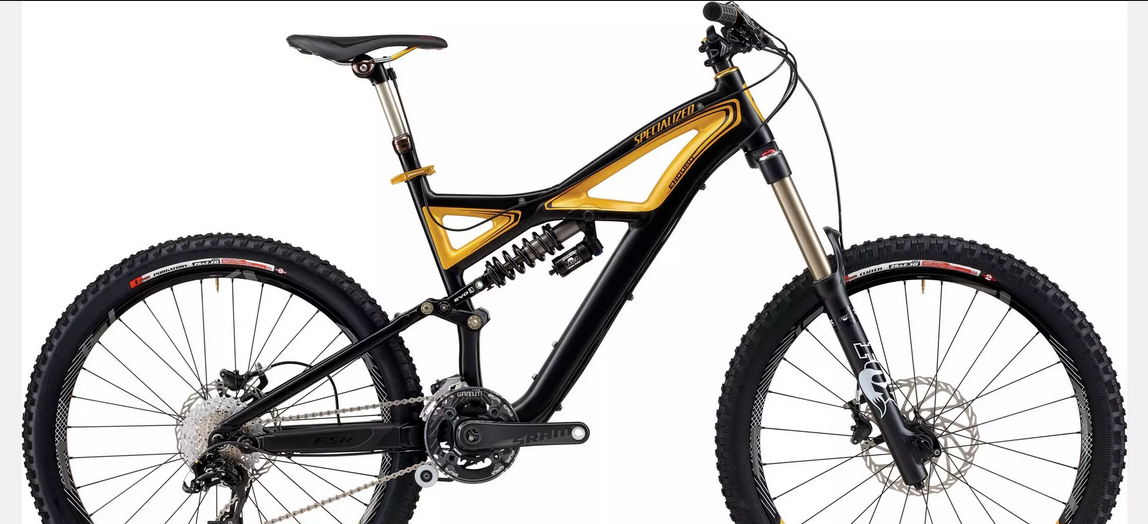
but thank you for the enlightenment and the advice on installing the clevis end first, i appreciate it
I had to look that old enduro up to figure out how it worked. They used a notch machined into the shock. And then later went to the proprietary bolt on version. Which i believe led to BikeYoke making their first yoke. @Sacki is the specialized yoke the origin of Bikeyoke? Previously you were with Bionicon?
https://www.pinkbike.com/news/bike-yoke-suspension-link-is-good-news-for-specialized-enduro-owners.html
It is. The company started in the dark days of proprietary shocks.
The weirdest shock I have seen is the propriety pull shock in a Cannondale. Can’t remember if it was a Jekyll or not. Had a 140 lefty which I nearly fell for. If it was a little cheaper I would have bought it. Had a bike with a 100mm lefty and it was SO good.
Scott used a similar setup on first gen and overall early Genius models (two distinct shock generations). I think it was the second gen that required crazy high pressures.
Cannondales variant was named DYAD.
Well, the name BikeYoke kind of already answers your question, doesn't it? 😉
We want to honour our roots, so we stuck with the name, although we are more known for other things now.
The Yoke for Specialized bikes was our first product.
I had previously been with Bionicon, yes. I was there from 2010-2018 as suspension and frame designer.
For Bionicon I had used the 90° rotated eyelet already to create a shock extension and then we used the same idea to allow the use of normal shocks on Specialized bikes.
DYAD on the Jekyll, Claymore and Trigger.
I had a Claymore that I really liked, super fun bike. I would totally buy another if it came up, but I would also make sure to buy a spare DYAD to go with it - pretty sure no one services them anymore.
These beauties were in the shop I worked at in 2005.....they have not don't much to change my opinion of them since!
That post needs a trigger warning up front.
The bike that launched the shock-destroying, clevis-extension era!
The notched design with bolt on arms was a half baked emergency measure. The frame was originally designed for an elegant, albeit proprietary, one piece shock/yoke. Unfortunately the entire in-house suspension program at Specialized was scrapped before it ever made it to production.
The notch/arm design was created to allow the use of any standard shock. I notched quite a eyelets in the Morgan Hill shop before the big suspension OEs got up to speed.
There were only Qty8 of these beauties ever made. Nicknamed The Tuning Fork, they produced a lovely tone. 🙂
This is some great MTB history here. Very deep dive.
I'm curious though, would these one piece yoke/shocks would been significantly better than 2-piece yoke designs with respect to leverage inside the shock on the shafts and seals, or would they have had similar problems (air and/or oil leaking, weird wear patterns, breaking shafts, etc)?
I'd say the one piece design was marginally better in that regard. Any extended yoke system is inherently bad for shocks in general due to the increased leverage it places on them.
The bolted on 2 arm system was very flexy, and introduced a new source of potential shock/frame misalignment. If the frame alignment was spot on, the improved stiffness and alignment of the one piece design was superior.
Unfortunately, frame/shock alignment for this generation of Enduro was often very poor. I spent many hours tuning a Fox DHX RC4 to try and get it to work with this frame, which had a leverage curve very hostile to coil shocks. After many tune iterations and a very aggressive bottom out system, it was actually pretty good. But due to frame alignment issues and the flexy arm extensions, the buckling forces on the shock body were so bad that over the course of a ride it would actually work the piston bolt loose and develop a death knock. I tried everything, including red loctite on the piston bolt and letting it cure for a few days before assembly. Nothing worked. 😠
Stuff like this is why forums and vital in particular are so great.
What about Poles double yoke system? Yeah it extends the ETE effectively, but completely frees up the shock if there is frame misaligment, even if it is dynamic. And theoretically you could make it the same ETE and still have the shock sideways (having a sort of an inline universal joint).
Id much rather prefer a revamping of a DYAD style standardized shock that can replace the traditional yoke design that so many companies copy and paste. I know that is a weird opinion, but there are immediately so many bikes I just say "no" to because they are yoke driven. But I would not say no to a cannondale with a DYAD. This all comes from the standpoint of premature servicing of my rear shock or safety concern because of a frame sheering a shock in half after a huck (Crazy that frames even do this in the year 2026 for the prices we pay but whatever).
Yeah maybe marginal improvement but you would also need to increase the damper shaft diameter and overlap between the sealhead bushing and piston. The other contributor is the bearings at the end of the yoke - if there is excess binding there it won't rotate smoothly and try to bend the shock instead of compress it. Unfortunately a lot of bikes use tiny 6801 bearings or even bushings! Which get chewed out quickly and have too much friction. Even if they feel OK they don't have the load capacity for that location and will be binding up in use. I've had a few of this type of bike which had continual air loss problems, but were fixed just by replacing those bearings!
You mean like a spherical bearing? I'm pretty sure the Pole bikes are clamped rigidly at both ends so all it does it extend the shock overall length. If they were able to rotate laterally then that would be too many degrees of freedom and snap the shocks just as much (except they might blow out sideways instead of vertically)
When I owned a Levo 3, I got a spherical eyelet bushing for the front of the shock to try and reduce loads on it from the yoke. This had an unexpected consequence that I didn't recognize the connection on until after I sold it: I could not keep the bearings in the seatstay pivot from unseating because the frame design relied on the stiffness of the shock to keep the rear end aligned. It was so bad that I could unseat them on demand with 1 hard cutty. I'm never buying a yoke-driven bike again.
That is wild...
Kinda, like a spherical bearing, but implemented the way Pole (or yokes in general) does things - have a standard bushing in a standard shock with standard shock hardware mounting it to an adapter, have the shock rotated 90 degrees sideways and mount it to the frame pivots.
Yeah, extending it makes the loads on it higher, as with a yoke. Yes, adding what is essentially a universal joint, will make it free in all directions and would technically open up another plane of buckling (side to side vs. just in the frame plane, whether that is up/down or back/forth is a question of the layout). But the benefit here is that in the case of any frame misalignment and/or sideloading, the shock is free to move out of the frame plane and not be additionally loaded by that. It just has to handle being squeezed together.
Yeah, spherical bearings could be a solution, but do shock eyelets accept them without problems? Is the eyelet size big enough to have a decently sized spherical bearing mounted to it? Do frame mounts enable the use of spherical bearings? Etc. Implementing everything correctly, the way I describe above would accept every shock currently on the market.
Yeah you can't fit a spherical in a standard eyelet, so it would need shock makers to come on board there. The universal joint might work if it was a) absolutely as short as possible, ideally inline with the current eyelets and b) uses large bearings like 690X. Both create packaging issues because you would also want to avoid single shear bolts (which would flex or cause wear/binding/loosening on the bearing)
The 2020 enduro uses a very short link, and in theory the shock is isolated from side loads but they are one of the absolute worst bikes for annihilating shocks, and they break in the vertical plane due to the binding from these tiny bearings. So a better system would need to be shorter and/or fit much larger bearings than they have managed in that bike to make it work
I mean, you'd flip the shock sideways so you need quite a lot of width to fit the shock anyway. If you're doing that you can (have to) space the bearings very widely apart. If you're doing THAT, you can use large diameter bearings, otherwise you have a lot of other packaging issues even before that.
The reason Specialized moved away from this design, and the reason they added the side rotating pivot thereafter (same as the bikeyoke) is that if there is no pivot there and the shock and yoke are hard fixed together, then whenever the bike is side loaded during turning (think berms or off camber), the rear triangle flex would transfer that side loading directly into the shock through the yoke interface (it becomes a structural element of the frame) and the shock would essentially flex where the shaft enters the shock body, this wears the shock stanchion shaft and the bushings in the shock (leading to burping of air in air shock) and therefore causing heavy shock maintenance requirements or resulting in failures.
Too bad designers moved away from the superior design of pull shocks.
Make a DYAD home serviceable and I'm buying tha thing tomorrow.
Technically you could make a pull shock in the exact same packaging we have now, for example in a super deluxe. The only negative I see is bottom out. The components would be a lot more loaded than they are in comoressive shocks.
Yup, you move those buckling loads from full extension to compression where the forces are a smidge higher.......
If you're pulling it apart you're not buckling it, that's the main benefit of pull shocks. The problem is in the load path.
If you were to make the shock easily serviceable at home, the overall architecture would have to be along the lines of the current Super Deluxe (& co obviously). I'm thinking it could be made to work. You'd need to move the transfer port to switch positive and negative chambers, probably move the air valve to the other side as well (inflating the negative chamber would be risk for a stuck down situation), flip over the damping piston (rebound becomes compression and vice versa) and change the oil flow to the reservoir (from one side of the piston to the other).
Therein lies the problem. Currently a bottom out loads the shock from the eyelet through the damper body, main air piston, bottom out oring bumper into the eyelet body. If you reversed it the bottom out would pull on the eyelet, damper body, main air piston and then that would pull either on the aircan (probably better option) or the damper piston and subsequently on the damper shaft before transferring the load on the eylet body. Though given the diameter of the aircan I guess it should be strong enough to handle it. You are loading the threads directly though, with compression you can thread parts in until they seat axially, but you can't have that when pulling things apart. You might get issues with parts unthreading.
Oh and one more thing. While pulling on a shock lessens the bending or buckling loads which is good, I think packaging a pull shock overall isn't as easy as it is a push shock on a bike. We have tons of options to compress a push shock, I think packaging it inside the front triangle without affecting seat tube insertion, bottle carrying capacity and keeping suspension parts (chain and seatstay) short would be a challenge.
Post a reply to: Why are yokes sideways?