


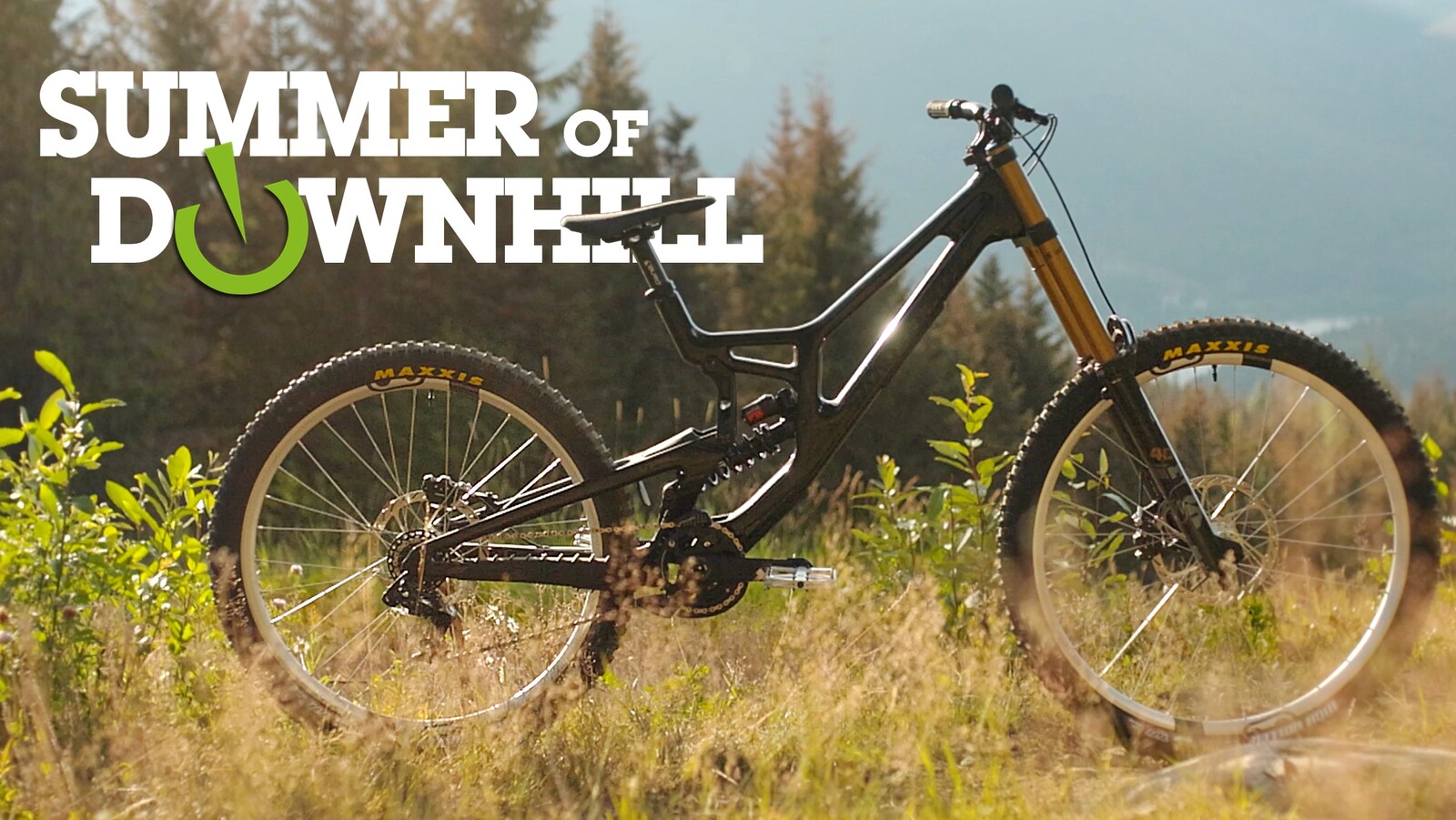
If you've even slightly tuned into World Cup downhill racing this year, then you're well aware of the terror Jackson Goldstone has been on, and how his riding style and bike setup are changing the way others are approaching riding a downhill bike.
But he's not the first to rewrite history aboard Santa Cruz's iconic V10 downhill bike. Since its inception in 2002, the V10 has been one of the most successful race bikes ever. Now in its 8th generation, a lot has changed, but it has maintained the easily recognizable silhouette and VPP suspension design. And like a marble statue, the V10 has slowly been etched away over the years to create the current version.
So we know the bike is obviously fast. But why? And how? And for us regular riders, what makes the V10 so special to ride? That's what we want to find out.
V10.8 Highlights
- 208mm of rear wheel travel // 200mm fork
- MX wheels (size S-L) // 29-inch wheels (size XL)
- VPP suspension design
- CC full-carbon frame
- Fine-tuned frame stiffness per size
- Increased adjustability:
- 3 chainstay length options
- 3 reach length options
- 3 bottom bracket and head tube angle positions
- Integrated shock mud guards, downtube and chain stay protection
- 12x157mm rear hub spacing
- 200mm rear rotor post mount
- Lifetime frame warranty and replacement bearings
- Sizes: S-XL
- Weight (size L): 36.96 lb // 16.76 kg
- MSRP: X01 Build (tested) - $8,899 // DH S Build - $7,049 // Frame + Factory DHX2 - $3,949

Frame Details
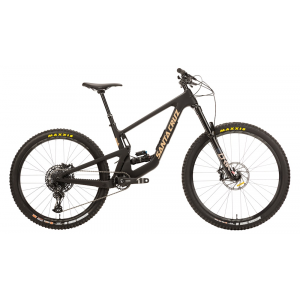
Carbon frame only—The V10 uses Santa Cruz's lightest, stiffest, and strongest CC carbon layup and proprietary manufacturing process. The latest frame was tweaked to increase frame compliance and traction, without losing stability under aggressive riding. All cables remain tube-in-tube guided.
Dedicated wheel sizes—You cannot change rear wheel size on the V10. Size small, medium, and large roll on mixed wheels. Size XL uses dual 29-inch wheels.


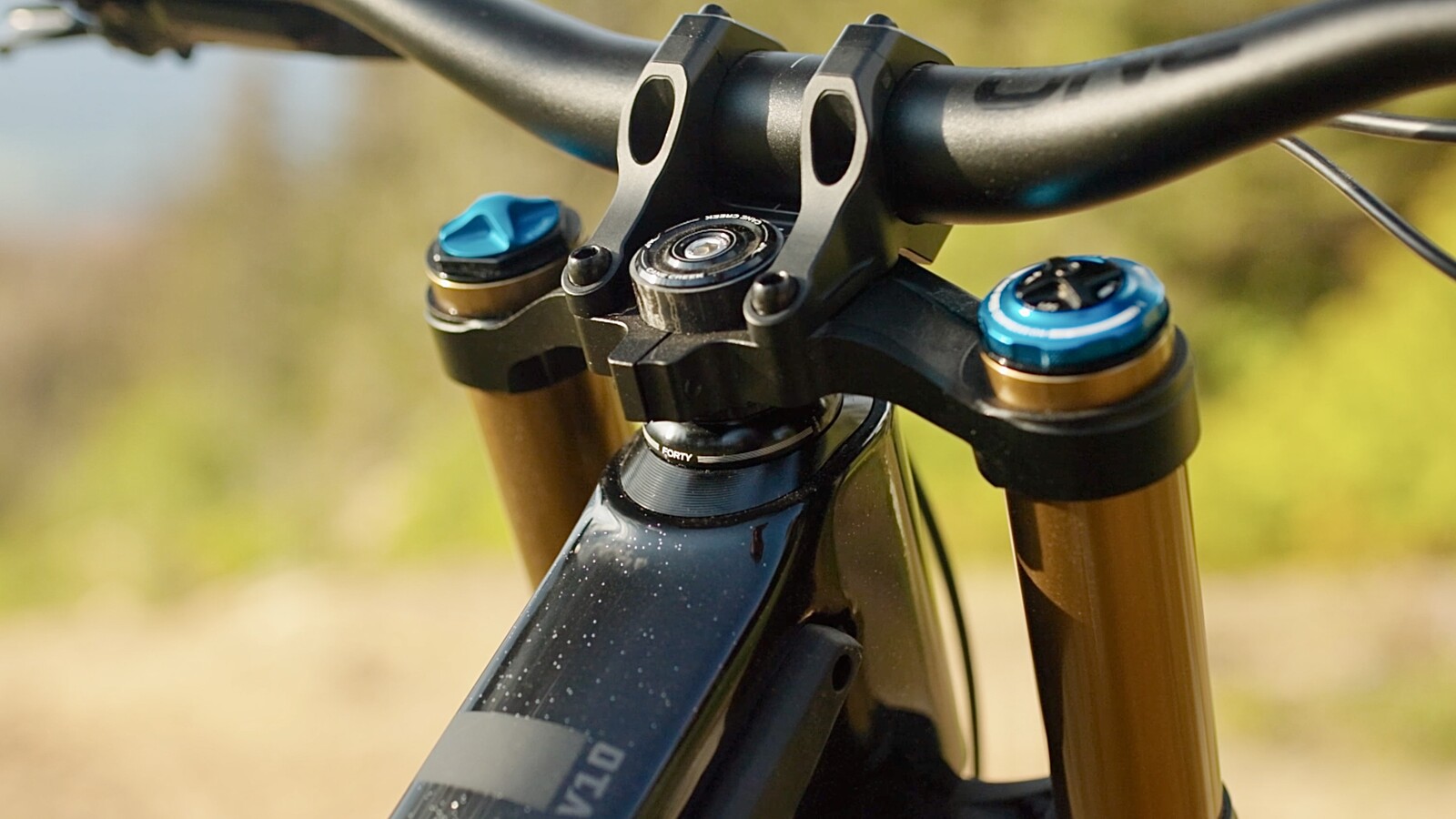
The most adjustable V10 yet—You have three points of adjustability, each with three positions (numbers provided for size large):
- Chain stay length: 450, 455, and 460mm
- Reach length via headset cups: 467, 475, and 483mm
- 5mm of bottom bracket height adjustment and a 62.7°, 62.9°, or 63° head angle via a lower link flip chip
- *Chainstay and reach numbers provided based on low flip chip position, which is primarily how we tested the V10

Suspension changes—The V10.8 has lower anti-squat than before to improve suspension sensitivity. Anti-rise was also reduced to make the suspension more active under braking. The leverage rate was made more linear with a lower starting leverage ratio to improve the bike's responsiveness to rider input and consistency at different points in the travel.

The finer details—There are plenty of nice touches spread throughout the frame, including: integrated mud guards around the shock, integrated fork bumpers, an aggressive chain slap guard, and a large down tube protector.


The price of speed—Despite what you might assume, the two V10 builds and frame only option are within range of what you'll spend to get on a premium DH bike. The X01 build we tested retails for $8,899 USD, the DH S build goes for $7,049, and the frame only with a DHX2 Factory Coil shock comes in at $3,949 USD.
X01 build highlights—FOX Factory 40 with a GripX2 damper, FOX DHX2 Factory Coil, SRAM X01 drivetrain and Maven Silver brakes (220mm F/200mm R rotors), OneUp cockpit with 30mm rise alloy bars, and then we swapped the Reserve 30|HD alloy wheels and Maxxis Assegai/DHR2 combo for our control wheels and tires: Crankbrothers Synthesis 2.0 alloys with DH-casing, MaxxGrip Maxxis High Rollers.
Test Riders
| 
|
What's The Bottom Line?

Jason's Bottom Line
Strengths | Weaknesses |
|
|
Shock / Fork Settings
- 550 lb spring, HSC: 7, LSC: 10, HSR: 4, LSR: 9
- 83 psi, 2 VR, HSC: 4, LSC: 14, HSR: 5, LSR: 5

To address the title of this review, I believe the V10 has been such a successful race bike due to its ability to hold a high average speed across various types of terrain. It offers a lot of support that encourages rider input, making for a very active and lively ride if you're willing to put in the effort. You can generate speed through flat or awkward sections where other downhill bikes might feel sluggish. At the same time, the V10 can plow and float through chunky tech sections thanks to its ability to drive forward through high-speed compressions. I wouldn't say it was the plushest bike through impacts, which some riders might interpret as a lack of comfort. Personally, I was okay with a touch more feedback, as it gave the bike a lot of ground feel. I never struggled to feel in control or to slow the bike down, and was repeatedly shocked by how easy it was to load the bike, even when deeper in the stroke, to move it over a hole or shift directions.
For the average downhill rider not racing the clock, the V10 is a bit of a chameleon. You've got numerous adjustments to cater to its strengths to your own, matched with very broad abilities. You can pick your way down a steep, raw DH track, and then on the next lap, go get sendy on a jump trail. The V10 is a joy to pilot down both. It has a lot of personality when you want to ride creatively, but remains stable when you need to hold a line. If I didn't connect so much to what Neko is doing with Frameworks, I'd buy a V10—it's fun to ride throughout an entire bike park without feeling limited in any one situation.
Ryan's Bottom Line
Strengths | Weaknesses |
|
|
Shock / Fork Settings
- 550 lb spring, LSC 9, HSC 7, LSR 9, HSR 3
- 94 psi (then to 88 psi later), LSC 10, HSC 5, LSR 6, HSR 5

The first thing I noticed hopping on the V10 was the bar height. With the recommended stiff spring in the rear, the dynamic BB felt high, which made the bars feel low. Coming off Horst link bikes, I am used to the rear extending a little under braking, so I normally want my bars higher to be prepared when that happens. The V10 didn't do that. The rear never rose, so the front end actually sat where it needed to be. Next time I'll still try a taller bar, but it was less of an issue than I first thought.
The bike felt fast right away. Even on flatter sections, it seemed to carry more speed than the other bikes, which I think came from the firmer recommended setup. Braking was different, too. The V10 had less rear-wheel braking traction, so you couldn't always shut it down as late into corners. The rear wheel doesn't get pushed into the ground for extra grip while braking, since it has higher anti-rise than the other bikes we were riding. At first, that felt like a weakness, but it turned out to be fine, and depending on how you look at it, maybe even a strength. Instead of defaulting to over-braking like I normally do (because I'm scared and don't want to blow the corner), the V10 forced me to ride faster. You head into a corner, grab a little brake, and suddenly you are in the corner going quicker than you expected. The bike was basically telling me to get off the brakes. And it worked. You learn you can carry more corner speed than you thought. It was like having a coach yelling at me to commit and just ride the corner.
The lack of rear-end extension under braking also calmed the bike in steep sections with big holes. Normally, with low anti-rise bikes, the rear extends under braking, which can amplify the fore-aft teeter-totter as the front drops into one hole and the rear kicks up in the last one. The V10 soaked up more of that hit and kept things calmer, saving arm travel and energy. I wasn't expecting it, but it made the bike ride smoother in the big holes where you had to stay on the brakes. The frame itself was comfortable too. At first glance, it looks stout, but you can tell they tuned the stiffness to get rid of chatter.
Even though it felt firm, the suspension still let the rear wheel move out of the way of bumps. It gave me a good combo of support without hanging up. You can have a high pivot bike to plow through rough terrain... or you can just jump over it! Watching Jackson Goldstone pop his way down tracks makes sense now. I wanted to do the same thing on this bike, and it was fun to ride that way.
The V10 has a decorated resume for a reason. It has won so many World Cups because it balances stability, efficiency, and play. It makes you ride faster by getting out of your way and teaching you to carry more corner speed. The firm recommended setup might be tough if you are not strong, but it lets you ride at a higher pace. Next time I'll run a higher bar and maybe experiment with spring rate a bit more, but regardless, the V10 was very impressive. It is a World Cup bike that doesn't just go fast, it makes you faster. If I lived in Whistler, I would buy this bike because it can both play and be fast.
View key specs, compare bikes and frames, and review the newest Santa Cruz V10 models in the Vital MTB Product section.
| Where To Buy | |||
|---|---|---|---|

|
Free shipping on orders over $50 (continental U.S. only).
International shipping available. Some exclusions apply. |
Free shipping on orders over $50 (continental U.S. only).
International shipping available. Some exclusions apply. $3,949.00
|
|
|
|||
|
|||
|
|||
|
|||
|
|||
|
|||
|
|||
|
|||
|
|||
|
|||
|
|||
|
|||
|
|||
|
|||
|
|||
|
|||
|
|||
|
|||
|
|||
|
|||
|
|||
|
|||
|
|||
|
|||
|
|||
|
|||
|
|||
|
|||
|
|||
|
|||
|
|||
|
|||
|
|||
|
|||
|
|||
|
|||
|
|||
|
|||
|
|||
|
|||
|
|||
|
|||
|
|||
|
|||
|
|||
|
|||
|
|||
|
|||
|
|||
|
|||
|
|||
|
|||
|
|||
|
|||
|
|||
|
|||
|
|||
|
|||
|
|||
|
|||
|
|||
|
|||
|
|||
|
|||
|
|||
|
|||
|
|||
|
|||
|
|||
|
|||
9/19/2025 8:51am



View replies to: Testing One of the Winningest DH Bikes of All-Time - Santa Cruz's V10
Comments