

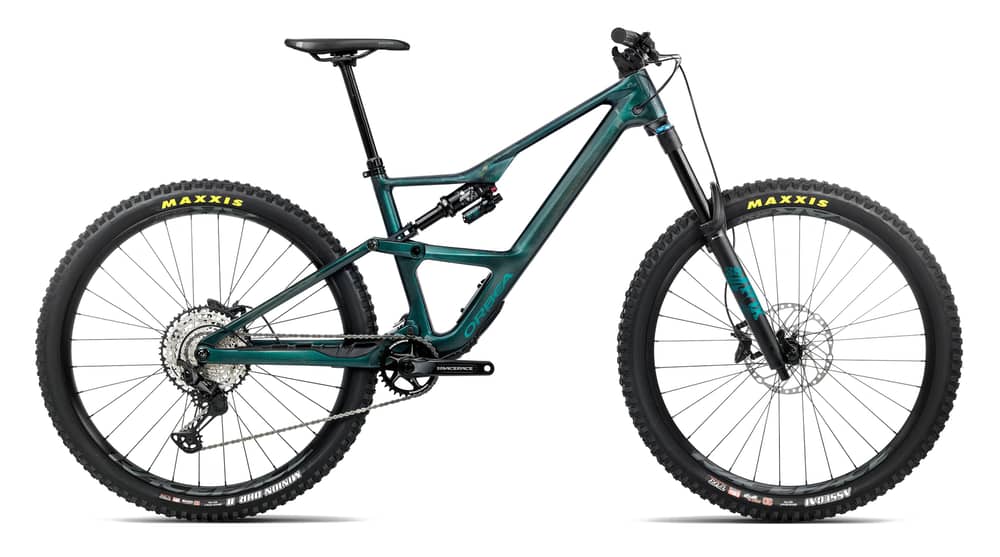
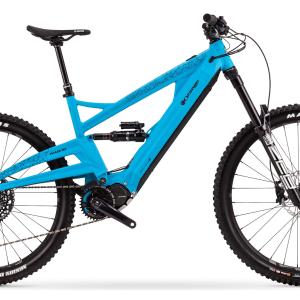
2025 Orbea Rise LT M10 E-Bike







| Where To Buy | |||
|---|---|---|---|

|
Free shipping on orders over $50 (continental U.S. only).
International shipping available. Some exclusions apply. |
Free shipping on orders over $50 (continental U.S. only).
International shipping available. Some exclusions apply. $4,899.00
|
|

|
|||
|
|||

|
|||

|
|||

|
|||

|
|||

|
|||
|
|||

|
|||

|
|||

|
|||

|
Free shipping on orders over $49 (continental U.S. only).
International shipping available. Some exclusions apply. |
Free shipping on orders over $49 (continental U.S. only).
International shipping available. Some exclusions apply. $9,238.95
|
|

|
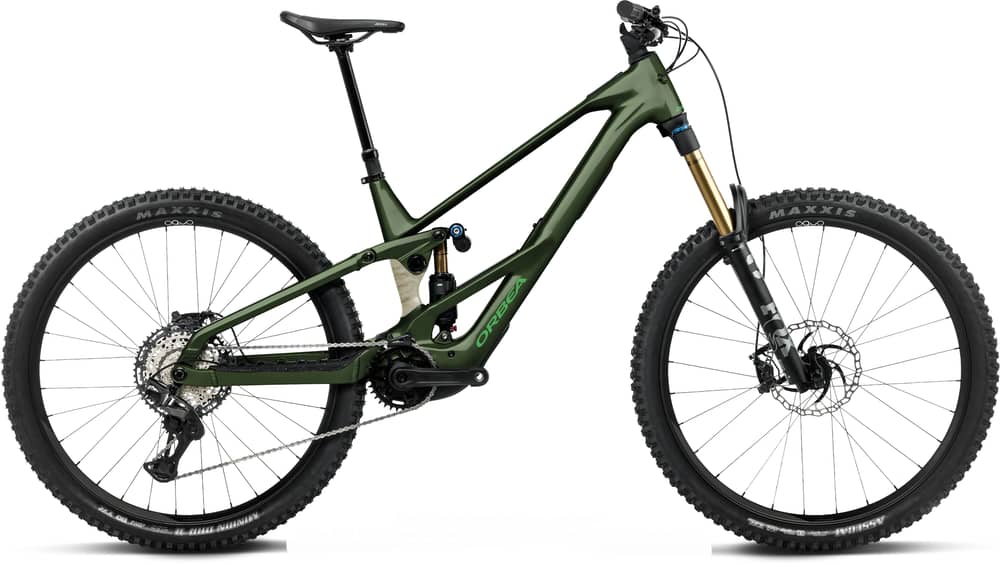
2026 Orbea Rise LT M10 630Wh
$9,238.95
|
||

|
2026 Orbea Occam LT M10
$6,718.95
|
||

|
2027 Orbea Wild LT M10 Mullet
$9,371.00
|
||

|
2027 Orbea Wild LT M-TEAM RS
$11,024.00
|
||

|
2026 Orbea Rise LT M20 630Wh
$7,663.95
|
||

|
2027 Orbea Wild LT H20
$6,173.00
|
||

|
2027 Orbea Wild LT H20 Mullet
$6,173.00
|
||

|
2026 Orbea Occam LT M30
$4,933.95
|
||

|
2027 Orbea Occam LT M30
$4,961.00
|
||

|
2027 Orbea Wild LT M20
$7,717.00
|
||

|
2027 Orbea Occam SL H10
$3,858.00
|
||

|
Free shipping on orders over $69 (continental U.S. only).
International shipping available. Some exclusions apply. |
||

|
Free standard UK delivery on orders over £50.
|
||

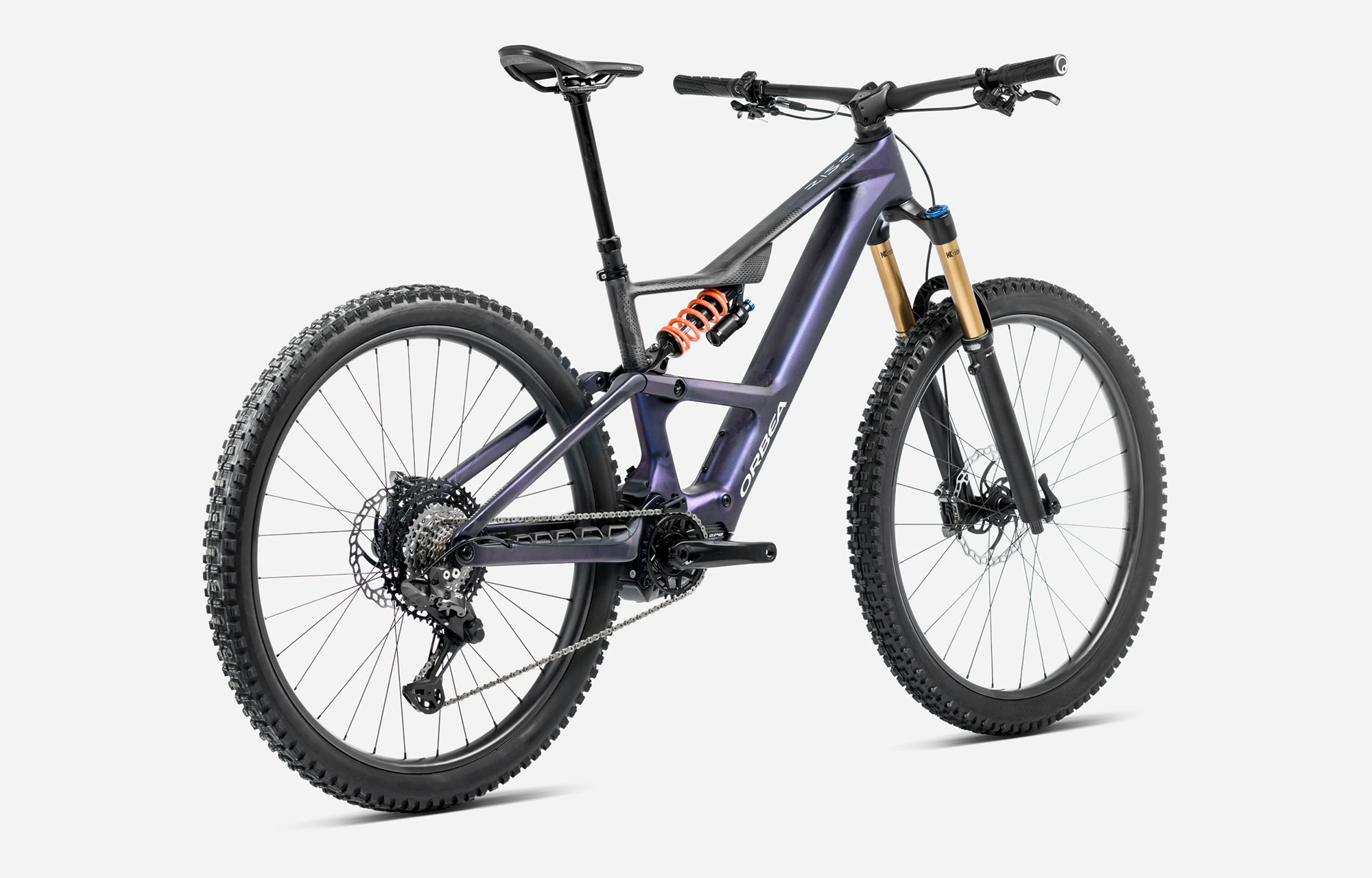
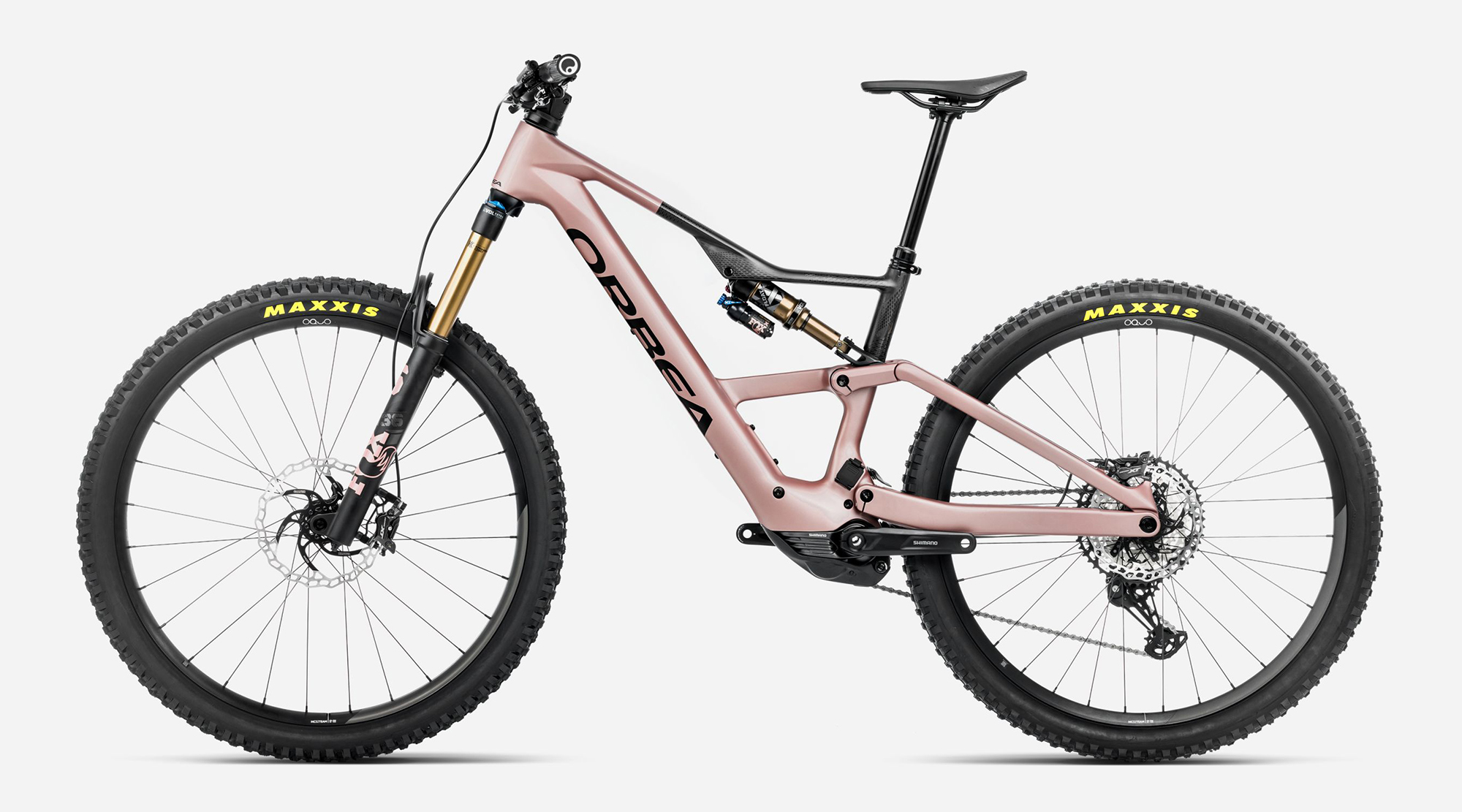
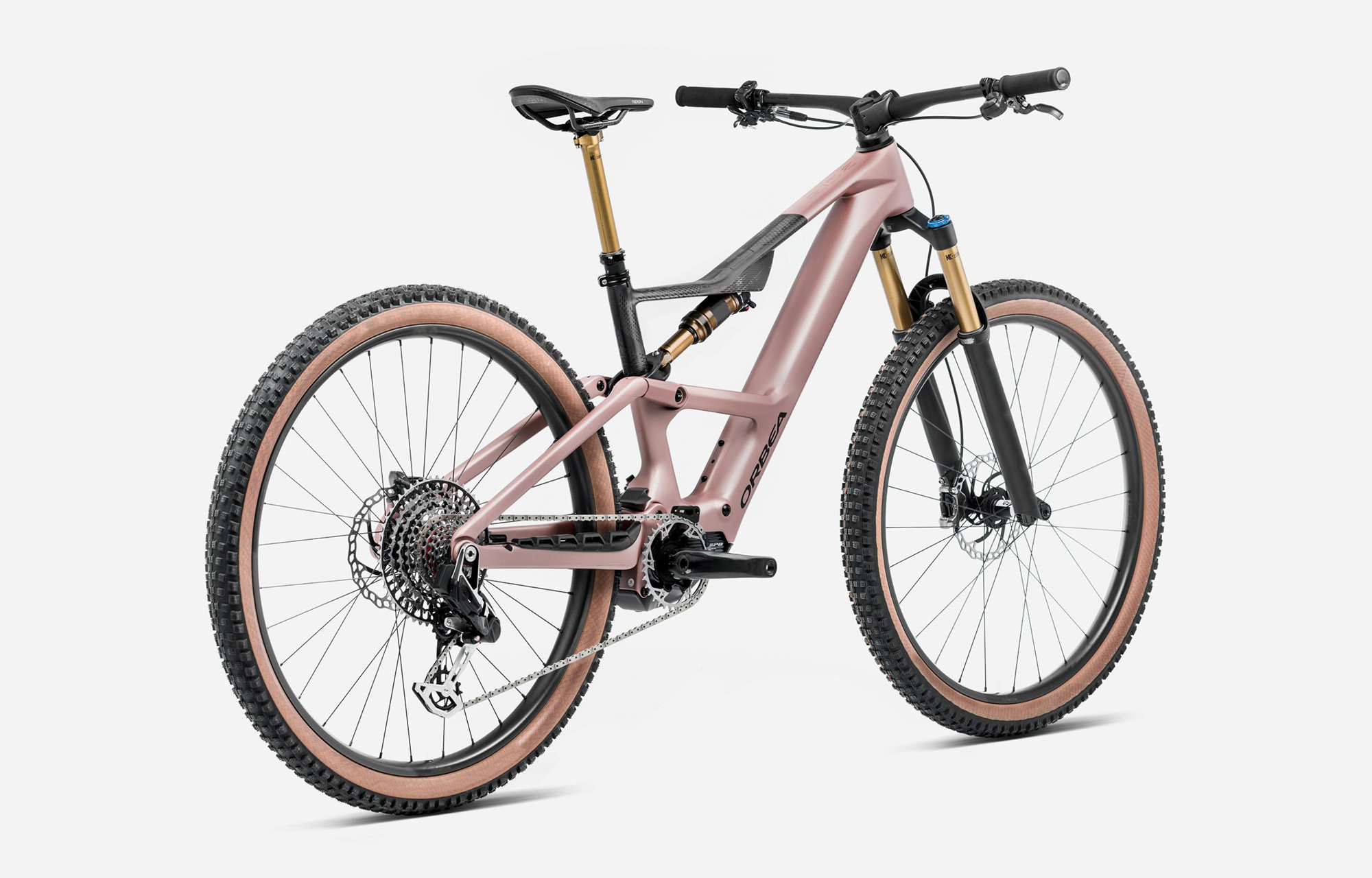
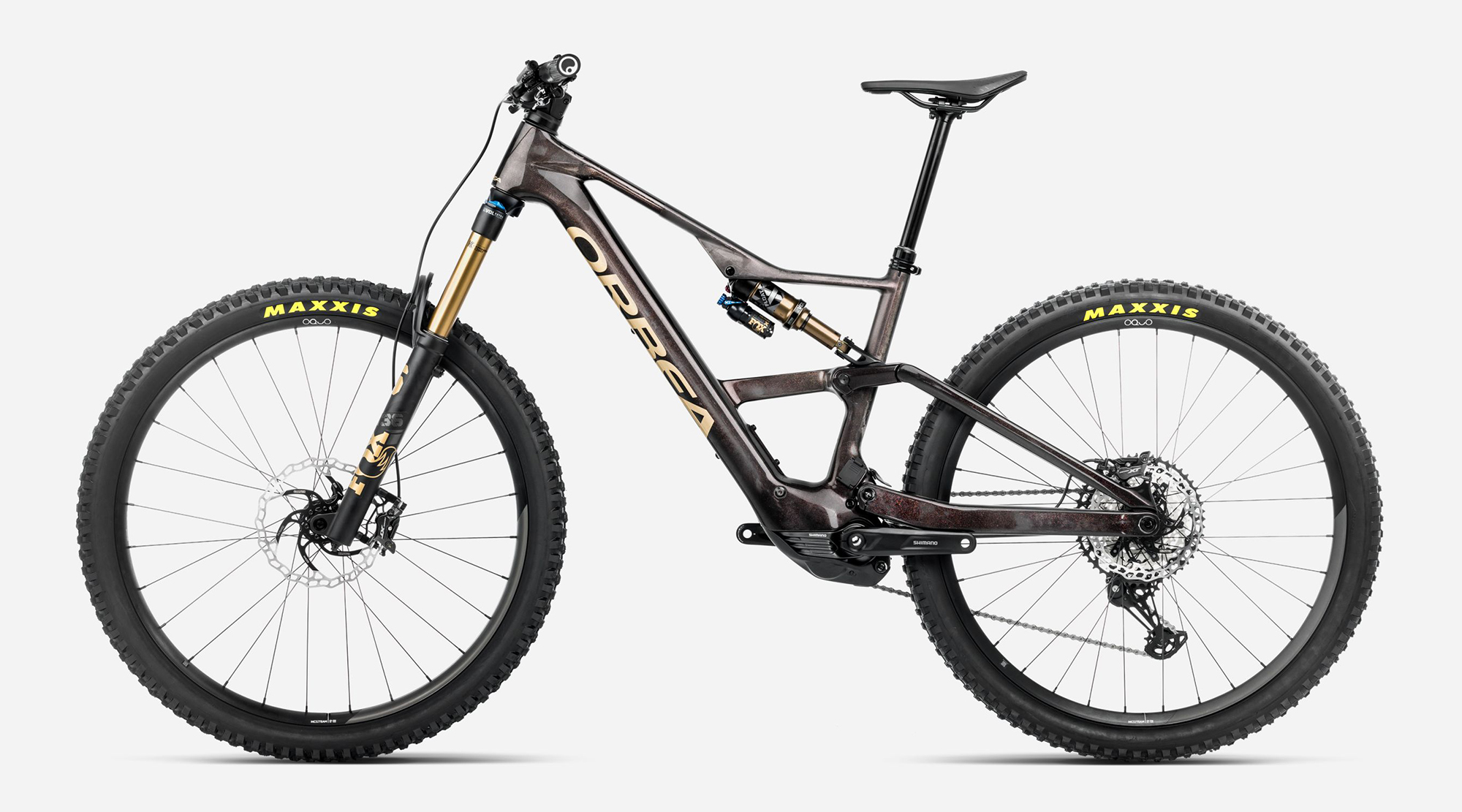
When Orbea launched the Rise five years ago, it defined the emerging category of lightweight eMTBs, offering just enough motor support while preserving the feel of a traditional mountain bike. Its blend of agility, efficiency, and subtle power delivery set a benchmark that took others years to match. Although it took years for the competition to catch up, the eMTB category has gained traction with lighter SL offerings and bigger, full-power bikes at reduced weights. As the eMTB landscape diversifies and expands quickly, where does the Rise stand in 2025?
Rise LT Highlights
- OMR Carbon frame
- 29-inch wheels
- 150mm (5.9 inches) of rear wheel travel // 160mm (6.3 inches) of fork travel
- 64.5 º (High) / 64 º (Low) head angle
- 77.5 º (High) / 77 º (Low) effective seat tube angle
- 12x148mm rear hub spacing
- Adjustable geometry
- Internal cable routing
- SIC System Cockpit
- Extra long dropper insertion on all frame sizes
- Shimano EP801 RS Gen2 Tuned Motor with 85Nm torque and 400W peak power
- 420Wh and 630Wh integrated battery options
- Sizes: S-XL
- Weight: 43 lbs (19.5 kgs)
- MSRP: $7,999 - $11,999 (carbon), $5,999 - $6,999 (alloy)
Strengths | Weaknesses |
|
|

What's New?
Orbea last updated the Rise platform in 2023 with Rise EVO, implementing small changes mostly focused on decreasing weight and adding battery options. While the minor updates appealed to some riders, others asked for more substantial improvements to reflect how the bike was utilized on the trail — a stiffer frame, modernized geometry, and capable componentry.


Orbea realized that Rise was being used for numerous trail applications, notably as a lightweight build for trail riding, or built with a longer travel fork and more durable components for all-mountain and descending prowess.
Rise has always leaned on Shimano's EP801 motor but has limited its output through software for battery efficiency. The second-generation Rise does away with the limitations on the motor's torque, increasing battery size and separating the Rise platform into two distinct models to answer rider's calls— a lighter, 140mm trail bike (Rise SL) and a 160/150mm all-mountain platform (Rise LT) with adjustable geometry.


Frame Details
The Rise LT shares the same frame as its little brother, Rise SL, but uses a different shock extender to achieve more suspension travel. The 2.2kg (4.8 lb) carbon frame is constructed with Orbea's premium OMR carbon layup technique, which Orbea claims improves stiffness-to-weight ratios. Its asymmetric design—mimicked from the Rallon and Occam models —utilizes a brace on the right side of the frame, increasing front triangle stiffness by 8% while adding only 40g, and the water bottle cage is offset to the left side to balance weight. The asymmetric design also allows Orbea to tune the frame rigidity for each size.


The frame's linkage has been revised to be lighter and stiffer, doubling as a home to Orbea's FLP multitool, secured by a magnet. In terms of kinematics, things haven't changed much, with progression increasing slightly to 23% to better accommodate the use of coil shocks. Sealed Enduro bearings are used in all pivots. Double the cost of a standard bearing, Orbea believes the trade-off is worth the long-term durability.

Orbea's integrated cable guidance system, SIC System, presents a clean cable aesthetic and a shorter cable length by routing cables through the headset. The system allows for the stem and handlebar to be changed without disconnecting cables but at the expense of using only Orbea's in-house stem and split spacers.
Geometry
The Rise LT has a longer reach and wheelbase and slacker head tube angle than before, but maintains short chainstays. The rest of the changes are mostly moderate and keep the overall geometry packed within the limits of what is standard for a 150mm travel bike.


An adjustable geometry flip chip on the shock extender — Orbea refers to it as Attitude Adjust — changes the head angle by a half degree (64 to 64.5). The previous Rise model's head angle was static at 65.5. The geometry adjustment also changes the bottom bracket drop from 26mm in the high setting to 34mm in the low setting.
eMTB Motor and Battery Details
Orbea continues its relationship with Shimano to handle the motor duties on Rise LT, using Shimano's EP801 motor with an Orbea-specific tune called RS (Rider Synergy). Previously, the RS tune limited the motor's output to 60Nm. The Gen2 tune permits the rider to use the motor's full power output of 85Nm while delivering 15% more power at lower cadences. However, peak power is still capped at 400W, compared to the EP801's stock 600W of peak power.

Two unique ride modes, RS and RS+, manage the motor's output through three assistance modes. RS mode offers 54Nm of torque in Eco and Trail assist modes in the factory setup, while RS+ is capable of 85Nm via Boost mode.
The Shimano E-Tube app permits a wide range of tuning to adjust the RS mode and motor assist functions and offers the option for as many as five power assistance modes.

Orbea handles the battery design in-house to optimize efficiency and charging speed. To complement the motor's 85Nm of torque, Orbea has increased Rise's battery capacity to 420Wh and 630Wh options. The lighter 420Wh battery weighs 1960g, while the larger one weighs 2880g. A 210Wh optional range extender slots into the water bottle cage, bringing the total possible battery capacity to 840Wh.

The system is controlled through a handlebar-mounted remote. The rider can choose between numerous power assistance levels (three factory settings) and power on and off the system. LED lights on the remote correspond with the assistance level. Battery life is indicated solely by a green light until the battery level drops below 20%, which is signified by a red light. The only other means of determining the battery level is through the app, which only displays five bars rather than a percentage. Rise is compatible with the Garmin system for data tracking and monitoring the battery level with an exact percentage.
Build Kits
Orbea offers a number of complete builds ranging from $6,999 to $11,999. Buyers can choose between either a 420Wh or 630Wh battery. There are also two alloy builds, H10 and H20, at $5,999 and $6,999. Should the factory builds fall short of your desires, Orbea's unique MyO online customization program offers the ability to choose specific components while personalizing the aesthetic with a plethora of paint schemes.
Long-Term Take Aways
We first sampled the Rise LT last spring in the Spanish Pyrenees, later receiving a bike for a long-term test in the Reno/Lake Tahoe region of the Sierra Nevada mountains. Since the conclusion of our long-term test, many of our First Ride impressions held. Rather than rehash those opinions, we'll take a closer look at a few of the updates and where they stand in today's market of quickly advancing lightweight and full-power eMTB offerings.

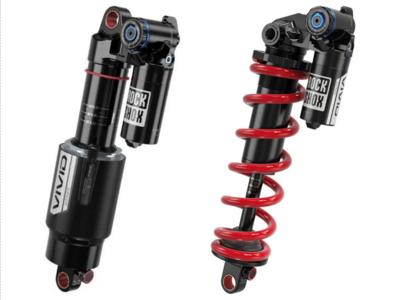
Our build kit was the top-level M-Team build. During our test, we put ample time on both an air and coil shock, as buyers can choose between either in Orbea's MyO customization program. With the revised suspension kinematics and rear suspension travel bumped from 140mm to 150mm, Rise is more adept at using a coil shock. But both shocks perform well on the revised platform. Riders who lean towards flowy trails will likely do well with the support of the air shock. We tested the coil shock on local bike park trails and rocky descents and preferred its suppleness when things got chunky or rowdy. The additional 10mm in travel and the slacker head angle further help Rise make light work of obstacles that had been more of a challenge when testing the prior generation.

Aiding in suspension performance, the frame's adjustable geometry is easy to take advantage of, taking only seconds to change between settings with the magnetic wrench conveniently housed in the rear dropout. Most useful on extended or technical climbs, placing the chip in the High position raises the bottom bracket height, reducing pedal strikes while providing a comfortable climbing position. Still, the Rise bottom bracket sits relatively low, and the 165mm crank arms are not averse to pedal strikes. A shorter crankarm option would be preferable.
It's worth noting that while swapping shocks, we experienced a stripped nut on the shock mounting hardware. The shock hardware is proprietary as it also holds the geometry chip, forcing a wait for replacement parts from Orbea.

The changes to the geometry are not aggressive, and as such, Rise's agile handling has thankfully not been compromised. The moderate 1230mm wheelbase length (size medium) and short 440mm chainstay result in ride characteristics that are very snappy and playful, making cornering and popping over trail obstacles a joy. This may slightly affect the Rise's all-out speed on technical descents, but that's where its big cousin, Wild, comes in, handling the enduro duties.
Shimano EP801 RS+ Tuned Performance
The updated Gen2 RS-tuned motor is a clear step forward from the original, delivering noticeably more usable power at lower cadences. On paper, the RS+ tune matches the output of many full-power competitors, boasting 85Nm of torque. But on the trail, the Shimano EP801 motor—specifically tuned by Orbea—delivers its power differently. Compared to punchier systems like Bosch's Performance Line CX, the Rise's assistance feels less forceful.
According to Orbea, this subtler power delivery helps extend battery life significantly by as much as 30% to 50% compared to similar-capacity batteries in full-power setups. During testing, the 420Wh battery proved sufficient for our typical daily rides. Trail mode (the middle of three assistance levels) struck the best balance between support and efficiency, with Boost mode reserved for the steepest climbs. Those searching for longer rides or adding up the elevation would be better with the 630Wh battery.

The Gen2 EP801-RS motor delivered a smoother and more intuitive power output compared to the previous generation. Gone are the abrupt power lapses we experienced with Gen1, especially during lower cadence efforts. Orbea has tuned the new motor to better assist riders in what they aptly call the "suffer zone"—low-cadence, high-effort moments. This improvement is most evident during punchy climbs. As gradients steepen, the motor progressively increases support relative to rider output. You still have to put in a meaningful effort, but the assist feels natural and polished.
We found that Boost mode resulted in the best outcome on steeper climbs, balancing traction and torque. Here, the motor provides "elastic" support — a consistent level of output matching the rider's input. The support is just enough to maintain momentum on the climb, but not so much that the rider can relax from exerting effort, hence the "suffer zone." However, once we dropped our cadence to very low levels or if the terrain became increasingly steep, uphill momentum became increasingly difficult to maintain. The motor's output trails off, which may leave some riders wishing for more assistance. In contrast, Bosch's motor uses sensors to detect steep climbs, automatically ramping up the assistance regardless of the mode or cadence, allowing the rider to stay seated and maintain traction. The rider only needs to work marginally harder than on a flatter surface.
Rise Amongst The Rest
So, where does that leave the Rise? Is it still an "SL" bike despite being equipped with full-power capabilities? We'd argue yes. While it now delivers the same peak torque figures as many full-power eMTBs, Orbea's RS+ tune deliberately adjusts peak power to preserve the lightweight, responsive feel that defined the original Rise. It doesn't go toe-to-toe with bigger, heavier rigs on all out power—and that's by design.
Having spent time on the Rise's burlier sibling, the Wild, equipped with the Bosch Performance Line CX, the differences become clear. The Bosch system delivers more immediate and forceful assistance, particularly noticeable on steep, technical climbs where traction and peak power are key. In contrast, the Rise offers a more measured, analog feel, favoring finesse over force. We find that more technical climbs are easier to navigate with the Bosch motor. Pedal cadence can drop quite low, but the motor provides enough assistance to crawl up tricky sections of trail with an impressive amount of traction on the rear wheel.

While the Gen2 Shimano EP801 motor represents a solid improvement, especially with low-cadence support and tuning flexibility, some drawbacks persist. The motor still produces a high-pitched whine under load, and the familiar rattle on rough terrain, while somewhat reduced, hasn't been eliminated.
The Shimano system is lacking in its user interface, with no integrated display on the bike, relying solely on the remote for simple inputs and the app for all other data and adjustments. An add-on, handlebar-mounted display is an option, but it feels outdated when most eMTBs now offer easy access to data with clean, top-tube integrated displays.

What's The Bottom Line?
We've spent ample time on the various Rise models over the years, resulting in a thorough understanding of its strengths and where it could be improved. Rise LT maintains its playful character despite having longer travel and more relaxed geometry. Instead, it's managed to greatly enhance its climbing and descending capabilities without diminishing its fun factor.
Rise LT remains an eMTB with a "less e, more mountain bike" philosophy, best suited for riders looking for an eMTB that closely resembles the handling of a traditional mountain bike. It rewards those who are unafraid to exert effort in challenging terrain, opting for a moderate amount of support rather than extended full-power boost. Riders happy to allow the idea of an eMTB to disappear beneath them on the descents for a natural feel will find a compelling sweet spot with the Rise LT.
View key specs, compare e-bikes, and review the newest Orbea Rise LT models in the Vital MTB Product Guide.
About the Tester
Rick Reed - Age: 42 // Years Riding MTB: Who's counting? // Height: 5' 9" (1.75m) // Weight: 142 pounds (64.4kg)
A veteran of the bike industry, Rick "E" Reed is a regular contributor to Vital. Rick enjoys riding fast tech, backcountry singletrack, and bike parks, occasionally sharing his chocolate with a select human being or two (you know who you are). He resides in Reno, Nevada, with his terror dog, Zuul.

Specifications
• All specifications are with 160mm travel fork with 575mm axle-to-crown length and 44mm offset
Option: Orbea Custom Range Extender, 210 Wh
Option: Shimano STEPS EN600 computer/display
Option: FOX DHX Factory
Option: OC Mountain Control MC11 Alu SL, 0° rise
Option: Shimano XTR M9120, 4-piston
Option: OQUO Mountain Control MC32LTD Carbon
Rear: Maxxis Minion DHR II, 3C MaxxTerra compound, EXO+ casing, TR, 120 TPI, 29" x 2.4" WT
Options: Double Down (DD) or DH casings
Option: FOX Transfer Factory dropper, 150/180/210/230mm drop options
• Geometry adjustable via flip chip in shock yoke
• Rider Synergy (RS) Concept
• SIC (Sealed Internal Cables) routing; cables/hoses route through headset
• SRAM UDH (Universal Derailleur Hanger)
• Power settings customizable via Shimano STEPS E-Tube Project Mobile App
• Compatible with Garmin IQ ecosystem to display support mode, assist level, cadence, range, and speed data
• Includes Orbea Gen2 Smart 2-4A battery charger (42V)
• Includes OC Computer Mount CM-05 for stem topcap
• Includes OC FLP MT-20 Multitool, stored in pivot axle
| Where To Buy | |||
|---|---|---|---|
|
|
Free shipping on orders over $50 (continental U.S. only).
International shipping available. Some exclusions apply. |
Free shipping on orders over $50 (continental U.S. only).
International shipping available. Some exclusions apply. $4,899.00
|
|
|
|
|||
|
|
|||
|
|
|||
|
|
|||
|
|
|||
|
|
|||
|
|
|||
|
|
|||
|
|
|||
|
|
|||
|
|
|||
|
|
Free shipping on orders over $49 (continental U.S. only).
International shipping available. Some exclusions apply. |
Free shipping on orders over $49 (continental U.S. only).
International shipping available. Some exclusions apply. $9,238.95
|
|
|
|
2026 Orbea Rise LT M10 630Wh
$9,238.95
|
||
|
|
2026 Orbea Occam LT M10
$6,718.95
|
||
|
|
2027 Orbea Wild LT M10 Mullet
$9,371.00
|
||
|
|
2027 Orbea Wild LT M-TEAM RS
$11,024.00
|
||
|
|
2026 Orbea Rise LT M20 630Wh
$7,663.95
|
||
|
|
2027 Orbea Wild LT H20
$6,173.00
|
||
|
|
2027 Orbea Wild LT H20 Mullet
$6,173.00
|
||
|
|
2026 Orbea Occam LT M30
$4,933.95
|
||
|
|
2027 Orbea Occam LT M30
$4,961.00
|
||
|
|
2027 Orbea Wild LT M20
$7,717.00
|
||
|
|
2027 Orbea Occam SL H10
$3,858.00
|
||
|
|
Free shipping on orders over $69 (continental U.S. only).
International shipping available. Some exclusions apply. |
||
|
|
Free standard UK delivery on orders over £50.
|
||





8 comments
Post a reply to: 2025 Orbea Rise LT Long-Term Review