



SRAM’s Maven brakes have become widely regarded as one of the most powerful brakes on the market. They deliver immediate power with nearly endless stopping force, matched with excellent heat dissipation. A beautiful combo if you like braking late or if you like your brakes to still work deep into a descent. Some might disagree, but I think Mavens set the benchmark for power, as you can’t discuss another brake's abilities without it being directly compared to Mavens.
Two phenomena have plagued Mavens to date, however: inconsistent lever throw or lever pump-out, and a high initial breakaway force that made the lever hard to pull. Well aware of these issues, SRAM has introduced a simple, effective, and backward-compatible solution—a new SwingLink cam in the lever. They say, "good things come in small packages," right?
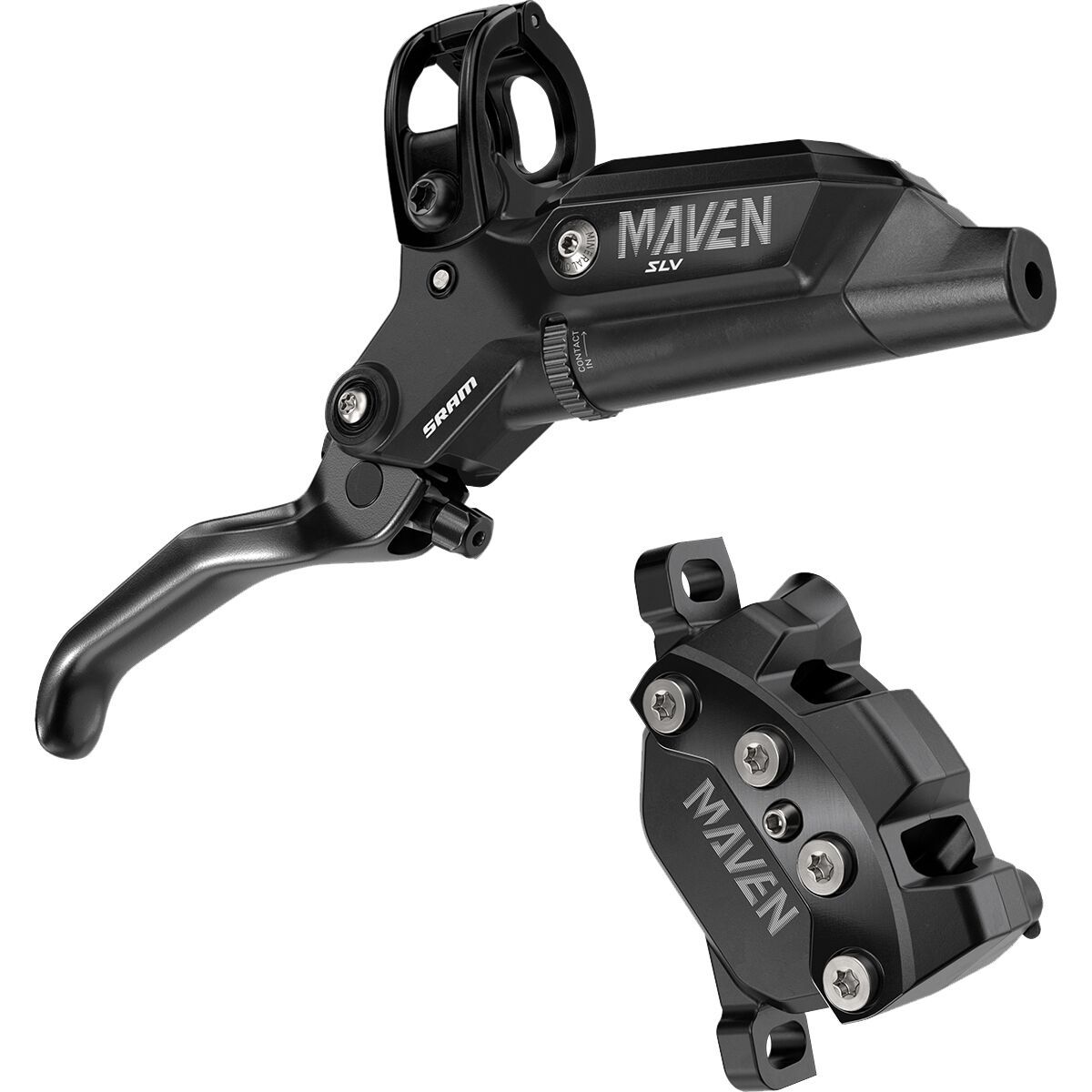
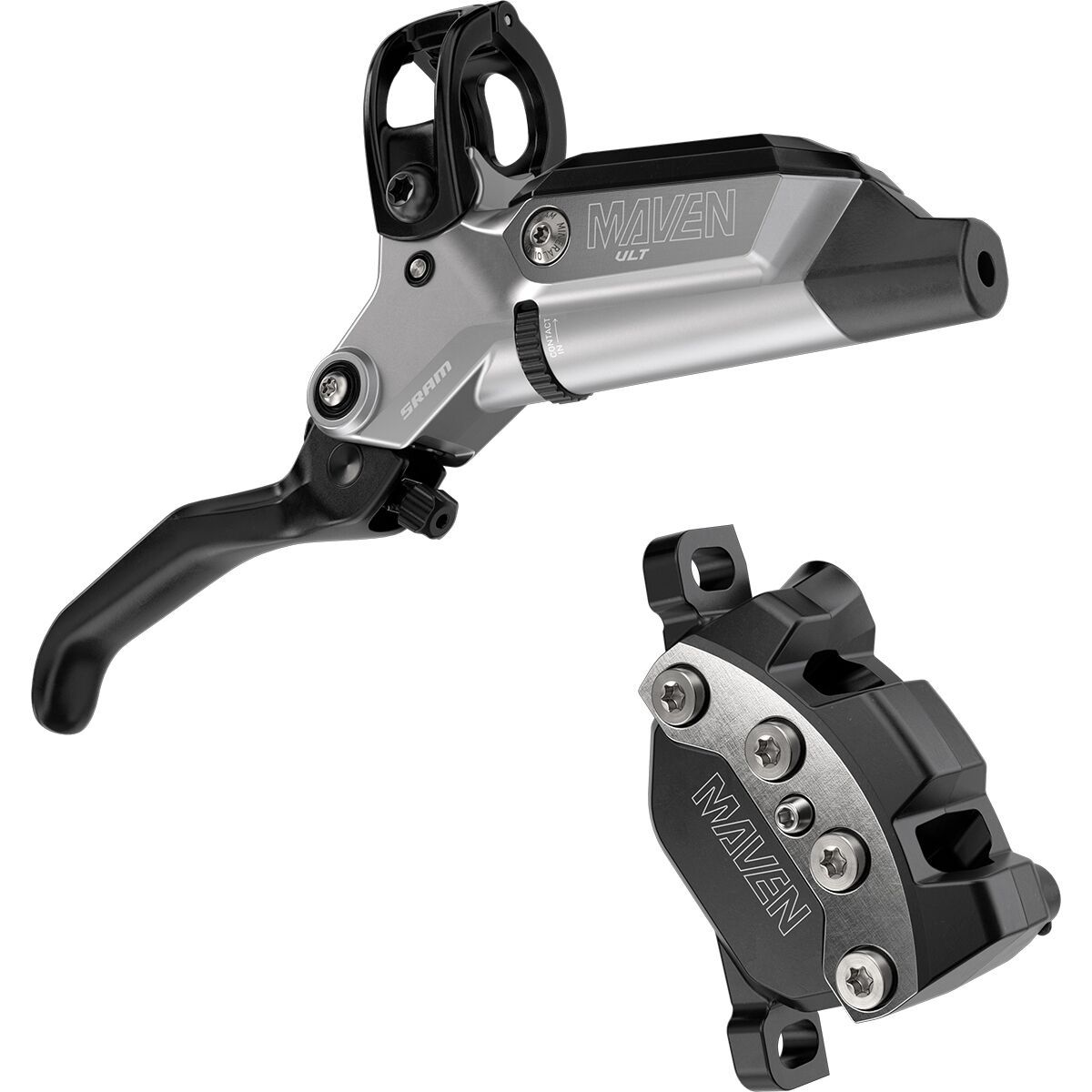
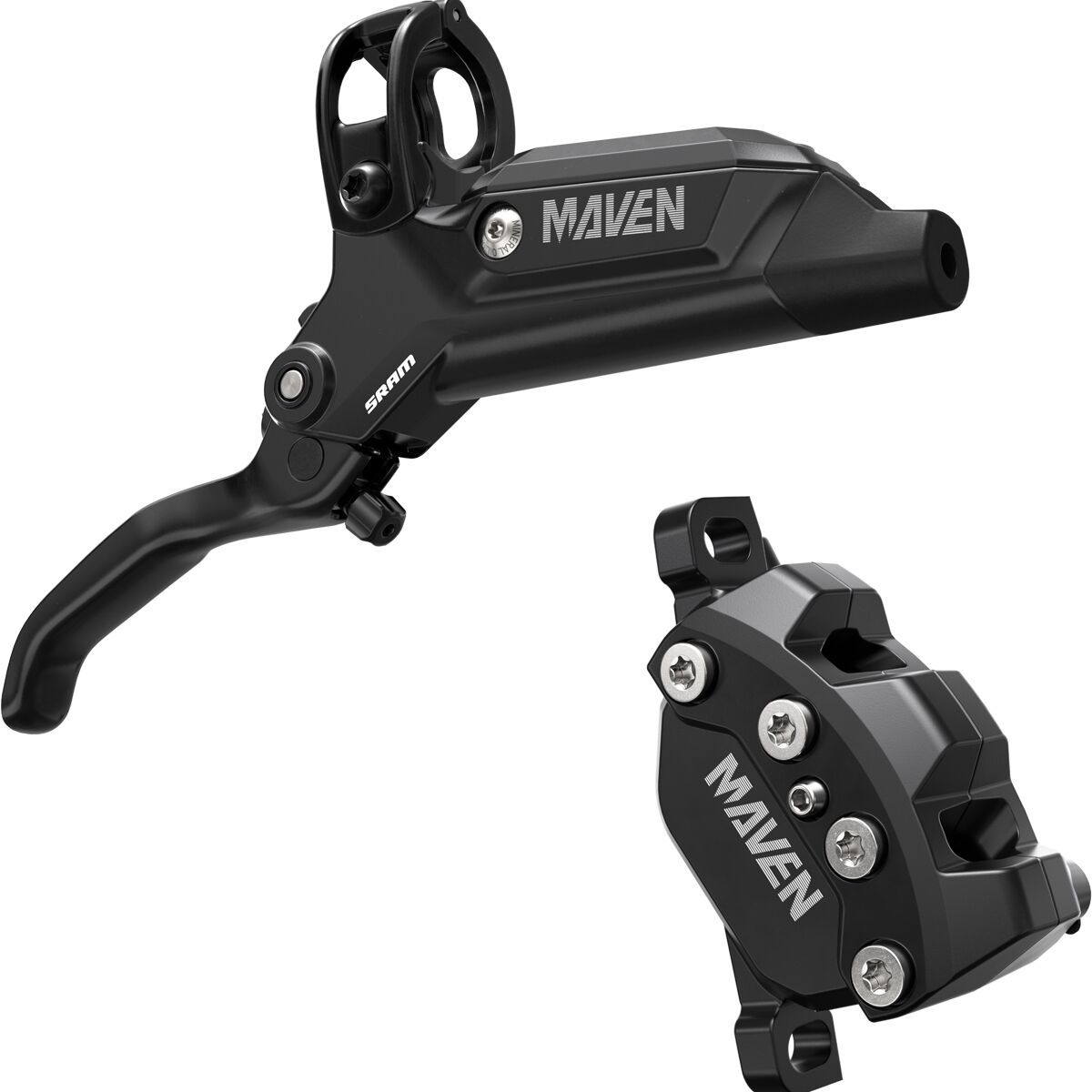
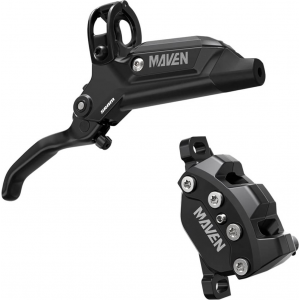
Maven B1 Brake Updates
- Comes equipped with new B1 SwingLink (identifiable by the gold link; old link was red)
- 4 18mm pistons
- New levers
- Ultimate: carbon
- Silver: forged aluminum with cutouts
- Bronze: forged aluminum
- Small updates to finish on Silver and Bronze models
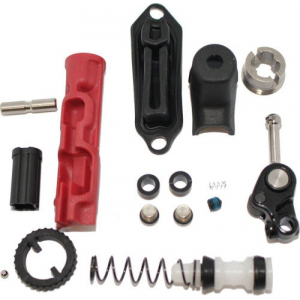
- Maven B1 SwingLink Tuning Kits are backward-compatible with Maven Ultimate, Silver, & Bronze A1 models (Includes: 2 levers & 2 SwingLink assemblies)
- Tuning Kit MSRP: $69 - $109, depending on lever
- Per Line MSRP: Maven Ultimate - $299 // Maven Silver - $265 // Maven Bronze - OEM Only
What’s Changed?
Swinglink is what SRAM calls the cam that the lever blade slides against as it is pulled, creating a progressive power curve. The first SwingLink used in Maven (referred to as the A1 cam and distinguished by its red anodizing) had a very progressive leverage rate that started low and quickly climbed during the first 20mm of lever throw. The intent was to minimize deadband and deliver power quickly, and it definitely achieved that. Unfortunately, the low starting mechanical leverage increased the lever’s breakaway force. This made it hard to smoothly engage the brakes, and some riders experienced hand/finger fatigue.

The new B1 Swinglink is all about improving the consistency and control of Maven’s power without changing max stopping force. The overall leverage rate is more linear than before. It sits higher for the first 20mm of lever movement to reduce the breakaway force. Leverage then steadily builds before ramping at the end of the lever stroke, achieving a similar peak power. You’ll note how SRAM’s Maven model is included in the graph below. It’s been praised for its light lever feel and modulation. The B1 SwingLink has lower starting leverage, making the lever touchier than Maven Base. It also offers more mechanical leverage at the end of the lever stroke.

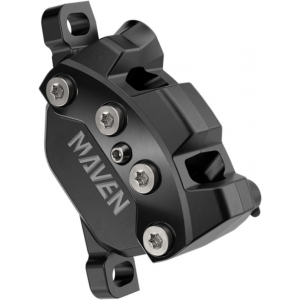
The other big change to Maven is the switch from 2 18mm and 2 19.5mm pistons, to 4 18mm pistons. SRAM says they did this to better match the hydraulic ratio to the updated SwingLink mechanical leverage rate.
I’ve ridden dozens of Mavens, and I always loved getting gas-lit into believing another piston massage would resolve the issue.
Beyond lever feel, the biggest byproduct of these changes is the reduction in lever pump-out during successive braking events. If you’ve ridden Mavens, you’ve likely had your bite point get smaller and smaller when braking a lot in a short period. I’ve ridden dozens of Mavens, and I always loved getting gas-lit into believing another piston massage would resolve the issue.

Mavens have a high hydraulic leverage rate. This makes them really powerful, but it can make it hard for the pistons to fully recede into the caliper during back-to-back lever pulls. When the pistons don’t recede, your lever throw shortens. Before, this sensation was amplified by the A1 SwingLink’s aggressive change in mechanical leverage during the first 15mm of lever stroke. Now, the B1 SwingLink’s linear rate of change during the first 15mm of stroke matched with the slightly lower hydraulic rate from the smaller pistons is enough to minimize the pump-out effect from happening as often or severely.
Swapping to the new cam is a dry job, meaning no bleeding is required.
All new Mavens will come equipped with the B1 SwingLink. There will also be kits available to retrofit past A1 levers. Swapping to the new cam is a dry job, meaning no bleeding is required. You can also run the new cam with the previous caliper (2 18mm and 2 19.5mm pistons). You’ll experience a bit more deadband, but you’ll unlock a touch more peak power thanks to the high mechanical leverage at full stroke. Super Mavens here we come…


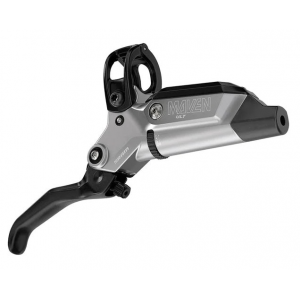
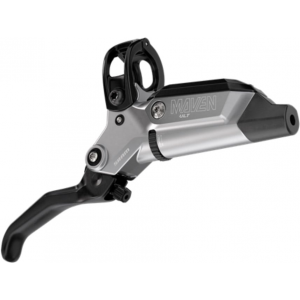
The Maven family continues to include three tiers: Ultimate ($300 per line), Silver ($265 per line), and Bronze (OEM only). Ultimate gets the upgrade to a carbon lever (was previously aluminum), and Silver gets a new forged-aluminum lever that is very Freedom-Coast-esque. And unless my Google search misled me, the brakes retail for less than before—Ultimate used to be $330 per line, and Silver was $290 per line.
On The Trail
I’ve ridden a lot of Mavens the past two years, and overall, they’ve served me well. Gobs of power, enough lever squish to modulate when on the brakes, and almost zero fade during brake-heavy descents. The hype has been warranted.
The stiff lever breakaway wasn’t something that tired my hands or caused more arm pump than other brakes. My issue with the lever was that it reduced control during subtle brake events. It was really hard to ease on the power and gently scrub speed without overbraking. Things became more complicated when conditions were slippery, as it was tough not to lock up the wheel.
When we did our brake comparison test in 2024, we collected data with some BrakeAce sensors. Observing the shape of my braking events with Mavens highlighted how hard it was to apply the desired braking force. Most of my brake events followed a similar pattern—an initial spike in braking power, followed by a steep drop, then a gradual climb again. This illustrated how I had to pull the lever hard to get it moving, which often resulted in more braking power than I needed for the situation, and I would have to let off to settle at a desired amount.


I rode the new B1 Mavens for a few weeks before I had any information about what had changed, but the light off-the-top lever feel was blatantly obvious.
I rode the new B1 Mavens for a few weeks before I had any information about what had changed, but the light off-the-top lever feel was blatantly obvious. It was much easier to get the lever moving and apply small amounts of power, and there was still enough resistance to gauge where I was in the stroke. Once I was deeper into the lever stroke, they felt pretty similar to past Mavens. You can still grab a handful and reach max stopping power really quickly. You can also live in the middle of the lever stroke and modulate power. The new cam design had the biggest impact on how controlled I could reach the middle of the lever stroke. I don’t have much time on the Maven Base model to draw the obvious comparison. The best comparison I can make is that the new lever feels similar to SRAM’s Code model, but with the ability to generate a higher max stopping force.

The other noticeable change has been the lack of pump-out during repetitive lever pulls or when braking through compressions. My lever throw has only varied a few times on the two sets I’ve ridden, which is significantly less than what I’ve experienced with previous Mavens. This is probably a bigger win to me than the new leverage rate, as you can always adjust how you brake to match a brake's power curve, but you can’t anticipate a wandering bite point. At least I can’t.

What’s The Bottom Line?
Power was never the issue with Mavens, but controlling that power has required some real finesse up to this point. The new B1 SwingLink removes a lot of the guesswork out of how much or little braking needs to be done. It also reduces lever pump-out. You now have greater control over how you roll on the power and a more predictable bite point, which should make Mavens more user-friendly for a wider range of rider abilities.
View key specs, compare, and review SRAM brakes in the Vital MTB Product section.
| Where To Buy | |||
|---|---|---|---|

|
Free shipping on orders over $69 (continental U.S. only).
International shipping available. Some exclusions apply. |
Free shipping on orders over $69 (continental U.S. only).
International shipping available. Some exclusions apply. $290.00
|
|
|
|||
|
|||
|
|||
|
|||
|
|||

|
Free shipping on orders over $50 (continental U.S. only).
International shipping available. Some exclusions apply. |
Free shipping on orders over $50 (continental U.S. only).
International shipping available. Some exclusions apply. $4.00
|
|
|
|||
|
|||
|
|||
|
|||
|
|||
|
|||
|
|||
|
|||
|
|||
|
|||
|
|||
|
|||
|
|||
|
|||
|
|||
|
|||
|
|||
|
|||
|
|||
|
|||

|
|||
|
|||
|
|||
|
|||

|
Free shipping on orders over $49 (continental U.S. only).
International shipping available. Some exclusions apply. |
Free shipping on orders over $49 (continental U.S. only).
International shipping available. Some exclusions apply. $4.00
|
|

|
|||

|
|||

|
|||

|
|||

|
|||

|
|||

|
|||

|
|||

|
|||

|
|||

|
|||

|
|||

|
|||

|
|||

|
|||
2/24/2026 7:00am


View replies to: Make ‘em Easier to Pull! SRAM Maven B1 SwingLink Review
Comments