



It's been four years since Yeti stepped into the electric assist world with the 160E. That was back when referring to mountain bikes as 'acoustic' would spike people's blood pressure. Good times. A four-year product cycle is definitely long. A sign of the wake Yeti created with the 160E, it built a reputation as one of the most capable full-power e-bikes. Not to mention the success it facilitated at World Cups under the likes of George Swift, Ryan Gilchrist, and Mick Hannah.
But success aside, the 160E was due for a refresh. Its Shimano system had become underpowered and less integrated compared to what's available now, and its geometry was beginning to look a bit reserved for a 160mm travel bike. To carry the torch forward and expand on what the 160E started, Yeti has rolled out the MTe. It features the same race-bred approach and unique Sixfinity suspension design and introduces numerous frame updates—most notably, the switch to a Bosch system.
Highlights
- 160mm of rear wheel travel // 170mm fork
- 29-inch wheels stock // Mixed wheel capable
- Sixfinity suspension design
- 100 Nm Bosch CX motor with 750W peak power (T4 model uses CX Race motor)
- 800 Wh battery (600 Wh compatible // 250 Wh range extender available aftermarket)
- Bosch Kiox 400C integrated top tube display
- Bosch wireless remote and speed sensor
- 64-degree head tube angle
- 5mm longer reach across all sizes
- Taller stack via longer head tubes
- 449mm chainstay length across all sizes
- Sizes: S, M, L, XL
- Weight: 51.43 - 51.72 lb (23.3 - 23.5 kg)
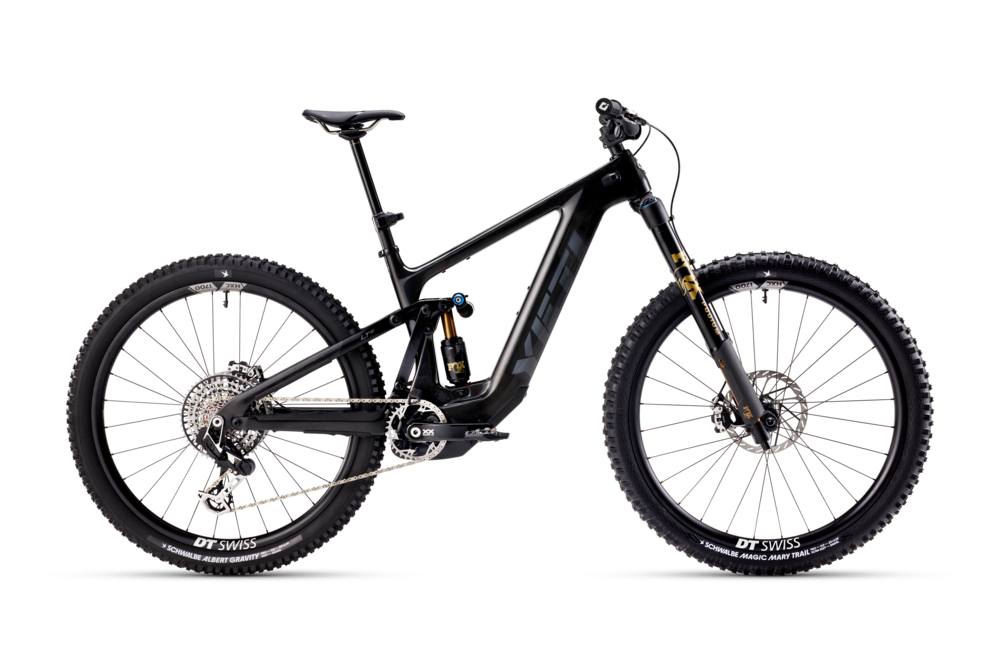
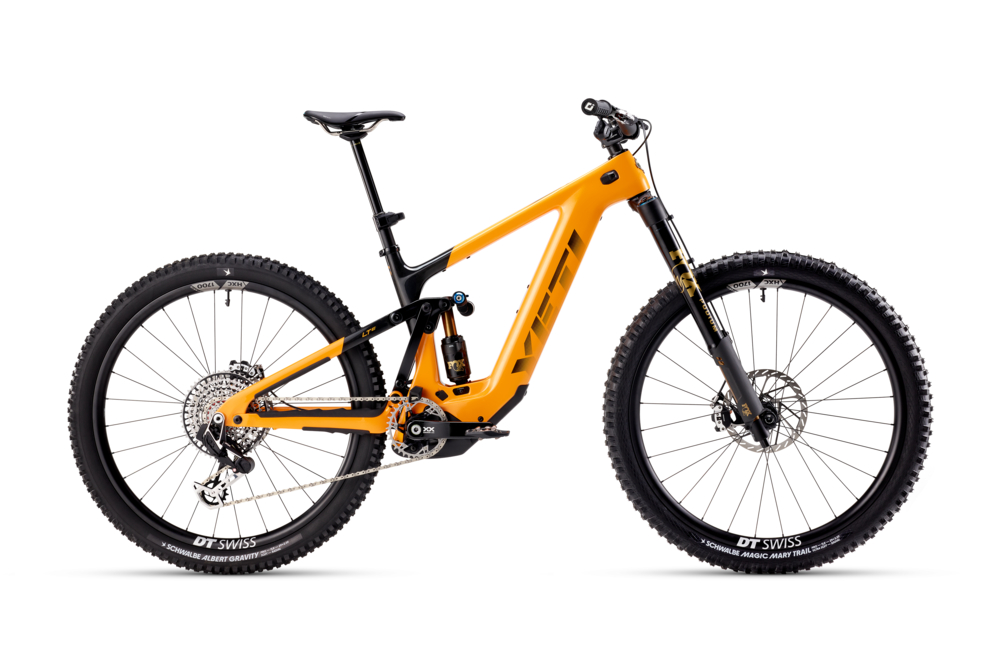
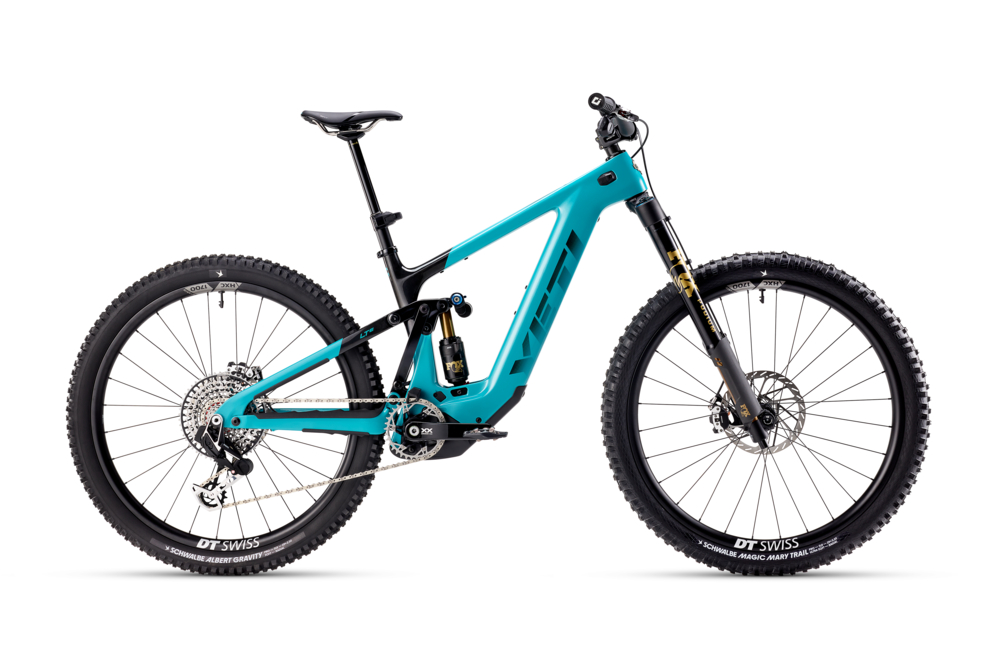
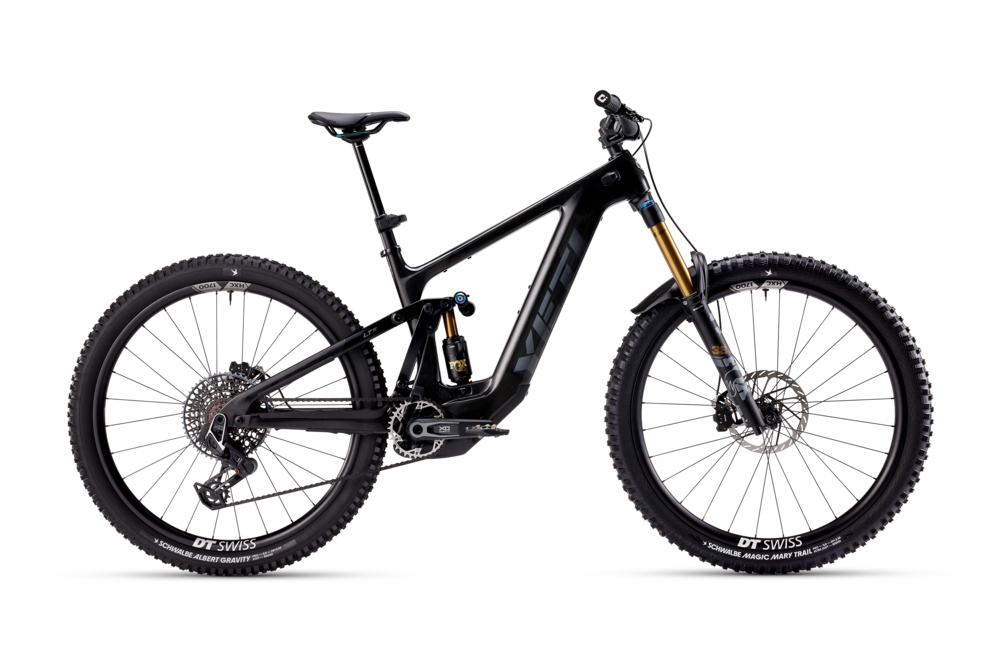
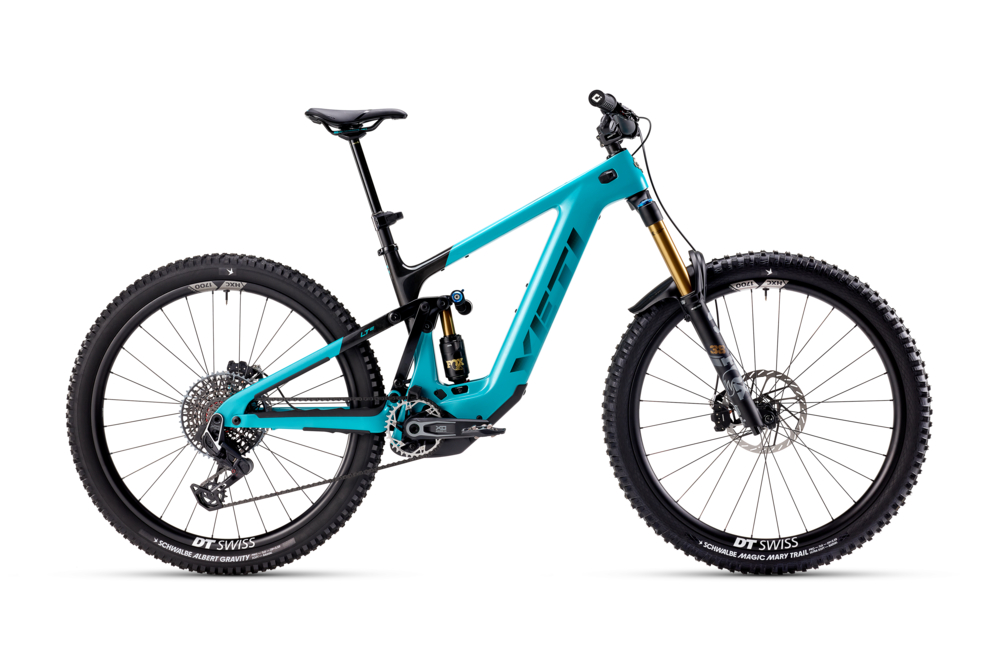
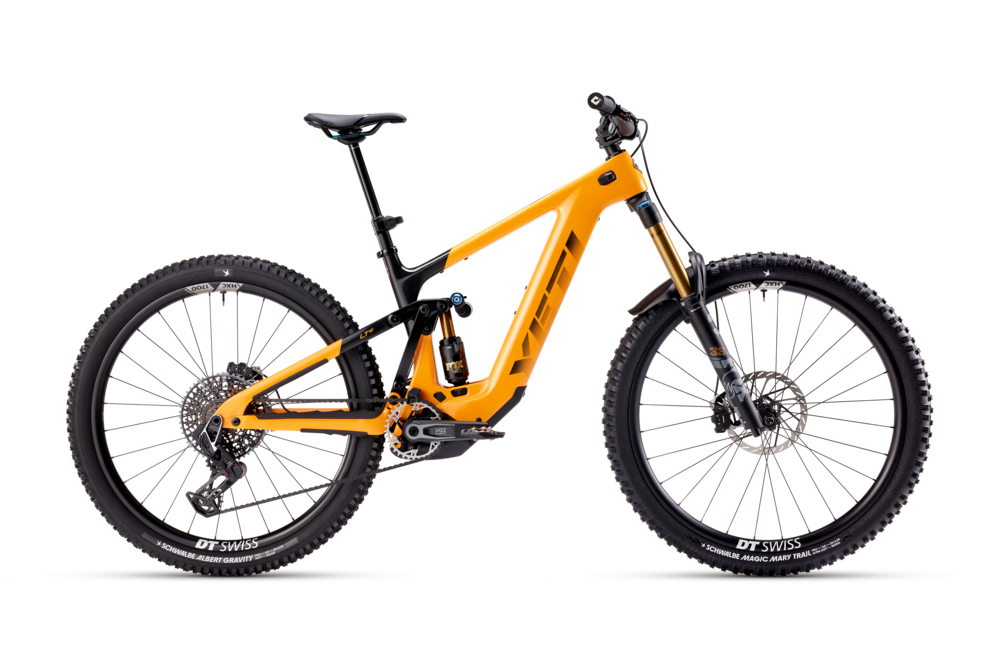
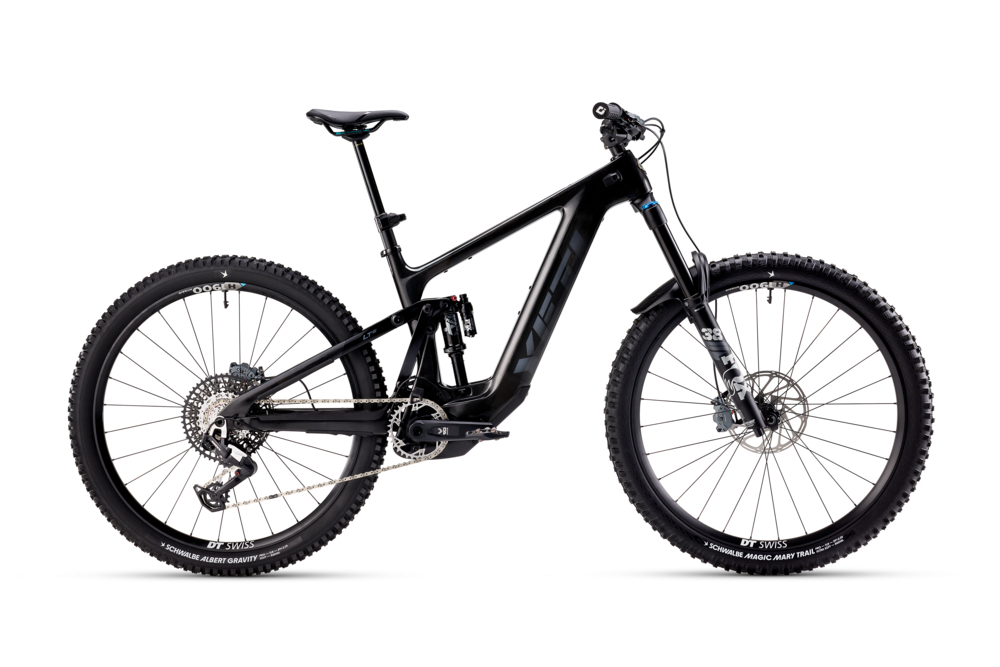
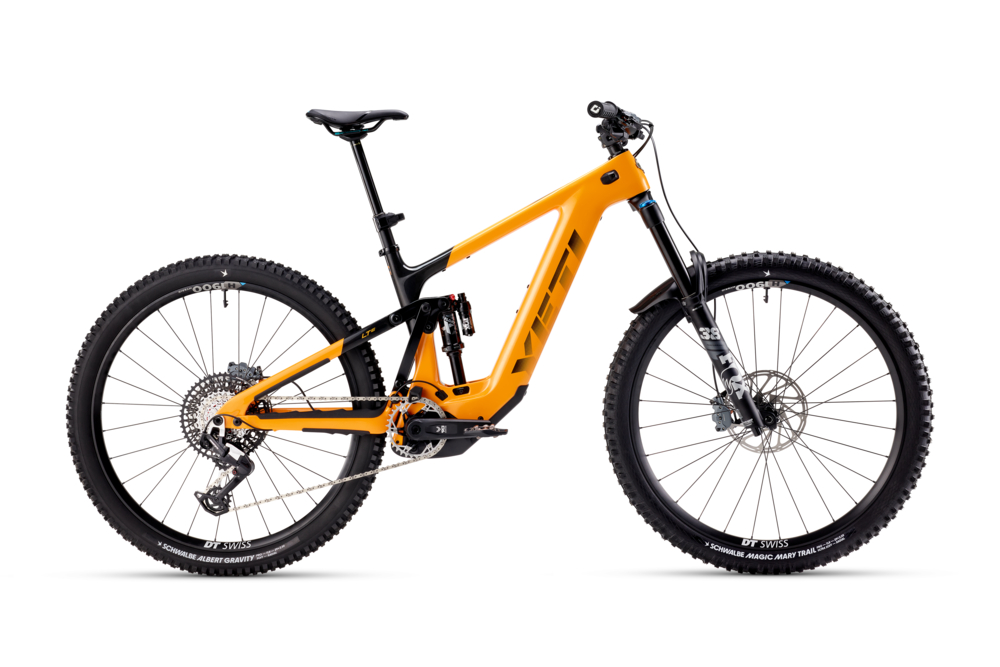
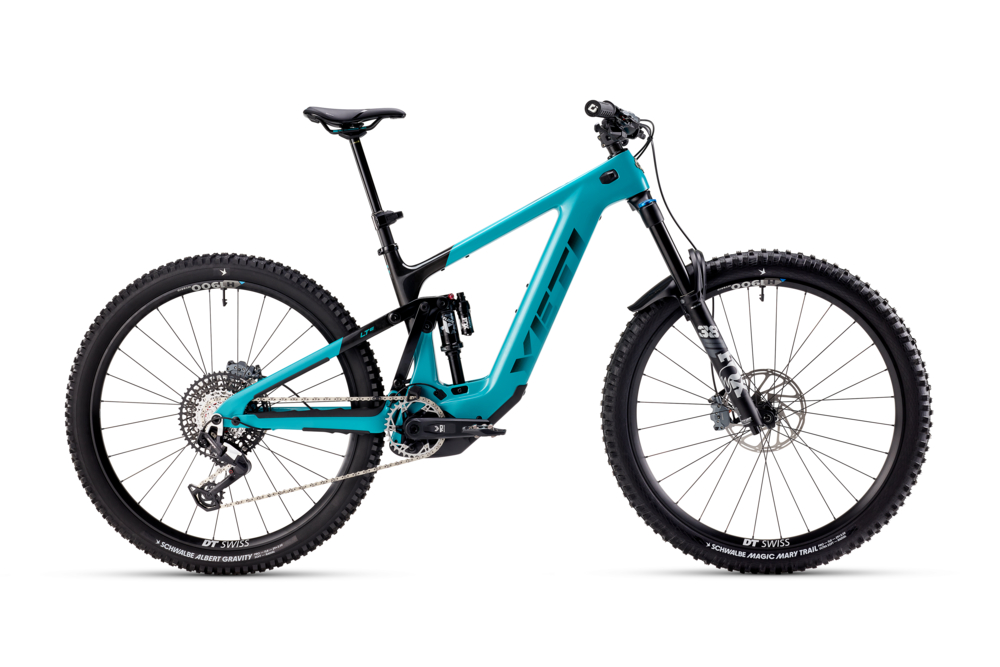
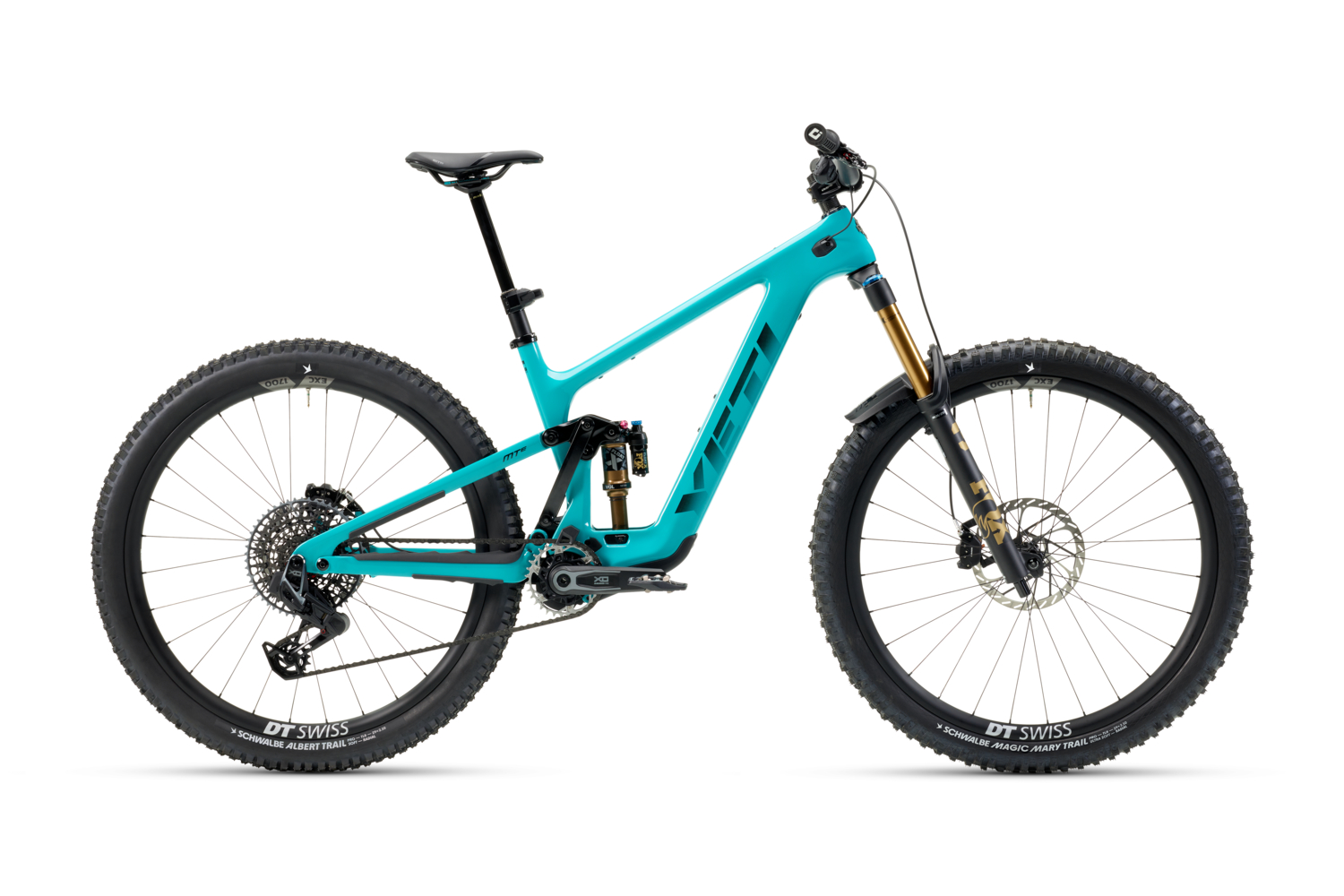
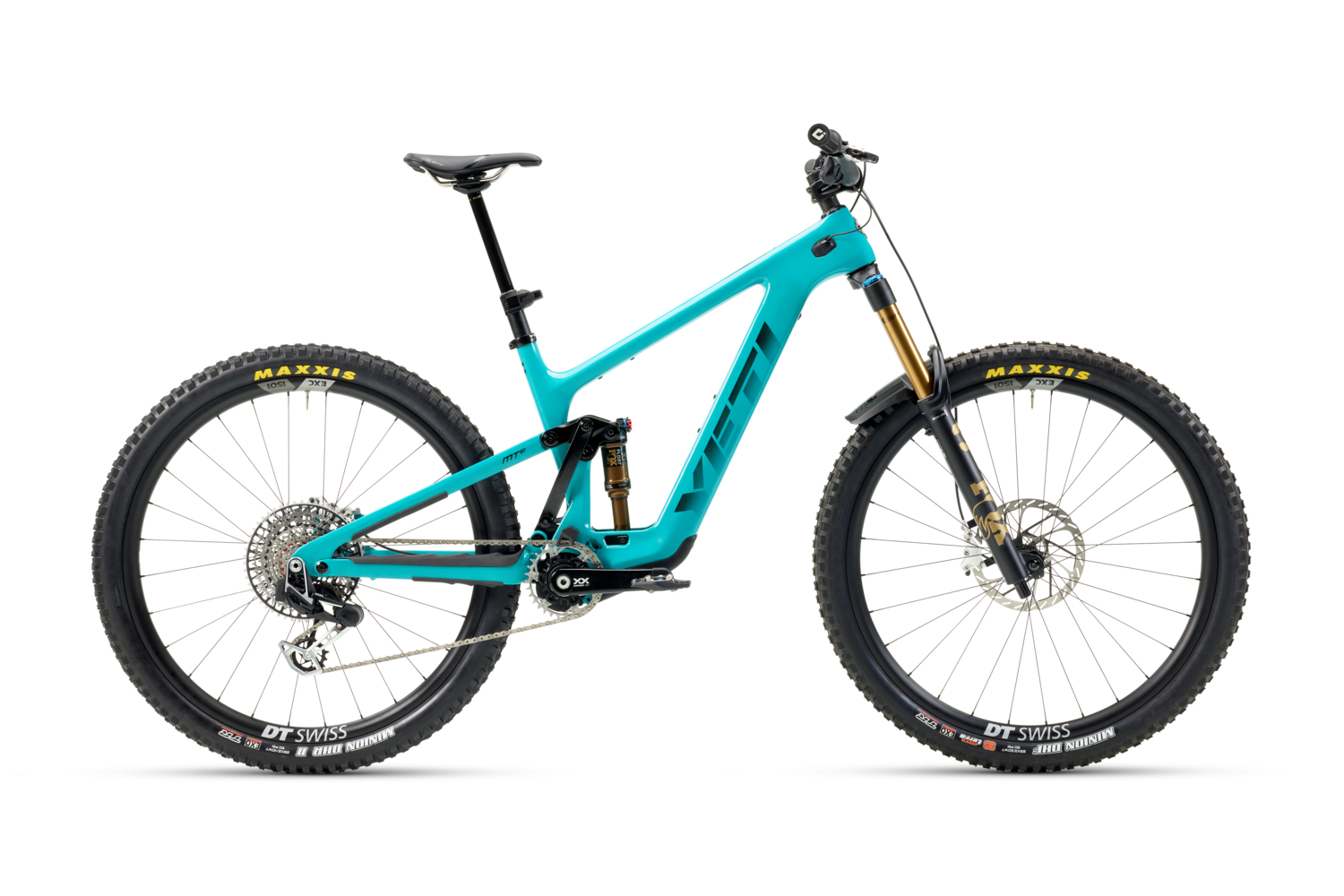
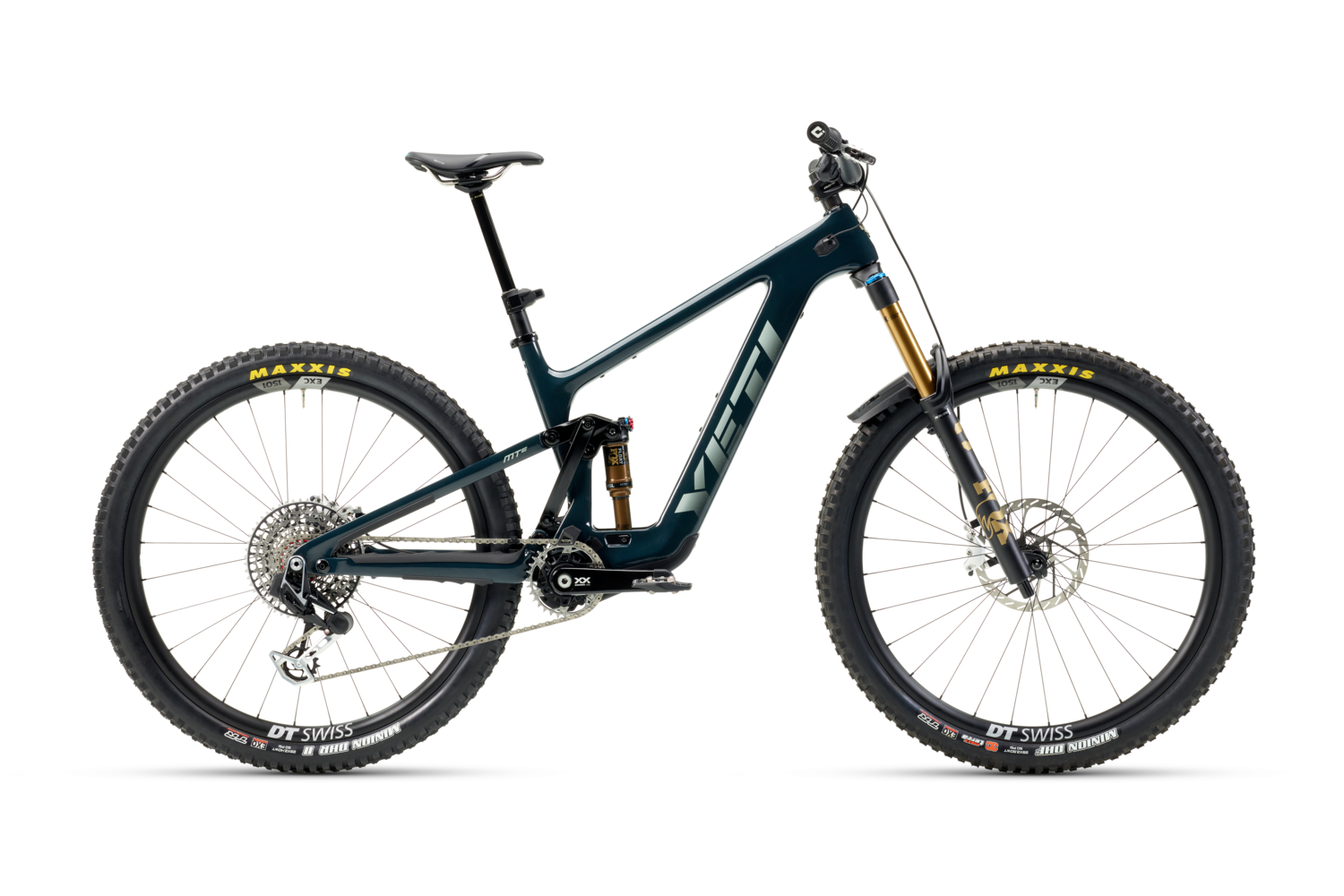
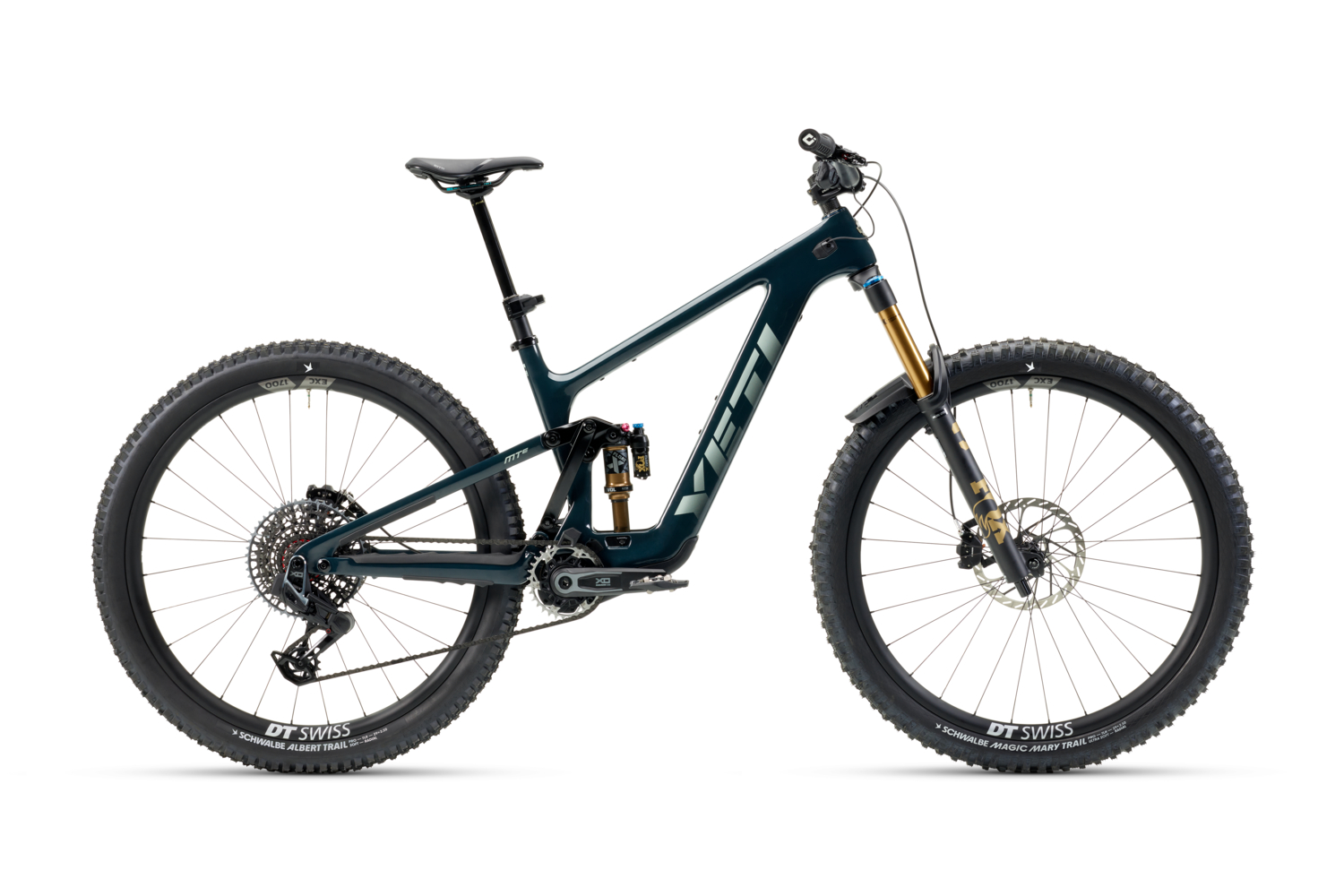
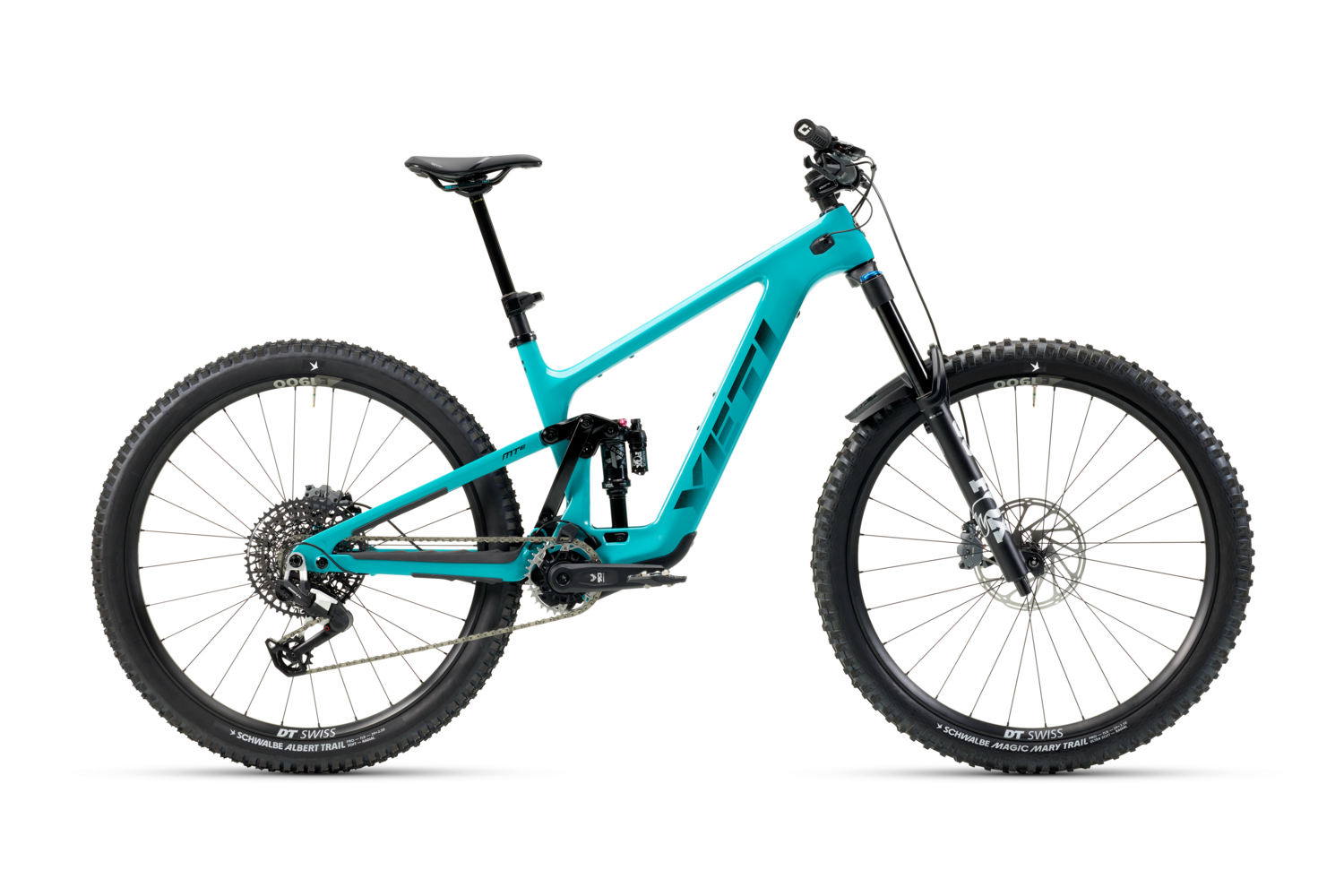
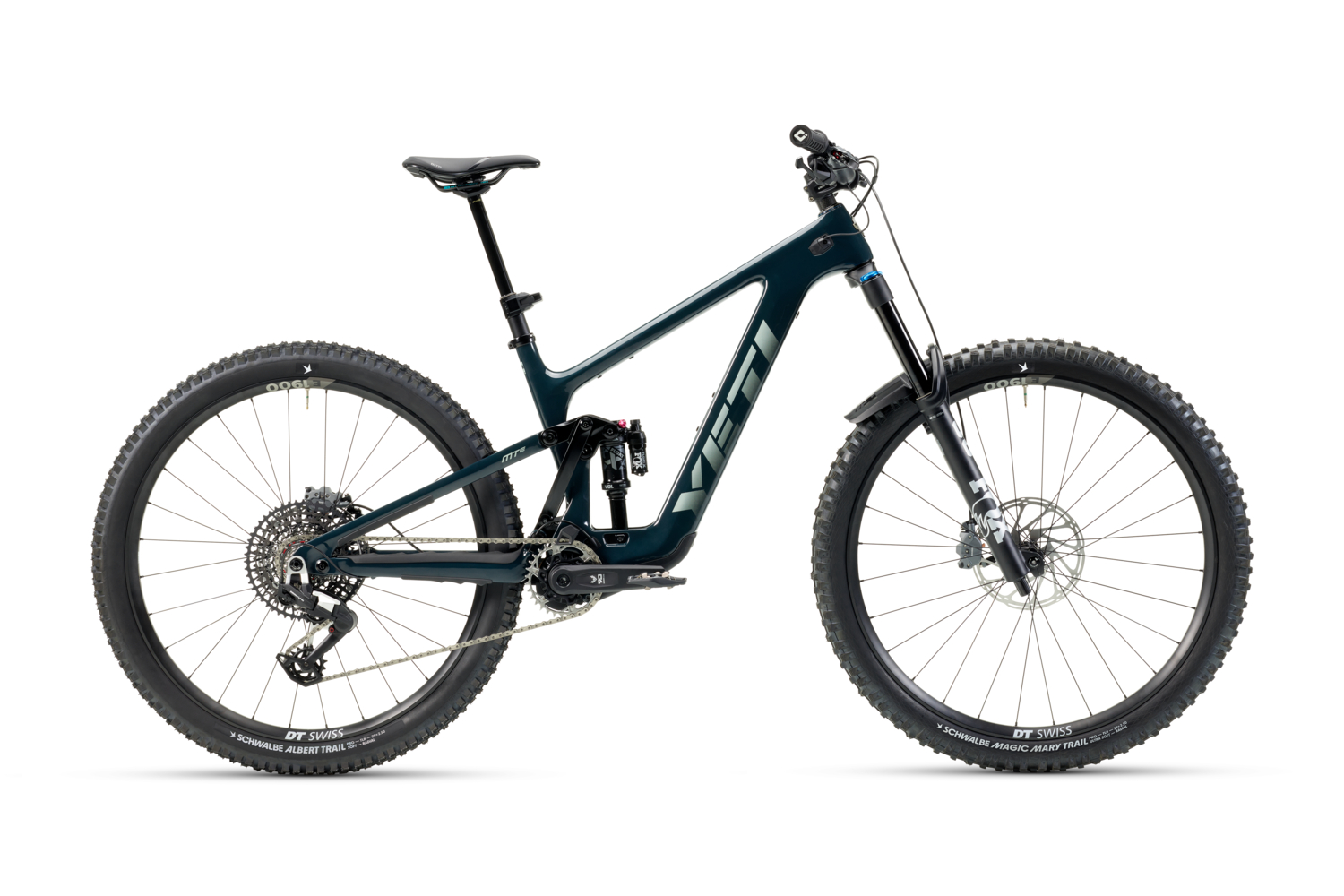
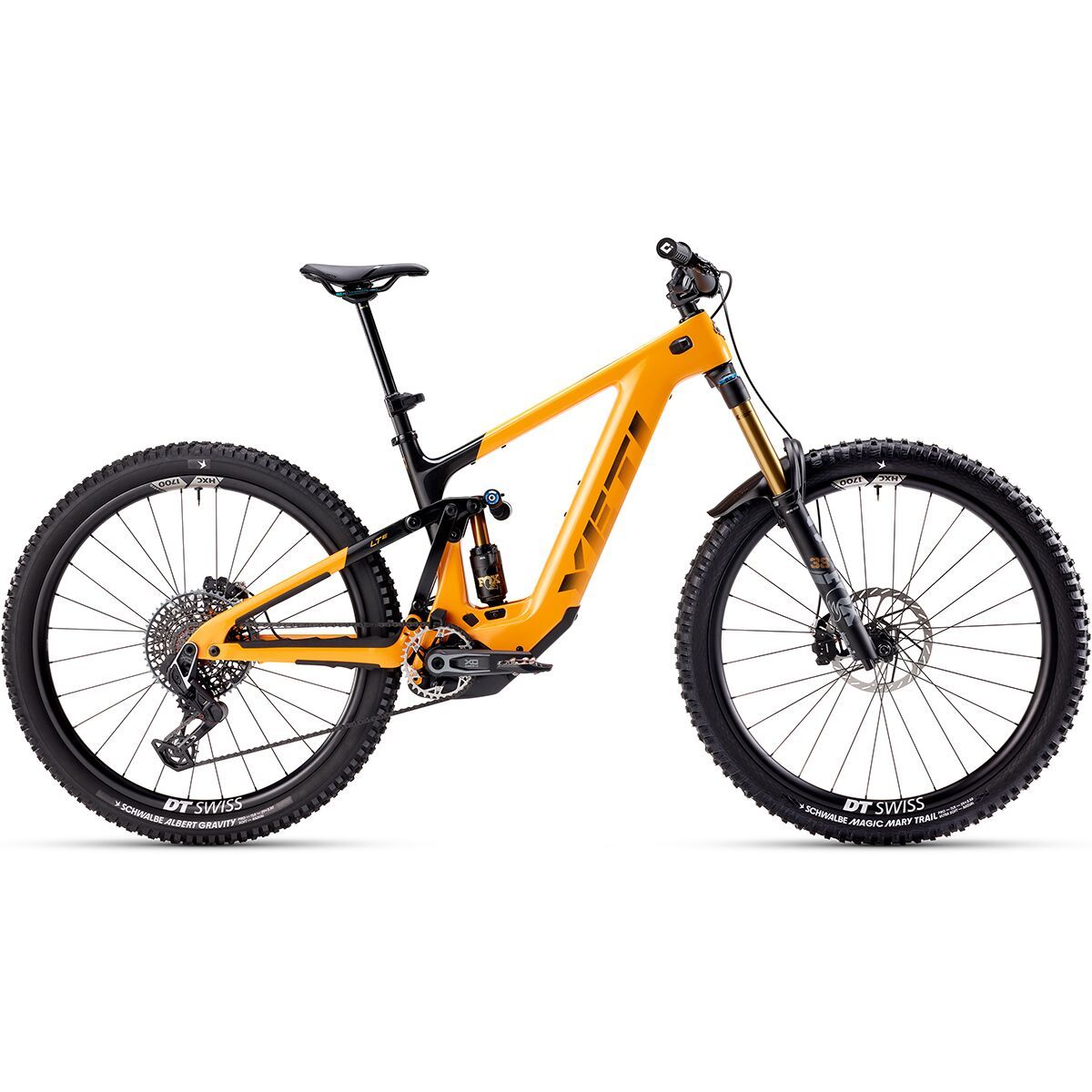
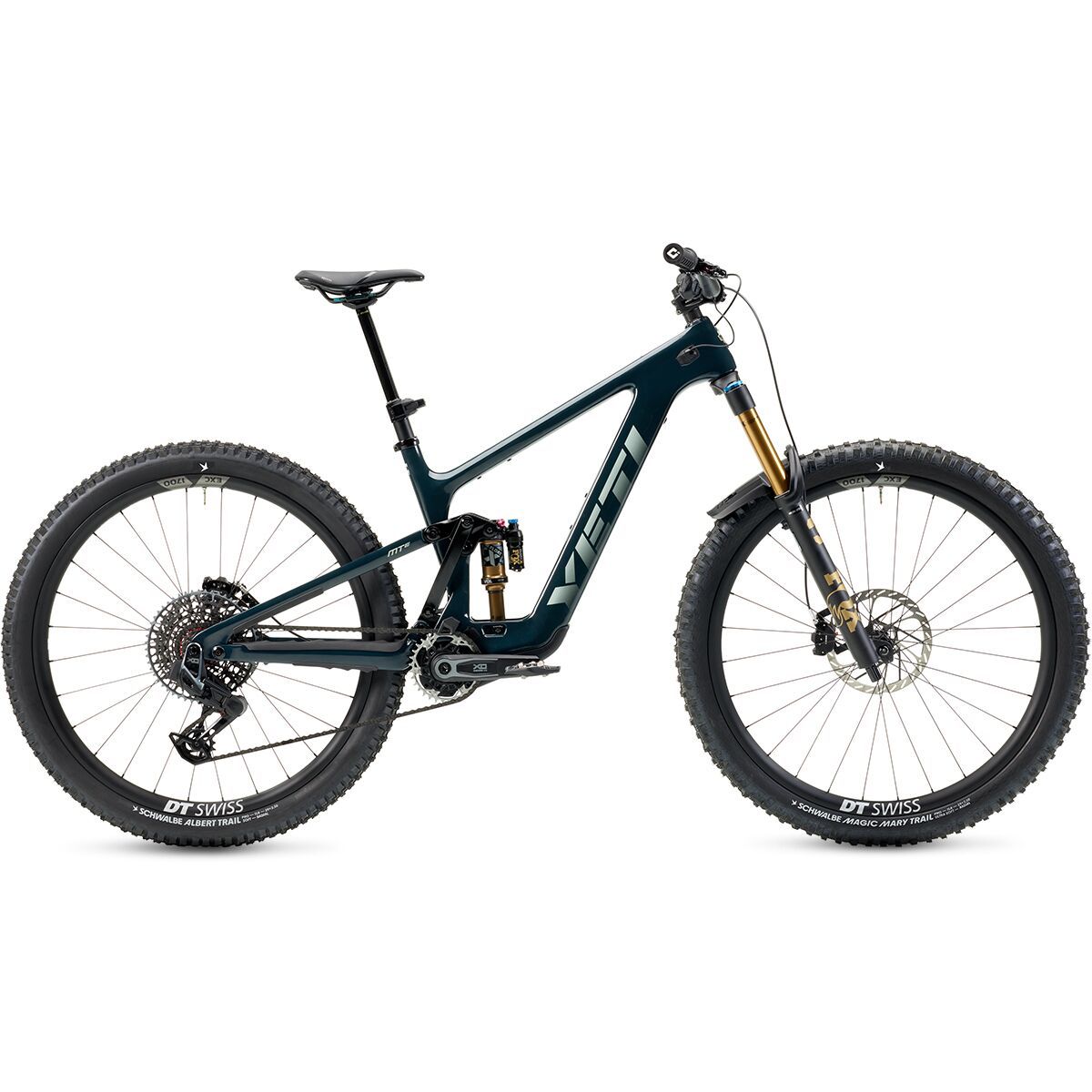
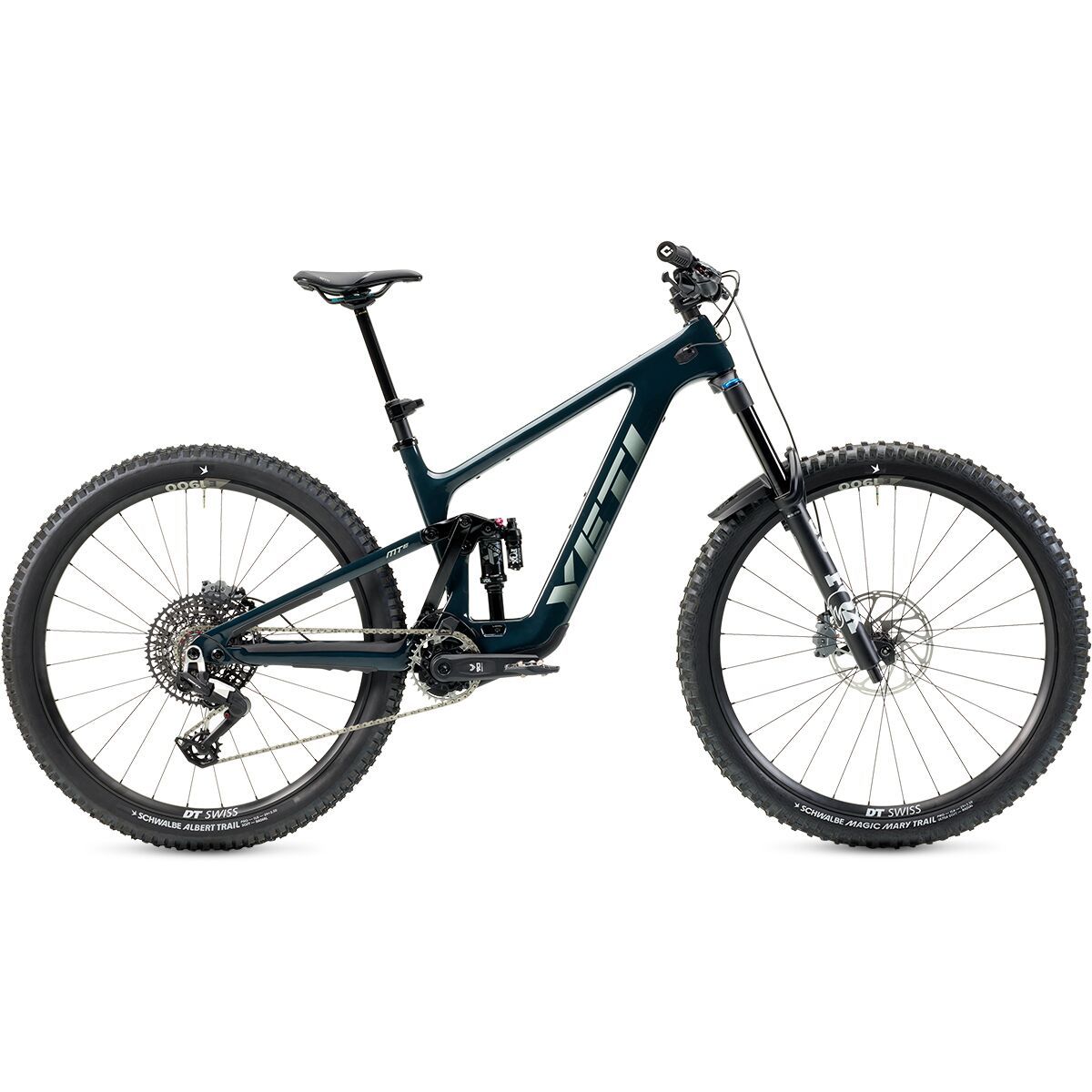
- Three build kits: C2 E90 - $10,300 // T3 X0 - $12,900 // T4 XX - $14,900
Strengths | Weaknesses |
|
|

What's New? 160E vs. LTe
The biggest change from the 160E to the LTe is the switch from Shimano to Bosch. The 160E used Shimano's EP801 motor, a 630 Wh battery, and a wired remote and bar-mounted display. The LTe is powered by Bosch's Performance Line CX or CX Race (T4 Build) motor, an 800 Wh battery, an integrated Kiox 400C top tube display, and a wireless remote and speed sensor.
160E: Shimano EP801 | LTe: Bosch Performance Line CX or CX-R |
 |  |
|
|
The switch to Bosch was shocking news considering the time Yeti's race team has spent with Shimano helping develop different e-products in past seasons. Shimano has undeniably fallen behind when it comes to system evolution, integration, and power. An opportunity Bosch has capitalized on to become the current go-to system for brands. Chatting with Yeti, this growth in popularity and performance drove the change—Bosch has a proven track record and reliability, the end-user experience is superb, and they were able to package the CX motor where they wanted within the LTe's Sixfinity suspension design.


The LTe comes with Bosch's latest update for the Performance Line CX Gen. 5 motor, which increases torque from 85 to 100 Nm and peak watts from 600 to 750 W. It also introduces an eMTB+ mode and, on the CX-R motor found in the T4 build, a Race mode that delivers immediate, full-power support and increases the 'Extended Boost' overrun. Bosch's Flow App offers various ways to customize each assist profile, change display configurations, log rides, and perform updates. There is a lot of freedom available in how you tune the motor to match your pedaling style and trails.

Yeti chose to match the new CX motor with an 800 Wh battery. Riders can swap to a 600Wh battery if they want to buy one aftermarket, which will save 1.9 lb (.86 kg). Yeti didn't specify why they went up in battery size over the 160E, but I'd assume the one-pound weight penalty was worth the extra range when paired with a more powerful motor.
The 160E wasn't in dire need of a geo overhaul, but there were some easy, impactful updates available. Comparing the MTe against the 160E, reach has increased 5mm per size, the head angle has been pushed out half a degree to 64°, stack has increased—especially on size L and XL—and the chainstay length has grown 3mm to 449mm. From my time riding the 160E, these changes are welcomed to complement the bike's stability, without diminishing its climbing or responsiveness. Yeti is still not doing size-specific chain stay lengths, which does make you wonder how the size small would handle with its 435mm reach. When pressed about the possibility of longer or adjustable chainstay lengths in the future, Yeti said both are being considered as they develop into the future.


The final big change on the LTe is the ability to now run mixed wheels. The bike comes with dual 29-inch wheels, but a flip chip in the upper seat stay pivot enables mixed wheels without changing the geometry or kinematics.

What's Carried Over from the 160E to the MTe?
The LTe remains a 160mm travel e-enduro bike that bears the mantra 'built for racing.' Cliche, but also accurate. What I think made the 160E and now the MTe a step above most eMTBs is that Yeti didn't just electrify an existing model. They literally created a new suspension design and intertwined the kinematics with the added power and weight of the bike. This makes for a very unified ride quality and a bike that rarely feels like it's fighting itself to perform.

Sixfinity is Yeti's true six-bar linkage layout that allows them to control anti-squat, anti-rise, and leverage rate independently. It features a lower link that switches directions as the bike moves through its travel, first moving upward until it reaches an inflection point, before moving downward. This creates a higher anti-squat value during the first portion of travel and around sag to improve pedaling efficiency. Once past the inflection point, anti-squat drops so the suspension can move freely, separate from chain forces, reducing pedal kickback. Anti-squat is a touch higher around sag on the LTe (113%) compared to the 160E (109%). It also remains higher for the first half of travel, whereas before anti-squat was reduced sooner into the travel.


Anti-rise is kept fairly low and consistent throughout travel, moving from 61 to 67% at sag, before fading to 62% at bottom out. Yeti found they could get away with less anti-rise on the LTe (and the 160E previously) because the extra weight of the motor and battery naturally keeps the bike from pitching under braking. Less anti-rise also means the bike is more active throughout its travel, improving traction.


Like before, there are three leverage options—25%, 30%, and 35%—adjustable via lower shock mount chips. There is a 4mm change in travel between the three positions, but all other kinematics and the geometry are preserved. The shape of all three curves is quite linear to provide consistent shock performance. The LTe ships in the middle, 30% position, which should set most riders up for success. If you're feeling aggressive, the 25% position is what Yeti's race team uses to achieve more support when hitting things at higher velocities. And if you are looking for a more forgiving ride, the 35% position is more supple off the top and through the mid-stroke.

A potential downside to a six-bar design is that the extra pivots and links offer added opportunities for flex and wear. Luckily, the layout of Sixfinity makes for a very laterally stout frame. Yeti also put a priority on achieving proper frame alignment and used floating collect axles throughout the linkage to ensure proper tolerances and bearing longevity.
The front triangle, seat stay, and chain stay are made from Yeti's T-Series carbon, while the rocker link, timing link, and Switch link are made of aluminum. One slight change from the 160E to the MTe is the addition of Vectran plies in the chainstay, seatstay, down tube, and top tube. Vectran is a Kevlar-like, multifilament material that improves impact resistance. It was first tested on Yeti's Special Project DH frame, and now the MTe and LTe are the first production bikes to use it.


The final parallel between the 160E and LTe is weight. The 160E was around 50 pounds, and the LTe is a touch heavier at around 51.6 pounds (average weight of the three build kits). I'd call that a competitive weight for a bike with an 800 Wh battery, but it is creeping into 'too-heavy' territory. It'll be interesting to see how motors and batteries evolve in the next four years, and how easily backwards compatible future (lighter) options will be.
Other Frame Details


Build Kits
It's hard enough to go shopping for an eMTB on a budget, but it's pretty much impossible to do so if you want it to say Yeti on the down tube. But for those in select tax brackets, the LTe is launching with three build kits that retail for $10,300, $12,900, and $14,900.


The only component spec that stands out as a bit strange is the AXS Reverb dropper on the C2 E90 build. I can appreciate Yeti's desire to keep the cockpit as tidy as possible across all builds, and I know the cost difference between a Reverb and a mechanical dropper is only a couple of hundred bucks. But still, if I were spending $10,300, I'd rather have a mechanical dropper in exchange for a Float X2 shock and/or HS2 rotors.
All builds also come with Yeti's in-house designed carbon handlebar. They've offered bars in the past, but are releasing a new model with the LTe that features a 35mm rise, 800mm width, 9° back sweep, and 5° upsweep.
First Ride Impressions
I've squeezed in about a dozen rides on the LTe over the past few weeks between plenty of summer travels. Less time than I'd prefer, but enough time to get acquainted with the bike. Unfortunately, I did have a few setup setbacks that further compounded my tight testing window. Beyond the usual familiarizing and tuning of the motor, this was the first bike I've ridden with a FOX Podium. It was impressive and interesting, but also different from what I'm used to. On top of that, the stock Schwalbe radial casing tires rekindled my ongoing battle to find anything good to say about their performance. But I'll save those thoughts for a later article. An eventual switch to familiar tires netted an immediate boost in comfort and helped expedite Podium setup.

The good news is the LTe itself was comfy from the onset. I rode the bike before receiving the press kit, and could actually tell the reach was a little longer, the stack was (thankfully) taller, and the rear end felt more than just 3mm longer than before. The fit of the 160E always gave me a lot of confidence and freedom to move over the bike. The simple geo changes on the LTe furthered that confidence, allowing me to stand a bit taller and better balanced within the bike. These changes had the biggest effect on my ability to weight both wheels through turns, minimizing unintentional front wheel over- or understeering.
I did swap to the 35% leverage rate to settle the bike into its travel off the top, which felt easier to ride as I got the bike set up. But I'll likely return to 30% as my familiarity and speed increases to get back some mid-stroke support. Swapping the chips is a trailside job, which would make for an easy and fun test if you really wanted to compare each position.

Beyond the improved body positioning granted by the geometry updates, the way the LTe managed compressions when hammering descents reminded me a ton of the 160E—as you'd expect, given the kinematics and weight similarities. It's definitely an e-enduro bike that excels at remaining calm and glued to the ground. Planted is a popular word to describe e-bikes, but I think the 160E and now the LTe own that word more than most. With that comes the necessity to ride lines with purpose to avoid feeling like the bike is getting away from you. It is 51+ pounds after all. But it's wild how the bike maintains its poise when you really start charging into things. The rear wheel never struggles to get out of the way of compression, creating a sense of eagerness as the bike drives forward. And when you have to slam on the brakes, the LTe tracks well with minimal pitching.
I know I haven't spent months testing the LTe, but I think everyone can relate to the trust that some bikes immediately infuse. There's no doubt that I could wring out more speed or uncover some nuanced strengths in time. But I'd also be just as happy ripping around with the base setup I've landed on. Which reminds me—Yeti provides recommended suspension settings for the LTe that got me 95% of the way to my preferred setup.

This is the first bike I've ridden with Bosch's Gen. 5 motor and update. It's also the first CX-Race motor I've pedaled with the extra Race mode. The jump from 85 to 100 Nm was noticeable but only necessary on really steep punches or when trying to hold a higher average speed. As the motor comes stock, only Race mode has access to the full 100 Nm and 750 W. I struggled to manage that much power on my loose, rocky climbs. Simultaneously, Tour+ and eMTB+ didn't feel that different, while Eco+ felt underpowered.
I ended up increasing the Assistance (+2), Dynamic (+2), and Max torque of Eco+ to make it more usable. I also increased max torque to 100 Nm in eMTB+ to make it a step above Tour+, and then bumped up the Assistance (+2) and Dynamic (+2) settings of Race mode to make it ludicrous. That way I could spend more time in Eco+ when climbs were mild, toggle between Tour+ and eMTB+ when climbs became challenging, and save Race Mode for those 'holy shit I might not make it up this' moments. I haven't done any range testing with the LTe, but these settings allow me to spend more time in Eco+, which, in theory, would translate to less battery consumption.

Mode modifications aside, I enjoyed the feel of Bosch's motor and the ability to change how reliant it is on rider input within the App. It does let out a soft whine as your cadence climbs, and it does produce a soft clicking noise when coasting. It's nowhere near the raucous a Shimano motor produces, but it's loud enough to rise above the chatter of most trails.

The lack of wires running around the handlebars compared to the 160E's nest of connections is a massive improvement. There also isn't a wire running to the rear axle for the speed sensor. It's really not even fair to compare the Shimano bar display to Bosch's top tube screen, as it gives you endless mid-ride stats. I had no issue glancing down and toggling between data fields. I did, however, find myself checking the screen often when changing between modes, as it was easy to double-press the assist switch buttons. Maybe I have poor thumb dexterity, or maybe the buttons are too easy to press. Who knows.
It always feels a bit goofy to discuss the climbing performance of an e-bike. You know, because it has a motor. Still, what Yeti has done with the Sixfinity kinematic does translate to a smoother-than-usual ride when seated. You can smash through bumps and up ledges without getting too tossed out of the saddle. This makes for a faster climbing bike because you can hold a steady cadence through chatter.


What's The 'First Ride' Bottom Line?
A lot can happen in four years. Luckily for Yeti, they were ahead of the curve with the 160E, allowing them to stick to a similar script when creating the LTe. Ditching Shimano for a Bosch e-system was a needed change, not only to increase power, but to improve the in-ride experience. Fewer wires running wild, and all the stats you could want right under your chin. A nice win-win situation.. Beyond that, the abilities and thoughtful frame details of the LTe greatly mirror the bike it replaces. Yeti's Sixfinity suspension platform makes for a smooth ride climbing and a highly capable bike descending. And the subtle yet effective geometry changes give you that extra bit of confidence needed to ride faster.The biggest factor that will decide who chooses to ride an LTe is the tall barrier to entry due to its $10,300+ starting price tag.
View key specs, compare e-bikes, and review the new Yeti LTe in the Vital MTB Product section.
| Where To Buy | |||
|---|---|---|---|

|
Free U.S. shipping on everything.
International shipping available. Some exclusions apply. |
Free U.S. shipping on everything.
International shipping available. Some exclusions apply. $14,900.00
|
|
|
|||
|
|||
|
|||
|
|||
|
|||
|
|||
|
|||
|
|||
|
|||
|
|||
|
|||
|
|||
|
|||
|
|||
|
|||

|
Free shipping on orders over $69 (continental U.S. only).
International shipping available. Some exclusions apply. |
Free shipping on orders over $69 (continental U.S. only).
International shipping available. Some exclusions apply. $12,900.00
|
|
|
|||

|
|||
|
|||
|
|||
|
|||
|
|||
|
|||

|
|||

|
|||
|
|||
|
|||
|
|||
|
|||

|
Free standard UK delivery on orders over £50.
|
Free standard UK delivery on orders over £50.
£10,999.00
|
|
|
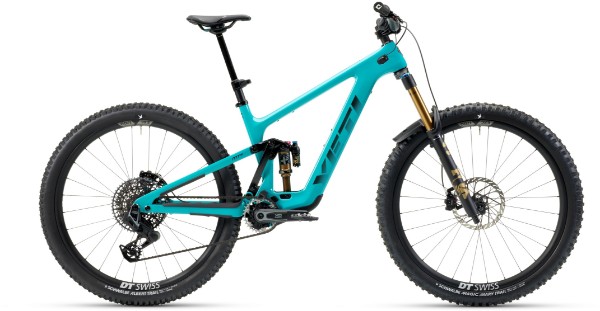
Yeti MTe T3
£10,999.00
|
||
|
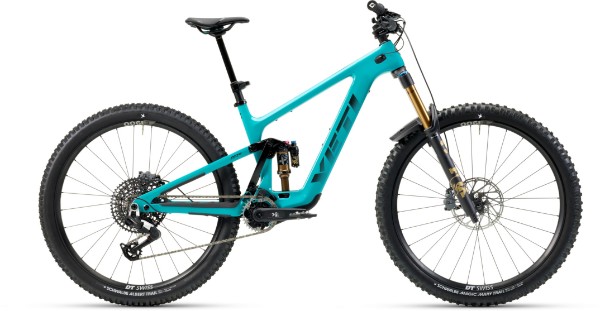
Yeti MTe C2 Eagle 90
£9,499.00
|
||
|
|||
9/16/2025 8:00am




View replies to: Yeti Builds on Its Critically Acclaimed 160E With New LTe Full-Power eMTB
Comments