



Going back a couple of years, Garmin split its highest-end smart watches into two distinct product families, mainly set apart by the screen technology used. The Fenix line offered a classic “transflective memory-in-pixel” display whilst the Epix went with a brighter AMOLED type. Aside from the different screens, both watches were built on the same foundation of features. Fast-forward to 2025, and Garmin had merged the two lines together again for the launch of the all-new Fenix 8. When we reviewed the gen 2 Epix in 2023, we found a lot to love about that watch but we were missing a couple of key features that have now been added to the Fenix 8. High time to find out if that does indeed make it the perfect companion for the mountain biking outdoors enthusiast!
Garmin Fenix 8 Sapphire (47mm) Highlights
- 1.4” AMOLED display
- Touchscreen and buttons
- Built-in speaker and microphone with voice assistant
- 32GB memory
- 24/7 health monitoring: heartrate, HRV, pulse OX, respiration tracking, “body battery”
- Sleep and stress tracking
- Up to 16 days battery life in smartwatch mode
- Smart notifications
- Increased number of built-in sports/activity apps
- Fitness monitoring, steps counter, in-app fitness tracking
- TopoActive mapping and navigation (other map services available with subscriptions)
- GarminPay
- Virtual coaching (mainly for running)
- Connectivity with power meters
- Multi-band GNSS with SatIQ technology for high GPS accuracy
- Altimeter, compass, gyroscope, accelerometer, thermometer, ambient light sensor, depth sensor (rated to 40 meters depth)
- “NextFork” trail map guiding
- ClimbPro gives preview of upcoming climbs
- Music apps (e.g. Spotify)
- MSRP: $1099.99 USD
Initial Impressions
Taking its place at the top of the Garmin wearable food chain (if we disregard the more exclusive “Marq” series with the fancy materials), the new Fenix 8 inherits the bright AMOLED screen from the Epix along with a host of new features that aim to make it a more serious player in the pure smartwatch field (there is also a Solar edition which still uses the old screen type). The main addition compared to the previous generation is the speaker and microphone array, which unlocks both voice calling and voice assistant capabilities, and there is also a new depth sensor rated down to 40 meters of depth that allows the Fenix 8 to function as a dive computer now as well. We tested the Sapphire edition which of course comes with sapphire glass and extra memory space (32GB, up from 16GB for the basic version).

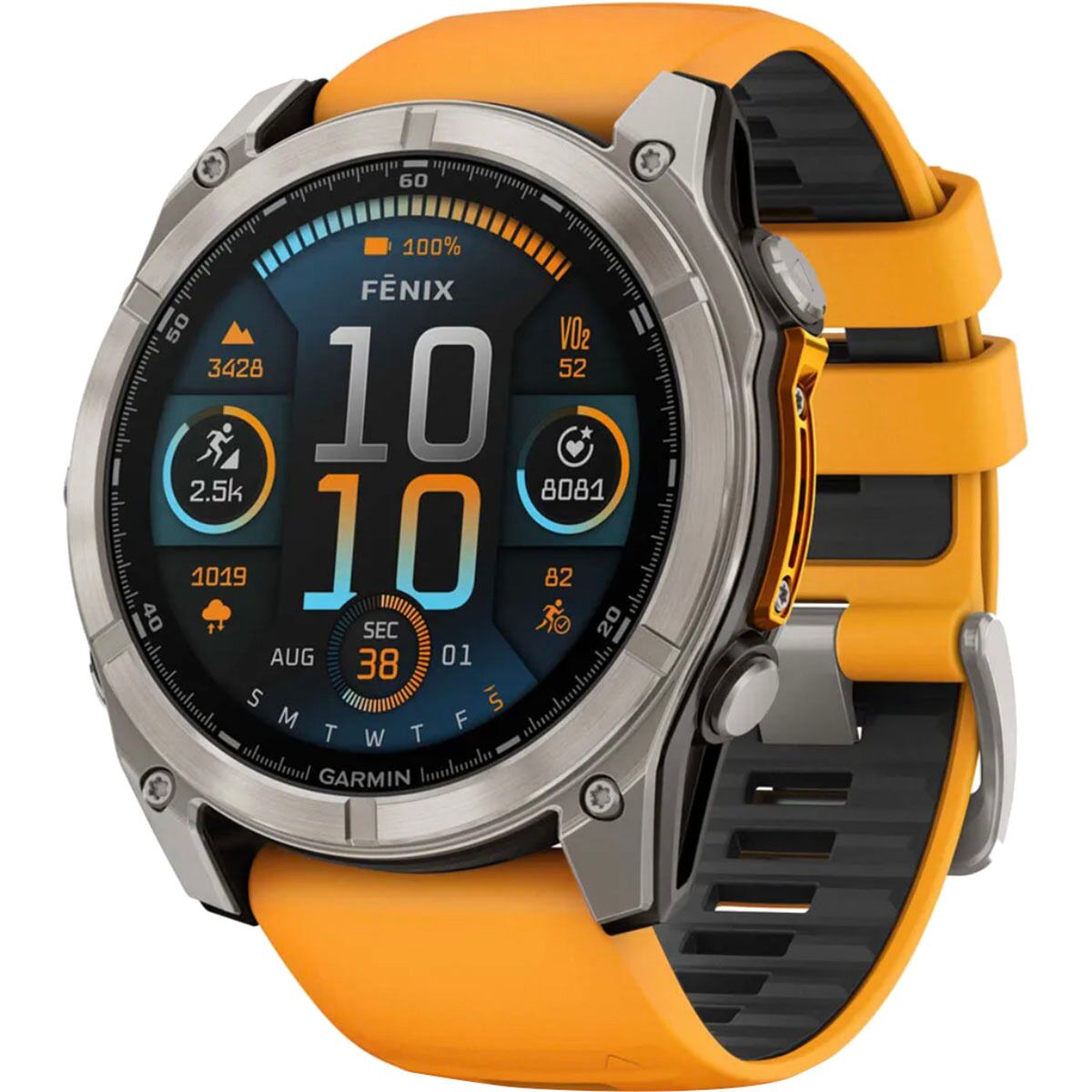
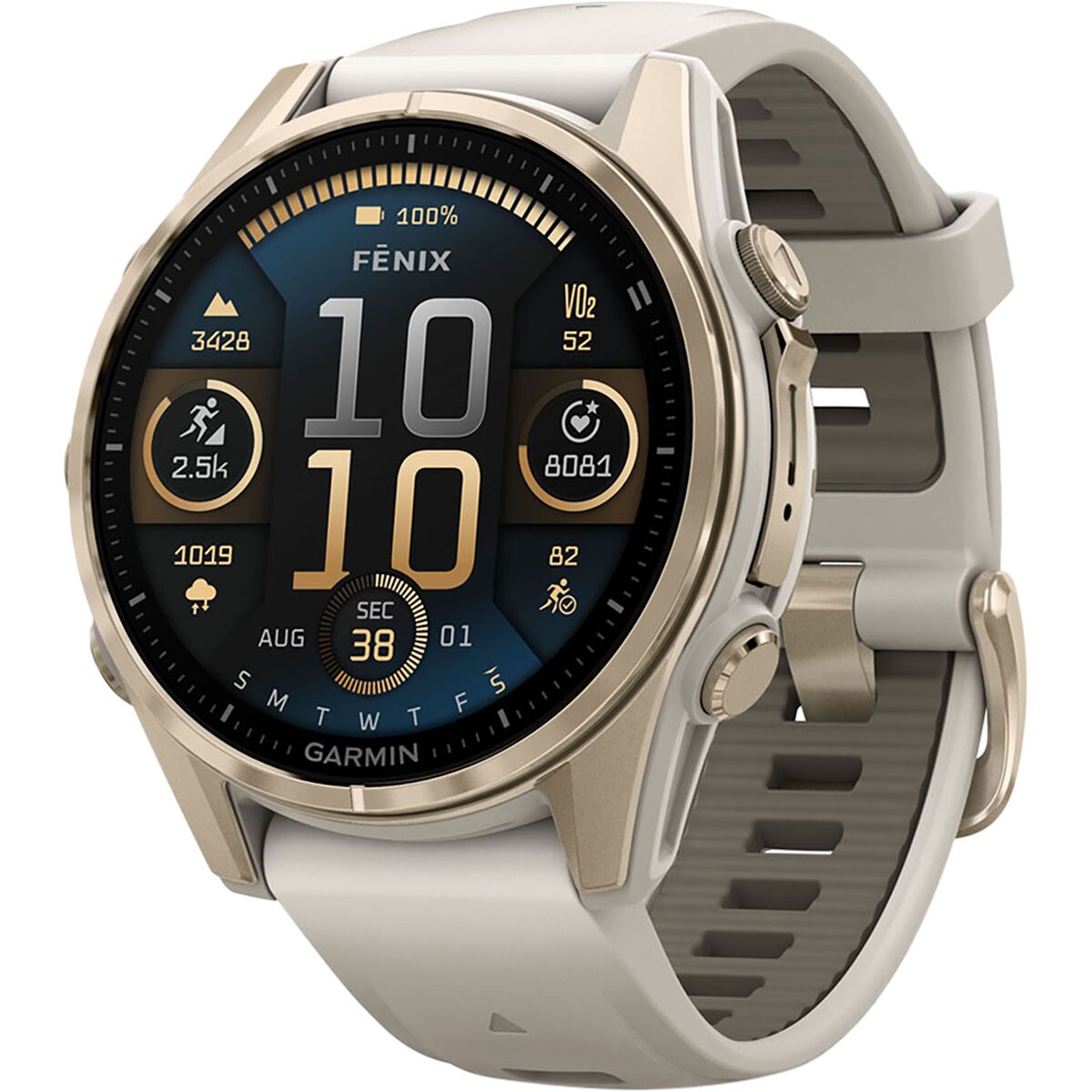
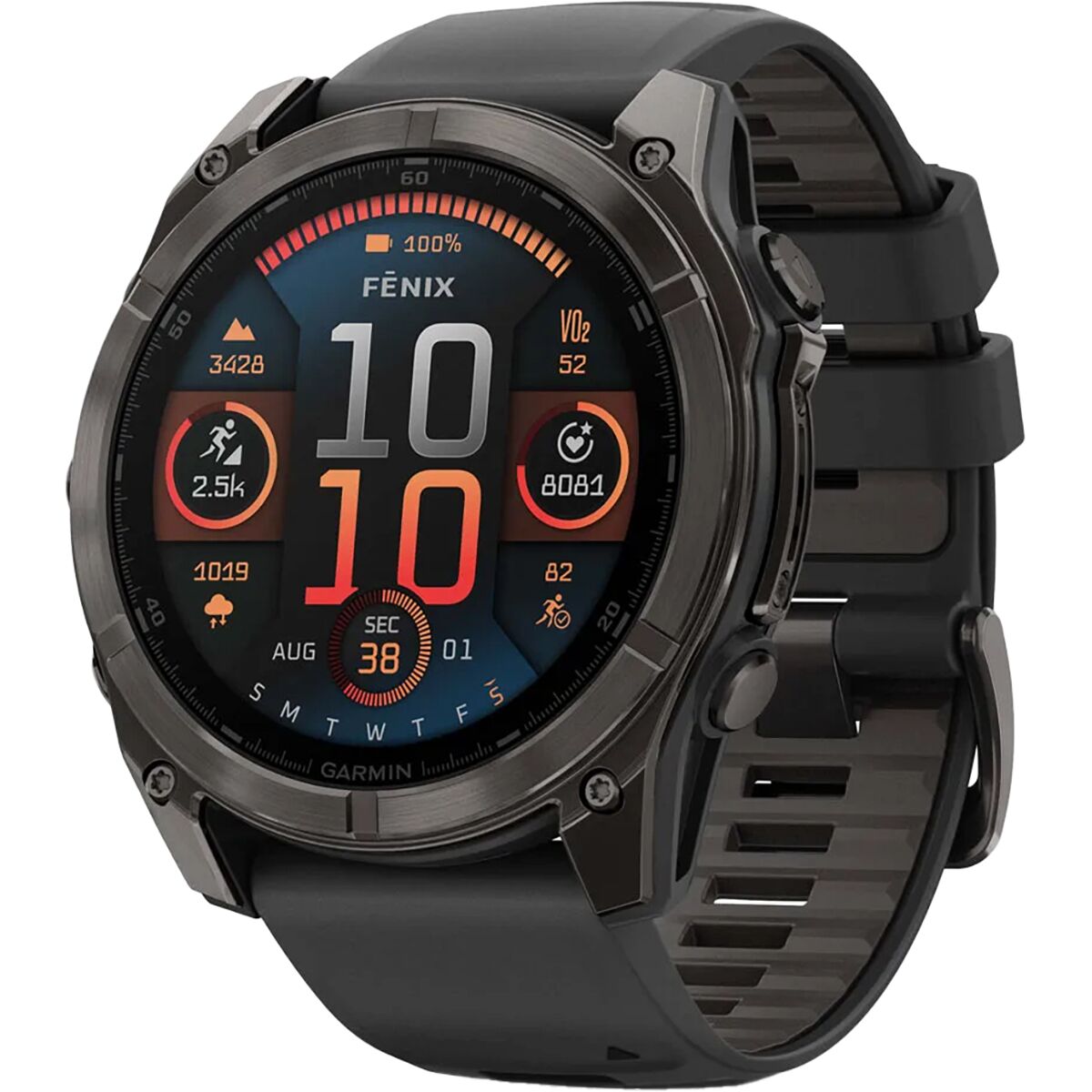
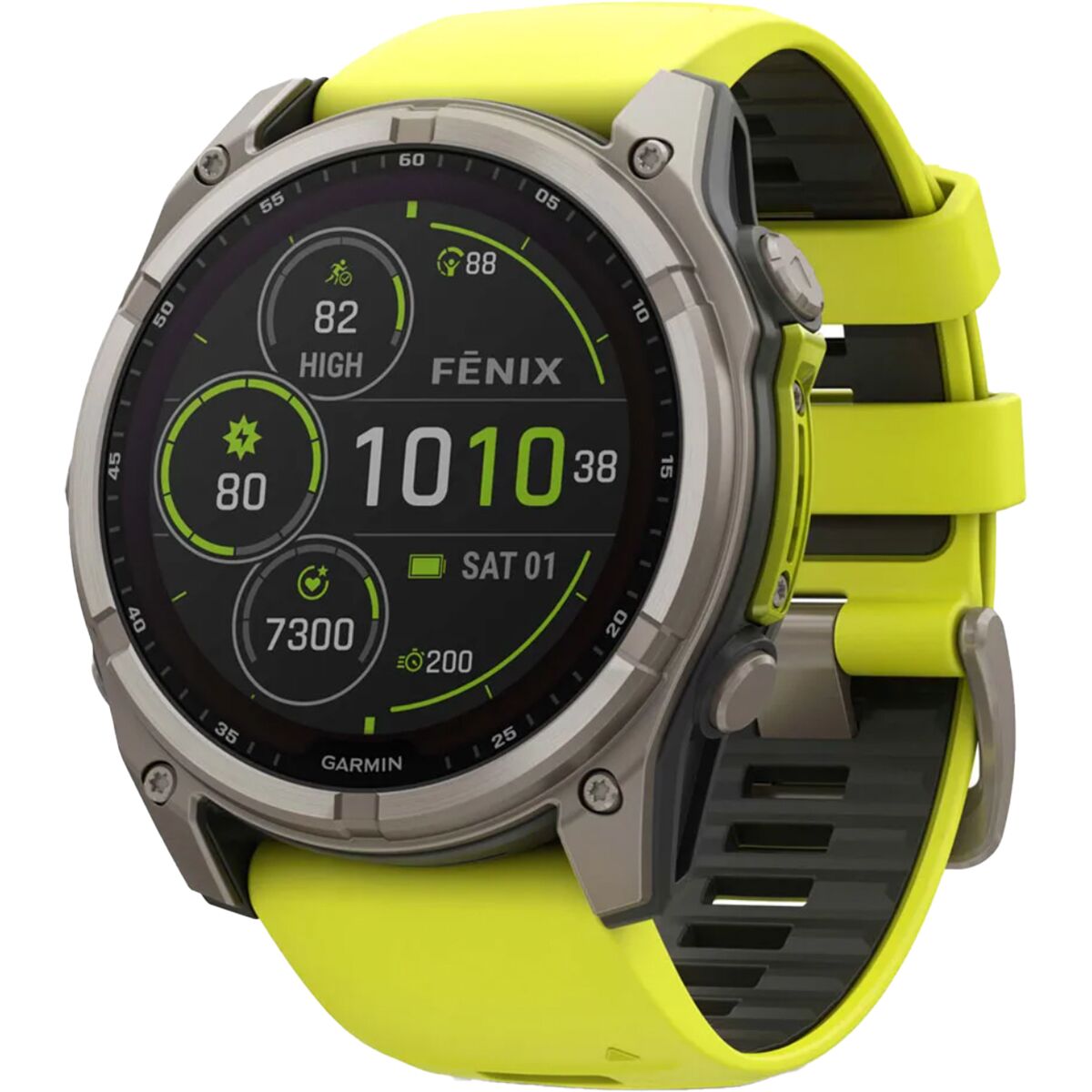
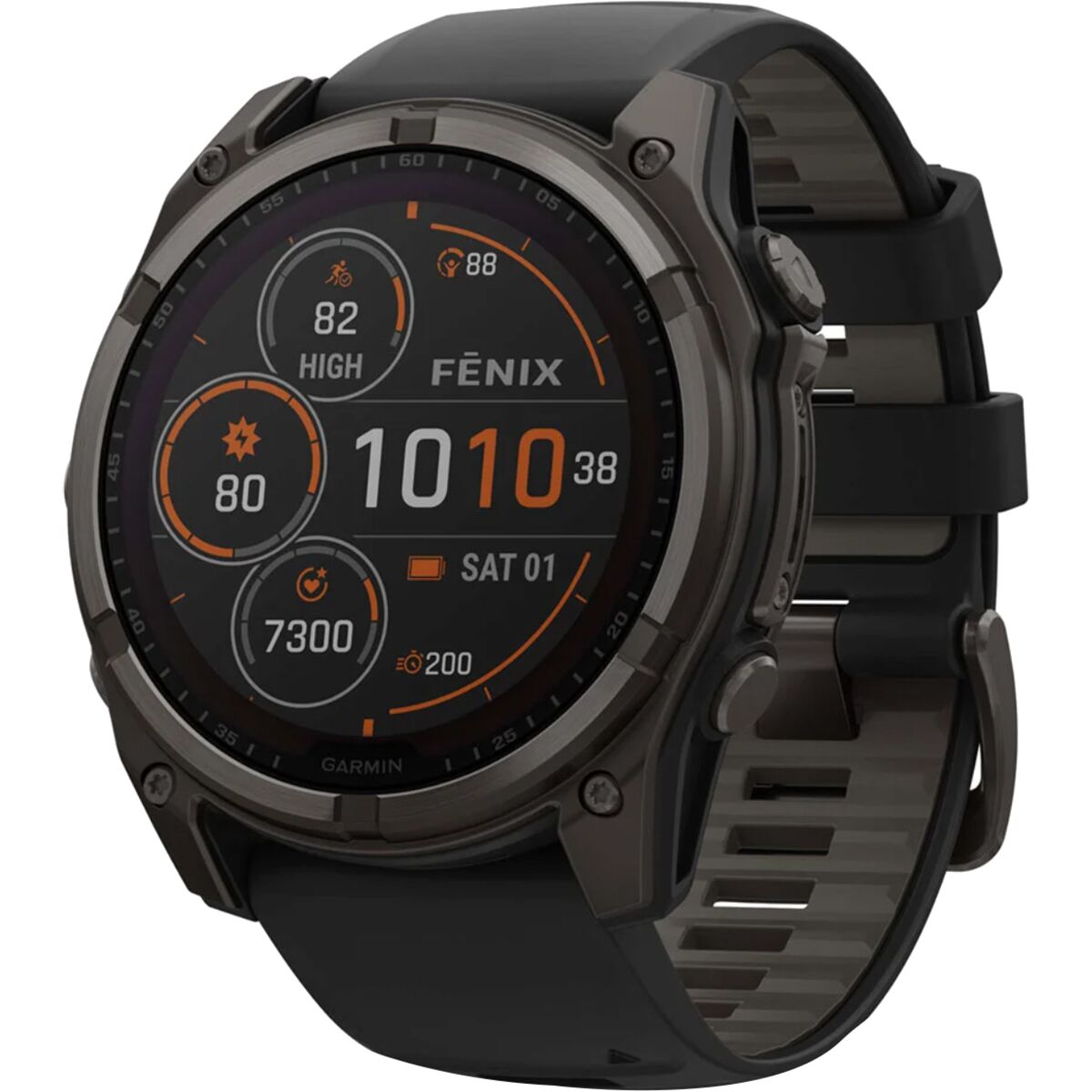
In terms of hardware, the Fenix heritage is clear, but there are changes here too. The bezel is a bit more stylish, and there’s a new, color-coordinated sensor guard on one side. The buttons have changed, they are now of the induction type which makes it much easier to seal the watch against moisture and dirt ingress. To let you know if you’ve pressed a button fully, the Fenix 8 provides haptic feedback via a little “thunk” that can be felt in the watch itself.

At the back of the watch we find the usual array of sensors, used to pick up on your heart rate, blood oxygen saturation, and respiration patterns. External sensors for barometric pressure and the like sit off to the side (under the new sensor guard). At the top of the watch we find the flashlight that first made its appearance on the Epix Pro, while the microphone and speaker sit towards the bottom. The wrist strap is the classic 22mm Garmin, which means that you can find a plethora of replacement options both from Garmin and third-party vendors.


Features Overview
The Garmin Fenix 8 is first and foremost built to track your activities, although as we previously mentioned it now provides more typical smartwatch functionality as well. Here’s an overview of the main features:
Advanced Mapping: the Fenix 8 has extensive mapping capabilities. Preloaded topographic maps provide detailed navigation, making it an ideal companion for cyclists, hikers, backpackers, and adventurers. You can track your progress on screen, explore your surroundings, navigate to a point of interest, or follow pre-set routes both in nature and in urban environments. The Fenix 8 leverages several GPS technologies to deliver highly accurate location tracking.
Health and Fitness Tracking: With a comprehensive suite of activity profiles, the Fenix 8 offers tracking for activities such as running, cycling, swimming, and much, much more. The built-in heart rate monitor provides real-time data that helps with optimizing workouts, while a pulse oximetry sensor offers further insights into your current condition. The Fenix 8 knows how to count your steps and track your sleep cycles as well, and it keeps track of your respiration rate too. For runners, the watch knows how to measure things like cadence, ground contact time, vertical oscillation and more.
Smart Connectivity: syncing with smartphones via an app, the Fenix 8 offers smart notifications allowing users to receive texts, calls, and app alerts directly on their wrist. If you have an Android phone, you can answer an incoming text (or call) with a preset or typed text message (feature not available for all message types with iPhone – mainly for iPhone-related reasons as we understand it). Thanks to the built-in speaker and microphone, you can now answer calls directly on the watch and access the voice assistant to carry out certain tasks on your phone (ask your phone about the weather or send a WhatsApp message to a contact, for example). There is no support for a SIM card so the watch does still need to be within Bluetooth range of the connected phone to make or answer calls. You can connect a pair of Bluetooth headphones to play music directly from the watch – synchronize with Spotify, Deezer, or Amazon Music (no Apple Music still) and bring your favorite playlists with you on your wrist. Garmin Pay lets you store your credit card on the watch and make contactless payments with it at participating merchants.
Battery Life: the long battery life of the Fenix 8 (as with most Garmin watches) is another key feature, allowing for up to 16 days in normal smartwatch mode (less when you use navigation or activity tracking).
Sensors: The Fenix 8 features a bunch of other sensors as well, helping it help you get the information you need when you need it. The list includes: barometric altimeter, compass, gyroscope, accelerometer, thermometer, depth sensor, and ambient light sensor. The addition of the depth sensor is new to the Fenix 8, and it unlocks useful and fun features for those who venture below the surface of the water as well.
Flashlight: the small but mighty built-in flashlight is so much more useful than you might think at first…

In Use / On The Trail
We’ve been using the Fenix 8 for 4 months by now, and in that time we’ve only ever taken it off to charge it – which you don’t need to do a lot of, thanks to the excellent battery life. Previously, we’ve been using a gen 2 Epix for 2 years, so we had a good idea of what a watch of this style would provide, but we were also looking forward seeing how the user experience has evolved with the latest changes. First up, let us start by saying that the Fenix 8 feels much more like a smartwatch in day-to-day use. The addition of the speaker and microphone checked a big item off the list of improvements we asked for with the previous generation of these watches from Garmin, and it makes the comparison with something like an Apple Watch much more balanced now – apples to Apples, if you can pardon the pun. The slightly more “exclusive” materials and the addition of the color-coordinated sensor guard also adds a touch of fun and draws a bit of attention to itself as well. To be clear, the software is nowhere near as slick and sophisticated as the Apple Watch, but it also runs on a much more energy-efficient chip which is part of the reason for the very impressive battery life. We’ll gladly trade the smooth scrolling and fancy finger gestures of the Apple Watch for days and days of extra battery.

The new inductive buttons are an improvement from a construction point of view, as they allow for more effective sealing of the watch. You soon get used to the haptic feedback (which replaces the now-absent physical button click,) and it becomes second nature to the point that you don’t even realize that it’s the watch doing the clicking and not the button itself. The buttons do need to be pressed with some intent to activate, but you get used to that as well.

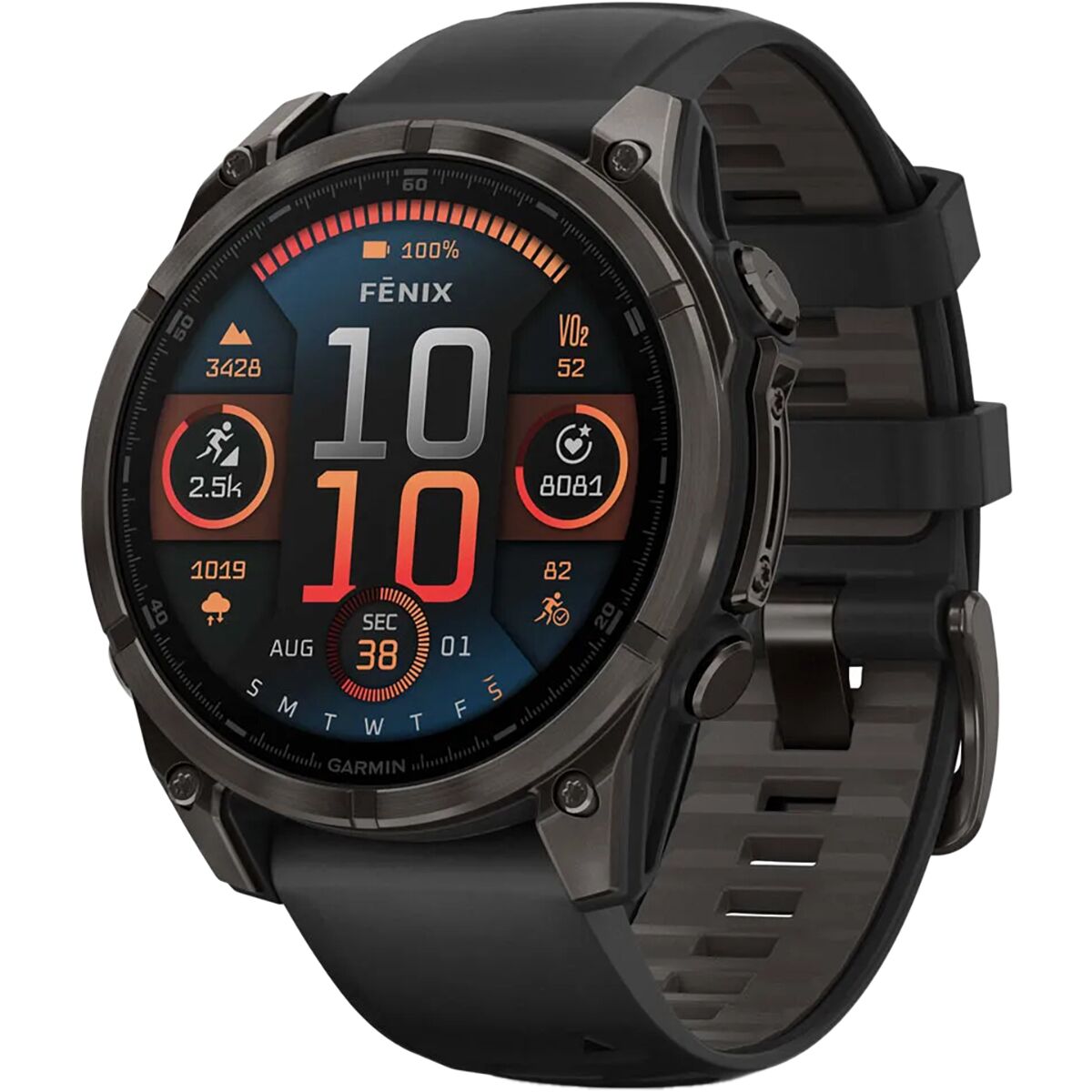
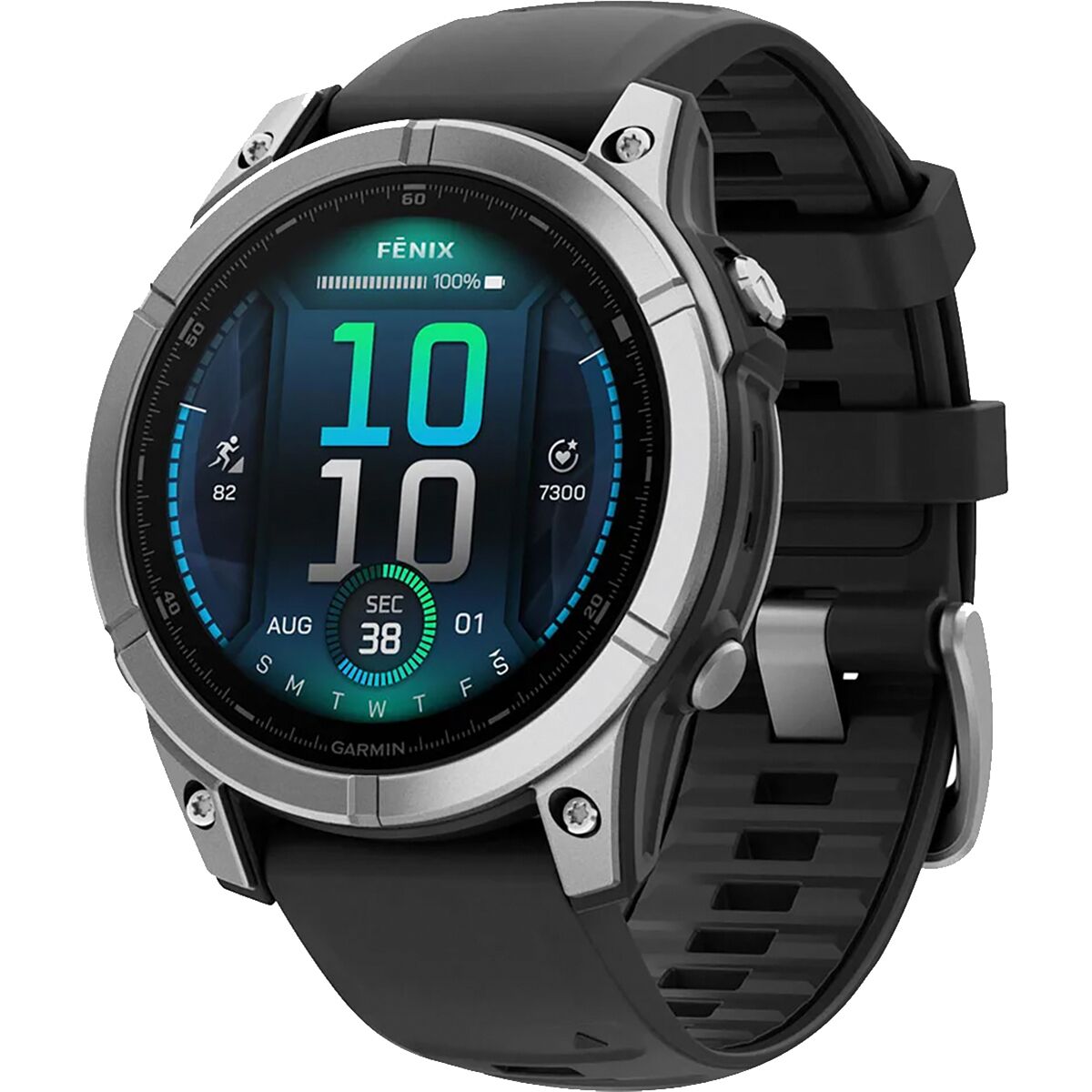
The AMOLED screen is another big reason why the Fenix 8 provides a bit of that high-end smartwatch feel to it. The screen is crisp and bright in any light, and there’s a vast amount of watch faces to choose from – whether supplied by Garmin directly or a third party. Many of the watch faces can be customized with regards to data and “complications” (watch-speak for those extra little dials and functions found on a typical watch face,) and there’s an app that lets you build your own as well. Some of the settings and menu elements are still found in slightly awkward places, but that’s getting better with each iteration of the watch. For example, you can now easily access and configure the settings for the various activity screens directly from the list of the activities on the watch, and the same goes for the “glances” that are used to present various bits of information or access widgets. The app ecosystem is not as rich as the Apple or Samsung universe for example, but there are still plenty to choose from if you want to add to what your Fenix 8 can do.

On the wrist, the Fenix 8 is comfortable. It is quite a big watch, but it is not heavy, and we found it to be very stable in action, even on very rough trails. For longer rides we recommend cinching down the strap an extra click to avoid excessive bouncing around and potential discomfort. The heartrate sensor has proven reliable, even when compared to external sensors, and the GPS and altimeter have tracked the elevation changes of our rides with great consistency. Feeding Strava or something like Training Peaks is seamless, and we’ve not run into any issues with missed activities or lost ride data. Activity tracking is of course what the Fenix 8 was really built for, and there’s a rich and ever-growing list of activities available to use. From the gym to the beach and the trails, we’ve been able to enrich a lot of our activities with fun data to geek out over later.

Using the dedicated Mountain Biking activity profile (as opposed to the generic Cycling activity) unlocks a couple of amusing little measurements called “Grit” and “Flow”. Grit essentially measures how hard a trail is to ride, based on changes in elevation and direction, while Flow measures your ability to maintain said flow regardless of what the trail throws at you. They both work as advertised, although we’ve not gone so far as to actively trying to track and improve our Flow metrics (if you use a handlebar mounted Garmin Edge device, you also get a “Jumps” measurement which is capable of tracking jump distance and hangtime, but that is not available on the wearable devices). As for the more “generic” activity data, we were able to configure the screens we wanted to see during a mountain bike ride, there are many flexible options so you can include as much or as little info as you want for a given scenario. Time of day, elapsed time, average speed, total climbing, total distance, etc etc…there are many data elements to choose from and plenty of different layouts to fit them into. We’ve also had good success using the Fenix 8 with a Quarg power meter crank, which unlocks further features and analytics. For example, when riding with a power meter, your Fenix 8 will tell you after a few minutes into the ride how you seem to be performing compared to your latest baseline (set automatically), so you’ll know if to make a bid for that elusive PR or if you should go easy that day.

We’ve also tried tracking a number of other activities. For example, in the gym, the watch does a pretty good job of automatically recognizing your movements and correlating them to a particular exercise. The app will then be able to show you which muscle groups you targeted, and if you record the weights used, you can learn more about your performance (it’s a little bit tedious to do on the watch, but totally feasible).

As mentioned in the features overview, the Fenix 8 has gained a depth sensor. This allows it to function as a dive computer (for single gas diving) and also keep track of your freediving activities. You can set the watch to automatically enter dive mode when you submerge, and then it will keep that mode active to track your dive time, depth, and surface time (when freediving). As far as we can tell, the sensor seems accurate and the functionality on offer is fun to use. There are a number of other water-based activities available as well, from swimming to surfing. The dive computer functionality is rated down to 40 meters, while the watch as a whole is waterproof down to 100 meters.


The Fenix 8 uses all the data it collects to inform you about the effectiveness of your training (which is just a fancy word for your activities, if you don’t think of it as training specifically). The activities can be easily viewed and managed via the Garmin Connect app, which is a convenient place to unlock the information hidden in the data. The free version of the app is very rich and certainly useful as a training tracking and analytics tool in its own right. You can unlock some more premium features via a subscription, but those features are by no means must-haves and your experience will not feel throttled in any way without them.


Habitual Garmin users will know the “morning report” – a handy little report that is presented as you start your day, letting you know about your level of training readiness and the factors that impact it, such as your recovery from the last activity or the quality of your sleep. We’ve always found this to be reasonably accurate, often reflecting how we felt on that day (the data that forms the morning report is available on the watch and in the app at any time of the day as well, so don’t worry if you didn’t read your report on time). After the very latest major software update (that literally dropped as we were writing this review) there is now an “evening report” as well, basically the same kind of report but focused on sleep recommendations and providing a glimpse of what tomorrow holds (training readiness, upcoming appointments and so forth).

What about navigation then? Well, Garmin has its roots in navigation, so it should come as no surprise that they do it quite well. Even on such a small device, you can quite easily plan a route and then follow it, even if you’ve never ridden it before. There are a lot of courses available directly in the Garmin community simply by browsing a map of the area you want to explore, or you can download and import a GPX file from an external source as well. Once you start following a course, you’ll get turn-by-turn notifications and you’ll be able to follow your progress on the map on the screen as well. Strava and Garmin live segments are supported. Not EVERY little bit of trail will be mapped in the standard Garmin TopoActive maps, so every now and then the watch would miss a turn (or wrongfully announce what it though was a turn), but overall, it’s easy to use and you can zoom in to great detail to help you quickly figure out if you’re going off course. There’s a cool feature called “ClimbPro” which will announce any significant climbs ahead of time, and show the gradient and duration that you’ll be up against. Useful info if you’re riding somewhere for the first time. You can also set the watch to alert you to any upcoming Strava segments as you ride – sadly, this is only available for climbs or full loops at this point (maybe there’s a liability issue that stops Garmin from implementing this feature for downhill segments as well, but if not, let’s hope it gets added in the future). You can configure the segment alert to show a specific goal for the segment, like the KOM or your PR, so you’ll know what you’re up against.

Things That Could Be Improved
When we reviewed the Epix 2 we mentioned the lack of hands-free voice call support, and the somewhat complex system navigation when accessing certain settings. Both of these issues have been addressed, and we do feel that the Fenix 8 has taken a big step towards competing as a proper smartwatch and not “just” an activity tracking device. The speaker is not quite loud enough and the microphone isn’t sensitive enough either, but it does the job if you hold the watch closer to your head while talking hands-free. We also miss a cycling-related suggested workout as part of the whole virtual coaching thing, as Garmin still only seems capable of serving up a suggestion for runners at this point.
Other than those issues, the price has gone up, but what hasn’t these days?
Long Term Durability
Our previous Garmin watch, the gen 2 Epix, was with us for 2 years and showed little to no performance degradation during this time. After 4 months with the Fenix 8, all signs point towards a similar experience with this one.
What’s The Bottom Line?
Living with the Garmin Fenix 8 has been very rewarding for us. You may or may not “need” to track your rides and other activities, but if you’re a little bit geeky about it, racking up stats is a fun way to enrich your experiences. The watch also does a great job as a smartwatch now, with apps, notifications, and hands-free voice call support. Sure, you can argue that you already have all that on your phone, and whilst that is true it is also very convenient to NOT have to take your phone out for every notification that pops up. A quick glance at your watch will tell you if it’s something that needs to be addressed right away or if it can wait – this is particularly useful when spinning up a climb or working on your bike, for example. We wouldn’t want to be without our Fenix 8 now, and it doesn’t hurt that it looks pretty cool these days as well.
More information at: www.garmin.com.
About The Reviewer
Johan Hjord - Age: 52 // Years Riding MTB: 20 // Weight: 190-pounds (87-kg) // Height: 6'0" (1.84m)
Johan loves bikes, which strangely doesn’t make him any better at riding them. After many years spent practicing falling off cliffs with his snowboard, he took up mountain biking in 2005. Ever since, he’s mostly been riding bikes with too much suspension travel to cover up his many flaws as a rider. His 200-pound body weight coupled with unique skill for poor line choice and clumsy landings make him an expert on durability - if parts survive Johan, they’re pretty much okay for anybody. Johan rides flat pedals with a riding style that he describes as "none" (when in actuality he rips!). Having found most trail features to be not to his liking, Johan uses much of his spare time building his own. Johan’s other accomplishments include surviving this far and helping keep the Vital Media Machine’s stoke dial firmly on 11.
Photos by Johan Hjord
| Where To Buy | |||
|---|---|---|---|

|
Free shipping on orders over $50 (continental U.S. only).
International shipping available. Some exclusions apply. |
Free shipping on orders over $50 (continental U.S. only).
International shipping available. Some exclusions apply. $1,199.99
|
|

|
|||

|
|||

|
|||

|
|||

|
|||

|
Free standard UK delivery on orders over £50.
|
Free standard UK delivery on orders over £50.
£919.99
|
|
|
|||
|
|||
|
|||
|
|||
|
|||
|
|||
|
|||

|
Free shipping on orders over $69 (continental U.S. only).
International shipping available. Some exclusions apply. |
Free shipping on orders over $69 (continental U.S. only).
International shipping available. Some exclusions apply. $1,099.99
|
|
|
|||
|
|||
|
|||
|
|||
|
|||
|
|||
|
|||
|
|||
|
|||
|
|
|||

|
Free shipping on orders over $50 (contiguous U.S. only).
International shipping available. Some exclusions apply. |
Free shipping on orders over $50 (contiguous U.S. only).
International shipping available. Some exclusions apply. $1,199.99
|
|
|
|||
|
|||
|
|||
|
|||
8/24/2025 4:22am


View replies to: Tested: Garmin Fenix 8
Comments