

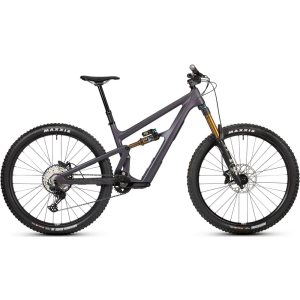
Ibis Ripmo V3 Frame




| Where To Buy | |||
|---|---|---|---|

|
Free shipping on orders over $50 (continental U.S. only).
International shipping available. Some exclusions apply. |
Free shipping on orders over $50 (continental U.S. only).
International shipping available. Some exclusions apply. $3,799.00
|
|
|
|||
|
|||

|
|||
|
|||

|
Free U.S. shipping on everything.
International shipping available. Some exclusions apply. |
||

|
Free shipping on orders over $50 (contiguous U.S. only).
International shipping available. Some exclusions apply. |
||
1 member reviews
Chainstay Protection
Storage Compartment
Marked Hardware
Free Bushings
Ibis Support
Little Harder To Work On Upper Link
Frame Bag Can Smell
By now, many of you have already read each and every review available online from the major media sites. My goal with this is to inform you of what the Ibis Ripmo V3 is like to live with on a day-to-day basis and beyond. What is the V3 like to work on, what quirks have I found, or what recommendations do I have for others? In this article, I will be able to share past experiences with the Ibis Ripmo V2 and what one can expect when contacting Ibis directly. You will not find information on individual components. I am more focused on the frame kit since there are reviews on all components for you to make an informed decision on your own build specs.
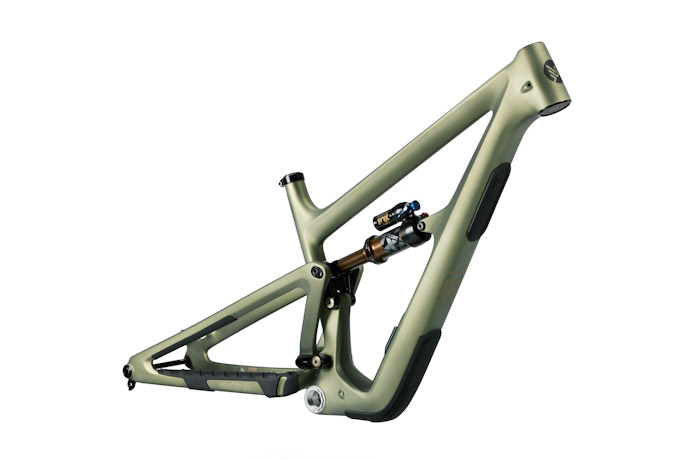
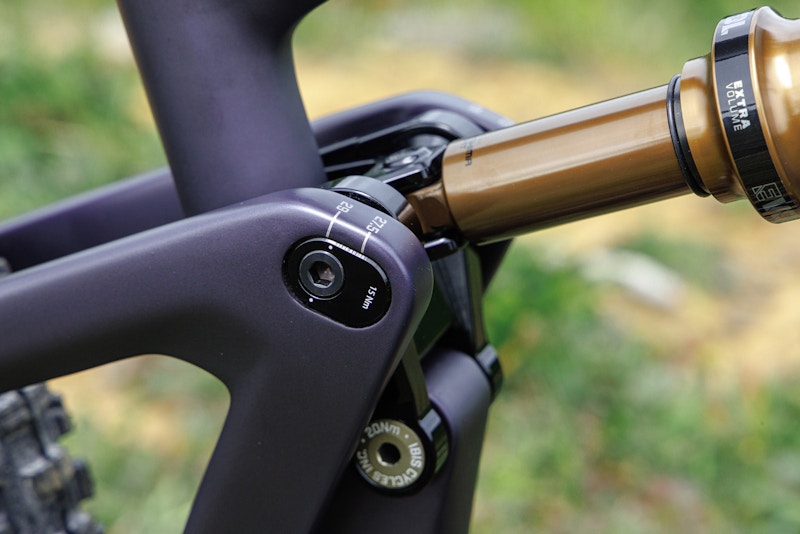
To start things off, it is hard to deny that the V3 is a stunner to look at. Ibis did a wonderful job of giving this iteration a much better curb appeal. They did not stop at the looks from twenty feet either. They seem to have given great detail all the way down to the hardware. The frame hardware has the torque setting laser etched either on the hardware itself or beside of them. I am a big fan of this since I am someone who works on their own bike, I can quickly and confidently torque the hardware down correctly without the need to look them up online each time. Hardware is primarily composed of aluminum, rear shock bolt is titanium, and a couple steel bolts. The aluminum hardware seems sturdy and should stand up to the test of time like it did on my V2.

While talking about the frame hardware, it would be improper not to discuss how it is to work on and maintain the pivots. Most of you know that Ibis uses bushings in their designs. The V3 uses bushings only in the lower linkage vs the lower and upper links of the V2. Ibis must have changed some spefications in order to make these new lower bushings very smooth. There is no need to do any additional sizing to them on this model. The seal design around this lower link and its bushings is impressive. The lower link uses o-rings much like the V2 did to keep out contaminates extremely effectively. After six months, the bushing area has remained totally clean and smooth, and all the bearings are still smooth.

The new upper link utilizes six ball bearings to connect the rest of the rear triangle to the front. Ibis does not spec replacement bearings for this link (or previous versions), but instead would like you to purchase a whole new link for $75 with bearings pre-installed. I do feel as this is a bit wasteful to replace a whole otherwise good link. It is a decent price and makes it easier for a home mechanic to repair without a bearing extractor/press though. The hardware is a little trickier to perform bolt checks on the fly. There is a certain order of operations when assembling or disassembling the upper linkage and yoke. This design leads me to want to use a paint marker on the hardware when assembling for a quick on trail visual verification that everything is still tight. Rest assured, I have yet to have any hardware come loose. I found this to be the same on the V2 during the near four years of riding.

Some of the other miscellaneous details such as the storage compartment have proven useful for me with the nice Cotopaxi bags. The lid has a seal around the edges giving it a quiet and relatively water-resistant fit. I am not sure how a small amount of moisture makes it around the compartment seal or elsewhere, but if you do not remove the frame storage bags, they will develop a very bad odor if the bike gets very wet. I have not seen a pool or even drops of water in the compartment, just seems humid in there.

I am thankful that the chainstay protection has improved to the point of me having no desire to look for anything to quiet chainslap down more. The chainstay protection utilizes a smaller entry/exit hole for the derailleur cable housing to go through creating a bit of a weather barrier. If any of you owned a V2, when it was time to replace the derailleur housing it could be very difficult to get out due to all the dirt and grime that would get into the tube-in-tube routing in this area. Speaking of tube-in-tube internal routing, the V3’s routing works well and is large enough in diameter to fit larger brake hoses like you will find on Hayes brakes.

Ibis specs each build with a Fox Factory Float X despite of what build you choose to purchase. They said to spec the rear shock with a .4 volume spacer pre-installed. I found mine actually had a total .5 installed. Ibis shares their Traction Tune philosophy openly in their marketing material which is on the lighter side of compression and rebound tunes. More information on their Traction Tune philosophy can be found HERE. In general, I feel like this works out well, but I do feel like I could benefit from a little bit more high-speed compression out of the Float X. My current set-up includes 185 PSI, .7 volume spacer, 9 clicks of rebound, and 7 clicks of low speed compression. This gives me approximately 27% sag at a rider weight of 178 pounds. I am still playing around with settings some depending on the terrain I am riding which is mainly East Tennessee and North Carolina.
The rear end feeling of the V3 feels stiffer laterally compared to the V2. I would on occasion get rub from the rear tire on the seat stays previously, but have not had that experience a single time on the V3. There is a small amount more of suspension bob when pedaling versus the V2, but not by much. The small amount of bob helps keep the rear tire tracking well on climbs making it easy to pedal up steeper technical trails while still giving the V3 an efficient platform. On the downhills, this tracks better than the V2. The rear end feels like it gets out of the way better on repeated square edge hits when at speed. As previously mentioned, I do find myself using most of the travel frequently even with the added volume spacer and 27% sag. This does not result in any harsh bottom-outs. The rear end actually feels like it ramps up nicely. I plan on comparing the stock Float X with an EXT Storia to verify my thoughts on how the factory spec’d high speed compression setting feels. In the future I plan on getting a hold of a 27.5 rear wheel to test mullet as I do find myself buzzing my rear end occasionally on the larger wheel.

Anytime I have contacted Ibis whether for general questions or warranty they have been quick to respond and detailed with their answers. As someone who does not have an Ibis dealer very close, they do allow you to contact and work directly with them on warranties. I find this as a huge plus and not something all the big guys offer. I solely work on my own bike from general maintenance to full fork rebuilds and prefer to handle things in this fashion. The bushing warranty is awesome, again Ibis will ship them straight to you if you prefer rather than sending them to a dealer for install.
I hope that this different take on a ‘review’ helps some of you in your next bike purchase. Many reviews do not really give the whole picture and hopefully this helps fill some gaps. As the costs continue to increase as a whole in our sport, I thought it would be helpful to give a little better idea on what it was actually like to own the bike. I look forward to any questions that may come out of this. If you are interested in what my current full spec is, you can check it out on VitalMTB HERE.

Specifications
• All specifications listed are with 160mm travel fork with 575mm axle-to-crown length; SM/MD values given for 27.5" rear wheel; XM-XL values given for 29" rear wheel
• Saddle heights for effective seat tube angle: 650mm (SM), 700mm (MD), 745mm (XM), 790mm (LG), 830mm (XL)
• Bottom bracket drop, for 29" rear wheel: 36mm (SM), 33mm (MD), 30mm (XM), 27mm (LG), 24mm (XL)
• SM/MD chainstay lengths in 29" configuration: 435mm
• XM-XL chainstay lengths in MX configuration: 433mm (XM), 435mm (LG), 437mm (XL)
• dw-link rear suspension design
• Compatible with 29" wheels front/rear or mixed ("Mullet") wheels (29" front, 27.5" rear) via flip chip adjustment
• STOW (snacks, tools, or whatever) internal frame storage in down tube; includes two Cotopaxi internal bags (one roll and one pouch)
• Internal cable routing with internal tunnels
• SRAM UDH (Universal Derailleur Hanger)
• Designed for 160mm travel forks
• 180mm post-mount rear brake tabs; 220mm max rear rotor
• Weight listed for size XM with FOX FLOAT X shock
Ibis Cycles Announces the All-New Ripmo and Ripley (2024 press release)
Ibis website
| Where To Buy | |||
|---|---|---|---|
|
|
Free shipping on orders over $50 (continental U.S. only).
International shipping available. Some exclusions apply. |
Free shipping on orders over $50 (continental U.S. only).
International shipping available. Some exclusions apply. $3,799.00
|
|
|
|
|||
|
|
|||
|
|
|||
|
|
|||
|
|
Free U.S. shipping on everything.
International shipping available. Some exclusions apply. |
||
|
|
Free shipping on orders over $50 (contiguous U.S. only).
International shipping available. Some exclusions apply. |
||




0 comments
Post a reply to: Living With The Ibis Ripmo V3