

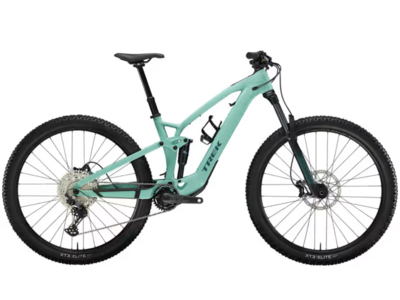
2025 Trek Rail+ 9.9 X0 AXS Gen 5 E-Bike


| Where To Buy | |||
|---|---|---|---|

|
$70 standard shipping on bikes (continental U.S. only).
|
$70 standard shipping on bikes (continental U.S. only).
$12,300.00
|
|
|
Rail+ 9.9 X0 AXS T-Type Gen 5
$12,300.00
|
||

|
Free shipping on orders over $50 (continental U.S. only).
International shipping available. Some exclusions apply. |
||

|
Free U.S. shipping on everything.
International shipping available. Some exclusions apply. |
||

|
Free shipping on orders over $69 (continental U.S. only).
International shipping available. Some exclusions apply. |
||

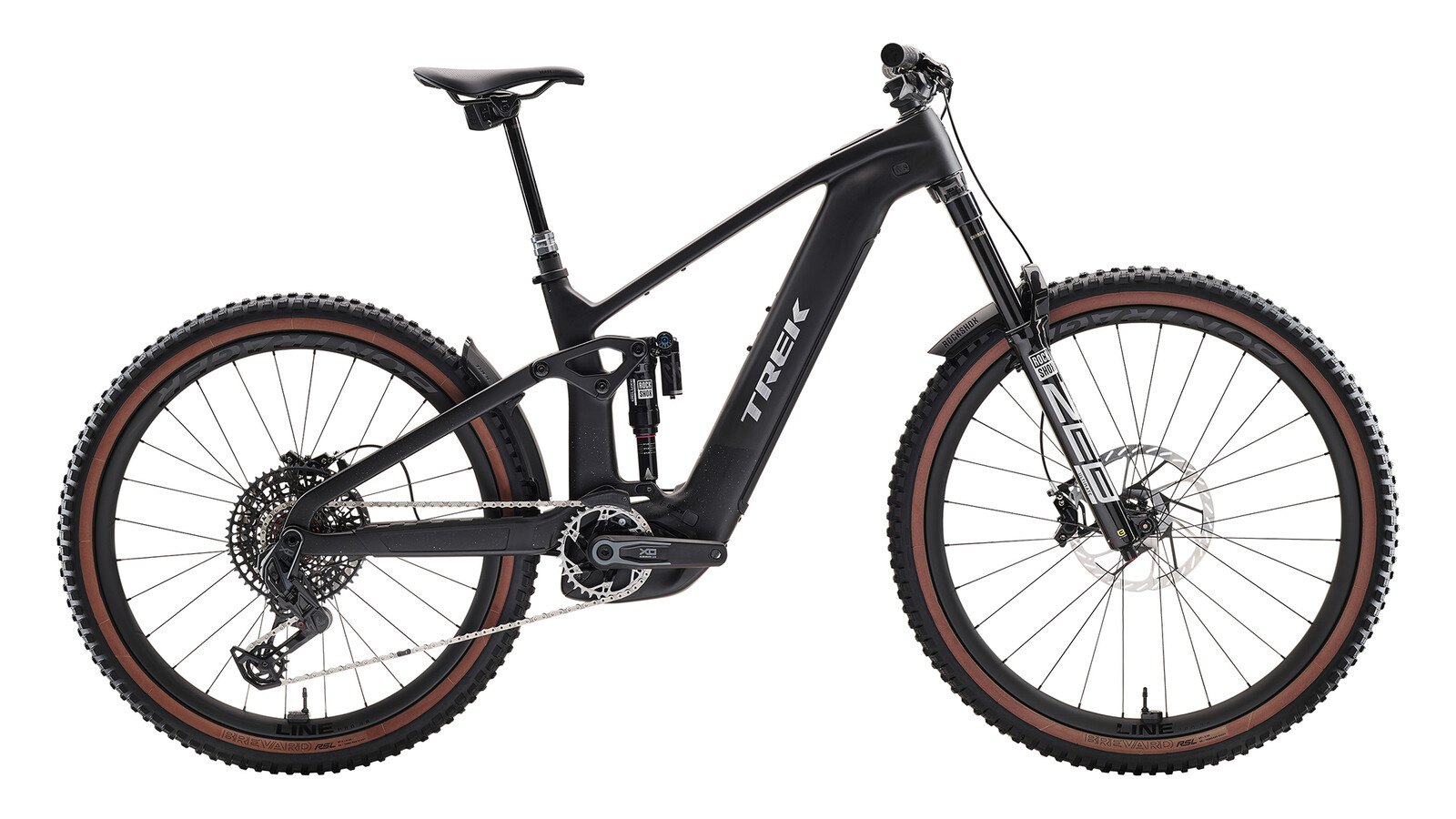
Trek's Gen5 Rail+ is their do-everything, long-range eMTB for riders who want to climb farther, descend harder, and explore deeper, free of any battery range anxiety. With updated geometry, a mullet wheel setup, an adjustable suspension leverage curve, and Bosch's latest 100Nm motor feeding off an 800Wh battery, the Rail+ seems destined for success on paper. But do these evolutions keep pace in the quickly advancing eMTB world? Has performance been compromised in any way to tick all these technical boxes? We spent the past few months understanding where the Rail+ delivers the best experience and how its many features add to or detract from daily riding.
Rail+ 9.9 Highlights
- OCLV Mountain Carbon frame
- Mixed wheels
- 160mm of travel front and rear
- 64.5º head angle
- Adjustable geometry
- Mino link leverage rate flip chip
- 12x148mm rear hub spacing
- Internal guided cable routing
- Bosch Performance CX Motor with 100 Nm of torque
- 800Wh integrated/removable battery
- Wireless mode controller
- New RIB 2.0 battery retention system
- Sizes: S-XL
- Measured weight (size M, no pedals): 54 pounds (24.4 kg)
- MSRP (as tested, 9.9 X0 AXS Build): $12,299.99 USD
Strengths | Weaknesses |
|
|
Rail+ Gen5 Overview
Several meaningful updates bring the fifth-generation Rail+ closer in line with modern eMTB expectations. A bump in rear travel from 150mm to 160mm, combined with a mullet setup, aims to improve all-around capability and maneuverability. Fork travel remains 160mm, but max-fork-travel has increased from 170 to 180mm. The head tube has also returned to a standard 1.5" lower bearing instead of the oversized 1.8" found on the Gen4 model, and gone is the Knock Block.


Power and range take a significant step forward thanks to a new 800Wh integrated battery (Gen4 used a 750Wh battery) tied to Bosch's Performance Line CX drive unit with 100Nm of torque (up from 85Nm).
The frame uses Trek's Optimum Compaction Low Void Carbon (OCLV), Trek's patented carbon fiber used for bike frames and components. The carbon fiber is layered in carefully calculated patterns, then compacted using heat and pressure to create the ideal carbon-to-resin ratio.
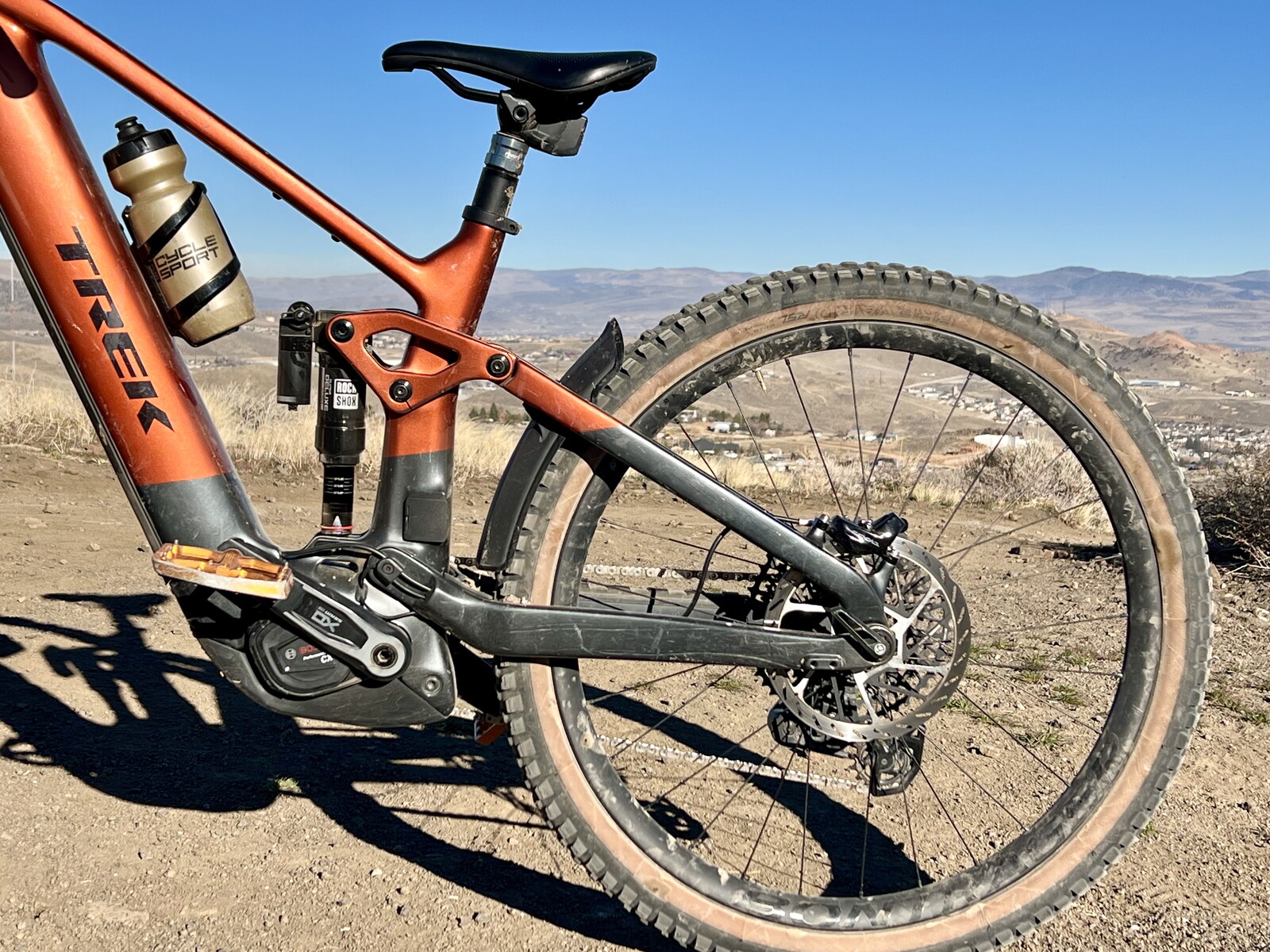

The removable 800Wh battery is accessed from the bottom of the downtube, not the side like before. It's secured using Trek's updated RIB 2.0 retention system, designed to eliminate rattle, and is now released with a 6mm Allen instead of a designated key. There is also an optional tension bolt that can be installed for "extra aggressive riding" to ensure the battery is silent and secure.
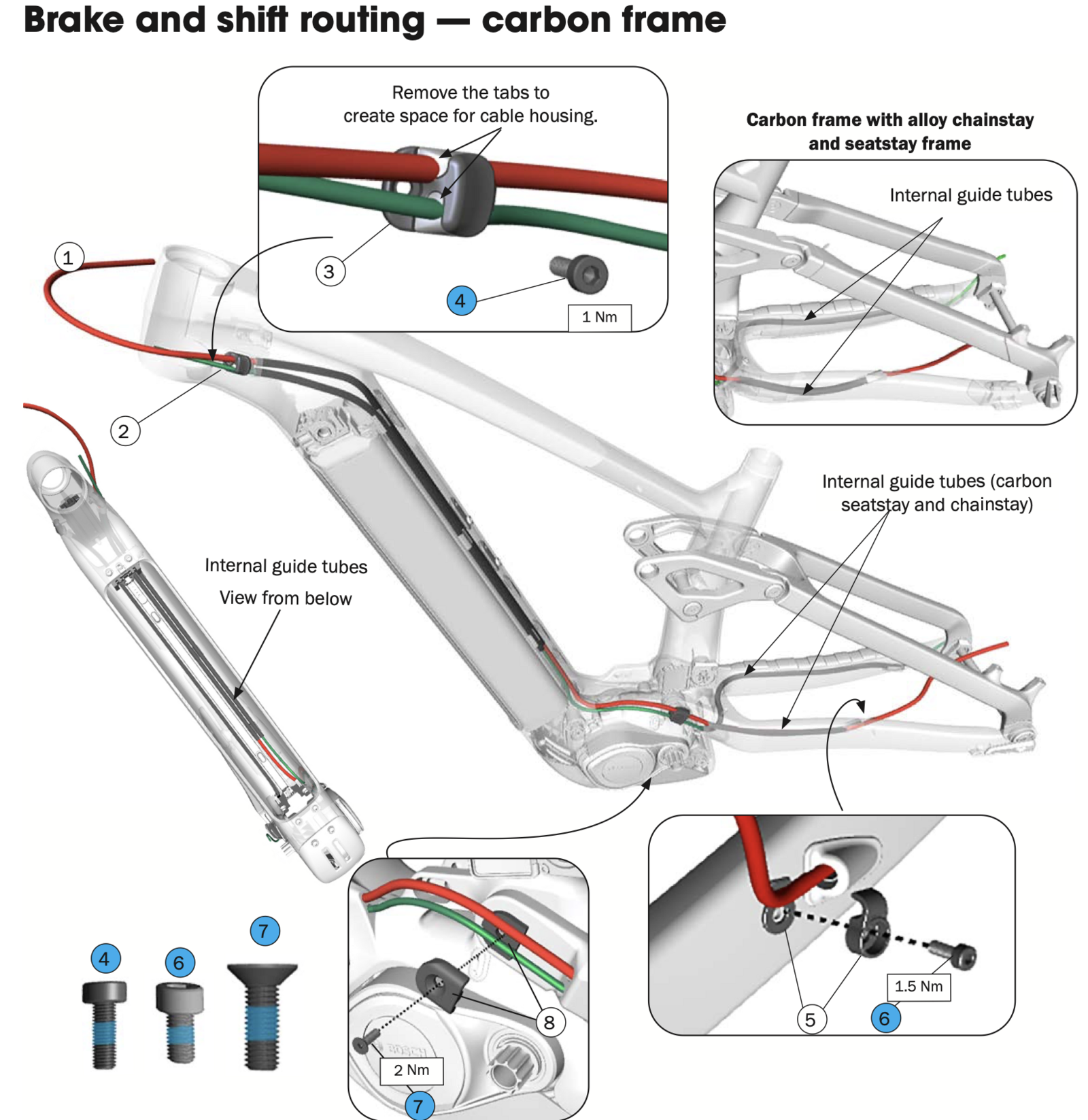
Cables are routed internally in tubes—before cables were simply held in place with clips above the battery. Additional frame updates include a storage mount on the underside of the top tube, a more noise-reducing chainstay guard, and an integrated rear fender.
Geometry
The Rail+'s static geometry is not a drastic change from the prior generation. The neutral head tube angle is 64.5° and is now adjustable by +/- degree with optional angle-adjust cups (sold separately). Before, the head angle was 64.9° and was only adjustable by changing the Mino link flip chip position, which also affects bottom bracket height. The chainstay length is consistent at 448mm, and seat tube insertion has increased across each size.

Motor and Battery Details
The Rail+ is powered by Bosch's latest Performance Line CX drive unit, now running the newest firmware update that increases torque output from 85Nm to 100Nm—paired with a peak power capability of 750 watts and up to 400% rider-input amplification.

Riders can toggle between four assistance modes via the handlebar-mounted Mini Remote—Eco, Tour+, eMTB, and Turbo—as well as walk mode. Each mode is customizable through Bosch's Flow app, allowing adjustments to the torque curve, responsiveness, and maximum assistance level.


Suspension Design
Along with the 10mm bump in rear wheel travel, the leverage rate is now adjustable via a chip at the lower shock mount. The stock setting is less progressive at 19%, better suited for rougher trails and those seeking a plusher feel. By flipping the chips 180°, the leverage rate goes up to 24%, adding more ramp later in the stroke, ideal for running a coil shock. Anti-squat was also increased from the prior generation for better pedaling efficiency.


Build Kit Analysis
Trek offers three carbon frame builds for Rail+, ranging from $8,699.99 to $12,299.99. The 9.8 and 9.9 builds feature SRAM Transmission drivetrains, while Shimano XT/SLX handles shifting on the 9.7. Two alloy builds are also available, at $6,099.99 and $7,699.99.
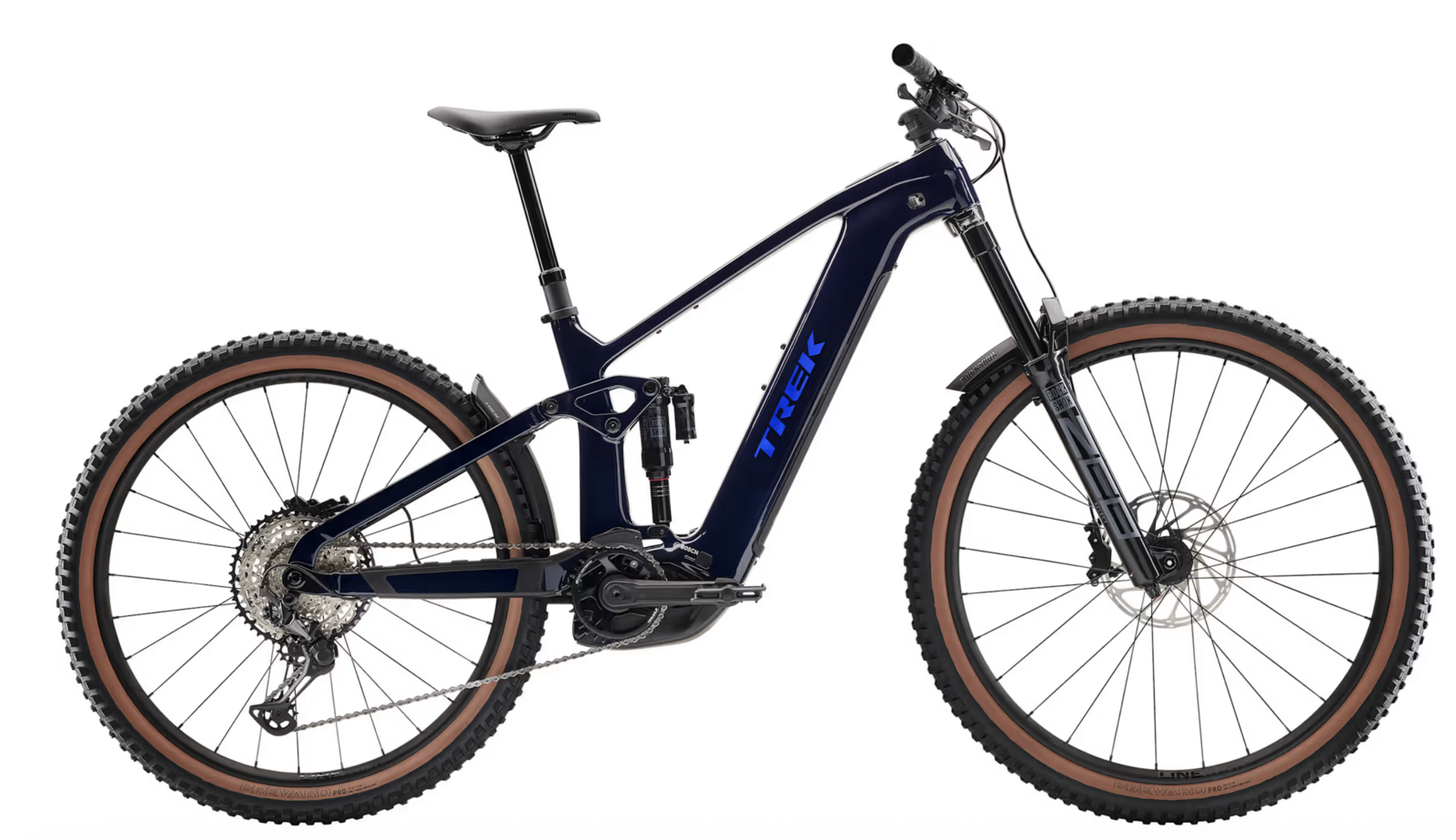


We tested the aspirational 9.9 build made up of the best parts from SRAM and RockShox and filled out with a host of Bontrager components. Our test bike came with SRAM's Code brakes, which were prone to frequent fading and squealing on descents. Thankfully, Trek's spec sheet on the website has since changed to include Maven Silver brakes, a worthy upgrade for the Rail+, especially considering the 9.9’s premium price point.

Ergonomics played a role in shaping our early impressions. The bike arrived with minimal spacers under the stem and a low, 27.5mm rise Bontrager bar that didn't pair well with the shorter stack and head tube length. This forced our weight low and forward, leaving a "ping-pong" sensation on steep, technical descents, reducing confidence. With the steerer tube cut flush to the top of the stem from the factory, the only feasible path to increasing cockpit height would be a higher-rise handlebar. Increasing the fork pressure helped keep the front end higher in its travel, making the bike feel less nose-heavy and slightly more manageable.
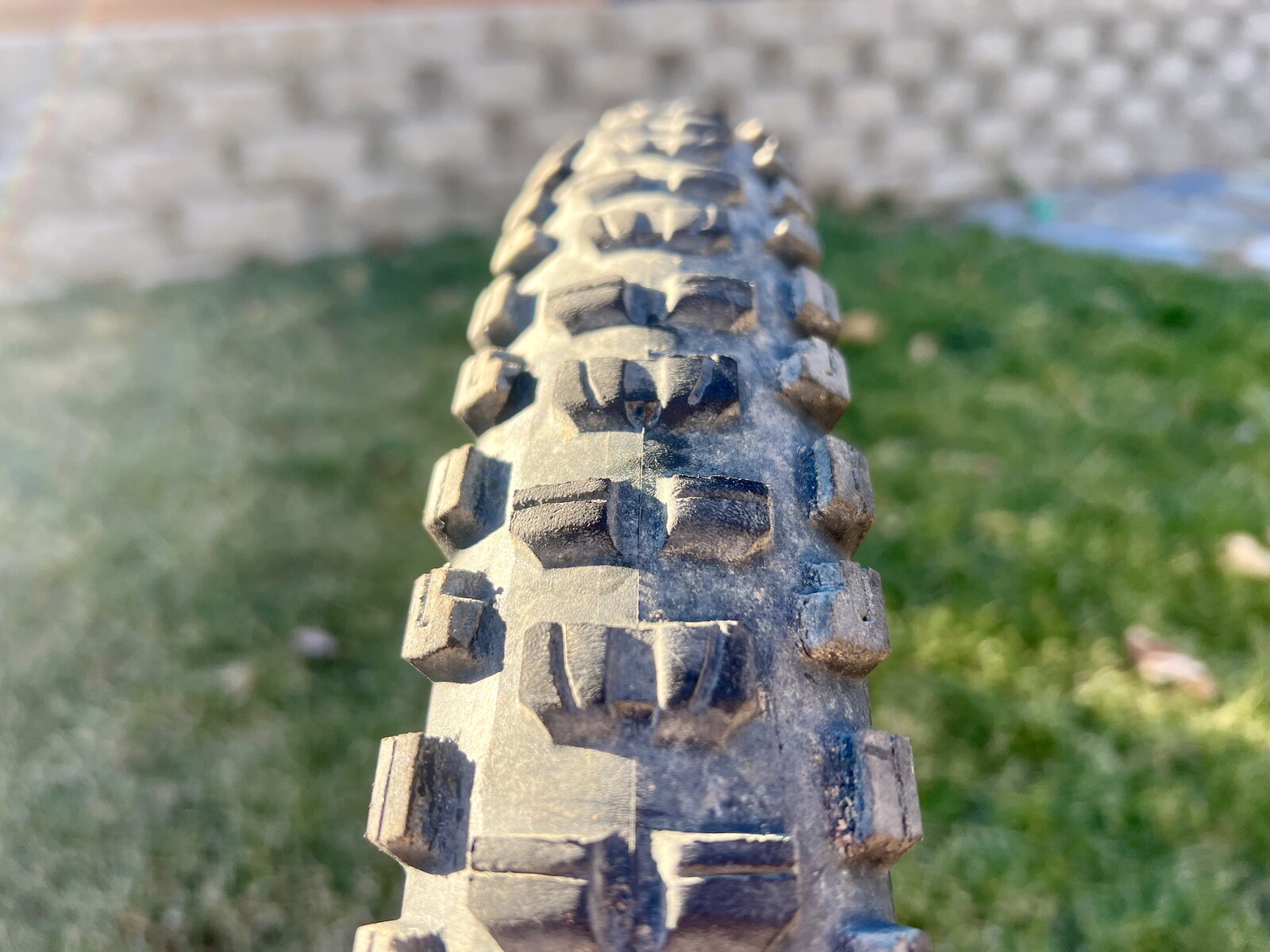
The weakest link of the 9.9 build was the Bontrager Brevard RSL tires that proved unpredictable in very dry and wet conditions. They held grip, until, well, they didn't. In loose over hard conditions, the front tire would occasionally break loose unexpectedly, while in wet conditions, both tires refrained from shedding mud, clogging up quickly. We also sliced the tread of the rear tire on a local loop, calling into question the Brevard's durability. Bontrager's wheels were problem-free.
For those looking for a solid build kit without the $12,000+ price tag, the 9.7 offers capable componentry for nearly $4,000 less. Featuring capable RockShox Select suspension, SRAM DB8 brakes, and a Shimano XT drivetrain, its purpose-driven kit that should please most riders. Of course, going with an alloy frame build is the most cost-effective way to get on a Rail+.
Railing, Flailing, and the In-between: Long-Term Takeaways
Before we even cracked open Trek's press materials, the Rail+ announced itself as a bike leaning more toward "big trail mileage machine" than "full-blown park-rat shuttle destroyer." Its thick downtube leaves no mystery about its purpose. The Rail+ isn't trying to masquerade as a featherweight play bike—it owns its identity from first glance.
Over several months, we put the Rail+ through a variety of terrain: chunky high-desert tech, fast and blown-out singletrack, long fire road climbs, and a few bike park laps— just to check if it had a dark side. The first ride impressions were straightforward: planted and confidence-inspiring.
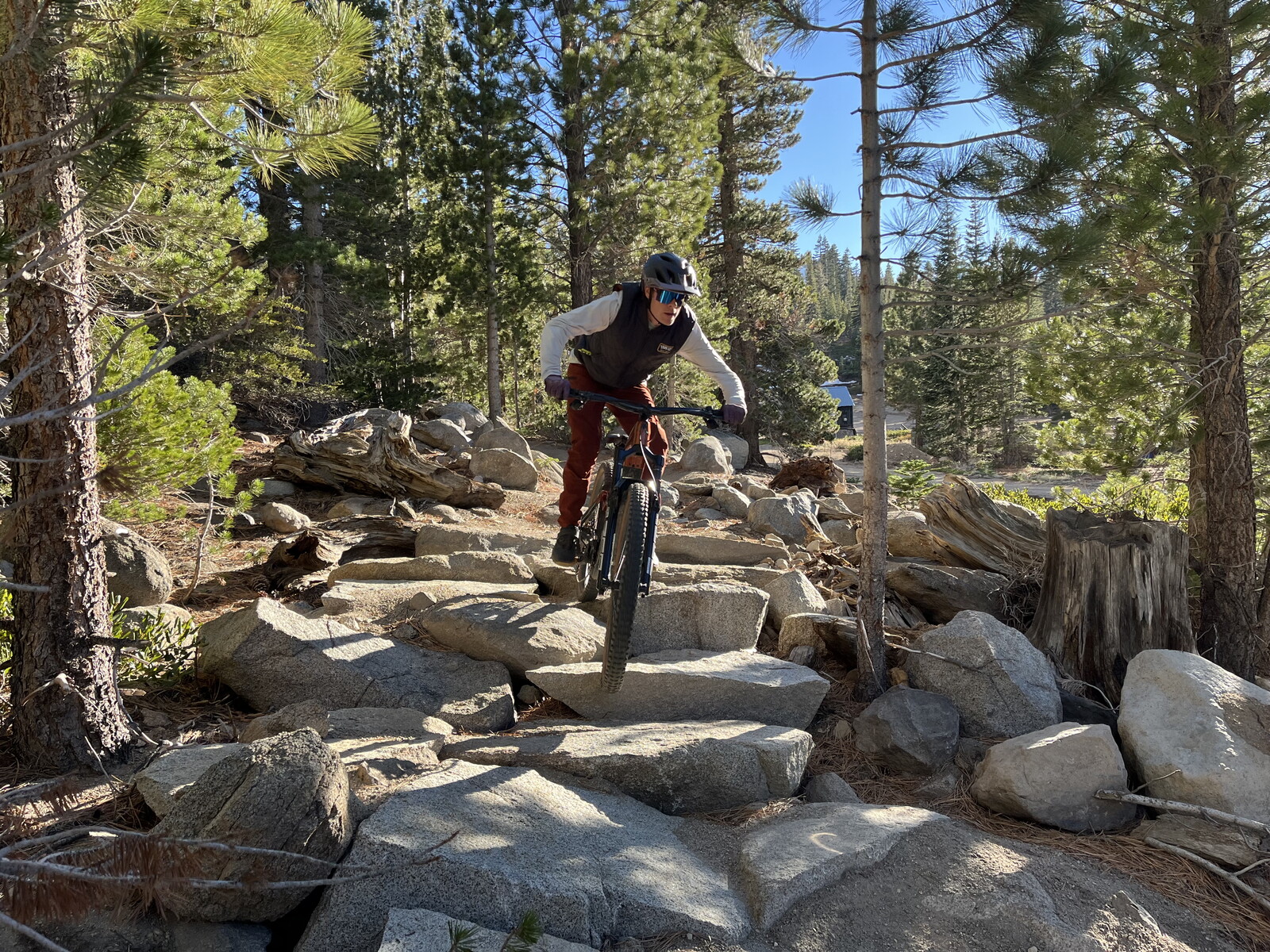
The Rail+ is clearly a mileage-focused adventure platform rather than a bike that rewards dynamic input or creative line choices. It's composed and controlled rather than lively or eager. Point it downhill, and the weight works in its favor, giving it line-holding authority. You can really bulldoze through rough terrain; however, the compromise is less maneuverability and a dampened willingness to play.
The stock "low" geometry setting was maintained for most of the test. Despite the lower bottom bracket resulting in occasional pedal strikes on rocky climbs, the tradeoff was improved stability and handling that better complemented its weight and suspension kinematics. A shorter crank arm, such as 155mm, would be a welcome update to counter pedal strikes.

The bike's cornering abilities were enhanced by the mixed wheel setup. Going mullet was a good call over the previous generation. The 27.5″ rear wheel helps shorten the turning radius, and combined with the fairly short wheelbase, gives the bike a much-needed hint of agility. Drop it into a berm and the rear wheel tracks predictably and with less effort than expected for a bike tipping the scales at 54 pounds.
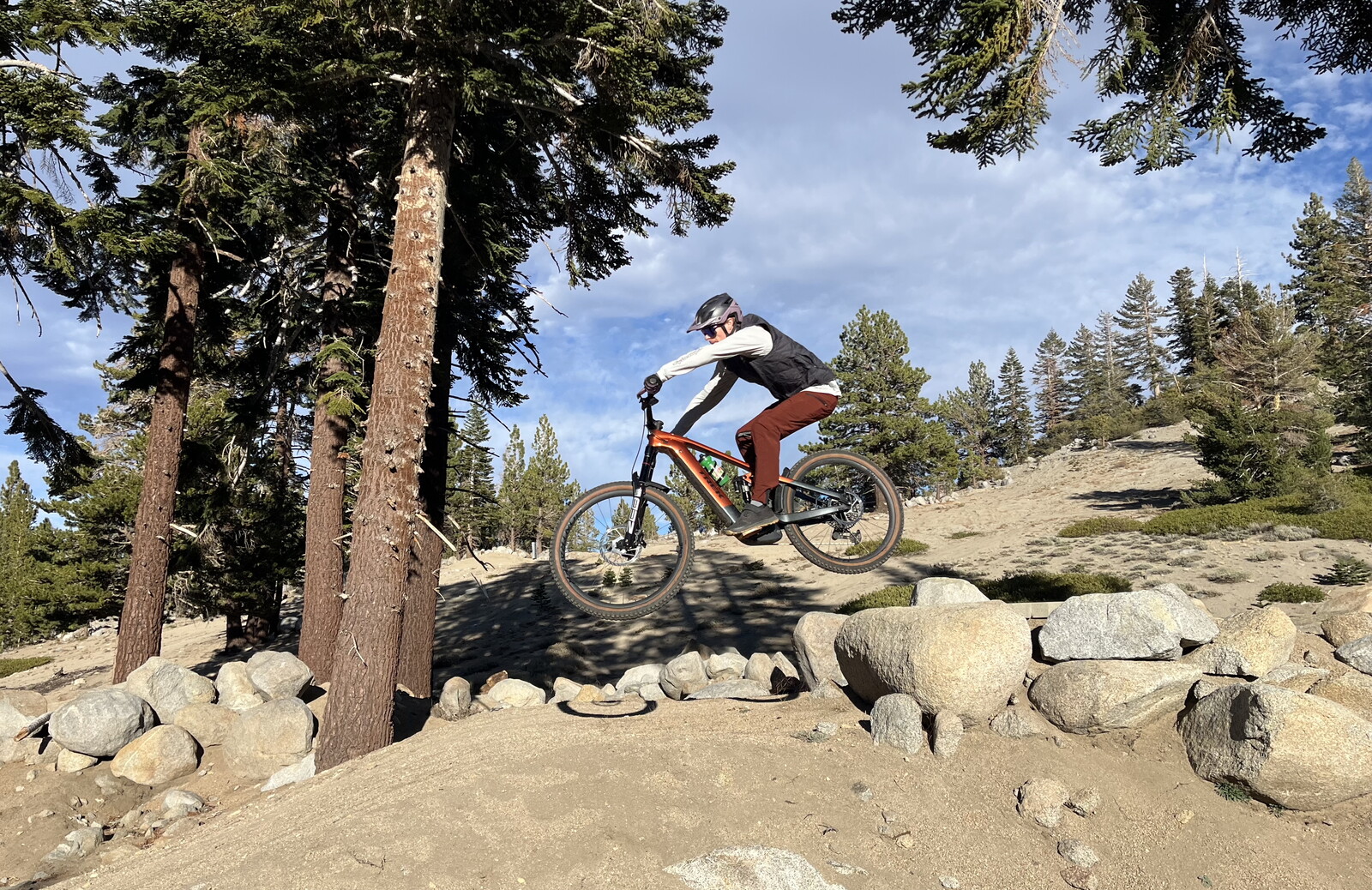
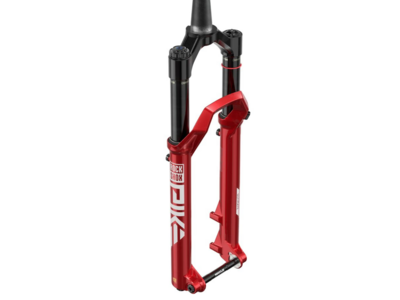
Surprisingly, the Rail+ handles air time with composure. Jumping isn't its forte, but it's predictable. The RockShox Ultimate-tier suspension also helped smooth out landings. Whether you find your ride taking you into rough trails or jumps, the ZEB Ultimate and Super Deluxe Ultimate perform a formidable task of taming the trail underneath the mass of the Rail+, resulting in impressive control and mid-stroke support across all trail conditions.
The ability to select the suspension curve between less and more progressive is a nice touch, though most Rail+ riders will likely stay in the less progressive position for bump-soothing performance. The more progressive setting works with a coil shock, but considering the intended purpose of the Rail+, the air shock should satisfy the majority. Nonetheless, switching between the two settings did not cause a significant difference in ride quality.
Climbing
The Rail+ strikes an enjoyable balance between its descending capability and climbing attitude, especially considering its presence. On steep, awkward, or loose terrain, the bike feels composed rather than chaotic, and climbing becomes less of a chore and more of a seated traction exercise with the Bosch drive unit doing the heavy lifting.
The updated suspension kinematics, with increased anti-squat over the previous generation, help the bike ride higher in its travel when pedaling, making power transfer feel crisp without the sensation of sinking into the rear travel under load. The Bosch CX motor deserves praise, as its delivery is smooth and intuitive. Combined with the active RockShox suspension, the system generates impressive traction even on blown-out, loose terrain and sandy high-desert climbs.
eMTB Performance
We've stated in numerous reviews how Bosch's Performance Line CX motor is among the current frontrunners of available eMTB platforms. Its strong ability to deliver natural (yes, it's cliché) assistance while maintaining traction is hard to beat when climbs get tricky. Bosh's software update that increased motor torque and assistance is, honestly, excessive in many trail-climbing scenarios. We preferred to detune the motor to 85Nm and the assist and dynamic settings to reduce overrun and superfluous wheelspin.

The Rail+'s 800Wh battery is like the Energizer bunny; it keeps going and going. Granted, extended use of Bosch's Turbo mode will hinder its capacity, but a local loop of 5,000 feet of climbing across 20 miles left 25-30% battery in the tank when relying predominantly on the Tour+ and eMTB modes.
Long Term Durability
While the Bosch drive unit is relatively quiet, the Rail+ exhibits a near-constant procession of creaks, squeaks, and thuds. The battery retention device, a metal engagement mechanism inside the frame where the battery rests, is operated by a 6mm hex on the left side of the frame. This hex mechanism, made of metal, rests somewhat loosely within the frame and exhibits an audible rattle. Upon removal and reinstallation of the battery for photos, we inadvertently broke the retention mechanism by apparently placing too much torque on the hex, causing an unfriendly snap to occur inside the frame. The audible "uh oh" moment was followed quickly by the familiar sound of a piece of metal pinging through the frame. A removable battery system should be intuitive and foolproof. Unfortunately, that wasn't the experience.
Additionally, the rubber material on the bottom of the battery creaks against the carbon of the frame during riding. It's not catastrophic, but for a $12K flagship build, the not-by-request soundtrack stands out, especially compared to some stealth-quiet competitors that we have tested.

What's The Bottom Line?
At over twelve grand, the Rail+ 9.9 sits in ultra-premium territory. The battery size is great for all-day adventures, the suspension is supple and active, and the Bosch motor performance is class-leading — but its sluggish weight and lack of refinement in the component spec and battery retention make the price hard to swallow.
The Gen5 isn’t a reinvention of the Rail+ platform so much as a host of valuable improvements from the prior Gen, with added geometry and suspension adjustability for those who like to tinker. Taking advantage of those improvements doesn’t require spending on the most premium builds. The Rail+ 9.7 build, at $8,699, may be where the sweeter spot lies. If electronic shifting isn’t a necessity, that model is worth a look, as its RockShox suspension package is still formidable, with overall spec not far off our test rig.
While the Rail+ Gen 5 lacks the poppy, playful "forget it's an e-bike" ride that some riders desire, it is a powerful, planted, long-range machine with excellent climbing capability and a prowess for picking a line and sticking to it while descending. If an eMTB that takes you deep into backcountry trails, prioritizes outright stability, and relieves range anxiety is top of your checklist, the Rail+ will absolutely deliver.
View key specs, compare e-bikes, and review the newest Trek Rail+ models in the Vital MTB Product section.
About The Reviewer
Rick Reed - Age: 42 // Years Riding MTB: Who’s counting? // Height: 5' 9” (1.75m) // Weight: 142 pounds (64.4kg)
Rick "E" Reed is a seasoned bike industry pro who now spends his days developing Reno Tahoe’s community-driven bike park, Sky Tavern. When he’s not busy making trail experiences better, he puts his product testing and gear knowledge to work as a regular contributor to Vital. Rick calls Reno, Nevada home, where he lives with his terror dog, Zuul

Specifications
• Geometry adjustable via two-position Mino Link flip chip in seatstay/rocker link pivot
• Geometry adjustable via optional angle-adjust headset cups, for +1° and -1° head tube angle adjustments
• All specifications listed are with 160mm travel fork with 43mm offset
Option: Bosch PowerMore range extender, 250 Wh
Drop: 100mm (SM), 170mm (MD-XL)
• Removable Integrated Battery (RIB) 2.0 system
• SM has 27.5" wheels; MD-XL have mixed ("Mullet") wheels: 29" front, 27.5" rear
• Geometry adjustable via two-position Mino Link flip chip in seatstay/rocker link pivot
• Geometry adjustable via optional angle-adjust headset cups, for +1° and -1° head tube angle adjustments
• Control Freak guided internal cable routing
• SRAM UDH (Universal Derailleur Hanger)
• Power settings customizable, plus all-in-one navigation and activity tracking, via Bosch eBike Flow Mobile App
• Weight given for size MD set up tubeless
• Includes rear mini fender/mudguard
• Includes Bosch battery charger
• Includes SRAM AXS Powerpack battery charger
Rear suspension leverage rate adjustable via flip chip at lower shock mount:
• Less progressive setting intended for a plusher feel perfect for rugged trails with square-edge bumps
• More progressive setting intended for hitting big features without bottom-out, or to run a coil shock
Trek Introduces the Rail Gen 5 | Full Power eMTB (press release)
| Where To Buy | |||
|---|---|---|---|
|
|
$70 standard shipping on bikes (continental U.S. only).
|
$70 standard shipping on bikes (continental U.S. only).
$12,300.00
|
|
|
|
Rail+ 9.9 X0 AXS T-Type Gen 5
$12,300.00
|
||
|
|
Free shipping on orders over $50 (continental U.S. only).
International shipping available. Some exclusions apply. |
||
|
|
Free U.S. shipping on everything.
International shipping available. Some exclusions apply. |
||
|
|
Free shipping on orders over $69 (continental U.S. only).
International shipping available. Some exclusions apply. |
||








6 comments
Post a reply to: 2025 Trek Rail+ 9.9 X0 AXS Long-Term Review