

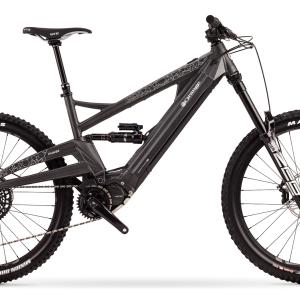
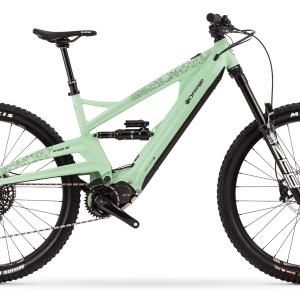
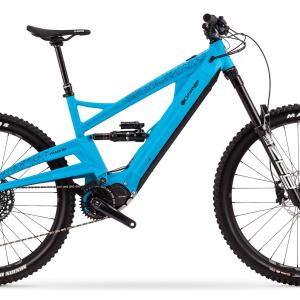
2027 Intense Tazer Pro E-Bike


| Where To Buy | |||
|---|---|---|---|

|
Free U.S. shipping on everything.
International shipping available. Some exclusions apply. |
||

|
Free shipping on orders over $69 (continental U.S. only).
International shipping available. Some exclusions apply. |
||

|
Free shipping on orders over $50 (continental U.S. only).
International shipping available. Some exclusions apply. |
||

|
Free shipping on orders over $50 (contiguous U.S. only).
International shipping available. Some exclusions apply. |
||
Before I get into this review, I have to admit something: I had become one of those salty, jaded, slightly over-it gear reviewers. A little too old, a little too slow, and haunted by the feeling that everything had settled into a certain flavor of sameness. The thing is, that sameness was good. You don't have to wander far into the Vital forums to find me babbling about the convergence of bike performance: it's all kind of the same now, and no matter what you pick, you are going to have a fine time out on the trail.
The Intense Tazer is the first bike in many years to make me throw all that jadedness out the window. I don't mean to lead with the conclusion, but it's the first bike I've thrown a leg over this decade that made me faster, more consistent, and, most importantly, had me having more fun and wanting more. That said, there is a catch, and it has to do with the motor package and the overall direction of e-bikes, the sport, and the regulatory backdrop.
The funny part is that on paper, the Tazer reeks of the very sameness that’s had me disgruntled. Reading the spec sheet, there is nothing special about the bike: 150mm of rear travel, 160mm fork, and a Bosch motor that is nothing new. Yet on the trail, the bike was nothing like the sameness I’ve been droning on about. I spent the summer on the Tazer figuring out why, and whether a motor that was plenty two years ago is still enough now that the power war is in full swing.
Highlights
- 150mm of rear wheel travel // 160mm fork
- Full carbon frame
- Full 29-inch or mixed wheels
- DCR suspension design
- Bosch CX motor
- 600 or 800 Wh battery
- 64.5° head tube angle
- 445mm chainstay length
- Sizes: S, M, L, XL
- Weight (size L, Pro build, no pedals): 49.9 lb (22.6 kg)
- MSRP (USD): Foundation Build - $6,999 // Pro Build (tested) - $8,799 // Legacy Build - $9,999 // Frameset - $5,999
Strengths | Weaknesses |
|
|

The Tazer sits squarely in the middle of the trail e-bike category: 150mm of rear travel built around a 160mm fork, with the kind of geometry you'd expect from a brand with Intense's downhill pedigree.
Power comes from Bosch's fifth-generation Performance Line CX drive unit. It ships at 85 Nm and 600 watts, and a free update through the Bosch Flow app raises that to 120 Nm and 750 watts. Buyers can choose a 600 or 800 Wh battery. I tested the latter as that’s what comes stock in the Pro build. It also comes with Bosch’s latest, colored Kiox 400c display.
The Tazer comes as a full 29er or a mullet, and that choice is made up front. Swapping wheel sizes later means an entirely different rear end. My bike was setup mullet.
Suspension Design
The rear suspension runs through Intense's DCR design: a dual-rotating-link layout. The leverage ratio is progressive, starting just under 3.4:1 and finishing around 2.4:1. The axle path is also much more rearward than on the previous Tazer, though it's still a long way from what I'd call a high pivot.


Sizing
I’m 6' 2" (188 cm) and often fall between sizes. While I feel most comfortable on a reach of around 500mm, I usually stick with shorter 475 to 485mm reaches, because I’ve found those front-of-bike measurements complement most rear-of-bike measurements best. I’m a nerd, and I firmly believe longer reaches need to be paired with longer chainstays to put the rider in the “center” of the bike. Otherwise, long reach plus short chainstays equals arm pump and upper body fatigue as I “fight” for front wheel grip.
E-bikes change the math a bit. The heavy battery in the downtube gives the front wheel more grip, so I can get away with a longer reach even if the rear center isn’t proportionally as long as I’d like.
With the Intense, I ended up sticking with the large at 480mm because I still felt the 445mm chainstays were too short for me to size up, even with the battery helping out. Worth noting: Intense does not vary rear end length with reach. I’m sure the XL rides great, but I’m very thankful I went with the L, because it turned out to be incredibly balanced. I won’t claim to have a magic formula that tells you what size to get based on rear center, but in the case of the Intense, the large was a great fit for me and I never wished for anything different.
The bike also has phenomenal standover, which let riders who normally ride a medium easily hop on and try it out without feeling like it was way too big. I’m not saying those of you with a shorter partner should justify this bike with, “hey it’s a great financial decision, we can share,” but you probably could.
Geometry
You won’t find much here that’s out of the ordinary for 2026. For the bike’s intended use, I never found it doing anything that had me passing notes to the team at Intense with suggested changes. The only thing I’d like to see on the geometry front, and this applies to most bikes, is reach adjustment via the headset and rear center adjustment via swappable modular dropouts offering roughly +/- 20mm. That said, this is a suggestion for the tinkerers. On the trail, I had literally zero notes on what I’d change. The bike handled phenomenally well.

Build Kit
Intense offers three complete builds from $7,000 to $10,000, and the 3D configurator on their website lets you configure the exact spec you want, which is something I expect to see more and more from non-mega-manufacturers. The frameset alone is $6,000, so given what comes on the $7,000 Foundation build, you'd be silly to go the frameset route.


On value, I'd call the Tazer good, but not crazy good. Intense isn't a budget brand, but the pricing isn't egregious either. We tested the Pro build that starts at $8,799, and includes a solid spec: SRAM's electronic GX Transmission drivetrain, SRAM Maven Silver brakes, DT Swiss HX 1700 wheels, a RockShox ZEB Ultimate A3 up front (editor’s note: the Pro build now features the B1 variant of a Zeb), and a RockShox Super Deluxe out back. I do have a few small gripes:
Dropper post. Given the seat tube height, most riders would appreciate at least 20mm more drop given the bike was spec’d with a 180mm dropper.
Tires. The Continental Kryptotals are good tires, and to be fair to Intense, they come in the Enduro casing, which is a step above a typical trail casing. At roughly 1,125 grams per tire in 29" x 2.4, they're reasonably substantial, falling somewhere between a Maxxis EXO+ and DoubleDown in terms of construction. That said, I firmly believe every trail-or-bigger e-bike should ship with full DH casings. This is a hill I will die on. The added weight and small hit to range are more than worth the improved damping, sidewall support, and puncture protection. Continental's Enduro casing is a step in the right direction, but for how and where I ride, it's still no substitute for a proper DH tire. Thus, I upgraded the rear to a Maxxis DH casing and ran an insert up front in the Conti, mostly because I'm tire-poor at the moment.
Fork. Our test bike came with the A3 Zeb instead of the B1, which is a bummer as I’m a firm believer that the B1 Zeb is one of the best performing single crowns on the market and happy to now see this build coming stock with it.
How I'd Spec It
If I were buying, and I very well might, I'd start with the $6,999 Foundation build, add the larger battery, upgrade the fork, and choose the longer dropper, which is a no-cost option. That means giving up electronic shifting, and I'm not convinced that's a loss. AXS doesn't integrate with the Bosch battery, and it has left me without shifting more than once.
Spec'd that way, and skipping the stock tires for the $90 credit since I'd run my own, the bike comes to $7,793. That would be an absolutely killer bike at a price that is roughly ~$850 (after I buy tires) less than my test bike.
On The Trail
The Tazer is my favorite e-bike, and maybe the most fun mountain bike I’ve ever ridden, full stop.
If I hadn’t read the spec sheet before riding it, I’d bet money it had more than 150mm of travel. It tracks rough, chunky terrain better than anything I’ve ridden short of a full downhill bike. Millimeter for millimeter, Intense has squeezed more performance out of its suspension than almost any trail or enduro bike I’ve tested. What’s extra cool is that, as good as it is at eating bumps, it’s still sprightly, easy to get airborne, and as responsive to rider input as any other 150mm bike. I’d be genuinely curious what an enduro (170mm+) version of the Tazer might feel like, but if you’re looking to push into more DH-worthy terrain, I wouldn’t shy away from this bike based on travel numbers alone the way I might with others.

The only time I was overwhelmed was on terrain built for proper downhill bikes, which is to say anything without a dual crown and a travel number starting with “2” is going to feel a bit outgunned there. I still had a great time, but I want to be honest that there are limits.
Getting into the nuances, the bike stiffens slightly under braking but stays pretty neutral overall. I noticed some kickback, but as a clipped-in rider it wasn’t something I thought much about. Noise was on the quiet side early in the test, especially for an e-bike. Some creaks crept in as testing went on, but I never once put an Allen key to the rear end for a cleaning and regrease, which I’m sure would quiet things down. It also rode a touch lower than other e-bikes I’ve tested, and I clipped pedals and cranks more often. I like low bikes, so I don’t count that as a negative, and shorter e-bike cranks are an inexpensive fix.
I also did one ride with the motor off (I may or may not have thought it was charging when it wasn’t), and it was impressively efficient, whether I was pedaling or pumping.

When it comes to handling, the bike’s balance is one of my favorite things about it. I always feel more confident on an e-bike, especially in corners, because the battery in the downtube means I don’t have to work as hard to weight the front end. The Tazer takes that to another level. I was carrying more speed through the trickiest corners and still felt completely in control, with the suspension keeping things ultra-composed. I’d put the Tazer on the stiffer side of the lateral stiffness scale, but between the extra weight of an e-bike and the compliance of the aluminum DT Swiss wheels, it never felt harsh or prone to deflection.
In the end, this bike left me shaking my head and wanting more, in a way I honestly haven’t felt in years (or ever?).
The Motor: Bosch in an Avinox World
There's a great Louis C.K. bit about flying on one of the first planes with Wi-Fi. Half an hour into the flight, the captain announces the Wi-Fi is down, and the passenger next to him declares it bulls**t. A technology he didn't know existed a few hours earlier had already reset his idea of normal.
That's roughly where I've landed with the Bosch CX. A few years ago I'd have had zero complaints. I'd likely have called it the best motor you could put in an e-bike. But it's 2026, and the new normal is Avinox’s latest M2 or M2S motor. I ran Bosch's performance upgrade for the extra torque and wattage, and the CX is still nowhere near as fast as even the first-generation Avinox, let alone the latest M2S. The real question is whether that matters.

Where does it fall short?
Most of the time, it doesn't. But mountain bikers build bikes for the edge cases, and people still love to put 35" tires on highway princess trucks for the 1% of the 1% of the time they think they might need it.
On technical climbs, depending on your weight, the CX does the job just fine. A handful of times I wanted a little more than Turbo offered, but I'm 200 pounds (90.7 kg), and those moments were rare. There are three situations, though, where I really wanted more power:
- Racing Avinox-equipped friends to the top. KOM hunting, Stravaduro, competing with buddies, I simply couldn't touch an Avinox (or Gobao-powered Aventon) bike, no matter how hard I pushed my own legs.
- Cramming maximum vertical into a short window. In fairness, the Bosch costs you roughly a minute per thousand feet of climbing, give or take, so it's not all that material IMO. But if you are racing an 11 am conference call and only have 38 minutes, it might (sorta) matter.
- Wanting class 3 speeds. Commuting, coffee runs, or chasing a downhill KOM on a trail where those bikes are allowed. Grabbing a pedal out of a corner and actually getting help from the motor feels great, especially since so many trails are right at that 20mph limit. I have one buddy who finds this very notable and feels the riding experience is much improved with Class 3 bikes. I can’t deny his feelings and wanted to mention this here. It is weird to hit the governor right where you need it most.
In all three cases, I wanted something that exists, just not on this bike. Does it come up often? No, and the rest of the Tazer more than makes up for it. I keep a Class 3 e-bike in my garage, and after taking delivery of the Intense, it seldom gets ridden unless I'm doing one of those three things. Otherwise, it's the Intense, every day, which is why the power war is so frustrating.

Software and UX
Bosch could also tighten up its user experience to keep pace with Avinox. A good auto mode would be welcomed, without paywalled app features (I didn't pay), plus an out-of-the-box Eco mode with a bit more punch. Avinox integrates its tech better across the whole package, from heart-rate-based assist that scales power to your effort to a flat-out better experience from software to hardware.
The Throttling Issue
One more thing I have to flag: on several occasions, while chasing a friend on a higher-output bike or climbing as fast as I could, the motor seemed to drop out of Turbo. It wasn't common, and for a while I wondered if I was imagining it, or if I was just sore about getting smoked by a stronger bike. I wasn't. The motor intermittently throttled back to a lower output.
We did reach out to Bosch about the issue, but without running a diagnostic report, which requires visiting a certified Bosch eBike dealer, they can’t with certainty identify the cause. Bosch has a great customer service track record, so if you buy a Tazer and have motor issues, a Bosch dealer will get you sorted.
That said, the issue we experienced aligns with what Bosch calls derating: when the motor gets too hot under extreme, sustained load, it gradually reduces assistance until the system temperature returns to normal to protect the electronics and motor components. Again, without diagnostics, we can't confirm or deny this was happening, but it sure sounds familiar. Also worth mentioning: if the motor was in fact derating, this isn't a serviceable issue, but rather an intentional design to protect the motor, so the resolution is simply letting the motor cool down.
The motor cut-out only happened in Turbo, it was a hotter-than-normal Teton summer, and it occurred during intense, high-input moments. I want to be fair to Intense and Bosch in noting just how rare this occurrence was. In that vein, other riders who rode the bike did not notice it, though they were both lighter and riding on cooler days.
Battery Range
Range tends to get lost in the power war conversation, so a quick reminder: you can't fight physics. The faster the mode, the faster you drain the battery. If you want the longest, most fun day possible, you'll be in one of the tamer modes, and so will your M2S friends. I didn't do any lab testing, but on the trail, the Bosch felt right on par with any other e-bike for output versus range.
The verdict On The Motor?
If you're not shopping for a mini dirt bike and can live with the trailhead guy telling you his bike is faster on paper, the Bosch CX is excellent, with a proven track record for reliability and serviceability. It's also one of the least rattly motors, which matters a LOT to me. I was very happy with it 95% of the time. But in that other 5%, I was losing…and I hate losing.
Things That Could Be Improved
You know what I’m going to say: I would have loved to see the Avinox M2 or M2S here. Beyond that, I’d like to see rear-end adjustability for the tinkerers out there. Otherwise, it’s one of the best bikes I’ve ridden, period.
Long-Term Durability
Besides some creaking, the bike held up great, and I see no red flags. I wrenched on it a silly-small amount. That said, it’s fairly well known that as good as SRAM’s Transmission drivetrains are, the extra torque and watts of an e-bike make everything wear faster. I did break a chain on one ride, which a quick link sorted out. No big deal, but the drivetrain didn’t have many miles on it when it happened. To be clear, this isn’t an Intense issue, it’s an industry issue, and one the rumored gearbox launch next year may solve. Until then, I’d like to see the e-bike world prioritize durability over gear count.
But I’m digressing. None of this is on Intense; it’s just the state of things.

What’s The Bottom Line?
Would I buy the Tazer? In a word, yes. Obviously yes.
Intense has done something very special with this bike, and it’s actually attainable for a lot of the e-bike market. Huge kudos to them, not just for how it performs, but for letting riders spec it how they want without paying an arm and a leg. Little things like getting tires you like (or a credit), a dropper that suits your inseam or the fork with the damper you prefer puts dollars back in your pocket, something Intense is doing as well as anyone.
I also handed it to my wife, who is firmly an intermediate rider. She’s decided it’s her favorite bike of all time, and at 125 pounds she found it almost too powerful. I point this out because you don’t need to be a bike nerd or a wannabe fast guy to have a great time on the Tazer, and the lighter you are, the less the power war matters.
Wild times for e-bikes. If history is any guide, the Chinese brands will keep pressing on the gas with little regard for regulation, especially while the rules stay as vague as they are worldwide. That said, if you want an e-bike that prizes descending performance and balance over the hottest motor on the market, the Tazer is very hard to beat.
Vital Rating: 4.6/5.0
Fun Factor: 5.0
Descending Performance: 5.0
Climbing Performance 4.0
Frame Details: 4.5
Value: 4.5
About The Tester
Jeff started racing bikes at 14, and at 41 he’s still fastening a number plate to his handlebars. After years working his way through gravity, cross-country, and eventually enduro ranks, he’s now what most would generously call washed up. He still rides an unreasonable amount and averages around 350,000 feet of human-powered climbing on a mountain bike each year. Along the way, he’s reviewed hundreds of outdoor products for media outlets and served as an internal product tester for some of the industry’s largest companies. Bred as a racer, Jeff still looks for the fastest line through a section rather than the most playful one, even if his definition of “fast” needs occasional recalibration. He lives in Victor, Idaho, on the quiet side of the Tetons.

Specifications
Rotors: SRAM HS2, 6-bolt, 200mm front and rear
Rear: DT Swiss 350, 12mm x 148mm (Boost), XD driver
Rear: Continental Kryptotal R, Enduro casing, 2.4"
Drop: 150mm (SM), 180mm (MD), 180mm (LG), 210mm (XL)
| Where To Buy | |||
|---|---|---|---|
|
|
Free U.S. shipping on everything.
International shipping available. Some exclusions apply. |
||
|
|
Free shipping on orders over $69 (continental U.S. only).
International shipping available. Some exclusions apply. |
||
|
|
Free shipping on orders over $50 (continental U.S. only).
International shipping available. Some exclusions apply. |
||
|
|
Free shipping on orders over $50 (contiguous U.S. only).
International shipping available. Some exclusions apply. |
||




0 comments
Post a reply to: Can a Bosch Bike be Among the Best E-Bikes in 2026? | Intense Ta