



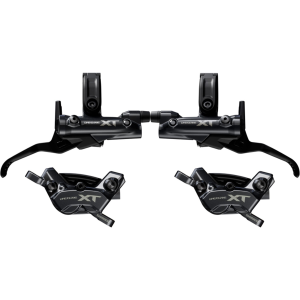
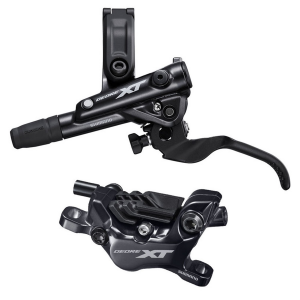
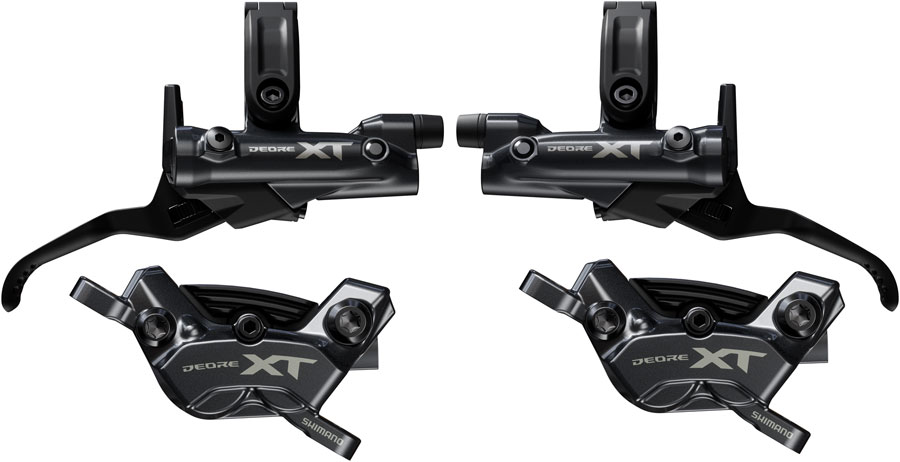
Shimano introduced its XT Di2 groupset back in June, and with it, new XT brakes. XT has long been Shimano’s capture-all brake that’s reasonably priced and powerful enough to stop most riders. The latest M8200 models introduce a few updates—most notably the switch to new mineral oil, a new lever design, and anti-rattle pads—but the feel and power are said to have remained much the same.
Knowing there are a lot of XT riders who are probably pretty content with the previous generation, we decided to get a set of the old and new brakes to see how they compare and if it's worth making the jump to the new models.
What Has Been the Consensus on XT Brakes in the Past?
Because XT brakes come in 2- and 4-piston variants and are a popular spec on complete bikes, many riders have first-hand experience with their abilities. The previous XT brakes had a reputation for being easy to bleed, producing an ‘on-off’ lever feel, delivering decently strong power, inconsistent lever throw (especially in varying weather conditions), leaky or cracked pistons, and excessive noise from pad rattle.

Shimano was well aware of what riders liked and disliked about the last brakes and made changes to address their shortcomings. Accessing how well these issues were resolved was a priority during testing.
How Do the New Brakes Compare?
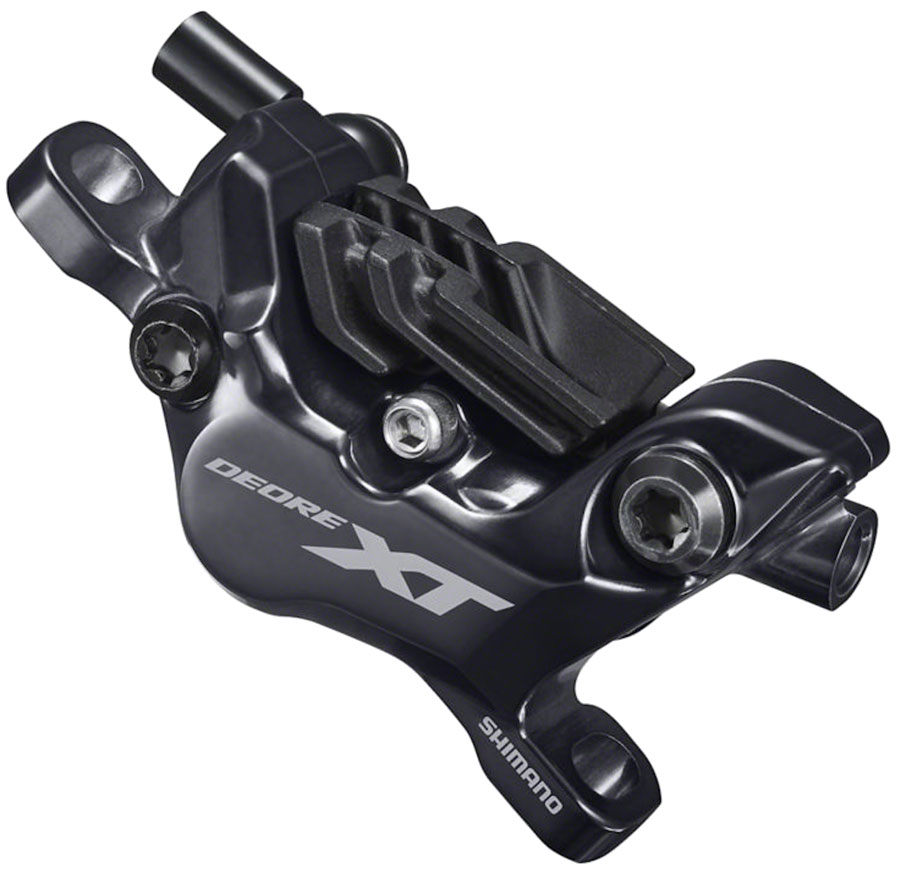
I compared the 4-piston versions of both brakes. Here are the key changes made from the M8100 to the M8200 models:
- The new brakes use low viscosity mineral oil to help improve braking consistency across a wider range of temperatures
- New piston seals offer a more consistent piston rebound speed
- Pistons are now made from resin instead of ceramic to improve durability
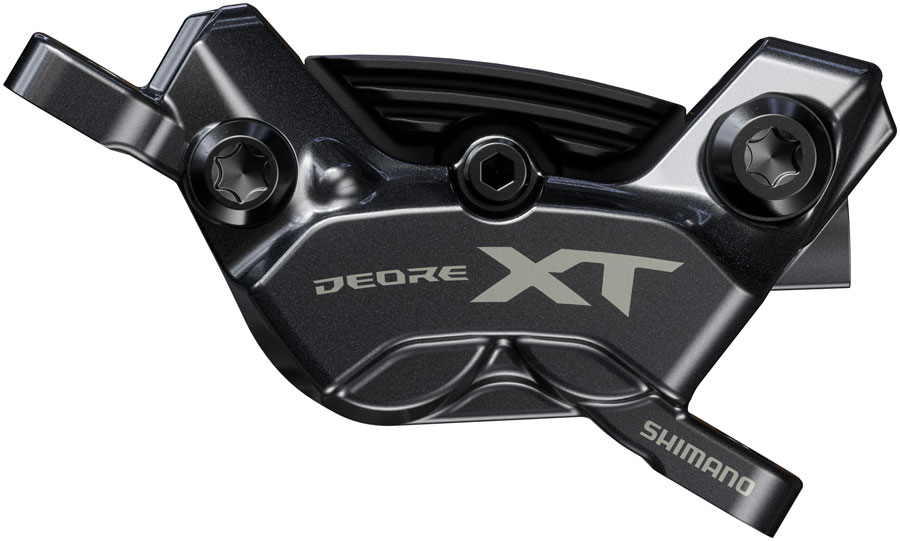
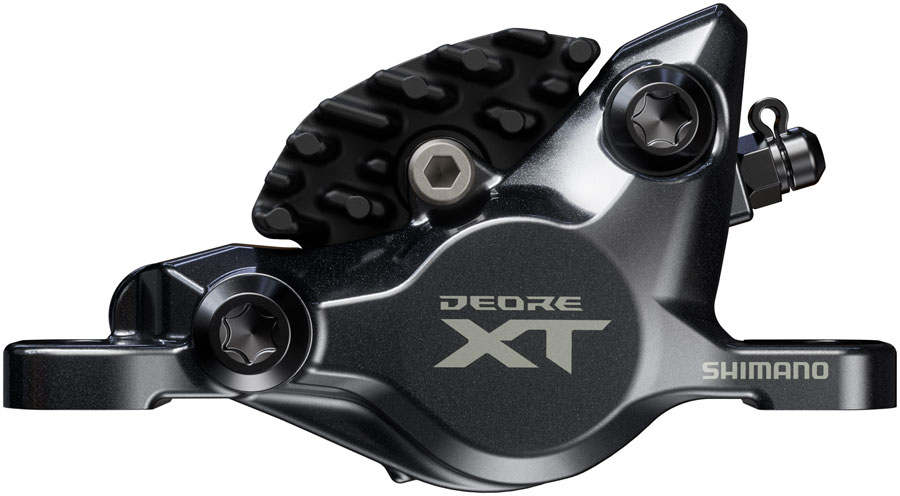
- The caliper is now stiffer, but is still made of two pieces
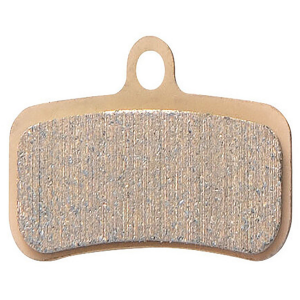
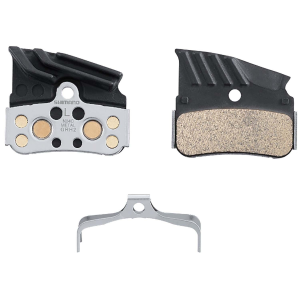
- New rattle-free pads reduce noise thanks to an ovalized retaining pin hole and new pad fins
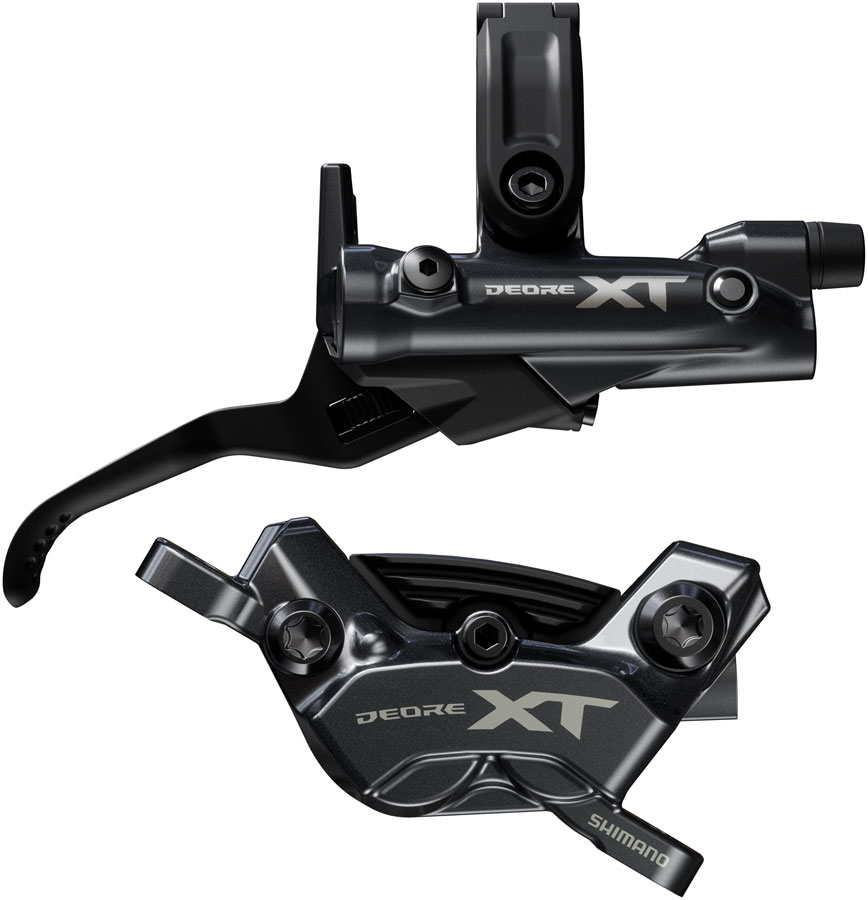
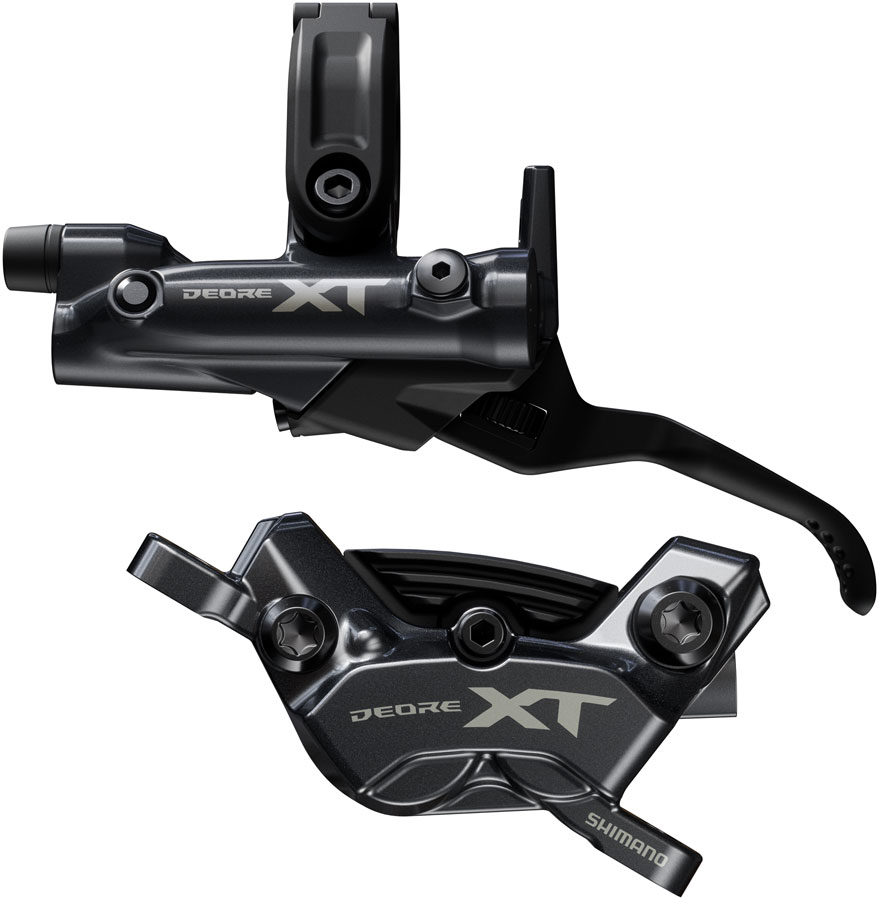
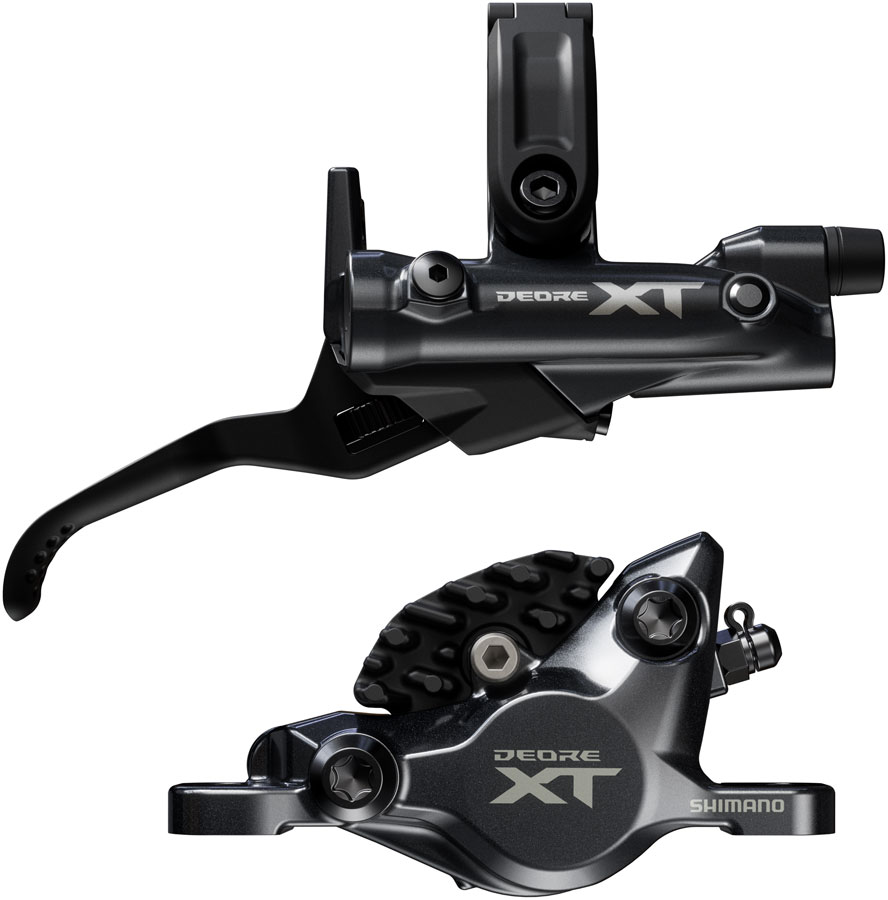
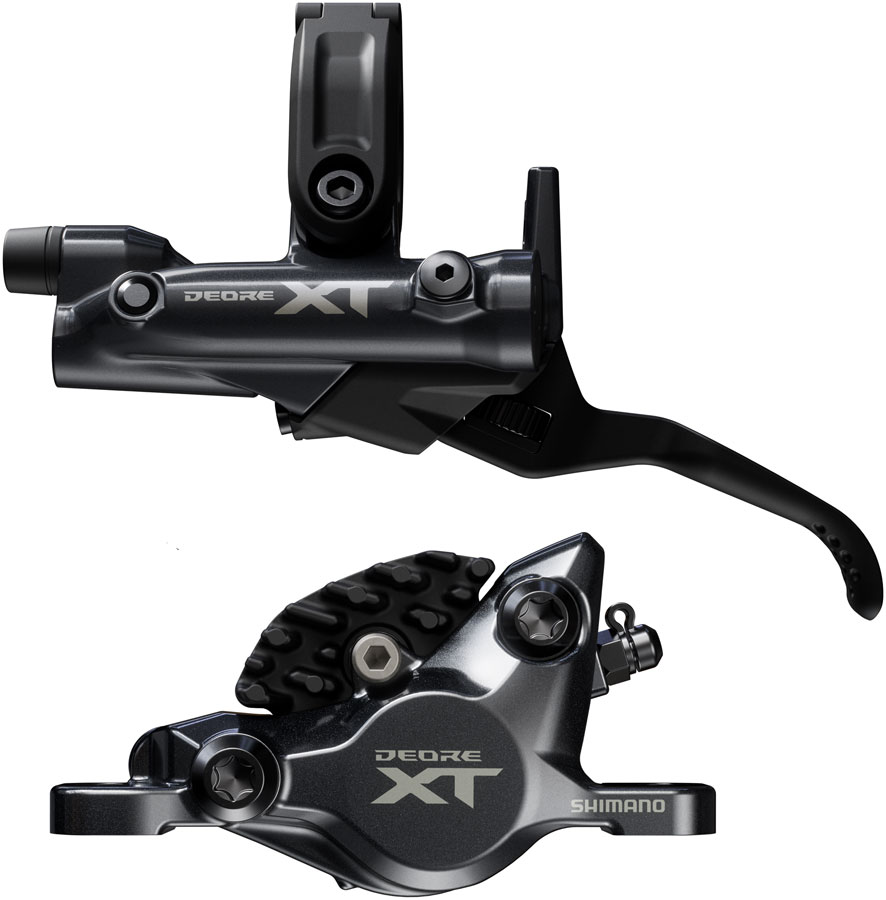
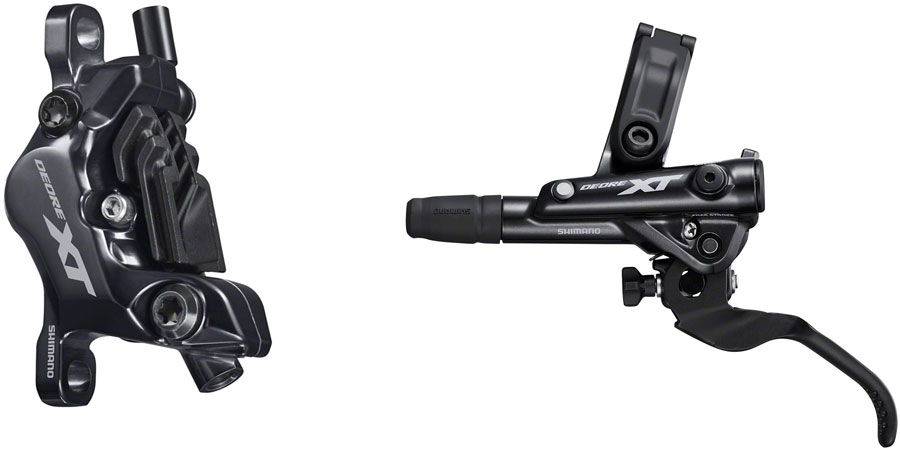
- All-new lever design that places the master cylinder more in parallel with the handlebar
- The lever blade pivot location is now closer to the handlebar, causing the lever to sweep outward as it’s pulled. Shimano calls this ERGO Flow
- New reach adjust dial with notched clicks of adjustment
- New caliper bleeding port uses a 3mm Allen key to open instead of an open-end wrench


Carry-over features:
- Shimano’s Servo Wave lever mechanism creates quick initial piston movement and a steady increase in power transfer through the lever stroke
- I-SPEC EV bar clamp and mounting interface
- Piston diameter (2x 15mm, 2x 17mm)
- The bleeding process and kit have not changed. Uses the same bleeding kit as before, just make sure to clean out excess oil after use to avoid cross-contamination
- Free stroke adjustment that changes the initial throw of the lever before pad contact is made. The new brakes do use a 2mm hex wrench instead of a Phillips screwdriver
Additional details worth noting:
- Because the new brakes use a different mineral oil, Shimano says can’t mix-and-match the new XT or XTR brakes with the old ones.
- The levers are the same between 2- and 4-piston models. Levers are right and left-sided specific.
Weight and Price
Impressively, both brakes retail for $265 per line. Shimano hasn’t bumped up the price of the new model. However, you can find the M8100 discounted in many places now that it’s no longer the current generation.
I weighed both brakes with the same hose length cut to fit my S4 Stumpjumper 15, and the new brakes were a minuscule 30g heavier.
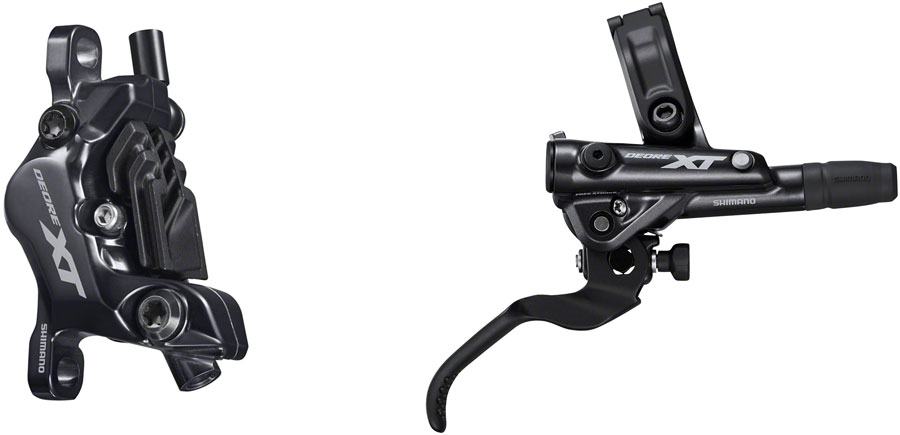
New XT M8200 Brakes
| Previous XT M8100 Brakes
|
On The Trail
Bleeding & Setup Process
I did a full system bleed when the brakes were new to shorten the lines. This wasn’t necessary as a lever bleed would have sufficed, but I wanted to make sure each brake started at the same point. Shimano brakes are straightforward to bleed. The update to the caliper bleed port is minor, but it makes the job a touch simpler, only needing hex wrenches throughout the process.


None of the brakes gave me trouble during the initial setup, and they all maintained a nice bleed throughout testing. Past XT brakes have given me more headaches, requiring additional bleeds to flush trapped air. But this can be true for any brake system. Patience and taking your time will forever be the best advice when it comes to bleeding brakes.
The rest of the setup was identical for both brakes. I prefer a smaller lever throw than I usually can achieve via bleeding, so on all the brakes, I pulled the brake lever with the caliper dismounted to advance the pistons slightly. This gave me the snug throw I prefer.

I liked the old reach adjustment knob over the new sleek dial. It was easier to turn and make on-the-go adjustments. Granted, most riders set and forget their lever position, so most won’t care enough to have an opinion.

The final thing that required attention during setup was figuring out how to secure the hoses on the new brakes so they wouldn’t tap against my bars. Like SRAM’s stealth levers, it's a bit annoying having to find a solution to a problem that didn’t exist before. A few strategic zip ties solved the issue. You could also try using some stem-mounted clips like this. And I’ll leave it up to everyone else to decide if the tucked-up positioning of the new levers is an aesthetic improvement over the past lever
Wandering Bite Point
Maintaining a consistent lever feel was a common complaint that I experienced firsthand with past XT brakes. When temperatures dropped or the brakes really heated up on long descents, the bite point would vary. Part of this could have also been due to caliper flex, but I don’t have any way to really prove this. What made things worse was how inconsistently these issues appeared—some days the brakes would pump out and feel tight, other days they would pull close to the bar out of nowhere, and sometimes they’d be totally fine—an emotional rollercoaster.
During this test, I did experience some wandering bite point with the outgoing M8100 lever. It wasn’t as severe as some XTs I’ve ridden, and only happened during a few wet, cold rides. The new M8200 brakes saw more weather, longer descents, and higher operating temps, but remained incredibly consistent with zero fluctuation in lever feel or bite point. It was the biggest improvement between the brakes and one that fans of XT brakes should be stoked about, as one of the most prominent problems of the past has been resolved.
I also tested the new XTR brakes this year that use the same LV oil and seals, and didn’t have any issues with bite point. So the new oil definitely delivers more consistent performance.
Power +/-/= ??
Shimano said the new M8200 brakes are a touch more powerful than before due to a stiffer caliper and more efficient power transfer at the lever. The ServoWave mech in the lever and piston sizes are the same as before, but more of the rider's effort at the lever is now translated into pressure at the pads.
After riding the new and old models back to back, and with one of each at the same time, I didn’t think the new brakes offered more stopping force. It would be splitting hairs to say one was more powerful than the other. This could be a moot point if you’ve previously enjoyed the tameable power of XTs. But if you were hoping power was going to get elevated to the level of SRAM Mavens or TRP EVO Pros, I’m sorry to bring you bad news. We’ve already seen prototypes floating around of what’s assumed to be the next-gen Saint brake, so I’d expect that it will compete with the power of said brakes.
Both brakes have a progressive power curve. The initial bite with stock metallic and resin pads was softer or less aggressive than other brakes. Once the pads contact the rotor, you have to continue pulling to build power. It’s at this point that the new XTs offered better modulation and a wider range of usable power. You can roll on the power more precisely, whereas the old brakes tend to feel like they hit a wall, giving them that classic on-off feel.
Still, the need to build power through the lever stroke does become apparent when riding steep trails or braking hard and late, as oftentimes power doesn’t come quite quick enough.
For these reasons, the old or new XT brakes wouldn’t be my first choice for gnarly trails with a lot of crucial braking moments. Or if I were riding a heavy e-bike, a downhill bike, or a bike park. There are brakes out there that deliver more stopping force faster.
However, I don’t have super steep trails in my area. I would say most of my trails only present a handful of braking events that challenge the power available with XTs. The rest of the time, slowing down is not an issue. Occasionally, I had to really reef on the brakes to slow down, but those moments were vastly overshadowed by the number of brake events that just required scrubbing some speed to stay in control. And for the mostly dry, dusty conditions I tested in, that gave me more confidence.
I would summarize the power of the new XT brakes as strong and user-friendly, which makes them an appropriate option for a broad user base. You end up living in the middle of the lever stroke, or power curve, more now than you did with the old brakes, which makes it easier to control how you brake.
I’ll add that this test was about comparing brake performance, not about how to make XT brakes more powerful. You can try third-party pads or thicker rotors to increase braking intensity, and if you’ve found a setup in the past that made XTs work better for you, odds are those changes will produce a similar outcome with the new brakes.
Pad Rattle
Ahhh, the iconic clunk-tap of Shimano brake pads. Recognized and despised by many mountain bikers. Solving this issue seemed like the lowest-hanging fruit that would be the most appreciated.
The good news is that the new ovalized pin hole and new fins do reduce the rattling noise a lot. You still get some clicking noises when rolling over chattery sections or braking through compressions, but it’s not nearly as obnoxious as before.

I spent a day switching between both brakes with new, old, and finless pads. I also tried using Velcro under the fins and flexing the pad spring to increase tension. Trying a bunch of setups confirmed that the new pads are definitely quieter than the old ones. And that Velcro between the fins and caliper further reduces noise. And that the most silent setup was the finless pads with extra spring tension. Go figure?
Like I mentioned about getting more power out of the brakes, because the new caliper uses the same brake pad size as before, if you previously found a solution to the dreaded pad rattle, odds are it will work well with the new brakes too.
Data Comparison
To close out this test, I used some BrakeAce sensors to gather data on both brakes. I rode a familiar trail with the same metallic brake pads and 220mm rotors, and did three runs with each to gather an average.
M8100 XT
| M82100 XT
|
The standout takeaway from the data was that I braked for less time with the new brakes and went a second faster. Which makes sense: brake less, go faster.
I used both brakes basically the same number of times, but my brake events were shorter with the new brakes. This added up to 1.5 seconds less total braking time. What’s interesting is that I didn’t perceive the runs with the new brakes as faster, and I was riding at a similar intensity, yet I was able to maintain a higher pace and stay in control.
Another interesting stat is that I braked very evenly with the old XTs, around 55% rear and 45% front, whereas with the new brakes I was closer to 66% rear, 34% front. I was also able to produce more power with the new rear brake during intense brake events over a shorter period. Which makes sense: more power allows you to brake harder for less time.


My first braking event in this section illustrates a larger story: the M8200s allowed me to brake hard when my speed was highest for a shorter time. The M8100's initial brake event required me to stay on the brakes for longer to slow down. This difference gave the M8200s better modulation and control, and allowed me to be on the brakes for less time. Also keep in mind, power is a touch misleading in this example as my speed entering this section was not the same. Comparing the shape of the brake events has more merit.
The data definitely shows how I was able to brake more intentionally with the new brakes instead of just grabbing a handful like I had to with the old brakes to slow down. And how being able to brake intentionally allowed me to brake harder and for less time, which made me faster in the end.

Should You Make the Switch to Shimano’s New M8200 XT Brakes?
If you are a fan of Shimano brakes and are due for some new stoppers, I’d urge you to look past the discounts that are available on the outgoing M8100 models and spend a little more on the new brakes.
They’ll deliver the same lever feel and power that you know and love, but will offer better modulation and will maintain that performance over time with a lot less headache. The new low-viscosity oil is the real deal for solving the wandering bite point issue, and the new pads are quieter. You also get to keep the simple lever mounting interface and bleed process.
If you currently have a set of XTs that are chugging along problem-free, I don't see any harm in running those as long as you can. You aren’t missing out on any major performance gains and should feel lucky that you got a ‘good set.’ The only thing I would do is swap to the new rattle-free brake pads (or finless pads).
| Where To Buy | |||
|---|---|---|---|

|
Free shipping on orders over $49 (continental U.S. only).
International shipping available. Some exclusions apply. |
Free shipping on orders over $49 (continental U.S. only).
International shipping available. Some exclusions apply. $265.00
|
|

|
|||

|
|||

|
|||

|
|||

|
|||

|
|||

|
|||

|
|||

|
|||

|
|||

|
|||

|
|||
|
|
|||

|
Free shipping on orders over $50 (contiguous U.S. only).
International shipping available. Some exclusions apply. |
Free shipping on orders over $50 (contiguous U.S. only).
International shipping available. Some exclusions apply. $530.00
|
|
|
|||
|
|||
|
|||
|
|||

|
Free U.S. shipping on everything.
International shipping available. Some exclusions apply. |
Free U.S. shipping on everything.
International shipping available. Some exclusions apply. $530.00
|
|
|
|||
|
|||
|
|||
|
|||
|
|||
|
|||
|
|||
|
|||
|
|||
|
|||
1/9/2026 9:00am



View replies to: Comparing Shimano XT Brake Performance - M8100 vs. M8200
Comments